
Roller skating is an exciting way to stay active, but taking your first steps on eight wheels requires the right equipment and a clear understanding of your personal limits. For beginners in the Philippines, finding the ideal pair of four-wheel quad roller skates involves balancing stability, comfort, and suitability for local skating environments. Whether you plan to glide along the smooth pathways of public parks, practice footwork on concrete barangay basketball courts, or visit an indoor rink, your skates must match your skill level and physical build.
Before purchasing your first pair, recognize that roller skating carries inherent risks of falls and joint strain. No amount of high-quality equipment can replace proper training, physical conditioning, and sound judgment. Beginners should always start on flat, dry, and debris-free surfaces, far from motor vehicle traffic or steep inclines. If you experience loss of balance, severe ankle fatigue, or wet weather conditions that compromise wheel grip, stop skating immediately to prevent injury.
To make a confident purchase, you need to evaluate the anatomy of a quad skate, select wheels that match your primary skating venue, and ensure a precise fit that supports your ankles. This guide outlines the essential technical specifications, safety gear, and buying strategies to help you choose a reliable pair of roller skates that will support your learning journey.
Products mentioned in this guide
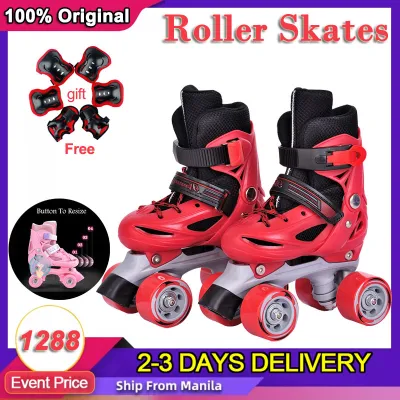
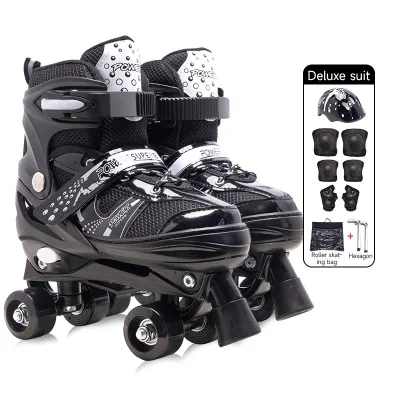
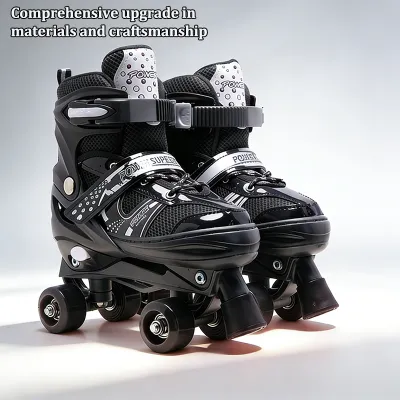
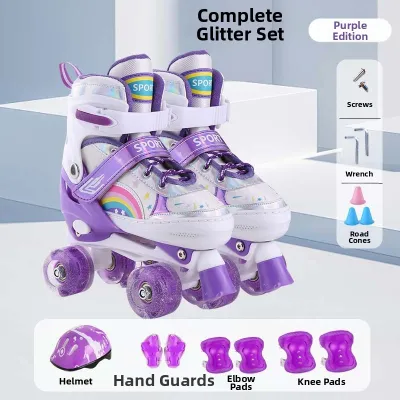
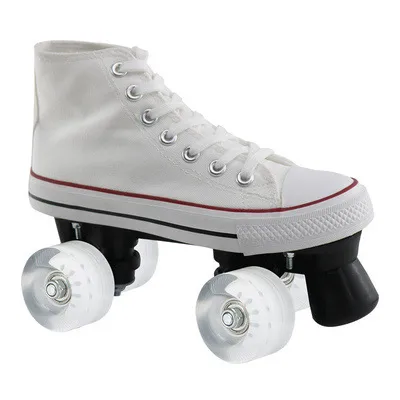
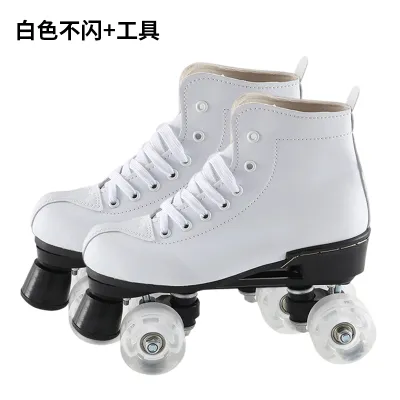
Prices are valid at publication and may change. Please refer to the product page for the latest price.
Understanding Quad Skate Anatomy for Beginners
Every quad roller skate is a system of interconnected parts that directly influence how stable you feel on the ground. For a beginner, understanding how the boot, plate, and toe stop work together is the first step in choosing a safe and comfortable skate.
Boot construction is the most critical factor for ankle stability. Beginners generally benefit most from high-top boots, which feature a tall collar that wraps securely around the ankle. This design provides structural support, helping to prevent lateral ankle rolls when your leg muscles are still adapting to the unique balance required for skating. Low-top boots, resembling running shoes, offer greater ankle mobility and are favored by speed skaters or jam skaters, but they require significant ankle strength and offer minimal protection against twists. For your first pair, a stiff, high-top boot is highly recommended to build confidence and maintain proper alignment.
Beneath the boot lies the plate, which holds the wheels and transfers your weight to the ground. Plates are typically made of either nylon or aluminum. Nylon plates are lightweight, affordable, and excellent at absorbing vibrations from rough outdoor concrete, making them a popular choice for recreational beginners. However, nylon can flex under heavier body weights or high-impact maneuvers, which may slightly reduce responsiveness. Aluminum plates are heavier and more expensive, but they offer exceptional rigidity, durability, and direct power transfer. If you are a heavier skater or plan to transition quickly into aggressive park skating, verifying the plate material and choosing aluminum can prevent premature wear.
The toe stop is your primary braking mechanism and is located at the front of the plate. Entry-level skates often feature bolt-on toe stops, which are secured by a single screw through the center and cannot be adjusted for height. While functional, bolt-on stops limit your ability to customize how far you need to tip your foot forward to engage the brake. Higher-quality beginner skates feature adjustable toe stops, which screw directly into the plate and are locked in place with a nut or a clamp screw. Adjustable stops allow you to set the perfect clearance distance—typically about three fingers’ width between the back wheels and the ground when the skate is tipped forward—ensuring reliable stopping power and safer transitions.
Choosing the Right Wheels for Indoor and Outdoor Skating
The wheels you choose dictate how smoothly your skates roll and how much grip you have on different surfaces. In the Philippines, where outdoor skating often takes place on rough asphalt, uneven concrete, or tiled plazas, selecting the correct wheel hardness is essential for safety and comfort.

Wheel hardness is measured using the durometer scale, represented by a number followed by the letter “A”. Softer wheels, ranging from 78A to 82A, are designed specifically for outdoor use. These wheels are made of a gummy polyurethane that compresses slightly over small pebbles, cracks, and rough textures, absorbing road vibrations and preventing your skates from stopping abruptly when hitting debris. Harder wheels, ranging from 85A to 101A, are built for smooth indoor rinks, polished wood, or coated concrete courts. Hard wheels offer less rolling resistance, allowing for faster speeds and effortless slides, but they will transmit every vibration and slip dangerously on rough outdoor surfaces.
Wheel size, measured in diameter (millimeters), also affects your stability and speed. Beginners should look for wheels with a diameter between 57mm and 62mm. Smaller wheels (57mm to 58mm) keep your center of gravity lower to the ground, providing a more stable base that makes it easier to learn basic strides and balance. Larger wheels (62mm to 65mm) roll over cracks and outdoor obstacles with greater ease and maintain their momentum longer, but they require more effort to accelerate and maneuver. Additionally, a wider wheel profile (the width of the wheel’s contact patch with the ground) offers a wider platform of stability, which is highly beneficial for first-time skaters.
To help you visualize the differences, refer to the comparison table below when selecting your wheel setup:
| Wheel Category | Durometer Range | Common Diameter | Ideal Skating Surfaces | Key Benefit for Beginners |
|---|---|---|---|---|
| Outdoor / Gummy | 78A – 82A | 58mm – 65mm | Rough asphalt, concrete courts, outdoor parks | Absorbs shocks and rolls over small debris safely |
| Hybrid | 82A – 85A | 58mm – 62mm | Smooth outdoor paths, indoor multi-purpose courts | Balanced grip and slide across multiple venues |
| Indoor / Rink | 85A – 101A | 57mm – 62mm | Polished wood rinks, smooth indoor sports courts | High speed, effortless turns, and minimal rolling resistance |
Before buying, check the specifications of the pre-installed wheels on your chosen skate model. If the skates you love come with hard indoor wheels but you plan to skate outdoors, you should budget for an extra set of soft outdoor wheels to swap out before your first session.
How to Ensure the Perfect Fit and Ankle Support
A common mistake among beginner skaters is purchasing skates in their standard street shoe size without measuring their feet. Because roller skates act as an extension of your body, an improper fit can lead to painful blisters, foot cramps, loss of balance, and a significantly higher risk of ankle injuries.
To find your correct size, you must measure your feet in centimeters or millimeters. Place a piece of paper against a wall, stand on it with your heel touching the wall, and trace the outline of your foot. Measure the distance from the heel to the longest toe, and repeat the process for both feet, as one foot is often slightly larger. Compare these measurements directly to the brand-specific sizing chart of the skate you intend to buy. Skate manufacturers use different sizing standards, and a size 38 in one brand may fit completely differently than a size 38 in another.
When trying on your skates for the first time, perform a thorough fit evaluation before rolling. Put on the socks you plan to wear while skating, lace the boots up fully, and stand up with your knees slightly bent in a basic skating stance. Your toes should gently brush the front of the toe box without being cramped, curled, or pinched. Next, lift your heel slightly; there should be minimal to no heel slip inside the boot. If your heel lifts significantly when you walk or bend your knees, the skate is too large, which will force your toes to claw for grip and lead to rapid foot fatigue and poor control.
Keep in mind that different boot materials have different break-in expectations. Synthetic leather or vinyl boots are highly common in entry-level skates; they are stiff out of the box, hold their shape well in humid tropical climates, and require minimal maintenance, but they will not stretch much over time. Genuine leather or suede boots are more expensive but will gradually mold to the unique shape of your feet, offering a custom fit after several hours of use. During the break-in period, you can adjust your lacing techniques to relieve pressure points. For example, if you have a high instep, you can skip crossing the laces over the top of your foot and thread them vertically through the eyelets to allow more vertical space.
Essential Protective Gear for First-Time Skaters
Roller skating is a high-impact activity, and falling is an inevitable part of the learning process. Wearing high-quality protective gear is a non-negotiable requirement for every beginner, regardless of how confident you feel. Investing in safety equipment not only prevents painful injuries but also builds the confidence needed to progress in your skills.
Wrist guards are arguably the most critical piece of safety gear you will wear. When losing balance, the human instinct is to reach out with open hands to break the fall. This action concentrates the entire force of the impact onto the wrists, often leading to severe sprains or fractures. Wrist guards feature rigid plastic splints on the palm and back of the hand that absorb the shock, slide along the concrete to disperse energy, and keep the wrist joint aligned to prevent hyperextension. Ensure your wrist guards fit snugly without cutting off circulation, and never skate without them.
A proper helmet is essential to protect against head injuries, particularly backward falls which are common when beginners lose their balance and slip out from under themselves. While standard bicycle helmets are designed to protect against single-impact forward crashes, they often lack coverage at the back of the skull. You should look for a multi-impact skate helmet that features a low-profile design covering the lower back of your head. Verify that the helmet carries safety certifications (such as CPSC or EN 1078) and fits snugly on your head without rocking forward or backward when the chin strap is buckled.
Knee and elbow pads complete your protective set. For beginners skating on hard concrete or asphalt, look for pads that feature thick EVA foam padding paired with hard plastic outer caps. The hard caps allow you to slide out of a fall on your knees, which safely disperses the forward momentum rather than absorbing the impact directly into your joints. Choose pads with secure strapping systems—ideally a combination of a neoprene sleeve that slides over your limb and adjustable hook-and-loop straps to keep the pads firmly in place during a slide.
Pre-Purchase Checklist and Buying Tips
Before finalizing your purchase, take a moment to run through a final specification check. Ensure that the boot style (high-top for ankle support), plate material (nylon for lightweight shock absorption or aluminum for rigidity), and wheel durometer (soft for outdoors or hard for indoors) align perfectly with where and how you plan to skate.
Budgeting for your first setup in the Philippines requires realistic expectations. High-quality, entry-level recreational quad skates generally range from ₱3,500 to ₱7,500. Skates priced below ₱2,000 are often constructed with cheap plastic plates, low-grade bearings, and hard plastic wheels that offer zero grip on concrete, posing a significant safety hazard. It is highly recommended to budget an additional ₱1,500 to ₱3,000 for a complete set of certified protective gear (helmet, wrist guards, knee pads, and elbow pads). Investing in a reliable mid-range setup ensures durability, safety, and a much more enjoyable learning experience.
When choosing where to buy, prioritize specialized local skate shops, official brand stores, or reputable online marketplaces that offer clear return and exchange policies. Because precise sizing is critical, purchasing from a retailer with a reliable return policy allows you to exchange the skates if the fit is not perfect. Additionally, buying from established sellers ensures you are getting authentic products and gives you access to replacement parts, such as cushions, toe stops, and bearings, which will extend the lifespan of your skates as you progress.
Frequently Asked Questions (FAQ)
How often should I clean and lubricate my skate bearings?
Your skate bearings should be cleaned and lubricated whenever they begin to spin slowly, make a gritty or grinding noise, or after you have skated through water, sand, or heavy dust. In the humid tropical climate of the Philippines, moisture and road grime can quickly cause steel bearings to rust and seize. To clean them, remove the bearings from the wheels, soak them in a bearing cleaning solvent or high-purity isopropyl alcohol, dry them completely, and apply two drops of skate-specific synthetic bearing lubricant. Never use household penetrating oils like WD-40, cooking oils, or heavy grease, as they attract dirt, gum up the internal components, and will permanently damage your bearings.
Can I upgrade the wheels on my beginner skates later?
Yes, one of the best features of quad roller skates is their modular design, allowing you to upgrade almost every component as your skills improve. Before purchasing new wheels, perform a compatibility check on your skate’s axle size; most modern recreational skates use 8mm axles, but some specialty or older models use 7mm axles. You will also need to ensure your new wheels match the width of your current trucks and plates without rubbing. Upgrading to harder, faster, or specialized wheels is highly justified once you have mastered basic stopping, turning, and stride techniques, and are ready to transition to specific disciplines like dance, ramp, or derby skating.
Community discussion
Share your experience or ask a question. Comments are reviewed before publication.