
Finding the right pair of swimming goggles is essential for maintaining clear vision, protecting your eyes, and ensuring comfort during your time in the water. In the Philippines, where tropical heat and high humidity make swimming a popular year-round activity, selecting the appropriate eyewear requires careful consideration of your environment, skill level, and facial structure. Arena offers a diverse range of goggles designed to meet the specific demands of competitive athletes, fitness lap swimmers, and recreational beachgoers alike.
Choosing the ideal pair involves matching the goggle’s design category to your primary swimming activities while verifying the physical fit against your face. Whether you are training in an outdoor Olympic-sized pool under the intense midday sun or practicing in a dimly lit indoor facility, the right lens tint and frame profile will directly impact your performance and comfort. This guide outlines the key factors to evaluate when selecting Arena goggles, helping you make an informed decision that enhances your aquatic experience.
Before embarking on any water-based training or recreation, it is vital to recognize that high-quality swim gear is a tool to assist your performance, not a substitute for water safety training. Always ensure you are swimming within your physical limits, especially when venturing into open water or deep pools. Equipment cannot replace proper training, physical preparation, and sound judgment in the water.
Products mentioned in this guide
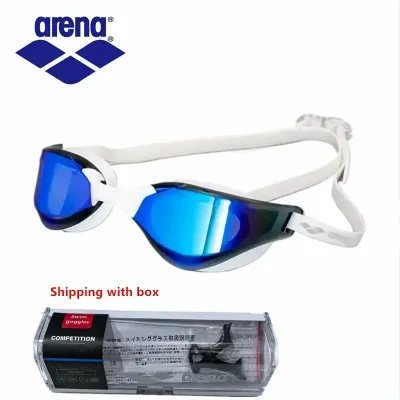
Prices are valid at publication and may change. Please refer to the product page for the latest price.
Identifying Your Primary Swim Purpose and Arena Category
To narrow down your options, you must first identify where and how often you swim, as Arena categorizes its goggles to serve distinct user profiles. The brand’s lineup generally falls into three primary design categories: low-profile racing goggles, mid-size fitness goggles, and high-volume recreational masks. Each category features a distinct balance between hydrodynamic efficiency and long-term wearing comfort.
Low-profile racing goggles are engineered specifically for competitive swimmers and high-intensity training sessions. These models feature small, compact eye cups that sit deep within the eye socket, minimizing the physical profile of the goggle to reduce water resistance or drag. While this streamlined design is highly effective for maintaining speed during starts, turns, and sprints, the tight fit and minimal cushioning can place direct pressure on the delicate bones around the eyes. For casual swimmers, this pressure may become uncomfortable during extended sessions lasting longer than an hour.
In contrast, mid-size fitness goggles are designed for regular lap swimmers who prioritize comfort during sustained workouts. These models utilize thicker, softer silicone gaskets that distribute pressure more evenly across a wider surface area around the eye socket. The slightly larger lenses offer a wider field of view, making it easier to monitor your lane positioning and keep track of other swimmers in a busy public pool. Fitness goggles strike a practical balance, offering sufficient stability for active lap swimming without the intense, localized pressure of a dedicated racing model.
For leisure swimmers, snorkelers, and open-water enthusiasts, high-volume recreational masks provide the maximum level of comfort and visibility. These designs feature a large, continuous silicone skirt that seals around the forehead and cheekbones, completely avoiding the sensitive eye socket area. While the increased surface area creates more drag—making them unsuitable for fast lap swimming or competitive racing—the expansive field of vision and pressure-free seal make them excellent for exploring tropical waters or enjoying a relaxed day at a resort.
To determine which category fits your routine, consider the following self-assessment checklist:
- Frequency and Duration: Do you swim once or twice a week for leisure, or are you training multiple times a week for competitive events?
- Intensity: Do your sessions involve explosive dives and high-speed turns, or steady, continuous aerobic laps?
- Primary Environment: Are you swimming in a structured, lane-controlled pool, or are you navigating open-water environments like lakes and oceans?
By matching your answers to the corresponding goggle category, you can avoid the common mistake of purchasing a highly specialized racing goggle for casual recreation, or a bulky mask for competitive training.
Evaluating Fit, Seal, and Strap Systems
No matter how advanced a goggle’s features are, it will not perform effectively if it does not match the unique contours of your face. Achieving a watertight seal depends entirely on the physical interaction between the goggle’s gasket and your facial structure. To verify this compatibility before you swim, you can perform a simple, reliable diagnostic known as the “suction test.”

To conduct the suction test, gently press the goggle lenses against your eye sockets without using the head strap. Apply light pressure to expel the air from inside the cups, then release your hands. If the goggles are a good match for your facial structure, the suction should hold them firmly in place for a few seconds before they fall off. If the goggles release immediately or fail to stick at all, air is entering through gaps in the seal, indicating that the frame shape or nose bridge width is not compatible with your face.
Once you have verified the basic seal, examine the strap configuration, which plays a critical role in keeping the goggles secure during active movement. Arena goggles typically feature either a single silicone strap with a tension adjustment clip or a split Y-strap design. Single straps are easy to adjust and work well for casual fitness swimming, but they can slide down the back of the head during vigorous activity. Split Y-straps, which divide into two separate bands across the back of the skull, provide superior stability by anchoring the goggles from two distinct angles. This configuration is highly recommended for competitive swimmers who need to prevent their goggles from shifting during high-impact dives and flip turns.
Another critical component of a proper fit is the nose bridge. Because the distance between human eyes varies significantly, a fixed nose bridge can cause the eye cups to sit too close together or too far apart, leading to painful pressure points or persistent leaks. Many of Arena’s fitness and racing models address this by including interchangeable nose bridges of varying lengths, or adjustable step-notch bridges. When trying on a new pair, take the time to swap out the nose bridge to find the width that allows the eye cups to sit flat and centered over your eyes without pinching the bridge of your nose.
Selecting Lens Tints and Optical Features
The tropical climate of the Philippines presents unique lighting challenges for swimmers. Intense, direct sunlight at outdoor pools can cause severe glare and eye strain, while indoor or covered pools often suffer from dim or uneven lighting. Selecting the correct lens tint is essential for maintaining clear visibility and protecting your eyes from harsh environmental conditions.
Clear and light-colored lenses are best suited for indoor pools, covered facilities, or early morning swim sessions when ambient light is low. These lenses allow the maximum amount of light to reach your eyes, ensuring you can clearly see the lane lines and pool bottom. However, using clear lenses in an outdoor pool under the bright Philippine sun can lead to squinting and rapid eye fatigue.
For outdoor swimming, smoke-tinted, mirrored, or polarized lenses are highly beneficial. Smoke lenses act like sunglasses, reducing overall brightness without distorting colors. Mirrored lenses feature a reflective coating that deflects intense glare away from your eyes, making them excellent for midday training sessions in open-air pools. Polarized lenses offer the highest level of glare protection by filtering out horizontally reflected light from the water’s surface, which is particularly useful for open-water swimmers navigating the bright coastal waters of the archipelago.
Regardless of the tint you choose, almost all modern Arena goggles come equipped with a factory-applied anti-fog coating on the inner surface of the lenses. This treatment prevents moisture from condensing into tiny droplets that obscure your vision. However, these coatings are delicate and will degrade rapidly if handled incorrectly. To preserve the anti-fog effect, never wipe, rub, or touch the inside of the lenses with your fingers, towels, or swim caps. Physical friction scratches the microscopic chemical layer, rendering it ineffective.
For swimmers who require vision correction, standard goggles can make it difficult to see pace clocks or navigate crowded lanes. While some swimmers attempt to wear contact lenses under their goggles, this practice carries a risk of eye infection if pool water penetrates the seal. A safer alternative is to check manufacturer specifications for prescription-compatible models or optical inserts. Arena offers corrective lens options in specific fitness lines, allowing you to select different diopter strengths for each eye to match your exact prescription.
Purchasing Authentic Arena Gear in the Philippines
As a premium swimwear brand, Arena is a frequent target for counterfeit manufacturers. Purchasing counterfeit goggles not only results in a poor-quality product that leaks and fogs instantly, but it can also expose your eyes to unsafe materials and lack proper UV protection. To ensure you are buying genuine Arena gear, you must follow a secure purchasing framework.
Always source your swim gear from authorized physical sports retailers, official brand storefronts on reputable online marketplaces, or specialized swim shops located in major metropolitan areas. Authorized distributors maintain direct supply chains, ensuring that the products on their shelves are genuine and stored in climate-controlled environments that prevent the silicone components from degrading prematurely in the tropical heat.
When shopping, be vigilant for common red flags that indicate counterfeit products. Price is often the most immediate indicator; if a premium competitive goggle model is listed at a price significantly below the standard retail range—such as under ₱500—it is highly likely to be a counterfeit. Additionally, inspect the packaging and product details closely. Genuine Arena goggles are packaged in high-quality, rigid plastic cases with clear, professionally printed branding, multi-language instruction manuals, and distinct barcode labels. Counterfeits often arrive in flimsy plastic bags, feature misspelled words on the packaging, or exhibit poor construction quality, such as rough silicone edges and misaligned logos.
Finally, verify the warranty terms and return policies before completing your purchase. Because swim goggles are considered personal hygiene items, many retailers enforce strict return restrictions once the packaging has been opened or the product has touched the water. Purchasing from an authorized dealer ensures you have access to legitimate customer support and return options if you discover a manufacturing defect before using the goggles in the pool.
Frequently Asked Questions (FAQ)
How do I safely clean and maintain the anti-fog coating?
To protect the delicate anti-fog coating on your Arena goggles, always rinse them thoroughly with cool, fresh tap water immediately after every swim session. This simple step removes chlorine, salt, sweat, and organic oils that can slowly degrade the silicone and lens treatments. After rinsing, shake off any excess water and allow the goggles to air-dry completely in a shaded, well-ventilated area away from direct sunlight. Never use harsh dish soaps, glass cleaners, or abrasive cloths on the lenses, and avoid wiping the interior surface, as any physical contact will scratch and strip the factory-applied coating.
How tight should swimming goggles feel on my face?
Swimming goggles should feel secure but comfortable, relying on the natural suction of the silicone gaskets rather than the tension of the head strap to keep water out. The head strap is designed solely to keep the goggles positioned correctly on your face, not to pull them tightly against your eyes. If you experience deep red ring marks around your eyes, localized headaches, or pinching at the temples, your straps are adjusted too tightly. A properly fitting pair of goggles should maintain a watertight seal with minimal strap tension, allowing you to swim comfortably without pain or excessive pressure.
Can I replace the nose bridge on all goggle models?
No, the ability to replace or adjust the nose bridge depends entirely on the specific design of the goggle model. While many of Arena’s fitness and competitive racing goggles feature interchangeable nose bridges in multiple sizes to accommodate different facial profiles, some models utilize a fixed, molded nose bridge. Fixed bridges are often integrated directly into the frame to maximize structural rigidity and minimize drag, but they offer no adjustability. Before purchasing, always check the product specifications or packaging to confirm whether the model features an adjustable, interchangeable, or fixed nose bridge system.
Community discussion
Share your experience or ask a question. Comments are reviewed before publication.