
Finding the right basketball ball for outdoor play in the Philippines requires understanding how local court conditions affect sports equipment. Unlike indoor hardwood courts, the vast majority of community and barangay courts across the country are made of unpolished concrete or asphalt. These rough surfaces act like sandpaper, rapidly wearing down standard balls and stripping away their grip.
To get the most value and performance out of your purchase, you must select a ball engineered specifically to withstand high abrasion, intense tropical heat, and heavy dust. Balancing durability with a reliable grip ensures that your ball maintains a consistent bounce and feel, allowing you to focus on your game rather than worrying about premature wear.
Understanding the Demands of Concrete Courts
Concrete courts present a unique set of challenges that can quickly ruin a basketball ball not built for the outdoors. The primary culprit is the abrasive texture of unpolished concrete. Every dribble, pass, and rim contact scrapes the outer cover, gradually wearing down the raised pebbles that provide grip. Over time, this friction can smooth out the surface entirely, leaving you with a slick, uncontrollable ball.
Products mentioned in this guide
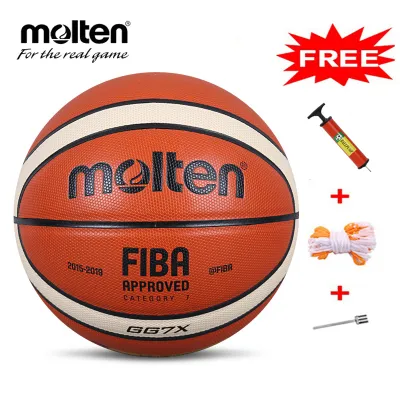
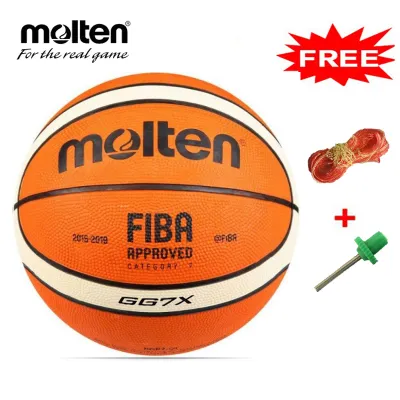
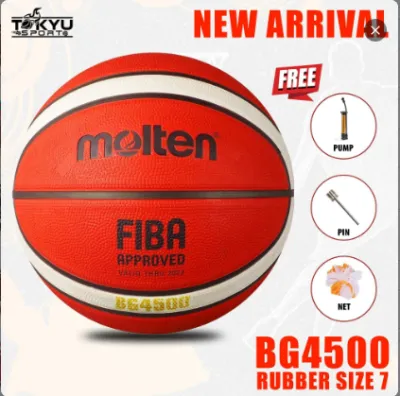
Prices are valid at publication and may change. Please refer to the product page for the latest price.
In addition to surface roughness, outdoor courts in the Philippines are constantly exposed to environmental dust and debris. Fine dust particles settle into the grooves and channels of the ball during play. This creates a slippery layer between your hands and the ball, making clean passes and controlled shots much more difficult. A proper outdoor ball must have design features that help manage this dust accumulation.
Weather conditions also play a massive role in the lifespan of outdoor sports gear. The tropical climate brings intense solar heat, high humidity, and sudden heavy downpours. Prolonged exposure to high temperatures causes the air inside the bladder to expand, putting immense pressure on the seams. Meanwhile, moisture from humidity or wet courts can seep into poorly sealed seams, leading to material delamination and warping.
Rubber vs. Composite Leather: Choosing the Right Material
When choosing an outdoor basketball ball, the most critical decision is selecting between rubber and composite leather covers. Each material offers a distinct set of advantages and trade-offs regarding durability, feel, and cost. Understanding these differences helps you match the ball to your specific playing environment and personal preferences.

Rubber basketballs are the traditional workhorses of outdoor courts. Built with thick, heavy-duty rubber covers, these balls offer the highest level of resistance to concrete abrasion. They are highly resilient against scuffs, scrapes, and punctures, making them a durable option for daily games on rough, unpainted barangay courts. Additionally, rubber does not absorb moisture, allowing the ball to perform consistently even in damp conditions.
The main trade-off with rubber is its tactile feel. Rubber balls tend to have a harder, more springy bounce and a less cushioned grip compared to leather. While they are highly practical and budget-friendly, players who are accustomed to indoor play may find the texture less comfortable for shooting and ball-handling practice.
Composite leather, on the other hand, is engineered to mimic the soft, premium feel of genuine leather while offering enhanced durability for outdoor use. These balls provide a much better grip, a cushioned feel, and a more controlled, predictable bounce. This makes them highly popular among players who want to practice their skills with a ball that feels closer to a professional game ball.
However, composite leather is inherently more susceptible to wear than rubber. Even composite balls labeled for outdoor use will scuff and lose their outer finish faster when subjected to constant friction on rough concrete. If you play frequently on highly abrasive surfaces, a composite ball will require more careful maintenance and will likely need replacement sooner than a rubber alternative.
Key Features to Check for Grip and Durability
Before purchasing a basketball ball for outdoor use, it is essential to inspect several key design features that indicate how well the ball will perform on concrete. You should not rely solely on brand names; instead, look at the physical construction of the ball to verify its outdoor readiness.
First, examine the depth of the channels and the texture of the pebble pattern. Deep, wide channels are crucial for outdoor play because they act as escape routes for dust, dirt, and sweat. When you grip the ball, these deep grooves allow your fingers to make clean contact with the surface, minimizing slippage caused by concrete dust. The pebbling should be pronounced and raised; flat or shallow pebbling will quickly wear smooth under constant friction.
Next, verify the manufacturer’s specifications and labels on the ball itself. Look for explicit designations such as “Outdoor” or “Indoor/Outdoor.” Avoid any ball labeled strictly “Indoor,” as these are made with softer materials designed exclusively for wooden courts and will degrade rapidly on concrete.
Finally, inspect the seam construction and the quality of the air valve. High-quality outdoor balls often feature reinforced, laminated seams that prevent the cover panels from peeling away at the edges. A reliable butyl bladder is also essential, as it provides superior air retention compared to latex bladders, ensuring the ball maintains its shape and bounce despite temperature fluctuations.
Sizing and Weight Considerations for Different Players
Selecting the correct basketball ball size is vital for player safety, skill development, and overall enjoyment. Using a ball that is too large or too heavy can lead to poor shooting mechanics and increased strain on joints, especially for younger players.
Size 7 (measuring 29.5 inches in circumference) is the standard size for adult men and male players aged 15 and older. This is the official size used in most competitive leagues and casual barangay tournaments.
Size 6 (measuring 28.5 inches in circumference) is designed for women and youth players aged 12 to 14. It offers a slightly smaller grip and lighter weight, allowing for better control and proper shooting form.
Size 5 (measuring 27.5 inches in circumference) is ideal for younger children, typically ages 9 to 11, who are just learning the fundamentals of the game. Ensuring young players use this size helps them build confidence and correct habits on rough outdoor courts.
Maintenance Tips to Extend Your Basketball's Lifespan
Even the most durable outdoor basketball ball requires regular maintenance to maximize its lifespan and maintain its performance. Taking a few simple steps after each game can prevent premature wear and keep the ball bouncing consistently.
Always monitor the inflation pressure using a reliable pressure gauge. Keep the ball inflated within the manufacturer’s recommended range, which is typically printed near the inflation valve. Under-inflation causes the ball to drag and wear unevenly, while over-inflation stretches the seams and can lead to warping or structural failure under the hot sun.
After playing on a dusty concrete court, make it a habit to wipe down the ball with a damp cloth. This removes abrasive dirt, sweat, and oils that can degrade the cover material over time. Avoid using harsh chemical cleaners; plain water is sufficient to clean the surface. Allow the ball to air dry completely in a shaded area before storing it.
Proper storage is equally critical. Never leave your basketball ball outside, exposed to direct sunlight, rain, or extreme humidity. Prolonged exposure to UV rays dries out rubber and synthetic leather, leading to cracking, fading, and a loss of grip. Store the ball in a cool, dry indoor space to preserve its materials and structural integrity.
Frequently Asked Questions (FAQ)
Can I use an indoor leather basketball on a concrete court?
Using a genuine leather indoor basketball ball on a concrete court is highly discouraged. Genuine leather is designed to absorb moisture to maintain grip on clean hardwood, but it is highly vulnerable to abrasion. On rough concrete, the soft leather will quickly shred, scuff, and lose its structural integrity. The abrasive surface will ruin an expensive indoor ball within a single session, making it slick and unusable.
How often should I check the air pressure of my outdoor basketball?
You should check the air pressure before every play session. Outdoor temperatures in the Philippines fluctuate significantly, especially between midday heat and cooler evening air. This temperature change causes the air inside the bladder to expand and contract. A quick bounce test—dropping the ball from shoulder height and ensuring it bounces back to about waist height—is a reliable way to verify playability before stepping onto the court.
Community discussion
Share your experience or ask a question. Comments are reviewed before publication.