
Finding the perfect parachute toy for outdoor family play in the Philippines means looking for a balance of size, durable construction, and heat-resistant materials. These large, multi-colored play canopies are excellent for bringing generations together, encouraging physical activity, and fostering teamwork during reunions, beach trips, or park picnics. Because these toys are subjected to constant pulling, waving, and exposure to tropical weather, selecting the right model requires understanding how different designs and materials perform in local environments.
By focusing on key specifications like fabric weave, handle reinforcement, and diameter, you can find a play parachute that withstands active play and lasts for years. Whether you are planning a small backyard gathering or a large community event, this guide will help you evaluate your options and choose a toy that keeps everyone engaged and safe.
Understanding Parachute Toy Sizes and Age Appropriateness
Selecting the correct diameter for a parachute toy is the first step in ensuring a successful play session. If the canopy is too small, players will crowd each other and bump heads; if it is too large, a small group will struggle to lift the heavy fabric and keep it airborne. For intimate family units of four to six players, a parachute with a diameter of 6 to 8 feet is highly manageable, especially for toddlers and preschoolers who have shorter arms and limited physical strength.
Products mentioned in this guide
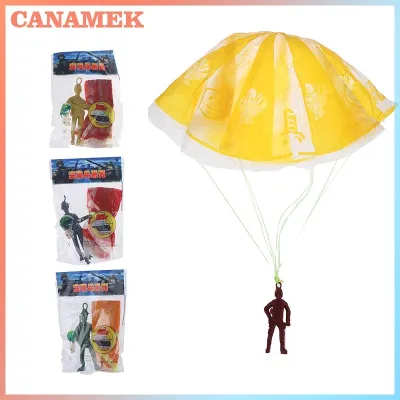
Prices are valid at publication and may change. Please refer to the product page for the latest price.
For medium-sized gatherings, such as weekend picnics with extended family or birthday parties with eight to ten participants, a 10-to-12-foot parachute offers the ideal balance. This size provides enough space for players to stand comfortably apart while still being light enough for children to lift without adult assistance. For grand family reunions, barangay sports festivals, or school events involving twelve or more active players, look for canopies spanning 15 to 20 feet in diameter.
Handle design is another critical factor that dictates how easily different age groups can enjoy the toy. Heavy-duty loop handles made of thick nylon webbing are far superior to simple fabric edge grips. Toddlers and young children often struggle to hold onto a flat fabric edge, whereas loop handles allow them to slip their hands through or get a firm, secure grip. Ensure the handles are spaced evenly around the perimeter so that tension is distributed equally when the canopy is pulled taut.
Weight and packability are essential considerations for families who love to travel. A high-quality play parachute should fold down into a compact, lightweight carrying bag that fits easily into a standard backpack or beach tote. When traveling to local destinations like Rizal Park, Quezon Memorial Circle, or the beaches of Batangas, a lightweight toy ensures you do not add unnecessary bulk to your family gear. Look for models that weigh under one kilogram including their storage bag for maximum portability.
Evaluating Material Durability for Tropical Outdoor Use
The tropical climate of the Philippines presents unique challenges for outdoor toys, including intense sunlight, high humidity, and sudden rain showers. To ensure your parachute toy survives these conditions, pay close attention to the fabric type. Ripstop nylon and high-density polyester are the industry standards for durability. Ripstop nylon features a specialized reinforcing technique where thick threads are interwoven at regular intervals in a crosshatch pattern, preventing small punctures or snags from turning into large, ruinous tears.

Polyester is highly valued for its natural resistance to ultraviolet radiation. Prolonged exposure to the harsh midday sun can quickly degrade cheap, untreated plastics and thin fabrics, causing them to become brittle and rip. A UV-resistant polyester parachute will retain its tensile strength and vibrant colors even after dozens of afternoons spent playing in open fields or on sunny beaches. Additionally, polyester resists stretching, ensuring the canopy maintains its circular shape over time.
Seam reinforcement is the ultimate indicator of a parachute’s lifespan. During active cooperative games, players pull, jerk, and wave the fabric simultaneously, placing immense stress on the seams. Inspect the stitching quality before purchasing; look for double-needle lockstitching along the radial panels and triple-stitching at the handle attachment points. A high-quality canopy will feature a thick perimeter band made of reinforced webbing that runs along the entire outer edge, absorbing the pulling force and protecting the lighter fabric panels from tearing.
Outdoor play inevitably leads to contact with damp grass, mud, volcanic ash, or salty beach sand. Choosing a fabric with a water-resistant or polyurethane coating makes cleanup significantly easier. These coatings prevent moisture and dirt from soaking deep into the fibers, allowing you to wipe away spills, mud, or wet sand with a damp cloth. Furthermore, colorfast fabrics are essential to prevent the bright red, blue, yellow, and green panels from bleeding into one another when the toy gets wet.
Matching Parachute Designs to Family Play Activities
The visual design of a play parachute directly influences the types of games you can play. While solid-color canopies exist, multi-panel designs featuring alternating primary colors are highly recommended for family activities. These bright, contrasting segments serve as excellent visual cues for structured games. For example, in a game of “Color Swap,” a leader calls out a color, and everyone holding that specific panel must run underneath the canopy to swap places before the fabric descends, promoting rapid cognitive processing and physical agility.
Another critical design feature is the center configuration of the canopy. Parachutes generally come with either a solid center, an open cutout, or a mesh center hole. A mesh center is highly versatile for family play. It allows air to escape gradually as the canopy is lifted, which reduces wind resistance and makes the toy much easier for young children to control. The mesh also acts as a safety net during “popcorn” games, where players bounce lightweight plastic balls or balloons on top of the fabric without them falling through the center hole.
If you prefer games that involve dropping objects through the middle as a target challenge, an open center cutout is more appropriate. However, for general family use, the mesh center provides the most stable and predictable airflow, preventing the parachute from collapsing awkwardly or sailing away in a sudden gust of wind. Some advanced models even feature a drawstring at the center, allowing you to adjust the size of the opening depending on the game you are playing.
Many parachute toys are sold as sets that include accessories like colorful play balls, beanbags, or activity guides. While you can always use standard lightweight balls, having a dedicated set of matching hollow plastic balls adds immediate value to your play sessions. These accessories allow you to introduce cooperative challenges, such as working together to roll a ball around the perimeter of the parachute without letting it fall off the edge, which builds communication skills and hand-eye coordination across all age groups.
Safety Checks and Setup Guidelines for Open Spaces
Prioritizing safety ensures that your outdoor family games remain fun and accident-free. Before unfolding the parachute, perform a quick pre-play inspection. Lay the fabric flat on the ground and check the handle attachments for any loose threads or fraying. A handle that snaps unexpectedly during a high-energy wave can cause a child to lose their balance and fall backward onto the ground. If you notice any significant tears in the fabric or loose stitching on the handles, repair them before allowing children to play.
Choosing the right location is equally important for preventing injuries. Look for a flat, open grassy area or a clear sandy beach free of debris. Scan the ground thoroughly for tripping hazards such as exposed tree roots, sharp rocks, broken glass, or hidden holes. In tropical environments, keep an eye out for active ant nests or muddy patches that could cause players to slip. Ensure there are no low-hanging tree branches, clotheslines, or overhead power lines that the canopy could catch on when fully lofted.
Establish clear, simple rules with all players before the game begins. Instruct children never to wrap the handles or the fabric around their wrists, arms, or necks, as sudden pulls from other players could cause injury. Emphasize that the parachute is a tool for cooperative play, not a tug-of-war rope; violent jerking or pulling in opposite directions should be discouraged. Finally, ensure at least one adult is positioned to supervise the play, coordinate the movements, and call out instructions to keep the activity organized and safe.
Frequently Asked Questions (FAQ)
How do I clean and store a parachute toy after beach or park use?
To clean your parachute toy, shake it vigorously after use to remove loose sand, dry dirt, and grass. Spot-clean any stained areas using a soft cloth, lukewarm water, and a mild soap; avoid harsh chemical detergents or bleach, which can damage the water-resistant coating and fade the fabric. Because of the high humidity in the Philippines, it is absolutely vital to air-dry the parachute completely in a shaded, well-ventilated area before packing it away. Storing a damp nylon or polyester parachute in its carry bag will quickly lead to mold, mildew, and unpleasant odors. Once dry, fold the fabric loosely rather than rolling it tightly to prevent permanent creasing along the seams.
Can parachute toys be used indoors if the weather is too hot or rainy?
Yes, parachute toys can easily transition indoors during rainy days or peak midday heat, provided you adjust the scale of play. You will need a clear indoor space, such as a spacious living room or garage, with a ceiling high enough to clear light fixtures and ceiling fans—always turn off ceiling fans before playing. For indoor spaces, smaller parachutes measuring 6 to 8 feet in diameter are highly recommended. Instead of high-energy lifting games, focus on low-impact activities where players sit on the floor to gently wave the fabric, roll lightweight foam balls across the surface, or take turns crawling under the canopy while others hold it low.
Community discussion
Share your experience or ask a question. Comments are reviewed before publication.