
Finding the right 4-wheel bike for your child in the Philippines requires balancing developmental readiness, safety features, and the specific environments where they will ride. Whether navigating a paved subdivision driveway, a local barangay basketball court, or a spacious park, the ideal choice keeps your child secure while encouraging active play. Parents often face a wide array of options online and in local toy stores, ranging from pedal-powered go-karts to standard bicycles with training wheels and battery-operated ride-ons. Selecting the right model involves understanding how these designs differ and how they perform under local conditions.
By focusing on structural durability, proper sizing, and reliable safety mechanisms, you can find a ride-on toy that matches your child’s physical abilities and stands up to the tropical climate. This guide breaks down the essential factors to evaluate, helping you make an informed decision that ensures hours of safe, active fun.
Understanding the Different Types of 4-Wheel Bikes
To choose the right 4-wheel bike, you must first distinguish between the three primary categories available on the market. Each type serves a distinct developmental purpose, requires different levels of physical exertion, and is suited for specific riding environments.
Products mentioned in this guide
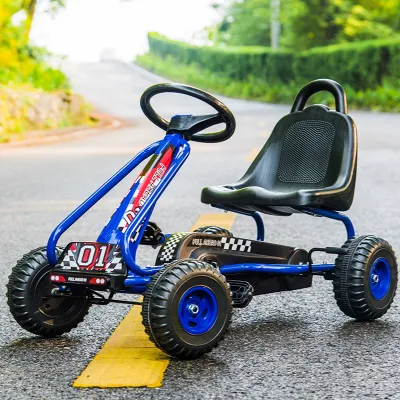
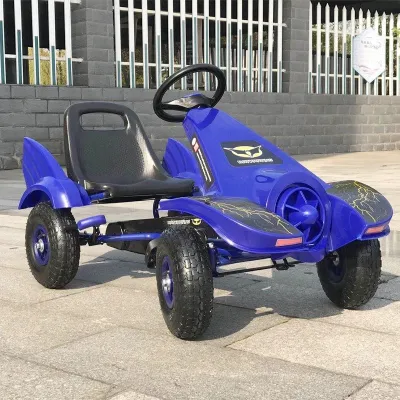
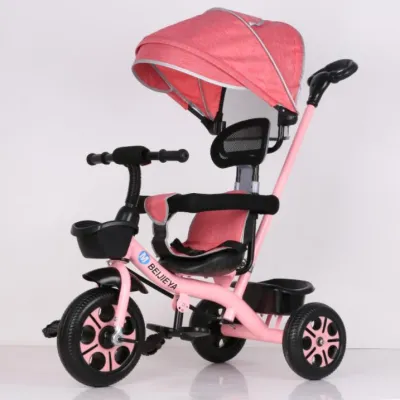
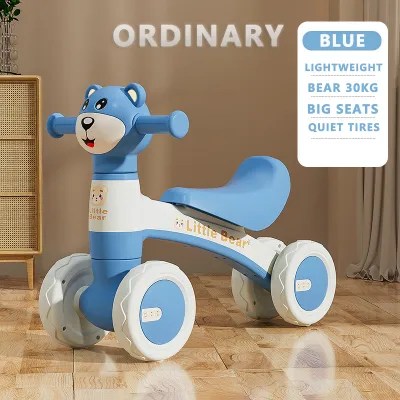
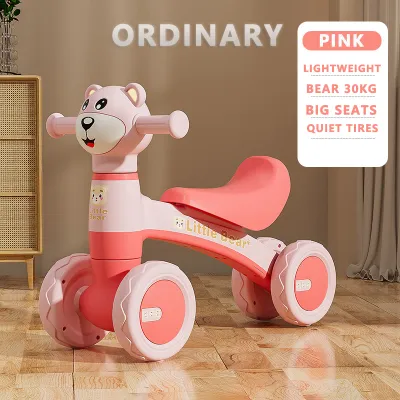
Prices are valid at publication and may change. Please refer to the product page for the latest price.
Pedal-powered quadricycles, often designed as low-slung go-karts, feature four wheels spaced widely apart with a steering wheel or dual-lever steering system. These vehicles offer exceptional stability because of their low center of gravity, making them virtually tip-proof on flat surfaces. They require significant physical exertion, helping children build leg strength, cardiovascular endurance, and bilateral coordination as they learn to pedal and steer simultaneously. Quadricycles are ideal for flat, paved driveways, subdivision roads, and spacious park pathways.
Standard bicycles equipped with training wheels are the traditional choice for parents preparing their children for two-wheel riding. This setup consists of a standard upright bicycle with two small stabilizer wheels attached to the rear axle. While they have four wheels on the ground, the riding dynamics are closer to a traditional bicycle, requiring the child to sit higher and manage a higher center of gravity. This type of bike provides moderate physical exertion and is excellent for teaching the pedaling motion and hand-braking coordination. They perform best on smooth asphalt, concrete pathways, and flat outdoor recreation areas.
Battery-operated 4-wheel ride-ons, such as electric mini-quads or toy cars, rely on rechargeable motors rather than leg power. These vehicles require very low physical exertion, focusing instead on developing hand-eye coordination, steering precision, and spatial awareness. They are highly engaging for younger children who may not yet have the leg strength to pedal a heavy manual bike. Because they rely on electrical components, these ride-ons are best suited for dry, flat indoor play areas, smooth tiled carports, or clean, paved driveways free of standing water.
Matching the bike type to your child’s age and environment ensures they remain safe and engaged. Younger toddlers benefit most from the simple steering of low-speed battery ride-ons or stable, lightweight quadricycles. Older children with developing balance and coordination are better suited for training-wheel bicycles that prepare them for independent cycling.
Key Safety and Durability Features to Evaluate
When shopping for a 4-wheel bike in the Philippines, durability and safety should be your top priorities. The local climate, characterized by high humidity, intense sunlight, and heavy seasonal rains, can quickly degrade low-quality materials.

Frame material is the foundation of the bike’s durability. Steel frames offer unmatched strength and weight capacity, making them highly stable and resistant to impact. However, steel is heavy and highly susceptible to rust in humid tropical environments if the protective paint chips or scratches. If you choose a steel-framed bike, ensure it has a thick, powder-coated finish and store it indoors away from rain and moisture. High-density plastic or aluminum frames are excellent alternatives; they are lightweight, naturally rust-proof, and easy to clean, though they may have lower weight limits and can degrade if left under direct sunlight for extended periods.
Wheel construction directly affects ride quality and traction on local terrains. Hard plastic wheels are common on budget-friendly models but offer poor grip, slip easily on smooth tiles or wet concrete, and produce a loud, rattling noise on rough asphalt. EVA foam tires are lightweight, puncture-proof, and provide a much smoother, quieter ride on indoor floors and flat outdoor surfaces. For the best performance on uneven barangay roads, gravel, or dirt paths, look for pneumatic (air-filled) rubber tires. Pneumatic tires absorb shocks, provide superior traction, and can be repaired with standard bicycle patch kits, though they require regular air pressure checks.
Safety mechanisms must be robust and easy for a child to operate. For pedal-powered bikes, verify the braking system. Coaster brakes (which engage when the child pedals backward) are intuitive for younger kids, while hand brakes help older children transition to standard bicycle controls. Ensure the bike features a steering limiter, which prevents the handlebars from turning too sharply and causing the vehicle to tip over during fast turns. Additionally, look for models with fully enclosed chain guards and covered moving parts. This is crucial in the Philippines, where children frequently ride in open-toed slippers or tsinelas; enclosed guards prevent loose clothing, shoelaces, and small toes from getting caught in the drivetrain.
Always check the manufacturer’s stated weight limits and look for recognized safety certification marks on the packaging. These certifications indicate that the product has undergone mechanical and chemical safety testing, ensuring the plastics are non-toxic and the structure can withstand daily play.
How to Size the Bike for Your Child's Comfort and Control
Buying a bike that is too large for your child “to grow into” is a common mistake that compromises safety. A child must be able to comfortably control, steer, and stop the vehicle to ride confidently.
To determine the correct size, do not rely solely on age recommendations, as children grow at different rates. Instead, measure your child’s height and inseam. To measure the inseam, have your child stand against a wall with their shoes on, place a book between their thighs, and measure the distance from the top of the book to the floor. Compare this measurement against the bike’s minimum and maximum seat height specifications to ensure a proper fit.
Foot reach is critical for stability and control. On a pedal-powered quadricycle, your child’s feet must easily reach the pedals throughout the entire rotation without straining their hips or stretching their legs fully straight. On a bicycle with training wheels, the child should be able to touch the ground with the balls of both feet while seated, allowing them to stabilize themselves when stopping or mounting the bike.
Consider the total weight of the bike relative to your child’s physical strength. A heavy steel bike can be difficult for a young child to pedal, steer, or push if they get stuck on an incline. As a general guideline, the bike’s weight should not exceed 30% to 40% of your child’s body weight. A lighter bike is easier to maneuver, less tiring to ride, and much safer if the child accidentally tips over and needs to push the vehicle off themselves.
Look for adjustable features that allow the bike to grow with your child. Adjustable seat posts with quick-release clamps and handlebars that can be tilted forward or raised will extend the lifespan of the bike, ensuring your child maintains an ergonomic riding position through multiple growth spurts.
Where to Shop and How to Verify Product Quality
Sourcing a high-quality 4-wheel bike requires careful selection of where you buy and diligent verification of the product’s physical condition.
Official brand stores and specialized local bike shops are the most reliable options. Buying from an established physical store allows you to inspect the build quality firsthand, test the steering and brakes, and have your child sit on the bike to verify the fit. Local bike shops also offer professional assembly services, which ensures all bolts are torqued correctly and moving parts are properly lubricated. Furthermore, physical stores typically provide clearer warranty terms and easier access to replacement parts like inner tubes, pedals, or training wheel brackets.
If you choose to shop on general online marketplaces or ecommerce platforms in the Philippines, you must exercise extra caution to avoid low-quality or counterfeit goods. Look for listings from official mall sellers or highly rated merchants with a history of positive feedback. Carefully read the product description for detailed specification sheets, including frame materials, wheel types, and exact dimensions. Pay close attention to verified buyer reviews, especially those that include photos and videos of the assembled bike. These reviews often reveal common assembly issues, missing parts, or discrepancies between the advertised product and what actually arrives.
Watch out for red flags when browsing online listings. Be skeptical of unbranded products packaged in plain brown boxes with no manufacturer contact information or safety warnings. Extremely low pricing compared to the market average for similar models often indicates thin, brittle plastics, weak welds, or low-grade hardware that will rust or break quickly.
Upon delivery, perform a thorough inspection before letting your child ride. Use this basic checklist to verify the bike’s structural integrity:
- Inspect all frame welds for visible cracks, gaps, or rough, sharp edges.
- Check that all nuts, bolts, and screws are tightly secured and do not wiggle.
- Spin the wheels to ensure they rotate smoothly without rubbing against the frame or brakes.
- Test the steering mechanism to confirm it turns smoothly from side to side without binding or sticking.
- Apply the brakes repeatedly to verify they engage quickly and stop the wheels completely.
- Inspect plastic components for any strong, chemical chemical odors, which can indicate the use of low-grade, recycled plastics.
Taking these steps protects your investment and, most importantly, ensures your child has a safe, reliable, and enjoyable riding experience.
Frequently Asked Questions (FAQ)
At what age should a child transition from a 4-wheel bike to a 2-wheel bike?
Most children are developmentally ready to transition to a two-wheel bike between the ages of 4 and 6, though this varies based on individual coordination and confidence. Key milestones indicating readiness include the ability to steer accurately, pedal continuously without losing momentum, and maintain balance on uneven ground. If your child is using a bike with training wheels, you can facilitate this transition by gradually raising the stabilizer wheels slightly off the ground. This encourages the child to practice balancing on two wheels while keeping the safety net of the training wheels nearby. Once they can ride smoothly without the stabilizers touching the ground, they are ready to try a standard two-wheel bicycle.
Are motorized 4-wheel bikes safe for young children?
Motorized 4-wheel ride-ons can be safe for young children when accompanied by strict parental supervision and appropriate safety features. When choosing an electric model, look for built-in speed limiters that allow parents to cap the maximum speed, parental remote controls that let you steer or stop the vehicle from a distance, and automatic braking systems that engage as soon as the child releases the accelerator pedal. Always adhere to the manufacturer’s age and weight restrictions, as these vehicles are designed with specific motor capacities and structural limits. Regardless of the vehicle’s speed, children should always wear protective gear, including a properly fitted helmet, elbow pads, and knee pads, to prevent injuries from accidental bumps or falls.
Community discussion
Share your experience or ask a question. Comments are reviewed before publication.