
Selecting the right adjustable wrist and ankle weights depends on your current physical conditioning, joint health, and specific training targets. For most fitness enthusiasts, starting with a highly customizable set that spans from 1 to 5 pounds (approximately 0.45 to 2.25 kilograms) per limb offers a safe and versatile entry point. Choosing an adjustable design allows you to fine-tune the resistance in small increments, ensuring you can gradually build strength without overloading your joints or compromising your natural movement patterns.
Assess Your Current Fitness Level and Joint Readiness
Before strapping on any extra resistance, you must evaluate whether your joints are prepared to handle localized, distal loading. Adding weight to the very ends of your limbs increases the rotational force, or torque, exerted on your wrists, elbows, shoulders, knees, and hips. To perform a basic self-check, execute standard bodyweight movements—such as arm circles, wrist rotations, ankle rolls, and bodyweight squats—through their full range of motion. If you experience any pinching, clicking, or discomfort during these unweighted movements, your joints are not yet ready for external loads.
Your baseline strength determines your safe starting point. Beginners, or those returning to exercise after a long hiatus, should focus entirely on mastering bodyweight form and building basic joint stability before introducing weighted accessories. Intermediate fitness levels, characterized by consistent strength training or structured cardio for at least three to six months, can safely introduce light resistance to enhance muscle activation. Advanced individuals who already possess excellent core stability and joint control can utilize heavier ranges to challenge specific muscle groups during controlled, low-impact movements.
Products mentioned in this guide
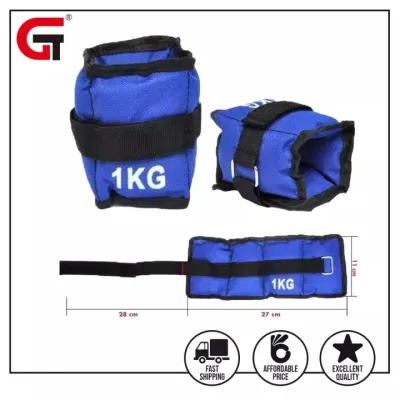
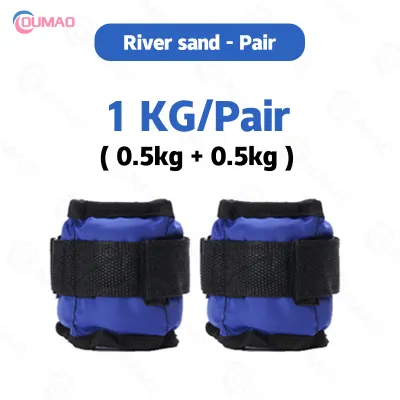
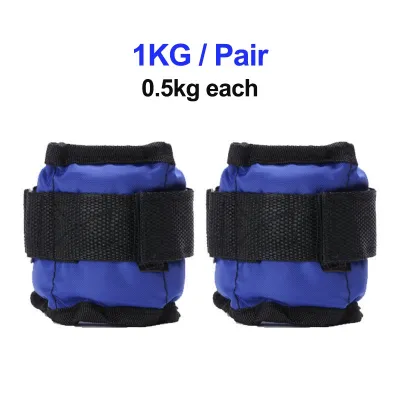
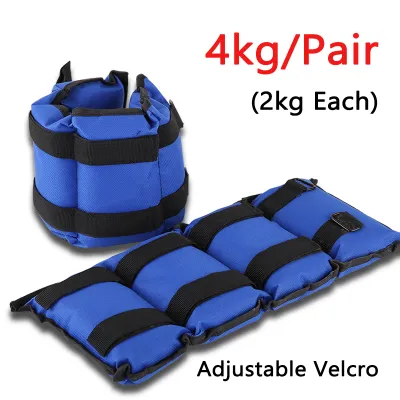
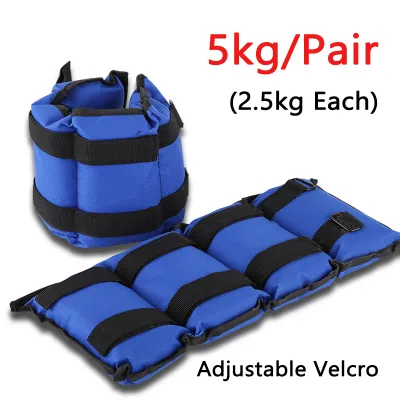
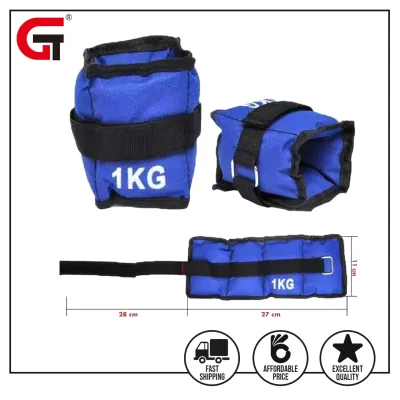
Prices are valid at publication and may change. Please refer to the product page for the latest price.
There are clear conditions where you must avoid wrist and ankle weights entirely. If you are recovering from acute joint injuries, dealing with unresolved tendonitis, or managing joint hypermobility, adding distal weight can exacerbate joint laxity and lead to severe strain. In these scenarios, prioritize low-impact mobility work or consult a physical therapist before introducing any wearable resistance.
Match Weight Ranges to Your Workout Goals
The ideal weight capacity of your adjustable set should align directly with your primary fitness activities and long-term conditioning goals. Because adjustable models allow you to add or remove individual weight packets, you can adapt a single pair to various exercises.

Light weight ranges, typically spanning 1 to 3 pounds per limb, are highly effective for cardiovascular endurance, physical therapy, and high-repetition toning exercises like barre or light aerobics. In a tropical climate like the Philippines, where high humidity can accelerate fatigue during outdoor workouts, keeping the resistance light prevents premature exhaustion while still providing a subtle, constant challenge to your stabilizing muscles.
Medium weight ranges, covering 3 to 5 pounds per limb, are ideal for intermediate strength training, mat Pilates, and targeted muscle activation. This range provides enough resistance to challenge the glutes, hamstrings, and shoulders during slow, controlled movements without causing you to break form. It is particularly useful for home workouts where space is limited and you want to increase the intensity of floor exercises without bulky equipment.
Heavy weight ranges, reaching 5 to 10 pounds or more per limb, should be reserved strictly for advanced lower-body strength training, specific rehabilitation protocols guided by a professional, or short-duration static holds like planks or leg lifts. Using weights in this range for dynamic or fast-paced movements carries a high risk of joint strain and is generally discouraged for general fitness.
Investing in an adjustable design rather than multiple fixed-weight pairs offers superior long-term value. Instead of purchasing separate sets as your strength improves, an adjustable system allows you to practice progressive overload—the gradual increase of stress placed upon the body during exercise—by simply adding small weight inserts over time. This not only saves money but also reduces storage clutter in your home workout space.
Safety Boundaries and Proper Usage Techniques
To get the most out of your wearable weights without risking injury, you must establish strict safety boundaries. The primary risk of distal weights is their tendency to alter your natural biomechanics. When wearing wrist or ankle weights, perform a form check in a mirror: ensure the added resistance does not cause your lower back to arch, your shoulders to hunch, or your walking gait to become uneven. If you find yourself limping, swinging your arms wildly, or throwing your body weight to complete a movement, the load is too heavy.
Certain activities are highly incompatible with wearable weights. You should strictly avoid high-impact exercises, such as running, jogging, or jumping rope, while wearing ankle weights. The repetitive, high-force impact of running combined with the extra torque on your ankles and knees can rapidly lead to joint stress, shin splints, or tendon micro-tears. Keep these weights limited to controlled, low-impact, or static exercises.
When progressing your workouts, follow a conservative rule: increase the duration of your workout with the current weight before adding more resistance. For example, if you can comfortably perform a leg lift routine with 2 pounds of resistance for 10 minutes, try extending the routine to 15 minutes before sliding another weight packet into the sleeve. This gives your tendons and ligaments ample time to adapt to the physical stress.
Key Features to Evaluate Before Buying
When shopping on an online marketplace or at a local sporting goods store, look closely at the construction and materials of the weights to ensure they remain secure and comfortable during sweaty sessions.
The strap and closure system is the most critical safety feature. Look for heavy-duty, wide hook-and-loop straps that thread through a solid D-ring. This design allows you to pull the strap tight enough to prevent sliding without cutting off your circulation. Neoprene padding on the interior of the band is highly recommended, as it cushions the skin against the weight inserts and prevents painful chafing during repetitive movements.
Weight compartment designs generally fall into two categories: soft pouches filled with iron sand, or solid metal inserts. Removable sand pouches conform more comfortably to the contours of your wrists and ankles, making them excellent for general fitness. Solid metal inserts, while bulkier, often allow for more precise micro-loading and are easier to clean.
Given the warm, humid conditions in the Philippines, material breathability is non-negotiable. Look for moisture-wicking fabrics and breathable mesh linings that allow sweat to evaporate. Weights made of cheap, non-breathable synthetic materials will trap heat and sweat, leading to skin irritation, unpleasant odors, and rapid degradation of the stitching.
Frequently Asked Questions (FAQ)
Can I wear ankle weights all day to burn more calories?
Wearing ankle weights during your daily chores or walks is generally not recommended. While it may slightly increase your caloric expenditure, the constant, unnatural pull on your joints over several hours can alter your natural walking gait and lead to chronic hip, knee, or lower back pain. Keep their use restricted to structured, low-impact workout sessions where you can actively focus on maintaining proper posture and form.
Are wrist weights a good replacement for dumbbells?
Wrist weights are not a direct replacement for dumbbells, as they serve different training purposes. Dumbbells require active grip strength, which engages the muscles of your hands, forearms, and upper body in a coordinated chain. Wrist weights bypass the grip entirely, making them excellent for individuals with hand injuries or arthritis, and for adding hands-free resistance during cardio or Pilates. However, for building raw muscular strength, traditional free weights remain superior because they allow you to lift significantly heavier loads safely.
Community discussion
Share your experience or ask a question. Comments are reviewed before publication.