
Finding the right judo gi uniform for adults requires balancing your height, weight, and body shape against the unique characteristics of heavy cotton fabrics. Because judo involves intense pulling, gripping, and throwing, your uniform must withstand extreme stress while allowing you to move without restriction. A gi that is too tight limits your range of motion, while an oversized uniform provides your opponent with excess fabric to grip and control. Choosing the correct size involves measuring your body accurately, adjusting for your specific build, and accounting for fabric shrinkage.
Understand Judo Gi Sizing Standards and Brand Variations
Judo uniforms utilize a traditional numerical sizing system, typically ranging from size 0000 for children up to size 7 or 8 for tall adults. For most adults, the relevant sizes fall between 3 and 6. These numbers are primarily anchored to height ranges, with each step up representing an increase of roughly five to ten centimeters. However, this system is not universally standardized. A size 4 from a Japanese manufacturer may feature a slimmer cut and shorter sleeves compared to a size 4 from a European brand, which often accommodates broader shoulders and longer limbs.
Beyond brand-specific cuts, the fabric weave plays a critical role in how a gi fits and behaves. Single-weave uniforms are constructed from a lighter, thinner fabric. They are highly breathable and dry quickly, making them a practical choice for training in warm, humid environments like those in the Philippines. However, they tend to stretch more during training and can shrink significantly during washing. Double-weave uniforms use twice as much fabric, resulting in a thick, heavy, and stiff jacket. While double-weave gis are incredibly durable and make it harder for opponents to secure a grip, they retain heat and moisture, requiring a more precise initial fit because they do not drape or stretch easily.
Products mentioned in this guide
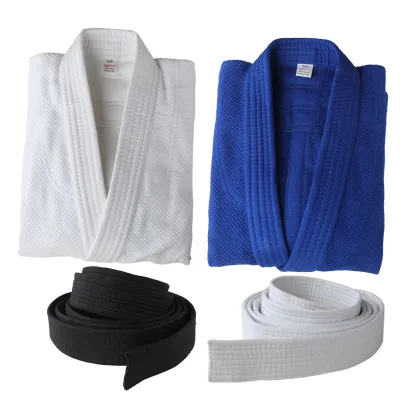
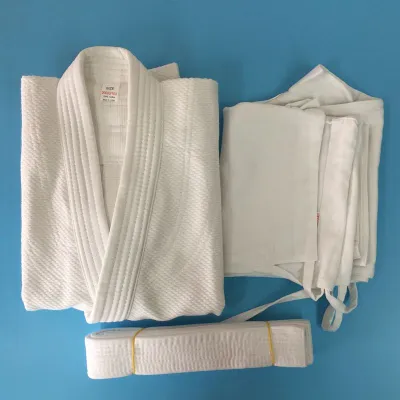
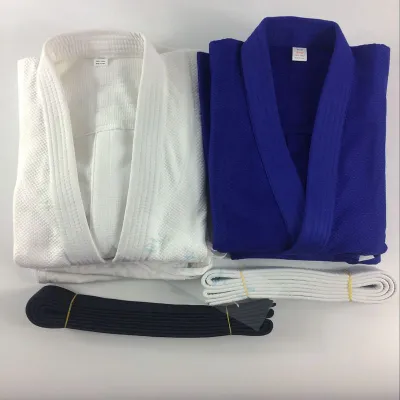
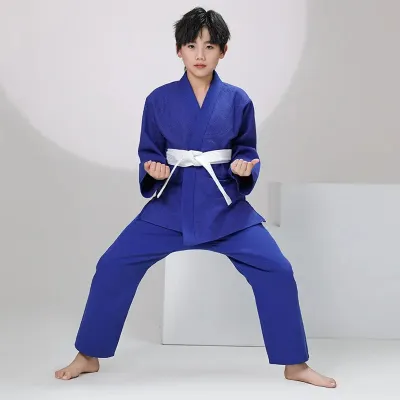
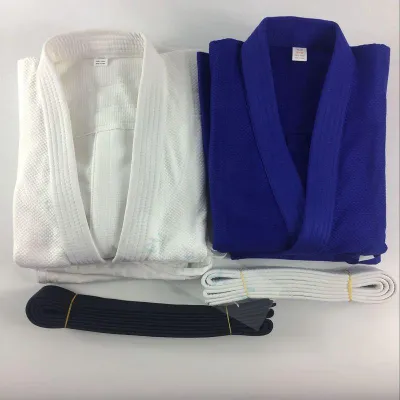
Prices are valid at publication and may change. Please refer to the product page for the latest price.
Material composition also dictates your sizing strategy. Traditional judo uniforms are made of 100% cotton, which is highly absorbent but prone to substantial shrinkage. Many modern training uniforms now incorporate poly-cotton blends. These blended fabrics are lighter, dry faster, and resist shrinking, meaning the size you buy is very close to the size that will remain after multiple washes.
How to Measure Your Body Accurately for a Judo Uniform
To avoid the hassle of returns, you must take precise body measurements before looking at any brand’s size chart. Relying on your casual clothing sizes is a common mistake that often results in an ill-fitting uniform. You will need a flexible measuring tape and a partner to help you, as attempting to measure yourself can cause you to bend or stretch, leading to inaccurate numbers. Stand naturally with your feet slightly apart, shoulders relaxed, and posture upright.

Begin by measuring your total height. Stand barefoot against a flat wall and have your partner mark the top of your head, then measure from that point down to the floor. Next, measure your chest circumference by wrapping the tape around the fullest part of your chest, keeping the tape parallel to the floor. For your waist, measure around the area where you naturally tie your pants, which is typically near your belly button. Finally, measure your inseam from the crotch down to the ankle bone.
It is highly recommended to take these measurements while wearing light clothing, such as a thin t-shirt and athletic shorts. This simulates the minimal bulk of the undergarments you will wear during practice. If you plan to wear a thick rash guard or compression gear under your gi, measuring over these items ensures you do not select a size that feels constricting once you are fully geared up on the mats.
Adjusting Your Size Choice Based on Body Build and Weight
While height is the primary starting point on any judo gi size chart, your body build and weight are equally important factors. Standard size charts are designed around average body proportions. If your build deviates from these averages, a simple height-based selection may result in a uniform that is either dangerously tight or excessively baggy.
If you have an athletic or muscular build with broad shoulders, a thick back, or a highly developed chest, you will likely need to size up. Judo requires constant overhead reaching and pulling. If the jacket is too tight across your upper back, you will feel a distinct binding sensation when attempting to grip your opponent, which limits your throwing power. Sizing up by half a size or a full size provides the necessary shoulder room, and any excess length in the sleeves can be managed through washing or tailoring.
For individuals with heavier builds, prioritizing weight and waist measurements over height is essential. A judo jacket must have sufficient fabric to overlap deeply across your torso. If the jacket cannot close properly, the lapels will pull apart during sparring, exposing your chest and violating standard safety rules. Furthermore, ensure the pants offer enough room in the thighs and seat; tight pants will restrict your ability to drop into low throws or squat effectively. Conversely, if you have a very slender or tall build, standard sizes may leave you with excess fabric around your torso. In this case, look for brands that offer specialized slim cuts, often designated with an “S” or “Y” next to the size number, which provide the necessary length without the extra bulk.
Step-by-Step Guide to Reading and Applying a Brand's Size Chart
Once you have your measurements, you can systematically apply this data to a brand’s official size chart. Start by locating the chart on the manufacturer’s official website or product packaging. Avoid using generic sizing charts found on third-party retail sites, as these may not reflect recent design updates or specific cut changes made by the brand.
When analyzing the chart, plot your height first to establish your baseline size. Next, look at the weight column. If your height and weight point to the same size, that is your ideal starting point. However, if your height points to a size 4 but your weight points to a size 5, you should almost always prioritize the larger size. It is far easier to manage a uniform that is slightly too long than one that is too narrow. A long uniform can be hemmed or shrunk down, but a narrow uniform cannot be expanded to fit a wider frame.
If your measurements place you exactly between two sizes, make your decision based on the fabric type and your preferred fit. For a 100% cotton gi that is not pre-shrunk, choose the larger size to allow for the inevitable shrinkage that will occur during the first few wash cycles. If the gi is made of a pre-shrunk poly-cotton blend, you can safely choose the smaller of the two sizes for a more tailored, streamlined fit, provided your measurements do not exceed the upper limits of that size.
Verifying the Fit: What to Check When Your Judo Gi Arrives
When your new judo gi uniform for adults arrives, resist the temptation to immediately wash it or cut off the tags. You must perform a thorough fit check while the garment is still in its original, returnable condition. Put on the entire uniform, tie the pants securely, and cross the jacket lapels as you would for training.
First, check the sleeve length. Extend both arms straight out in front of you parallel to the floor. The cuffs of the sleeves should end near your wrist bones. According to international judo regulations, the sleeves must cover the wrist joint to prevent fingers from getting caught in the fabric during gripping sequences. If the sleeves already sit several centimeters above your wrist bones before washing, the gi is too small and will become illegal for competition and impractical for training once washed. Next, check the pants; they should end just above the ankle bone. Pants that drag on the floor are a tripping hazard, while pants that sit mid-calf do not offer adequate protection for your shins and knees during groundwork.
Second, evaluate the jacket overlap and skirt length. The left lapel must cross over the right lapel, and the overlap at the belt line should be deep enough to prevent the jacket from popping open with every movement. The skirt of the jacket must fully cover your hips and extend down to the mid-thigh. Finally, perform a mobility test. Drop into a deep squat, raise your arms fully above your head, and twist your torso from side to side. If you feel any pinching in the crotch, binding in the shoulders, or if the jacket pulls completely out of your belt during these basic movements, the fit is incorrect. If the uniform fails any of these checks, keep the tags attached and contact the manufacturer or seller to arrange an exchange.
Frequently Asked Questions (FAQ)
Should I buy a larger judo gi to account for shrinkage?
Whether you should size up depends on the fabric composition and how you plan to care for the uniform. Unshrunk 100% cotton judo gis can shrink by up to 5% to 10% over their lifespan, particularly during the first few washes. If you are purchasing an unshrunk cotton gi and your measurements are near the upper limit of a size, buying one size larger is highly recommended. However, if the uniform is labeled as pre-shrunk or is made from a polyester-cotton blend, the shrinkage will be minimal. In tropical climates where cold-water washing is standard, shrinkage is reduced, but drying the gi under direct, intense sunlight can still cause the cotton fibers to contract. Always check the manufacturer’s specific care label for shrinkage estimates before making your final decision.
Can I alter a judo gi if the sleeves or pants are too long?
Yes, you can alter a judo gi, but the process is more challenging than altering standard clothing. The fabric of a judo uniform, especially a double-weave jacket or heavy canvas pants, is exceptionally thick and dense. Standard household sewing machines are generally not powerful enough to pierce these multiple layers of heavy cotton and will likely break needles or jam. To shorten the sleeves or pants, you should take the uniform to a professional tailor who possesses industrial sewing equipment. Expect to budget a few hundred ₱ for this service. Instruct the tailor to use heavy-duty polyester thread and to replicate the original multi-row stitching at the cuffs to ensure the alterations do not compromise the structural strength of the uniform during intense training sessions.
Community discussion
Share your experience or ask a question. Comments are reviewed before publication.