
The ideal air pump for inflating basketballs and footballs in the Philippines must withstand high humidity, frequent outdoor use on concrete barangay courts, and the rapid pressure changes caused by tropical heat. Rather than looking for a single universal model, finding the right tool requires matching the pump’s pressure accuracy, needle compatibility, and physical mechanism to your specific playing environment and maintenance routine. A reliable pump ensures your sports balls maintain their bounce and structural integrity without damaging their delicate internal valves.
Key Specifications to Evaluate in a Ball Pump
When selecting an air pump specifically for sports balls, the pressure gauge is the most critical feature to evaluate. Basketballs typically require an inflation pressure of 7 to 9 PSI (pounds per square inch), while footballs (soccer balls) generally need between 8.5 and 15 PSI. Because these pressure ranges are relatively low, a standard bicycle pump gauge—which often scales up to 160 PSI—will not provide the resolution needed to read small increments accurately. Look for a pump equipped with a dedicated low-pressure gauge, preferably one that maxes out at 20 or 30 PSI, to ensure you can read single-digit changes clearly and prevent over-inflation. Over-inflating a ball, especially in hot tropical climates where air expands rapidly inside the bladder, can warp the ball’s shape or cause the seams to split.
The quality of the inflation needle and its threading standard is another vital consideration. Standard sports ball valves require a hollow metal needle, usually constructed from stainless steel or brass. Ensure the pump uses standard threading, typically 5/16-inch or 8mm threads, which allows you to easily source replacement needles from local sports shops or online marketplaces. Avoid cheap plastic needles, as they lack the structural integrity to withstand repeated insertions and are highly prone to snapping off inside the ball’s rubber valve, which can permanently ruin the bladder.
Products mentioned in this guide
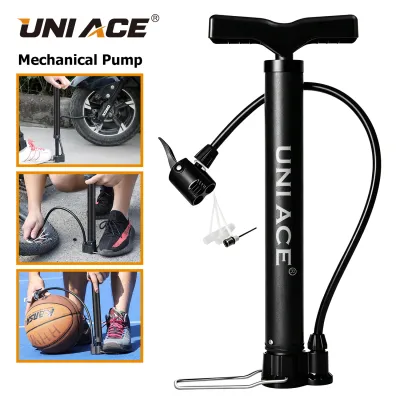
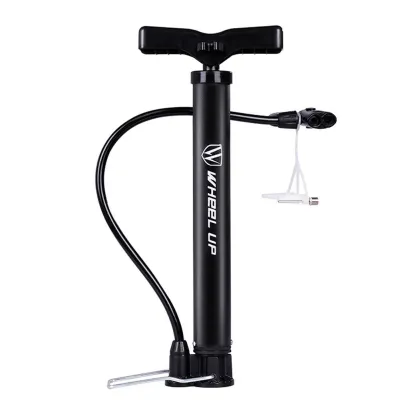
Prices are valid at publication and may change. Please refer to the product page for the latest price.
A flexible hose connection between the pump body and the needle is highly superior to a rigid, direct-connect design. When you pump a rigid hand pump, your physical motion naturally shakes and tilts the pump body. If the needle is locked directly into the pump, this movement transfers lateral force to the needle, bending the metal and tearing the ball’s internal rubber valve. A flexible rubber or braided nylon hose absorbs this movement, keeping the needle perfectly still inside the valve. The hose fittings must feature high-quality rubber O-rings or threaded brass connectors to maintain a hermetic seal and prevent air leakage under pressure.
Choosing the Right Pump Mechanism for Your Routine
Hand pumps are the most popular and accessible option for individual players and local teams. Their primary advantage is extreme portability; they easily slide into a backpack or sports bag, making them perfect for quick adjustments right on the court. When evaluating hand pumps, look for dual-action models. These pumps utilize a piston system that compresses and forces air into the ball on both the push and the pull strokes, effectively doubling your inflation speed and reducing physical fatigue. While hand pumps are highly convenient for maintaining one or two balls, inflating a large mesh bag of team balls with a manual hand pump can become physically exhausting.

Foot pumps offer a highly stable and efficient alternative for sideline use or home garage setups. These pumps feature a sturdy metal frame that sits flat on the ground, allowing you to use your body weight and leg muscles to compress the air chamber. Because your legs are significantly stronger than your arms, foot pumps make inflating multiple balls quick and effortless. They also typically feature larger, more readable pressure gauges mounted directly on the base. The trade-off is portability; foot pumps are bulkier, heavier, and less convenient to carry to a casual pickup game at a local park.
Electric or battery-operated pumps represent the modern standard for coaches, tournament organizers, and sports facilities. These compact, motorized devices run on rechargeable lithium-ion batteries and do the physical work for you. Most digital electric pumps allow you to preset your desired PSI; the pump runs automatically and shuts off the moment the target pressure is reached, completely eliminating the risk of over-inflation. When choosing an electric pump for use in tropical environments, verify that the unit has built-in heat dissipation vents. Small electric motors generate significant heat during operation, and high ambient temperatures can cause them to overheat if used continuously to inflate multiple balls. Additionally, consider the noise level and ensure the battery charges via a standard USB-C port for easy recharging on the go.
Proper Inflation Standards and Needle Maintenance
Maintaining the correct air pressure is essential for the performance and longevity of your sports equipment. Every high-quality basketball and football has its recommended inflation pressure range printed directly on the outer casing, usually located immediately adjacent to the inflation valve. Always locate and read this specification before you begin pumping. Operating within the manufacturer’s specified range ensures the ball bounces predictably, flies true, and maintains its structural roundness over hundreds of games.
The most critical step in the inflation process is moistening the needle before inserting it into the ball. Inserting a dry metal needle into a dry rubber valve causes intense friction, which can easily tear or dislodge the delicate rubber flaps of the internal valve core. This damage leads to slow, irreversible air leaks that will ruin the ball. To prevent this, always apply a drop of glycerin, specialized valve oil, or clean water to the needle before gently sliding it into the valve. Never use saliva, as the natural enzymes and bacteria can degrade the rubber valve material over time.
Always insert the needle at a perfect 90-degree angle relative to the ball’s surface. Tilting the needle during insertion or extraction puts immense lateral stress on the valve housing, which can push the valve entirely inside the ball’s bladder. Once inflation is complete, pull the needle straight out in one smooth, quick motion. When storing your pump, always unscrew the needle and place it in a dedicated protective cap or the pump’s built-in storage compartment. Leaving a needle attached to a pump loose in a sports bag is the most common cause of bent, weakened, or broken needles.
Purchasing Channels and Quality Verification
Acquiring a reliable air pump requires careful selection and immediate quality verification upon delivery. Purchasing from physical sports stores allows you to inspect the build quality firsthand, test the flexibility of the hose, and ensure the pressure gauge needle rests precisely at the zero mark. If you choose to buy from online marketplaces, prioritize sellers with high ratings and clear return policies. Online shopping offers a wider variety of specialized low-pressure pumps, but you must rely on user reviews to verify real-world durability and gauge accuracy.
As soon as you receive your new air pump, perform a thorough three-step quality inspection. First, roll the inflation needle across a flat table to verify that it is perfectly straight and free of manufacturing defects. Second, inspect the pressure gauge to ensure the needle is calibrated correctly and sits exactly at zero when no pressure is applied. Third, assemble the pump, insert the needle into a ball, and perform a test inflation. While pumping, brush a small amount of soapy water over the hose connections and the valve entry point; any escaping air will create visible bubbles, indicating a faulty seal or a loose fitting that requires adjustment or return.
Finally, verify the included accessories in your pump package. A high-quality pump kit should include several spare metal needles, as these small components are easily misplaced during outdoor games. It is also highly beneficial to look for packages that include plastic cone adapters and flexible hose extensions. These accessories expand the utility of your pump, allowing you to inflate other common household items like pool floats, air mattresses, or bicycle tires, making your investment far more versatile.
Frequently Asked Questions (FAQ)
Can I use a standard bicycle pump for sports balls?
Yes, you can use a standard bicycle pump to inflate sports balls, provided you have a compatible ball needle adapter. Most bicycle pumps are designed for Schrader or Presta valves, so you will need to screw a standard threaded metal ball needle into the pump’s nozzle or secure it using the pump’s thumb-lock lever. However, you must exercise extreme caution when using a high-volume bicycle floor pump. These pumps are designed to push large volumes of air at high pressures, and they can easily over-inflate and damage a basketball or football in just one or two quick strokes. Always monitor the ball’s firmness carefully during the process.
What should I do if the air leaks out immediately after removing the needle?
If air escapes from the valve immediately after you remove the needle, the ball’s internal rubber valve is likely dirty, dry, or temporarily stuck open. First, try inserting a well-moistened needle into the valve and moving it gently up and down a few times; this can often help the rubber flaps realign and seal properly. If dirt or dust from outdoor courts has lodged in the valve, applying a drop of specialized valve oil or glycerin directly into the valve opening can help clear the debris and restore the seal. If the valve continues to hiss and leak air despite these efforts, the internal bladder valve is permanently damaged, and the ball will need to be replaced or repaired using a professional valve replacement kit.
Community discussion
Share your experience or ask a question. Comments are reviewed before publication.