
Finding the right air source for your Pre-Charged Pneumatic (PCP) airgun in the Philippines requires balancing portability, physical effort, and the unique challenges of a tropical climate. Because PCP airguns operate at exceptionally high pressures, standard air compressors are entirely inadequate. Shooters must choose between manual hand pumps, specialized high-pressure electric compressors, or pre-filled high-pressure air (HPA) tanks. Each option presents distinct trade-offs in terms of physical labor, initial cost in ₱, and maintenance requirements.
Selecting the ideal filling system depends heavily on your shooting frequency, physical fitness, and where you plan to use your airgun. A setup that works perfectly for a backyard target shooter near a dive shop may be highly impractical for a hunter trekking through remote provincial terrain. By understanding the mechanical limits and environmental requirements of each pump type, you can protect your airgun investment and ensure a safe, reliable shooting experience.
Understanding the Main Types of PCP Air Pumps
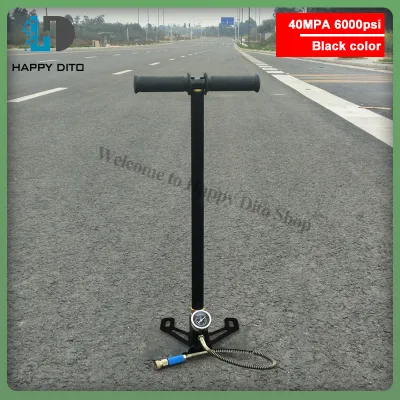
Manual hand pumps are the most accessible entry point for PCP shooters. These are not ordinary bicycle pumps; they utilize a multi-stage compression design—typically three or four stages—to compress air up to 4,500 PSI. A three-stage pump compresses air progressively through three concentric chambers, while a four-stage pump adds an extra chamber to reduce the physical force required on the downward stroke at higher pressures. While highly portable and independent of electrical power, manual pumping requires significant physical effort, especially as the pressure in the airgun reservoir rises past 2,000 PSI. Most quality hand pumps feature a small, built-in moisture trap in the base or handle, but their capacity to filter out high tropical humidity is limited during long pumping sessions.
Products mentioned in this guide
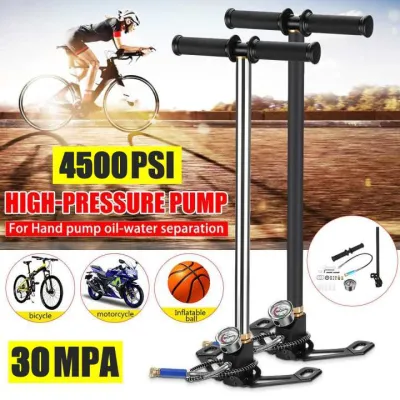
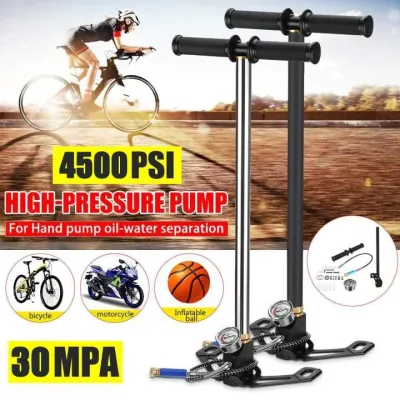
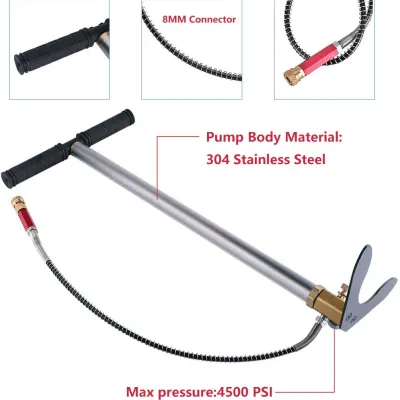
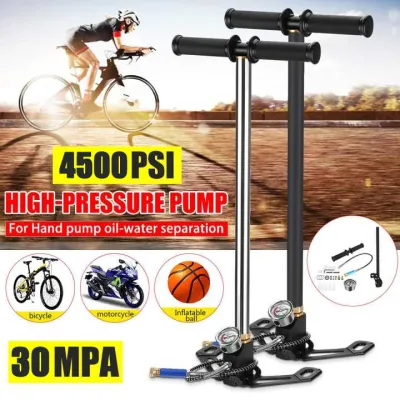
Prices are valid at publication and may change. Please refer to the product page for the latest price.
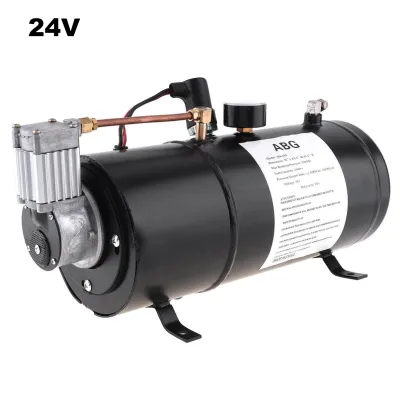
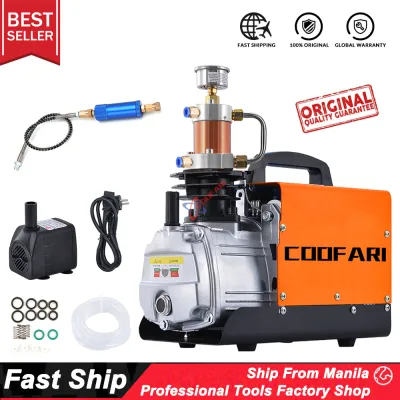
Electric compressors offer an effortless alternative by automating the high-pressure compression process. These units are generally divided into portable 12V DC models, which can run off a car battery in the field, and stationary 220V AC models designed for home or workshop use. Cooling mechanisms are critical for these machines; air-cooled compressors rely on built-in fans and are best suited for quick fills of small airgun reservoirs, whereas water-cooled compressors use an external water bucket and a submersible pump to manage heat during longer filling cycles. Every electric compressor has a strict duty cycle—the maximum continuous run time before it must be turned off to cool down—which must be carefully monitored to prevent motor and seal failure.
High-pressure air (HPA) tanks, often referred to as scuba or carbon fiber cylinders, provide the fastest and most convenient filling method. Instead of pumping active air, you fill a large capacity tank to 3,000 or 4,500 PSI at a local dive shop or paintball center, then use a yoke or charging kit to transfer the compressed air to your airgun in seconds. Cascading systems link multiple tanks together, allowing you to maximize the number of full fills by drawing air from the lowest-pressure tank first before topping off from the highest-pressure tank. While HPA tanks offer unmatched speed and dry air, they require a higher initial setup cost in ₱ for the tank and regulator, and they must undergo mandatory hydrostatic testing every three to five years to verify their structural safety.
Key Selection Criteria for Shooters in the Philippines
Pressure compatibility is the first technical specification you must verify. Every PCP airgun has a manufacturer-specified maximum fill pressure, commonly ranging from 2,000 PSI (approximately 138 bar) to 4,500 PSI (approximately 310 bar). Your chosen pump or compressor must be rated to safely reach and sustain this maximum pressure. Attempting to use a pump with a maximum rating lower than your airgun’s capacity will leave you with underfilled reservoirs and degraded shooting performance, while using an unregulated source that exceeds your airgun’s limit can cause catastrophic valve or reservoir failure.

Moisture control is an absolute priority for shooters in the Philippines due to the country’s high relative humidity. When ambient air is compressed to 3,000 PSI or higher, the moisture suspended in the air condenses into liquid water. If this water enters your airgun’s reservoir, it will cause rapid internal corrosion, ruin delicate rubber O-rings, and damage the firing valve. To prevent this, look for pumps and compressors equipped with robust, multi-stage filtration systems, including integrated oil-water separators and inline desiccant filters filled with color-changing silica gel or molecular sieve beads that actively absorb water vapor.
Power compatibility and environmental stability are crucial when choosing an electric compressor. The standard electrical grid in the Philippines operates at 220V AC and 60Hz. Many imported compressors are manufactured for 220V AC at 50Hz (common in Europe and parts of Asia) or 110V AC at 60Hz. Running a 50Hz motor on a 60Hz system causes the motor to spin faster and run hotter, which can lead to premature failure. Always verify the frequency rating on the product label and consider using a high-quality voltage regulator or surge protector to shield the compressor’s sensitive electronics from local power fluctuations and brownouts.
Portability and weight must be balanced against your physical carrying capacity and shooting venue. A manual hand pump weighs only a few kilograms and easily fits into a gun case, making it the ultimate choice for remote field trips where electricity is unavailable. Portable 12V compressors weigh between 5 to 10 kilograms and can be transported in a vehicle trunk, though they require proximity to a car battery. Heavy-duty, water-cooled stationary compressors can weigh over 30 kilograms, making them strictly stationary workshop equipment that requires a dedicated setup space.
Matching Pump Types to Your Shooting Scenarios
For field hunting and remote plinking in provincial areas, mobility and self-sufficiency are paramount. If you frequently travel far from power lines or dive shops, a high-quality manual hand pump is an indispensable tool or backup. It ensures you will never be stranded with an empty airgun, regardless of electrical access. Alternatively, if you travel by vehicle, a portable 12V electric compressor offers a highly convenient compromise, allowing you to fill your airgun directly from your vehicle’s battery without physical exhaustion, provided you keep the vehicle engine running to prevent battery drain.
High-volume target shooters and competitive marksmen who practice frequently at dedicated ranges require a more robust air supply. Pumping a large-capacity buddy bottle or filling multiple airguns manually between rounds is physically exhausting and detracts from shooting precision. For these scenarios, a stationary 220V electric compressor with an active water-cooling system is highly efficient, allowing you to fill multiple airguns quickly. Alternatively, a large carbon fiber HPA tank filled at a commercial facility provides silent, instantaneous fills at the range, allowing you to focus entirely on your shooting form.
Beginners on a budget must carefully weigh the lower upfront cost of manual hand pumps against the long-term physical commitment. While a hand pump is the most affordable way to start shooting PCP airguns, the physical effort required to fill a reservoir from empty can be discouraging. If your budget allows, investing in a entry-level portable electric compressor can greatly improve your shooting enjoyment. However, if you choose a hand pump, starting with an airgun that has a smaller reservoir and a lower operating pressure (such as 2,000 to 3,000 PSI) will make manual filling far more manageable.
Safety, Maintenance, and Operational Limits
Heat management is the single most critical factor in preserving the life of an electric PCP compressor. High-pressure compression generates extreme heat, which rapidly degrades piston seals and lubricants. Always adhere strictly to the manufacturer’s specified duty cycle, which typically limits continuous operation to 15 or 20 minutes, followed by a mandatory cool-down period of equal duration. For water-cooled models, ensure the cooling water is flowing freely and keep the water temperature below the manufacturer’s maximum limit, adding ice to the bucket if necessary during hot tropical days.
Filtration upkeep must be performed regularly to protect both your pump and your airgun. Desiccant filters do not last indefinitely; in humid environments, the active filtration media will saturate quickly. Inspect your inline filter beads before every filling session. Color-changing silica gel will turn from blue or orange to pink or clear when saturated, indicating it is time to replace or bake the beads to restore their moisture-absorbing properties. Additionally, regularly drain the oil-water separator on your compressor using the bleed screw to expel accumulated liquid.
Pressure safety requires absolute vigilance to prevent severe accidents. Never exceed the maximum pressure rating of your airgun’s reservoir, your pump, or your fill hoses. Always inspect the high-pressure hose for kinks, cracks, or exposed braiding before pressurizing the system. When filling, monitor the pressure gauge on both the pump and the airgun simultaneously to ensure they match. Once the fill is complete, you must always open the bleed valve on the pump or compressor to release the pressurized air inside the hose before attempting to disconnect the quick-disconnect fitting from the airgun.
Knowing when to stop operation is vital for preventing equipment damage and personal injury. Halt the pump or compressor immediately if you observe any unusual knocking noises, excessive vibration, smoke, a burning smell, or a sudden spike in temperature. For water-cooled systems, stop immediately if you detect any water leaks near the electrical components or high-pressure lines. If any of these stopping conditions occur, depressurize the system safely, disconnect the power source, and consult the manufacturer’s manual or a qualified technician before attempting to use the equipment again.
Frequently Asked Questions (FAQ)
Can I use a standard tire inflator to fill a PCP airgun?
No, you cannot use a standard automotive tire inflator or workshop air compressor to fill a PCP airgun. Standard tire inflators are designed for high volume but very low pressure, typically topping out between 35 and 150 PSI. PCP airguns require extremely high pressures, usually between 3,000 and 4,500 PSI, which is roughly one hundred times greater than the pressure in a car tire. Attempting to modify or connect a low-pressure tire inflator to a PCP airgun is physically impossible, highly dangerous, and can result in catastrophic equipment failure or severe physical injury if the high-pressure air from the airgun backflows into the low-pressure pump.
How do I prevent moisture from ruining my PCP airgun's valve?
To prevent moisture from damaging your airgun’s internal components, you must use a multi-stage filtration system. Always ensure your pump or compressor has an active oil-water separator and a high-quality inline desiccant filter installed between the pump outlet and the airgun fill probe. When you finish filling, always open the bleed valve slowly; this sudden release of pressure forces condensed moisture out of the bleed block rather than allowing it to migrate into the airgun. Finally, never store your PCP airgun completely empty; keeping a minimum pressure of around 1,000 PSI inside the reservoir keeps the internal valves and seals tightly seated, preventing humid ambient air from entering the chamber.
Community discussion
Share your experience or ask a question. Comments are reviewed before publication.