
Choosing the right badminton racket apacs model requires matching your physical skill level to the racket’s weight and shaft flexibility, while aligning your playing style—whether attacking, defensive, or all-round—with the racket’s balance point. In the tropical climate of the Philippines, where high humidity and indoor court temperatures can quickly sap a player’s stamina and affect string tension, selecting a racket that works in harmony with your physical capabilities is essential for both peak performance and injury prevention. By focusing on verifiable physical specifications rather than marketing names, you can find a racket that elevates your game.
While APACS has built a global reputation for high-quality engineering at accessible price points, many players make the mistake of choosing a racket based purely on series names like Lethal, NanoFusion, or Vanguard. A racket designed for aggressive attacking may sound appealing, but if its physical specifications do not match your current technique, it can hinder your development and cause physical strain. This guide breaks down the critical specifications you must verify, matches them to your playing style, and aligns them with your skill level to ensure you make an informed decision.
Quick Match: Aligning APACS Rackets With Your Profile
When browsing the extensive catalog of APACS rackets, it is easy to get overwhelmed by the sheer variety of models. Many players assume that buying a racket from a specific series automatically guarantees a certain playing experience. For instance, while the Lethal line is generally associated with power and aggressive play, and the NanoFusion series is known for speed and control, individual models within these families can vary significantly. The final choice must always be based on matching the physical specifications of the specific racket to your actual playing profile, rather than relying on series branding alone.
Products mentioned in this guide
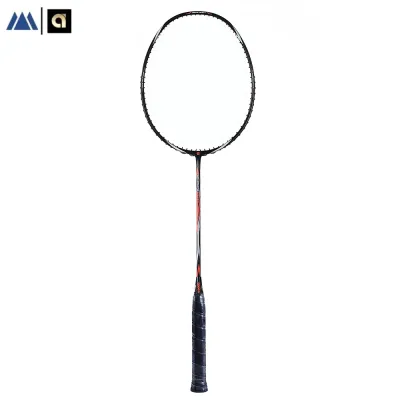
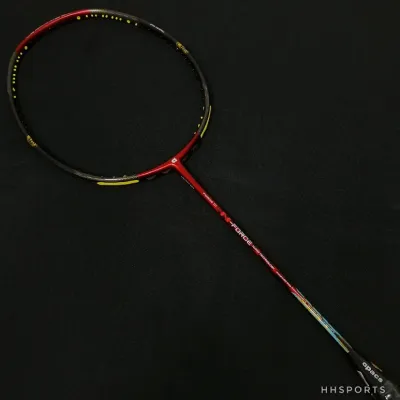
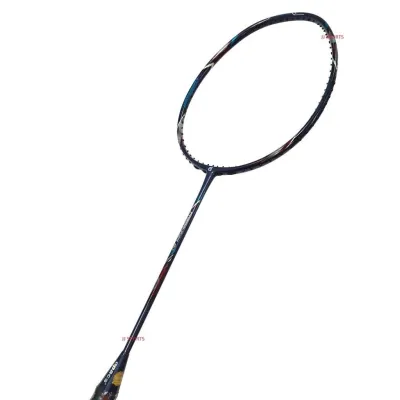
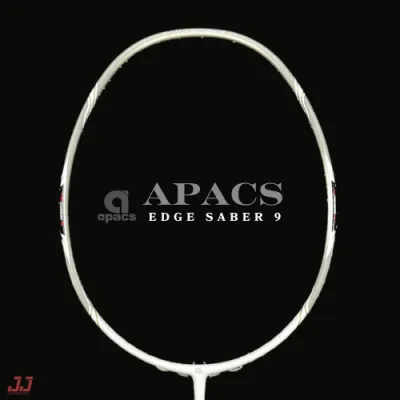
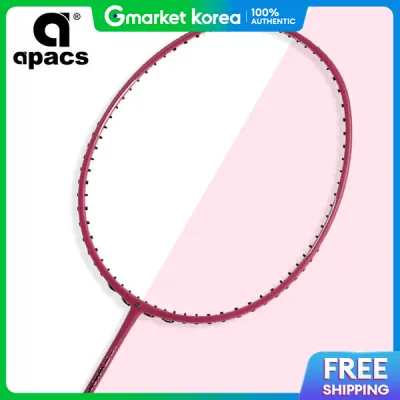

Prices are valid at publication and may change. Please refer to the product page for the latest price.
To make a successful match, you must understand the core decision matrix of badminton gear. Your playing style—how you behave on the court and the types of shots you prefer—dictates the ideal balance point of your racket. Conversely, your current skill level and physical conditioning determine the ideal shaft flexibility and overall weight. A beginner trying to use an advanced, stiff, head-heavy racket will struggle to generate power and may risk injury, whereas an advanced player using a highly flexible, head-light racket will find their shots lacking precision and depth.
Before finalizing any purchase, always make it a habit to verify the specific model specifications on the product label, the racket shaft, or the manufacturer’s official technical sheets. Subtle variations in weight, balance, and flex exist even among models that look identical. Checking these details beforehand ensures that the racket you receive matches the exact playing characteristics you need on the court.
Key Specifications to Verify on the Product Label
To choose the right racket, you must learn to read the technical specifications printed on the shaft or frame. These numbers and letters represent the physical blueprint of the racket and dictate how it will behave during a swing.

Weight (The U System)
Badminton rackets are categorized by weight using the “U” classification system. The higher the number preceding the U, the lighter the racket frame:
- 3U (85–89 grams): Heavier frames that provide excellent momentum and mass transfer. They are highly favored for singles play and powerful baseline smashes, though they demand more shoulder and wrist strength to maneuver quickly.
- 4U (80–84 grams): The highly versatile industry standard. These rackets offer a balanced blend of swing speed and power, making them suitable for both singles and doubles players across various skill levels.
- 5U (75–79 grams): Lightweight frames designed for rapid defense, quick net play, and fast-paced doubles rallies. They reduce arm fatigue during long playing sessions but require more physical effort from the player to generate deep clear shots.
- 6U and Lighter (Below 75 grams): Ultra-lightweight rackets engineered for maximum hand speed and reaction time, often used by defensive specialists or players recovering from shoulder injuries.
Balance Point
The balance point of a racket is measured in millimeters from the bottom of the handle grip to the point where the racket balances perfectly on a thin edge. This measurement determines where the weight is concentrated:
- Head-Heavy (295 mm and above): The weight is concentrated toward the top of the frame. This design acts like a hammer, utilizing centrifugal force to add momentum and power to smashes and deep clears. However, it increases swing inertia, making quick defensive reactions more physically demanding.
- Head-Light (285 mm and below): The weight is concentrated closer to the handle. This setup minimizes air resistance and swing inertia, allowing for lightning-fast racket transitions, quick defensive blocks, and precise net play. The trade-off is a reduction in natural power generation from the back of the court.
- Even-Balance (285 mm to 295 mm): The weight is distributed evenly throughout the frame and shaft. This configuration offers a neutral, versatile feel, allowing players to transition smoothly between offensive smashes and rapid defensive blocks without favoring one over the other.
Shaft Flexibility
Shaft flexibility refers to how much the racket bends during a swing. This characteristic acts as a spring mechanism that must be synchronized with your natural swing speed:
- Flexible: The shaft bends easily with minimal effort. This is highly forgiving for players with slower, less developed swing speeds, as the bending action creates a "whip" effect that helps launch the shuttlecock deep into the opponent's court.
- Medium: A balanced middle ground that offers a blend of power assistance and directional control. It is highly suitable for intermediate players who are developing more consistent swing mechanics.
- Stiff: The shaft resists bending and requires a very fast, explosive swing speed to deflect. It offers exceptional precision, immediate feedback, and rapid recovery, but provides virtually no built-in power assistance, relying entirely on the player's physical technique.
String Tension Limit
APACS rackets are highly regarded for their exceptionally strong frame construction, with many models rated to withstand maximum string tensions well beyond the industry average. The recommended maximum tension is printed directly on the frame (often ranging from 28 lbs to 38 lbs). Always check this limit before stringing your racket. Exceeding the manufacturer’s specified maximum tension can cause structural micro-fractures, void the warranty, and lead to a catastrophic frame collapse during the high-stress stringing process or during an off-center hit on the court.
Matching Racket Specs to Your Playing Style
Your playing style is defined by how you win points and where you position yourself on the court. Matching your racket’s physical specifications to these habits allows you to maximize your natural strengths while mitigating your weaknesses.
Attacking Players (Power and Smashes)
If your game relies on aggressive baseline play, heavy clears, and steep, powerful smashes to force errors, your ideal racket configuration should lean toward a head-heavy balance and a stiffer shaft. This combination ensures that maximum kinetic energy is transferred from your arm through the racket frame and directly into the shuttlecock upon impact.
Popular APACS lines such as the Lethal series are specifically engineered to cater to this aggressive style of play. However, you must verify the exact balance point of the specific model you are considering, as not all rackets within an attacking series share identical specifications. Some may be slightly lighter or have a more moderate balance point to appeal to a broader audience.
Keep in mind the high physical demands of this setup. Head-heavy rackets require excellent wrist, forearm, and shoulder strength to swing repeatedly. In the hot, humid indoor courts often found in the Philippines, playing with a heavy, demanding racket can accelerate physical fatigue, which can degrade your hitting form and increase the risk of injury during extended three-game matches.
Defensive and Speed Players (Quick Reactions)
For front-court players, doubles specialists, and defensive tacticians who rely on quick drives, precise net drops, rapid blocks, and counter-attacking placement, swing speed is the most critical factor. Your ideal setup consists of a head-light balance, a lighter overall weight class (such as 4U or 5U), and a flexible to medium shaft.
These specifications significantly reduce air resistance and swing inertia, allowing you to react instantly to fast smashes and execute rapid changes in racket direction during intense flat rallies. A lighter head allows for quick wrist-flicks at the net, giving you the control needed to tight-spin the shuttlecock over the tape.
When researching defensive rackets, look closely at the frame’s aerodynamic profile in the product description. APACS utilizes various frame geometries, such as high-speed aero frames or box frames. Aero-shaped frames feature a slimmer, tapered cross-section that cuts through the air with minimal drag, further enhancing your reaction time and swing velocity during fast-paced doubles exchanges.
All-Round Players (Versatility and Control)
If you prefer a balanced playing style, mixing baseline smashes with tactical drops, defensive clears, and steady net play, you need a racket that does not compromise on any front. Your ideal configuration is an even-balance racket paired with a medium-flex shaft, which provides a highly neutral and predictable feel across all areas of the court.
APACS series like the NanoFusion or the Z-Ziggler are highly popular starting points for all-round players. These models are designed to offer enough head weight to assist with deep clears and moderate smashes, while remaining light enough in hand to facilitate quick defensive blocks and drives during fast rallies.
However, because the term “all-round” can cover a broad spectrum, you must check the individual model specifications. Some all-round rackets may lean slightly head-heavy (e.g., 290 mm) to favor singles play, while others may lean slightly head-light (e.g., 285 mm) to favor doubles play. Verifying the exact millimeter measurement ensures the racket aligns perfectly with your personal definition of versatility.
Selecting the Right Flex and Weight for Your Skill Level
While playing style determines the balance of your racket, your technical skill level must dictate the shaft flexibility and weight. Choosing a racket that matches your current physical mechanics is critical for skill progression and physical health.
Beginners (Forgiveness and Ease of Use)
For players who are new to the sport, the primary focus should be on developing consistent hitting mechanics, learning footwork, and avoiding injury. Beginners should look for rackets with highly flexible shafts and lighter weights, specifically in the 4U or 5U categories.
A flexible shaft acts as a valuable power assistant. Because beginners have not yet developed the rapid wrist-snap and forearm rotation required to bend a stiff shaft, a flexible shaft bends easily during a standard swing. As it straightens at the point of impact, it releases stored energy, helping the player clear the shuttlecock from baseline to baseline with minimal physical strain.
We strongly advise beginners to avoid stiff, head-heavy rackets. Attempting to use a demanding racket without the proper technique often leads to “muscling” the shuttlecock, relying on raw shoulder and elbow force rather than smooth kinetic transfer. Over time, this poor mechanic combined with the heavy vibration of a stiff frame can cause chronic injuries, such as lateral epicondylitis (commonly known as tennis elbow) or rotator cuff strain.
Additionally, beginners should start with lower string tensions, ideally between 20 lbs and 24 lbs, staying well within the manufacturer’s safe operating range. Lower tensions create a highly forgiving “trampoline effect” on the string bed, which significantly enlarges the sweet spot and provides easier power generation on off-center hits.
Intermediate Players (Developing Technique)
Intermediate players are those who have mastered basic strokes, can consistently execute clears, drops, and smashes, and are beginning to focus on directional control, shot variation, and faster rally paces. If you fall into this category, you should transition to a medium-flex shaft paired with an even-balance or slightly head-heavy racket.
This intermediate setup rewards your improving technique by offering a more direct feel and better feedback upon impact. The medium shaft reduces the slight directional lag inherent in highly flexible rackets, allowing you to direct your drops and drives with greater precision while still providing a moderate amount of power assistance for deep clears.
As your swing speed and control improve, you can gradually transition to higher string tensions, typically in the 24 lbs to 27 lbs range. However, you should only increase your string tension when your physical control and swing speed actually demand it. Prematurely copying the high-tension setups of professional players will drastically shrink your racket’s sweet spot, making off-center hits feel stiff and vibration-heavy, while reducing your overall power output.
Advanced Players (Precision and Feedback)
Advanced players possess highly refined, explosive swing mechanics, consistent footwork, and the ability to generate rapid power through precise wrist-snap and forearm rotation. If you play at this level, your ideal configuration consists of a stiff to extra-stiff shaft, with the overall weight class selected based on your personal conditioning and specific discipline (singles or doubles).
A stiff shaft offers virtually no lag during a high-speed swing, providing immediate, crisp feedback and exceptional directional control. This allows advanced players to place the shuttlecock with extreme precision, execute tight net play, and angle their smashes sharply. However, because a stiff shaft does not bend easily, it provides no built-in power assistance; the player must rely entirely on their own physical strength and technique to generate force.
Advanced players often customize their rackets to suit their exact preferences. This includes adding specific overgrips to adjust the handle size, applying lead tape to fine-tune the balance point, and utilizing high-performance, thin-gauge strings at high tensions (28 lbs and above). Because of these demanding customizations, verifying the frame’s maximum tension tolerance and structural integrity is critical before purchasing an APACS model.
Sourcing Genuine Rackets and Pre-Purchase Checks
To ensure your APACS racket performs as intended and lasts for years, you must take steps to source a genuine product and perform a thorough physical inspection before taking it to the court.
Authenticity Verification
Due to the popularity of APACS rackets, counterfeit models are common in online marketplaces and unauthorized physical stores. To protect your investment, purchase rackets only from authorized sports retailers, established physical pro shops, or official brand stores on reputable e-commerce platforms.
When you receive your racket, verify its authenticity by checking for the official manufacturer holograms or scratch-off security codes on the shaft or handle. Genuine APACS rackets feature clean, crisp decals, perfectly aligned grommets, and high-quality paint finishes. Counterfeit models often display blurry text, misaligned decals, or a cheap paint smell, and they lack the structural graphite quality required to handle high string tensions safely.
Factory Strings vs. Custom Stringing
Many entry-level and mid-range APACS rackets are sold pre-strung from the factory. It is important to understand that these factory strings are typically installed at very low tensions (often below 20 lbs) using basic, budget-friendly monofilament strings. This is done primarily to protect the frame from warping during long transit periods and to display the racket in retail shops.
For an optimal playing experience, budget for professional custom stringing at a local pro shop. Selecting a high-quality multifilament string and having it strung to your specific recommended tension (e.g., 22 lbs for a beginner, 25 lbs for an intermediate player) will drastically improve the racket’s feel, control, and power generation. Custom stringing allows you to choose a string gauge that matches your preference for durability versus repulsion power.
Physical Inspection
Before accepting your package or removing the factory plastic wrap from the handle, perform a detailed physical inspection of the racket. This quick check can save you from hassle later on:
- Frame Integrity: Run your fingers along the entire circumference of the frame to check for hairline cracks, deep paint chips, or structural soft spots that may have occurred during shipping.
- Grommet Check: Inspect the plastic grommets lining the string holes. Ensure none are missing, split, or pushed out of alignment, as damaged grommets can cause the strings to rub directly against the sharp carbon frame, leading to premature string breakage.
- Shaft Straightness: Hold the racket at eye level and look down the shaft from the handle to the head. The shaft must be perfectly straight and free of any visible warping, bends, or manufacturing defects.
- Joint Stability: Gently hold the head and the handle and apply a very slight twisting motion. The T-joint area should feel completely solid, with no creaking sounds or structural play between the frame and the shaft.
Frequently Asked Questions (FAQ)
Is APACS a suitable brand for competitive club play?
Yes, APACS is highly suitable and exceptionally popular for competitive club and amateur tournament play. The brand has earned a strong reputation for producing highly durable rackets that offer an excellent performance-to-value ratio. While APACS may not have the same level of global professional tour sponsorship visibility as some premium legacy brands, its high-end models utilize advanced high-modulus graphite materials that perform on par with more expensive alternatives. When strung with high-quality strings and customized to match the player’s physical specifications, an APACS racket is fully capable of handling intense, high-level competitive play.
How do I know if my APACS racket needs restringing?
Your racket strings will lose tension over time due to structural stretching, even if you do not play frequently. In the warm, humid climate of the Philippines, this tension loss can occur more rapidly as the moisture in the air affects string elasticity. You should consider restringing your racket if you notice any of the following signs:
- Loss of Control: Your shots begin to feel mushy, and you struggle to place the shuttlecock accurately.
- Reduced Repulsion: You find it increasingly difficult to clear the shuttlecock to the backcourt, requiring more physical effort to generate power.
- String Movement: The strings constantly shift out of alignment after every rally, indicating they have lost their tight, interlocking grip.
- Visible Fraying: The outer casing of the string begins to shred or notch deeply at the intersections, indicating that a break is imminent.
As a general guideline, frequent club players who play two to three times a week should restring their rackets every two to three months to maintain consistent performance, while casual players should aim to restring at least once every six months to avoid playing with dead, unresponsive strings.
Community discussion
Share your experience or ask a question. Comments are reviewed before publication.