
Carrying a smartphone during a run is a balancing act between accessibility and physical comfort. If the phone bounces, it disrupts your running cadence and can lead to bruising or skin irritation. If the strap is pulled too tight to prevent movement, it restricts blood flow and causes muscle fatigue. For runners seeking a reliable way to carry their device, finding the right balance requires looking beyond generic product rankings and understanding how different designs interact with your body mechanics and training environment.
This guide provides a comprehensive framework for evaluating an armband cellphone holder based on its construction, fit, and performance under various environmental conditions. By focusing on material specifications, structural design, and ergonomic placement, you can identify the features that match your specific training needs. Whether you are preparing for long-distance road runs or navigating technical trail routes, this approach helps you build a personalized shortlist of gear that keeps your device secure without compromising your stride.
Key Features to Evaluate Before Buying
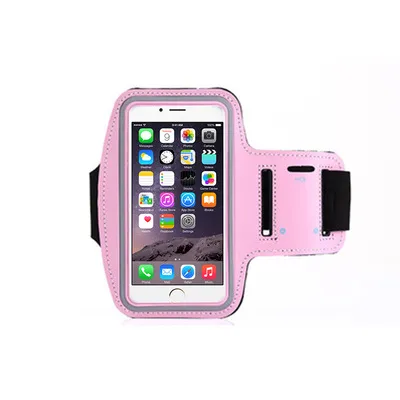
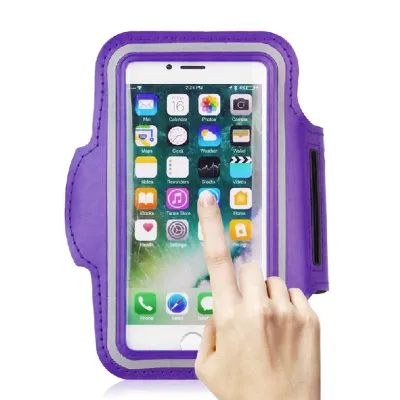
Selecting an armband requires a close look at how you interact with your phone during a workout. The interface design determines how easily you can check your pace, change a music playlist, or answer an urgent call. Full-face transparent covers offer excellent protection against dust and light rain, but they introduce a physical barrier over the screen. This plastic layer can reduce touch sensitivity, especially when moisture from sweat or humidity gets trapped underneath. If you rely on quick swipes or biometric features like fingerprint scanning and facial recognition, a full-face cover may prove frustrating during high-intensity intervals.
Products mentioned in this guide
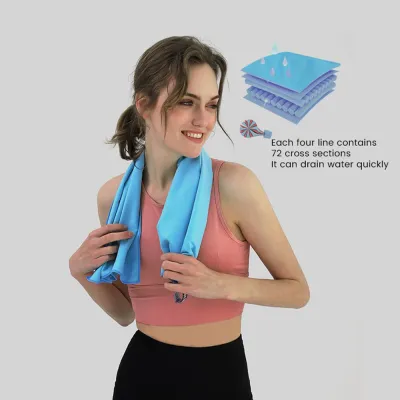
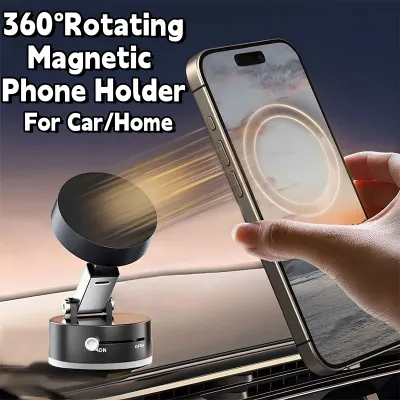
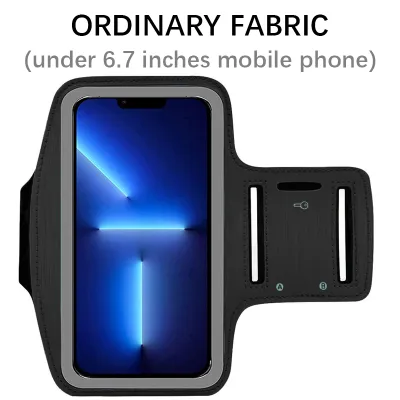
Prices are valid at publication and may change. Please refer to the product page for the latest price.
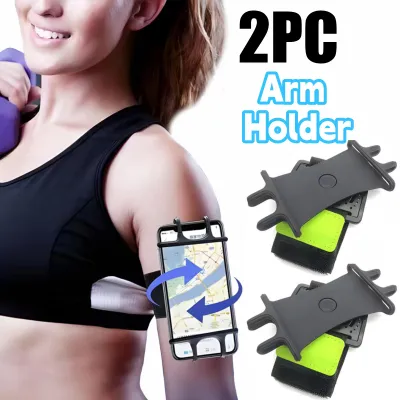
In contrast, open-face or corner-mount designs use elastic silicone bands to secure the corners of the phone, leaving the screen completely exposed. This style provides immediate, unobstructed access to the touchscreen and physical side buttons. However, the lack of a protective front cover means your screen is vulnerable to direct sunlight, rain, and accidental scratches if you trip. Side-loading sleeves offer a middle ground, keeping the phone enclosed in a fabric pocket, but they require you to slide the device completely out of the holder to access any on-screen controls.
Strap material and breathability directly impact your comfort during long training sessions. Neoprene is a common choice because of its durability, cushioning properties, and resistance to water. However, thick neoprene can trap body heat, leading to a localized buildup of sweat underneath the band. For runners in warm climates, lightweight Lycra, nylon, and polyester mesh blends are often more comfortable. These materials facilitate faster moisture evaporation and conform more easily to the contours of your arm. Look for straps that feature laser-cut ventilation holes or textured inner channels designed to channel sweat away from the skin.
Device compatibility involves more than just matching the screen size listed on a product package. While many manufacturers label their holders by general phone models, you must consider the total physical dimensions of your device, including its protective case. A rugged, shockproof case or an external battery pack adds significant thickness and width. If the sleeve is too tight, forcing the phone inside stretches the seams, degrades the hook-and-loop fasteners, and can press down on the side buttons, causing the phone to restart or adjust its volume unexpectedly. Always measure the length, width, and depth of your phone with its case on before comparing it to the internal compartment specifications of a holder.
Matching the Armband to Your Running Conditions
Your local running environment plays a major role in how well an armband performs over time. In the tropical climate of the Philippines, high humidity and heavy sweat are constant challenges for any piece of running gear. Standard fabrics can quickly become saturated, causing the armband to lose its grip and slide down your arm. To prevent this, prioritize holders made from quick-drying synthetic fabrics and those equipped with water-resistant internal barriers that block sweat from reaching the phone compartment. Anti-slip silicone patterns or textured rubber grips on the inner side of the band help maintain a secure position against bare skin or lightweight apparel.

If you prefer running during the early morning or late evening to avoid the midday heat, visibility is a critical safety consideration. Road runners sharing space with motorists, cyclists, and pedestrians need to remain visible in low-light conditions. Look for armbands that incorporate highly reflective piping, wide reflective strips along the strap, or bright fluorescent color accents. These elements catch the light from streetlamps and vehicle headlights, helping to signal your presence from a distance.
Trail running introduces different physical demands compared to flat road running. Navigating uneven terrain, jumping over obstacles, and managing sudden changes in direction create significant lateral movement. A standard single-strap armband may wobble or shift during these dynamic motions. For trail environments, a wider band or a dual-strap fastening system provides superior stability by distributing the weight across a larger surface area. Additionally, trail runners should look for closed-sleeve designs that protect the phone’s ports and screen from dust, dirt, and low-hanging branches.
How to Ensure a Secure and Comfortable Fit
Achieving a comfortable fit requires experimenting with placement and understanding how the weight of the phone affects your body mechanics. The most common position is high on the bicep, just below the shoulder. This placement keeps the phone close to your center of gravity, minimizing the rotational force exerted on your arm during its natural swing. Some runners prefer placing the band on the forearm, which makes it much easier to view maps or tracking metrics on the go. However, because the forearm is further from the shoulder pivot point, the phone’s weight feels heavier, which can lead to premature muscle fatigue in the arm over long distances.
Adjusting the strap tension is a delicate balance between security and circulation. The band must be tight enough to eliminate bounce during high-impact strides, but not so tight that it restricts blood flow or pinches the skin. A good rule of thumb is to adjust the strap while your bicep is fully flexed. This ensures that when your muscles contract during a run, the band does not become painfully tight. If you experience any tingling, numbness, or coldness in your hand or fingers, stop immediately and loosen the strap.
Skin protection is essential for preventing painful chafing, especially during long-distance training. Look for armbands constructed with seamless edges, heat-bonded seams, and soft fabric linings that cover the plastic buckles or adjustment rings. Rough stitching or exposed plastic can rub against sweaty skin, leading to abrasions within a few kilometers. If you have sensitive skin or find that direct contact causes irritation, try wearing the armband over the sleeve of a lightweight, moisture-wicking running shirt. Applying a thin layer of anti-chafing balm to your arm before securing the band can also significantly reduce friction.
Common Trade-offs and Limitations to Expect
While an armband is a convenient way to carry a phone, it comes with inherent design compromises that you should anticipate. One of the most common limitations is restricted access to physical buttons and ports. Once the phone is sealed inside a protective sleeve, adjusting the volume, pressing the power button, or plugging in wired headphones can be difficult or impossible. Many runners resolve this by pairing their phone with wireless earbuds that feature built-in volume and playback controls, allowing them to manage their audio without touching the armband.
Another potential conflict is how the armband interacts with other wearable fitness technology. If you wear a smartwatch, GPS tracker, or optical heart rate monitor on your wrist or forearm, a bulky bicep armband on the same arm can feel restrictive or interfere with the natural movement of your arm. Additionally, some wide-band armbands can press against the upper portion of a forearm-based heart rate sensor, affecting its accuracy. To avoid these issues, try wearing your fitness tracker on one arm and the phone armband on the opposite side to balance the physical load and prevent sensor interference.
Finally, there is a minor physiological learning curve when running with an asymmetrical load. Adding 150 to 250 grams of weight to a single arm alters your natural arm swing, which can cause you to unconsciously compensate by swinging the weighted arm harder or holding it at a different angle. Over long distances, this imbalance can lead to mild shoulder tightness or neck fatigue. To mitigate this effect, try alternating the armband between your left and right arms on different training days. This helps distribute the physical strain evenly over your weekly training cycle and prevents chronic muscle imbalances.
Frequently Asked Questions (FAQ)
Can I use an armband cellphone holder with a thick protective case?
Yes, but you must verify the internal dimensions of the armband sleeve rather than relying on general phone model compatibility. Thick, rugged cases, integrated kickstands, and ring holders add substantial depth and width to your device. To ensure a proper fit, measure the total length, width, and thickness of your phone while it is inside its case. Compare these measurements directly against the manufacturer’s specified maximum compartment dimensions. Forcing a thick case into a sleeve that is too small can stretch the fabric, weaken the seams, and reduce the touch sensitivity of a transparent screen cover.
How do I clean and maintain the armband after sweaty runs?
To preserve the elasticity of the strap and the holding power of the hook-and-loop fasteners, hand-wash your armband regularly using cool water and a mild, non-abrasive soap. Avoid machine washing and tumble drying, as the high heat and agitation can warp plastic components, degrade the adhesive bonds on seamless edges, and cause the elastic fibers to break down prematurely. Gently squeeze out excess water without wringing the fabric, and hang the armband to air-dry in a shaded, well-ventilated area away from direct sunlight. Use a small, soft-bristled brush to periodically clear lint, dirt, and fabric fibers from the hook-and-loop fasteners to maintain a secure grip.
Community discussion
Share your experience or ask a question. Comments are reviewed before publication.