
Selecting your first weapon in Filipino Martial Arts (FMA)—whether you call it Arnis, Kali, or Eskrima—is a critical step that directly shapes your safety and technical progression. Beginners often make the mistake of buying the first stick they see online or choosing a heavy, polished hardwood weapon based purely on looks. However, finding a properly sized arnes stick with case requires balancing physical dimensions, material behavior, and your specific training environment. The right stick acts as a natural extension of your arm, allowing you to focus on learning angles of attack without risking joint strain.
Why Proper Stick Specifications Prevent Injury and Bad Habits
Training with an incorrectly sized or excessively heavy stick is a fast track to chronic injuries. When a beginner uses a weapon that exceeds their physical capacity, the wrist and forearm muscles must overcompensate to control the stick’s momentum. This constant strain often leads to lateral epicondylitis, commonly known as tennis elbow, as well as acute wrist sprains. Furthermore, heavy sticks force you to “muscle” your strikes, which ruins the fluid, hip-driven mechanics essential to FMA.
Safety during partner drills is another critical factor. While solo practice allows for some flexibility in your gear, partner sparring demands materials that absorb and distribute impact. Using an inappropriate material, such as dense hardwood or brittle plastic, during high-speed blocking drills can cause severe bone bruising, joint trauma, or even fractures. For a beginner, your first stick must prioritize control, safety, and tactile feedback over aesthetic appeal or extreme durability. It should allow you to make mistakes safely while building correct muscle memory.
Products mentioned in this guide
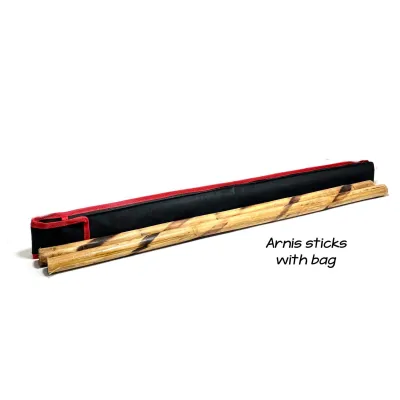
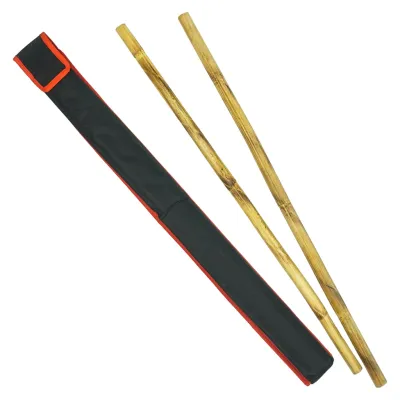
![ARNIS STICK WITH CASE approx 70cm [2PCS]](https://img.lazcdn.com/g/ff/kf/S2ea1895c20a4469d99d9e04616190e38y.jpg_400x400q80.jpg_.webp)
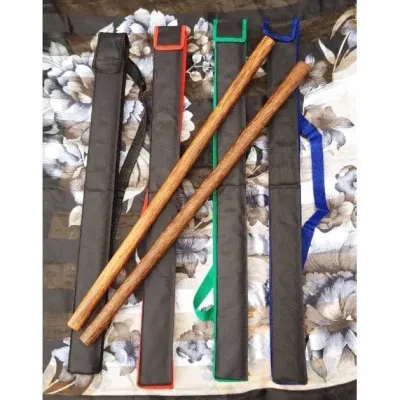
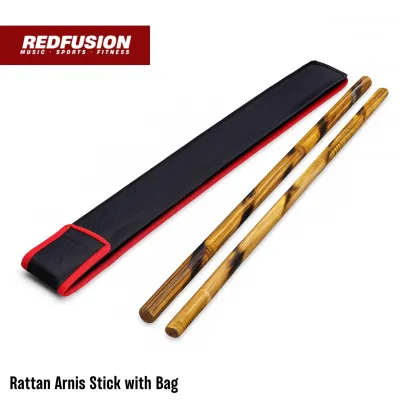
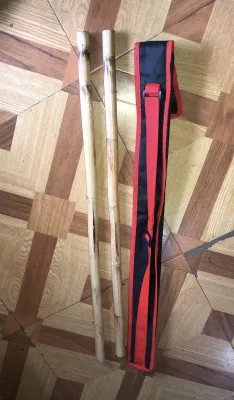
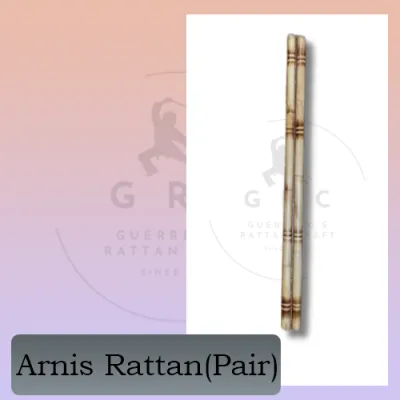
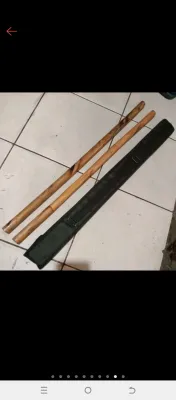
Prices are valid at publication and may change. Please refer to the product page for the latest price.
How to Measure and Select the Correct Length for Your Height
In martial arts supply shops and local sporting goods stores in the Philippines, you will find arnis sticks ranging anywhere from 24 to 30 inches in length. A common mistake among beginners is assuming that stick length is standardized. A one-size-fits-all approach fails because a stick that is perfect for a tall practitioner will constantly strike the ground when wielded by a shorter person, disrupting low-line attacks and footwork.

To find your ideal stick length, you can use two reliable, body-proportionate measuring methods:
- The Floor-to-Armpit Method: Stand upright with your shoulders relaxed and your arms hanging naturally at your sides. Place the tip of an arnis stick on the floor next to your foot, running it vertically up your leg. The top of the stick should reach comfortably into your armpit. If it extends past your shoulder, the stick is too long and will likely scrape the floor during low-line sweeps or downward diagonal strikes.
- The Arm-Length Method: Extend your arm straight out to the side, parallel to the ground. Measure the distance from your armpit to the tips of your fingers. This measurement represents the maximum safe length for your stick, ensuring you can execute full-range motion without losing control of the tip.
Your training style and specific drills also influence this decision. Close-quarters training (corto) often utilizes slightly shorter sticks (around 24 to 26 inches) to facilitate tight, rapid trapping and locking maneuvers. Conversely, long-range striking systems (largo mano) favor longer sticks (28 to 30 inches) to maximize reach and leverage. As a beginner, it is highly recommended to start with a standard, middle-of-the-road length of 28 inches—or whatever matches your armpit measurement—before you begin experimenting with specialized short or long variants.
Choosing the Safest Material for Your Current Training Stage
Choosing what your stick is made of is not just a matter of durability or price; it is first and foremost a safety decision. In FMA, where partner drills, coordination patterns (sinawali), and block-and-counter sequences are introduced early on, how a material behaves under impact is crucial. Different materials react uniquely when they clash, and using the wrong one in the wrong setting can lead to equipment failure or physical injury.
Rattan: The Standard for Sparring and Partner Drills
Rattan remains the undisputed industry standard for everyday FMA training, sparring, and partner drills. Derived from a fibrous, climbing palm native to tropical regions, rattan possesses a unique cellular structure that makes it incredibly lightweight and naturally flexible. When two rattan sticks collide, the fibrous material absorbs a significant portion of the impact energy rather than transferring the shock directly into your hand, wrist, and elbow joints.
Unlike solid hardwoods, rattan does not splinter or snap into sharp, dangerous shards when it fails. Instead, under repeated heavy impact, rattan will gradually dent, compress, and fray. This peeling or fraying behavior is a vital safety feature; it serves as a highly visible indicator that the stick is reaching the end of its lifespan and needs replacement. Because it minimizes the risk of catastrophic breakage and reduces impact shock, a pair of rattan sticks is the safest and most practical choice for any beginner starting their training journey.
Hardwood: Strict Limits for Solo Forms and Target Striking
Traditional Philippine hardwoods, such as kamagong (ironwood), bahi (wild palm), and lanite, are highly prized for their beautiful grain, extreme density, and substantial weight. However, these premium materials carry strict safety boundaries. Hardwood sticks must never be used for partner sparring, high-speed blocking drills, or sinawali exercises. Because hardwood does not flex or absorb impact, clashing these sticks together transfers massive shock waves directly into your bones and joints, which can easily cause fractures, deep tissue bruising, or severe wrist strain.
Additionally, when hardwood sticks do break under intense stress, they can split into sharp, jagged points that pose a serious puncture hazard to you and your training partners. Beginners should restrict hardwood sticks exclusively to solo forms (anyo), slow-motion alignment practice, or controlled striking against soft targets like heavy bags or old tires. Using a heavier hardwood stick for solo practice can help build forearm strength, but it should never replace your rattan sticks for interactive partner work.
Synthetic and Padded Sticks: Low-Risk Alternatives for Indoor Use
For absolute beginners, children’s classes, or training environments where safety must be absolute, synthetic and padded sticks offer a practical alternative. Padded sticks typically feature a plastic or thin rattan core wrapped in thick high-density foam, covered by a durable nylon sleeve. These are excellent for low-risk sparring simulations, allowing students to practice target striking and defensive blocks at full speed without the fear of painful bruises or hand injuries.
However, synthetic options come with distinct trade-offs. Foam-padded sticks lack the realistic weight distribution, thin grip profile, and crisp tactile feedback of natural rattan. They also tend to bounce off targets unrealistically upon impact, which can teach beginners poor defensive positioning and incorrect follow-through habits. High-density polymer or PVC sticks are sometimes used for indoor dojos to prevent marking up walls or damaging hardwood floors, but they can still deliver painful impacts and do not offer the natural shock absorption of rattan. Use these as specialized tools for specific safety drills rather than your primary training weapon.
Finding the Right Weight and Grip Diameter for Wrist Control
The weight of your arnis stick and how it fits in your hand directly dictate your ability to control your movements and execute clean techniques. If a stick is too heavy, your forearm muscles will fatigue rapidly. To compensate for this fatigue, beginners often “choke” the weapon—gripping it with excessive, white-knuckled tension. This over-gripping slows down your striking speed, limits your wrist flexibility, and prevents the fluid, continuous motion that defines effective FMA.
To ensure proper wrist mechanics, pay close attention to these three physical factors:
- Grip Diameter: When you hold the stick, your fingers should wrap comfortably around the shaft. There should be a small, natural gap between your fingertips and the palm of your hand. If your fingers overlap your palm excessively, the stick is too thin, which can cause hand cramping. If your fingers cannot wrap far enough to secure a firm grip, the stick is too thick, making it highly susceptible to flying out of your hand during high-speed drills. Most beginners find that a diameter between 7/8 inch and 1 inch is the ideal starting point.
- Weight Distribution and Balance: Hold the stick at its standard grip position, which is typically one fist-width (about 2 to 3 inches) from the butt end (known as the puno). Swing the stick slowly in a figure-eight pattern. The balance point should feel slightly forward-biased to assist with striking momentum, but it should not feel nose-heavy. If the tip feels incredibly heavy and drags your wrist downward, the stick's balance is incorrect for a beginner.
- Conditioning Sticks Warning: You may see heavy, thick "conditioning" rattan sticks marketed to build wrist strength. Avoid these as your first purchase. Starting with an overly heavy stick forces you to use raw muscle power rather than proper biomechanics, ingraining slow, stiff, and clumsy movement patterns that are incredibly difficult to unlearn later.
Why You Should Look for an Arnis Stick with a Case
When purchasing your first set of training weapons, buying a bundled arnes stick with case is one of the smartest practical decisions you can make. From a purely logistical standpoint, a dedicated carrying case makes transporting your gear to and from the gym, community center, or barangay park incredibly convenient. Walking around with loose sticks can be awkward, and a case allows you to sling your gear over your shoulder, keeping your hands free while commuting on public transport like jeepneys or tricycles. A standard beginner-friendly arnes stick with case typically ranges from ₱300 to ₱800, making it an affordable entry point that protects your investment.
Beyond convenience, a carrying case serves a vital protective function in the tropical climate of the Philippines. Rattan and hardwood are natural, organic materials that are highly sensitive to environmental conditions. The intense humidity of the rainy season, followed by sudden dry spells or exposure to air-conditioned training halls, can cause unprotected wood to warp, develop mold, or dry out and crack prematurely.
When browsing online sports retailers, searching specifically for an arnes stick with case ensures you get a matching, breathable canvas or heavy-duty nylon sleeve. These materials are ideal because they allow moisture to escape, preventing the humid air from getting trapped inside and rotting the fibers. When evaluating a case, look for these key features:
- Breathable Fabric: Canvas or mesh panels that prevent moisture buildup.
- Reinforced Ends: Extra padding or double-stitching at the bottom to prevent the stick ends from wearing holes through the fabric.
- Secure Closure: Reliable hook-and-loop straps, drawstrings, or zippers that keep your sticks firmly secured during travel.
How to Inspect and Test Your Stick Before Buying
If you have the opportunity to select your arnis sticks in person at a local sporting goods store, performing a quick, systematic quality check will ensure you walk away with a safe, high-quality product.
First, conduct a thorough visual inspection of the rattan. Look closely along the entire length of the shaft for deep longitudinal cracks that split the outer skin, as these indicate structural weakness. Check the nodes (the natural rings along the rattan cane); they should be smooth and intact, with no deep gouges or signs of insect damage, such as tiny pinholes left by wood-boring beetles. Note that traditional fire-hardened sticks will feature dark scorch marks and minor surface cosmetic blemishes; these are completely normal and actually help seal the outer skin of the rattan.
Next, perform the “shake and flex” test. Hold the stick firmly by the grip and flex the tip gently against a clean floor, or bend it slightly between both hands. A high-quality rattan stick should feel lively, springy, and responsive. If it feels completely rigid, brittle, or “dead” under light pressure, the cane may be dried out and prone to snapping early in your training.
Finally, execute a few slow, basic striking motions—such as diagonal downward cuts—to verify that the grip diameter feels comfortable and the balance point allows for relaxed, effortless wrist rotation.
Stop Conditions: If you notice any deep structural cracks, if the stick feels excessively heavy for your wrist strength, or if it causes immediate joint discomfort during a simple swing, do not purchase it. A bad stick is not just a waste of money; it is a safety hazard to both you and your training partner.
Frequently Asked Questions (FAQ)
These common questions can help you maintain your training gear and optimize your performance in the gym.
Can I use the same rattan stick for sparring and heavy bag work?
While high-quality rattan is remarkably durable, repeatedly striking dense, unyielding targets like heavy bags, wooden posts, or striking tires will rapidly compress the internal fibers. Over time, this localized impact destroys the stick’s natural flexibility, causing it to go soft, warp, or crack prematurely.
To extend the lifespan of your gear, it is highly recommended to practice equipment rotation. Dedicate one pair of lightweight, smooth rattan sticks strictly for partner drills, sinawali, and light sparring where safety and flexibility are paramount. For heavy bag work, solo tire striking, or power conditioning, use a separate, cheaper pair of rattan sticks or a dense hardwood stick, keeping your primary sparring sticks in pristine, safe condition.
How should I store my stick to prevent warping in humid weather?
In a tropical environment like the Philippines, proper storage is essential to prevent your natural wood or rattan sticks from warping or molding. Always store your sticks horizontally on a flat shelf or rack, or hang them vertically by a lanyard. Never lean them at an angle against a wall for extended periods, as gravity will gradually bend the warm, humid wood, causing permanent warping.
Keep your gear in a well-ventilated room away from direct sunlight, damp concrete floors, or direct drafts from air conditioning units, which can cause rapid moisture loss and cracking. To maintain the wood’s integrity, occasionally wipe your sticks down with a dry microfiber cloth to remove sweat and hand oils. If the manufacturer’s care instructions allow, you can apply a very light coat of natural mineral oil or linseed oil once every few months to seal the wood and preserve its natural flexibility.
Community discussion
Share your experience or ask a question. Comments are reviewed before publication.