
When ascending a vertical rope, your safety and efficiency depend on a single mechanical interface: the ascender. Choosing the right device requires matching your rope’s exact diameter (typically ranging from 8 mm to 13 mm) with your specific climbing style and the environmental conditions you will encounter. Using an incompatible combination can lead to dangerous slippage, rope damage, or mechanical jams. Whether you are navigating wet caves in Samar, climbing a big wall, or performing a high-angle rescue, understanding how your gear interacts with your rope is a fundamental safety requirement.
Mechanical ascenders are highly specialized tools. They cannot replace formal training, sound judgment, or proper rope management techniques. Before using any ascender, you must read the manufacturer’s instructions for both the device and the rope you plan to use. If instructions conflict, or if you are unsure about compatibility, stop immediately and consult a qualified professional.
Ascender Types Explained: Which Form Factor Fits Your Technique?
To choose the right tool, you must first understand the primary form factors available and how they fit into different ascending systems. Each design serves a specific ergonomic and mechanical purpose on the rope.
Products mentioned in this guide
Prices are valid at publication and may change. Please refer to the product page for the latest price.
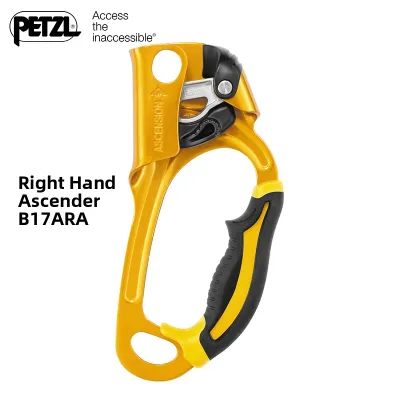
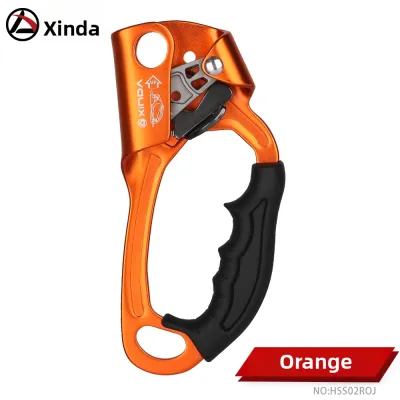
Handled ascenders are the most common and versatile option. Featuring an integrated grip, they are designed for manual operation, making them ideal for general ascending, cleaning climbing routes, and hauling heavy gear. They are typically sold in distinct left-handed and right-handed configurations to optimize wrist alignment and reduce hand fatigue during long vertical ascents.
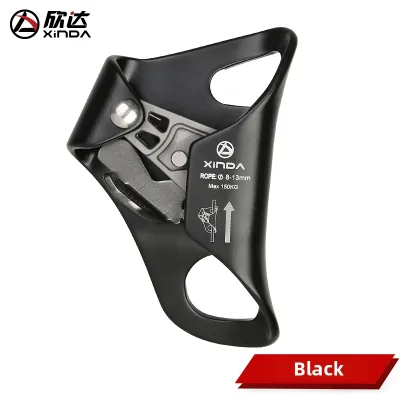
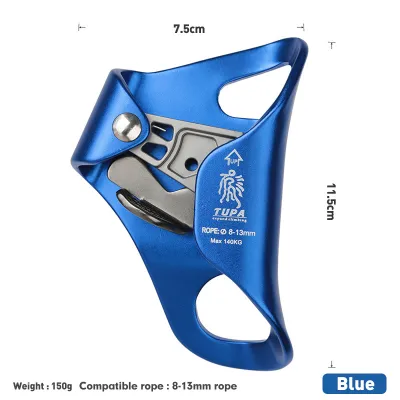
Chest ascenders are compact, lightweight, and designed to mount flat against your chest harness. Their primary role is to keep your body upright and close to the rope, maximizing the efficiency of your leg strokes. They are a core component of the “frog” ascending system, which is widely favored in caving and rope access work for its ergonomic efficiency over long vertical pitches.
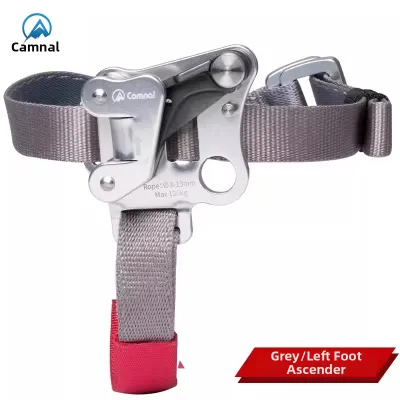
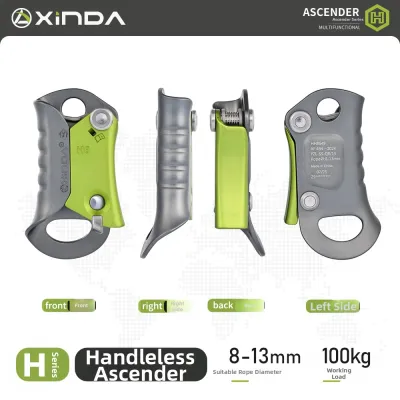
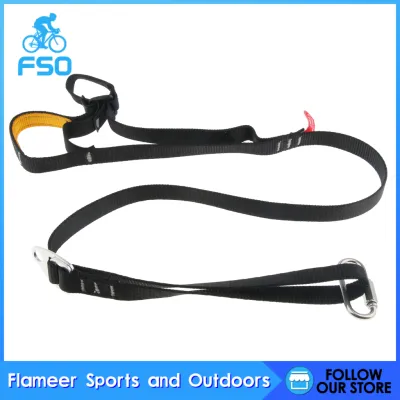
Foot ascenders attach directly to your boot and serve as auxiliary climbing aids. While they greatly increase climbing speed by allowing you to use your leg muscles in a natural walking motion, they are not classified as personal protective equipment (PPE). They must always be used in conjunction with primary life-support ascenders, such as a chest and handled ascender combination.
Progress capture pulleys integrate a high-efficiency pulley with a locking cam mechanism. These devices are exceptionally lightweight and are primarily used in hauling systems, rescue rigging, and emergency ascending scenarios. They allow a rope to glide smoothly in one direction while instantly locking when weight is applied, making them indispensable for building mechanical advantage systems.
The gripping mechanism of these devices generally falls into two categories: toothed cams and smooth cams. Toothed cams utilize sharp, angled steel teeth to bite through mud, water, or ice, providing an aggressive grip on standard semi-static and dynamic ropes. Smooth cams, or spring-loaded friction clamps, rely on surface pressure and friction rather than teeth, which significantly reduces wear on the rope sheath but makes them more sensitive to wet, muddy, or icy conditions.
Your choice of ascender type should align directly with your preferred climbing system. For example, a rope walker system requires a combination of foot, chest, and handled ascenders to mimic a ladder-climbing motion. Conversely, a classic alpine system might only require a single handled ascender or a micro-ascender paired with friction hitches for occasional glacier travel or emergency self-rescue.
How to Match Your Ascender to the Correct Rope Diameter
Matching your ascender to your rope’s exact diameter is a critical safety requirement that directly affects the device’s mechanical function. The cam of an ascender is engineered to compress a rope of a specific thickness range against the inner wall of the device frame.

If you use a rope that is too thin for your ascender’s rated capacity, the cam will not be able to compress the rope sufficiently. Under load, this lack of compression causes the device to slip down the rope, which can lead to rapid friction heating, sheath melting, or a complete fall. Conversely, if your rope is too thick, the cam cannot rotate fully into its locked position, or it may pinch the rope too aggressively, jamming the device and making upward progress impossible while risking severe sheath damage.
To prevent these hazards, you must physically inspect the ascender’s metal body before use. Manufacturers stamp or laser-etch the certified rope diameter range directly onto the device frame (for example, “Ø 8 – 11 mm”). Never rely on general assumptions or third-party forum advice; always verify that your rope’s actual, measured diameter falls comfortably within the stamped limits of your specific ascender model.
Environmental conditions can dynamically alter your rope’s physical characteristics. In highly humid tropical environments, such as those found throughout the Philippines, nylon ropes can absorb water, which causes the fibers to swell and effectively increases the rope’s diameter. Mud, grit, and clay can also accumulate on the rope surface, filling the space between the cam teeth and reducing the friction required for the cam to engage safely. When climbing in these conditions, you must account for these changes by using ropes and ascenders with self-cleaning channels and verifying grip security at a safe, low height before ascending.
Furthermore, you must distinguish between the types of ropes you are using. Most standard mechanical ascenders are certified exclusively for use on single dynamic or semi-static ropes. Using them on half ropes, twin ropes, or ultra-thin hyperstatic cords is extremely dangerous unless the manufacturer explicitly states that the device is approved for such configurations. Dual-rope systems distribute loads differently, and standard cams may fail to grip both strands evenly, leading to catastrophic slippage.
Choosing the Right Ascender for Your Specific Climbing Activity
Different outdoor pursuits place unique physical and environmental demands on your gear. Narrowing down your selection requires matching the ascender’s features to the specific conditions of your activity.
Mountaineering and Alpine Climbing
In alpine environments, weight savings and simplicity are paramount. Carrying heavy, bulky gear up technical ridges or glaciers quickly leads to physical exhaustion, which compromises your decision-making and safety. Alpinists generally prefer ultra-compact handled ascenders or micro-ascenders that can be easily stowed on a harness gear loop when not in use.
These devices must be highly versatile, serving as emergency ascenders, progress captures for crevasse rescue, or haul line clamps. Because alpine climbing often involves freezing temperatures, the ascender must be easy to operate while wearing heavy mountaineering gloves. Look for models with wide trigger openings and ergonomic designs that allow you to engage and disengage the cam smoothly without exposing your hands to the elements.
Caving and Wet Environments
Caving and canyoneering present some of the most hostile conditions for mechanical gear. Subterranean environments are characterized by constant moisture, abrasive mud, sand, and tight, awkward passages that require maximum physical efficiency. For these activities, a dedicated frog ascending system—consisting of a chest ascender, a handled ascender with a foot loop, and a foot ascender—is the industry standard.
When selecting gear for wet or muddy environments, prioritize corrosion-resistant materials. Look for stainless steel cams and hard-anodized aluminum frames that can withstand prolonged exposure to water and grit. Most importantly, ensure the cams feature prominent self-cleaning slots. These specialized cutouts allow mud, clay, and water to be squeezed out of the cam mechanism as it compresses the rope, ensuring the steel teeth can make direct, secure contact with the rope fibers.
Rescue Operations and Big Wall Hauling
Rescue work and big wall climbing involve prolonged use, high loads, and complex rigging systems. In these scenarios, gear durability and ergonomic comfort are essential for preventing physical fatigue during hours of repetitive motion. Handled ascenders with large, comfortable, rubber-molded grips are highly preferred here, as they distribute pressure evenly across your hand and protect your fingers from rubbing against the metal frame.
Additionally, these activities require gear with high working load limits (WLL) and clear safety certifications. When building mechanical advantage systems for hauling heavy gear bags or lifting an injured climber, progress capture pulleys are often paired with heavy-duty handled ascenders. You must verify the load ratings of every component in your hauling system to ensure they can handle the forces generated by multi-person loads or dynamic catches without deformation.
Critical Safety Checks and Maintenance for Rope Ascenders
Mechanical rope ascenders are critical safety components, but they are only as reliable as their maintenance and correct usage. Neglecting routine inspections or violating basic safety rules can lead to sudden equipment failure on the rope.
Before every use, you must verify the manufacturer’s exact load limits and look for recognized safety certification marks, such as CE (Conformité Européenne) or UIAA (International Climbing and Mountaineering Federation), stamped on the device. These certifications prove the gear has undergone standardized testing for strength and reliability.
Establish a strict visual and functional inspection routine before and after every climb:
- Frame Inspection: Check the aluminum or steel body for any signs of hairline cracks, deformation, sharp burrs, or excessive wear from rope friction. Pay close attention to the attachment holes, ensuring they are perfectly round and free of stress fractures.
- Cam and Teeth: Examine the cam teeth for wear. Blunt, chipped, or missing teeth cannot grip the rope safely and must be retired. Use a soft plastic brush to remove any dirt, mud, or salt spray from the teeth and cam pivot.
- Spring Tension: Pull the cam back fully and release it. The cam must snap shut instantly and smoothly against the frame. If the action is sluggish, sticky, or fails to close completely, the internal spring is damaged or dirty. Do not use the device until it has been thoroughly cleaned and re-tested, or retired if the spring remains weak.
- Axles and Rivets: Ensure the pivot axle and rivets are secure, with no excessive lateral play or loose parts.
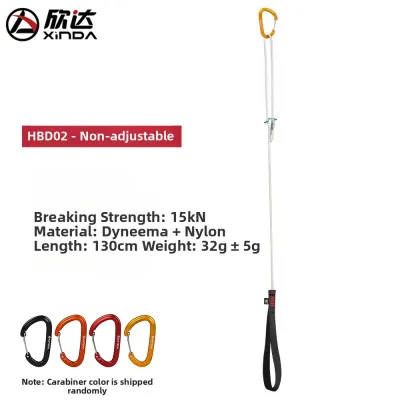
The golden rule of ascender safety is redundancy. You must never rely on a single mechanical ascender as your sole point of life support. Always back up your ascender with a secondary system, such as a backup safety lanyard (cowstail) attached to a secondary ascender, a friction hitch (like a prusik), or a backup knot tied in the rope below you.
Furthermore, never attempt to slide a mechanical ascender down the rope while it is under load. Doing so can cause the cam teeth to tear through the rope’s protective sheath—a catastrophic failure known as “scalping” the rope—which can lead to immediate rope failure. If you need to descend, you must completely unweight the ascender, manually disengage the cam according to the manufacturer’s safe-operating instructions, and transition to an approved descender.
Frequently Asked Questions (FAQ)
Can I use a left-handed ascender on my right hand?
While it is physically possible to clip a left-handed ascender with your right hand, doing so is highly discouraged for ergonomic and safety reasons. Handled ascenders are contoured specifically for the natural anatomical alignment of your wrist and arm. Using the incorrect hand forces your wrist into an unnatural, awkward angle. This significantly reduces your grip strength, accelerates forearm fatigue, and increases the risk of dropping the device or failing to operate the safety trigger correctly under load.
Do ascenders damage the climbing rope sheath?
When used correctly, toothed ascenders are designed to grip the rope without damaging the sheath. The teeth are angled to slide smoothly upward and bite securely only when downward force is applied. However, damage occurs if you attempt to slide the device downward while it is loaded, or if the cam is clogged with abrasive grit that grinds against the fibers. If you are concerned about sheath wear on thin, delicate, or high-value ropes, consider using smooth-cam friction clamps, which compress the rope without using sharp teeth.
Can I use an ascender on a wet or icy rope?
Standard toothed ascenders can slip on heavily iced or extremely wet ropes because ice and water act as lubricants, preventing the cam teeth from biting effectively. If you anticipate these conditions, you should use ascenders specifically designed with self-cleaning slots that allow ice and mud to escape. Additionally, when climbing in wet or icy conditions, you must always employ a reliable backup knot system below your ascenders to catch you immediately in the event of a mechanical slip.
Community discussion
Share your experience or ask a question. Comments are reviewed before publication.