
Choosing the right badminton bag is a balancing act between carrying capacity, gear protection, and physical comfort. Many players make the mistake of purchasing either a massive tournament bag that sags when half-empty or a cramped backpack that forces clean clothes, dirty shoes, and expensive rackets into a single, suffocating compartment. To find the sweet spot, you must evaluate your regular playing habits, the climate of your local courts, and how you transport your gear. A well-chosen bag organizes your equipment and extends the lifespan of your rackets by shielding them from physical impact and environmental stress.
Inventory Your Typical Court Loadout
Before browsing online marketplaces or visiting a local sports shop, you need a clear count of what actually goes to the court with you. Start with your rackets, which are the most delicate items in your inventory. If you play casually once a week, carrying one or two rackets is usually sufficient. However, if you participate in competitive club play or train multiple times a week, you should carry at least three to four rackets. This backup inventory ensures you are never left stranded if a string snaps mid-match or a frame suffers a collision during a fast-paced doubles rally.
Next, estimate the volume of your bulky items and consumables. A standard tube of shuttlecocks is long and rigid, requiring a compartment with enough length to store it without crushing the feathers. Your court shoes are another major space consumer; they must be carried to the venue rather than worn on the street to preserve their specialized grip on wooden or rubber courts. In hot and humid tropical environments, such as indoor courts in the Philippines, you will also need to pack at least two fresh shirts, a change of socks, and a highly absorbent sports towel to manage heavy perspiration during long sessions.
Products mentioned in this guide
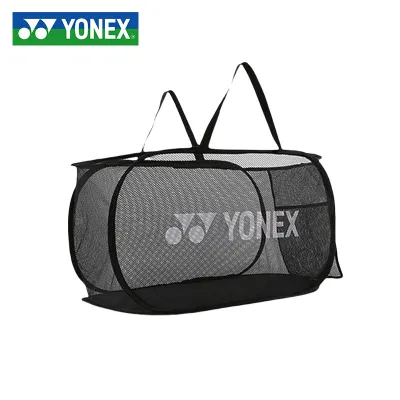
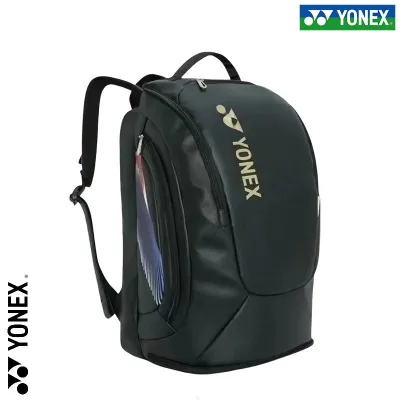
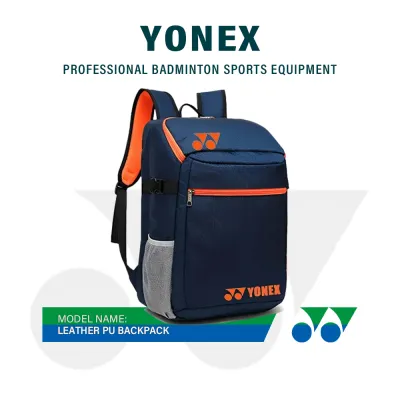
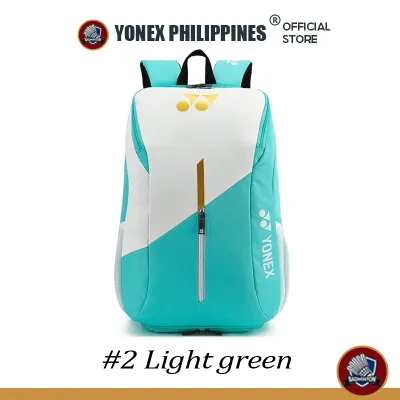
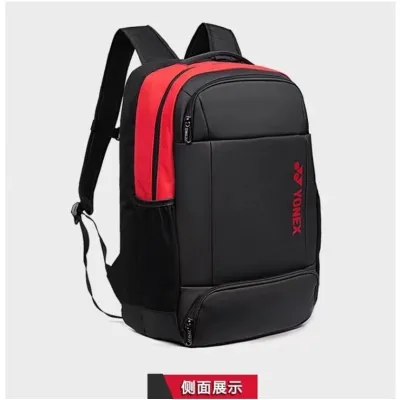
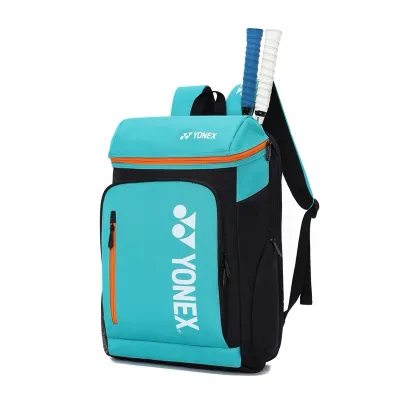
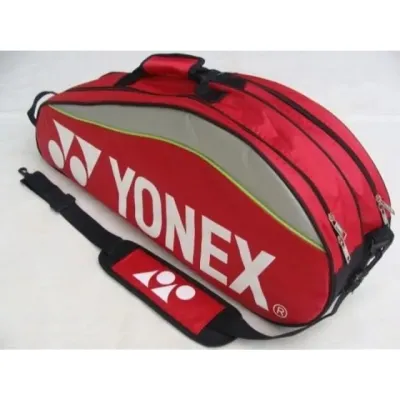
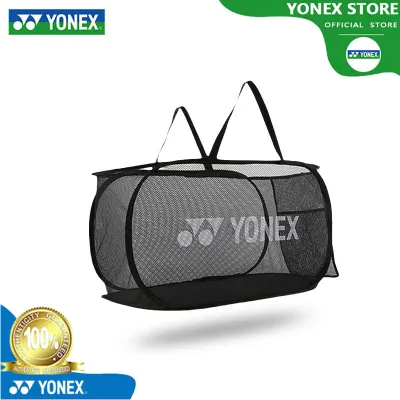
Prices are valid at publication and may change. Please refer to the product page for the latest price.
Finally, account for the smaller accessories that keep you playing. This includes replacement grip tape, grip powder, scissors for cutting broken strings, joint supports, and a basic first-aid kit. You also need dedicated space for a large water bottle or insulated flask to stay hydrated in warm, unventilated sports centers. Tallying these items beforehand prevents you from buying a bag that is too small, which forces you to leave essential gear at home or risk damaging your rackets by cramming them alongside heavy water bottles.
Match Racket Compartments and Main Volume to Your Gear
Badminton bags are typically categorized by the total number of rackets they can hold, such as 3-pack, 6-pack, 9-pack, or 12-pack configurations. However, these industry ratings assume you are filling the bag exclusively with rackets. If you need to carry shoes, apparel, and a water bottle, you must adjust these numbers downward to find your actual capacity. For example, a standard 3-pack bag is ideal for minimalist players who only carry one or two rackets, a thin towel, and a water bottle, but it rarely has room for a dedicated pair of court shoes.

For most regular players, a 6-pack bag serves as the practical sweet spot. When you allocate one side compartment to hold two or three rackets safely, the remaining main compartment provides ample volume for your shoes, a tube of shuttlecocks, and a fresh change of clothes. If you step up to a 9-pack or 12-pack bag, you are entering tournament territory. These larger bags are excellent if you carry four or more rackets and need separate spaces for multiple changes of apparel, warm-up gear, and recovery tools, but they can be incredibly bulky to transport.
Selecting a bag that is too large for your daily needs presents its own set of problems. When a large bag is only partially filled, it lacks the internal pressure required to maintain its shape. This causes the bag to sag, leading to poor weight distribution that pulls uncomfortably on your shoulders during your commute. It also allows your rackets and gear to shift violently inside the bag while you walk, increasing the risk of cosmetic scratches or structural damage to your frames. Match your bag’s rated capacity to your actual loadout to ensure a snug, secure fit.
Evaluate Internal Layout and Gear Protection
A great badminton bag does more than just hold your gear; it actively protects your investment from dirt, moisture, and temperature fluctuations. The first feature to look for is an isolated shoe compartment. Court shoes accumulate dust, sweat, and odor during a match. Storing them in a dedicated, externally accessible pocket prevents dirt from transferring to your clean apparel and keeps abrasive court grit away from your delicate racket frames and grips. Look for shoe compartments that feature ventilation eyelets or mesh panels to allow moisture to escape.
Temperature and humidity control are equally critical for maintaining your equipment. High heat can cause racket frames to warp under high string tension, and extreme humidity can soften shuttlecock feathers, ruining their flight path. Premium bags feature at least one racket compartment lined with thermal insulation material. This silver lining acts as a barrier against external heat, which is especially valuable if you commute during the hottest parts of the day or have to leave your bag in a warm vehicle before heading to the court.
Additionally, verify that the bag offers effective wet/dry separation. After an intense session on a humid court, your towels and shirts will be damp with sweat. Placing these directly into a main compartment can cause mold to grow and create unpleasant odors that are difficult to wash out of the bag’s fabric. A dedicated wet pocket lined with water-resistant materials keeps damp items isolated until you can get home and wash them. Smaller zippered mesh pockets are also highly useful for keeping keys, phones, and wallets dry and easily accessible.
Select the Right Carrying Style and Comfort Features
How you transport your gear to the sports center should dictate the carrying style of your bag. The three primary designs are the classic rectangular racket bag (carried via a single shoulder strap or dual backpack straps), the dedicated badminton backpack, and the athletic tote bag. If you commute by walking, riding a motorcycle, or taking public transportation like jeepneys or tricycles, a backpack style or a rectangular bag with dual, ergonomic backpack straps is highly recommended. These styles keep your hands free and distribute the weight evenly across both shoulders.
When evaluating backpack straps, look for thick, high-density foam padding and breathable mesh backing. Cheap, unpadded straps will quickly dig into your shoulders when the bag is fully loaded with heavy water bottles and court shoes. A chest stabilizer strap is another excellent feature for longer commutes, as it prevents the bag from swaying side to side while you move. For those who drive directly to the court and have minimal walking distances, a single-shoulder strap or a tote-style bag offers quick, convenient access to your gear.
Finally, pay attention to how the bag balances when fully loaded. Because rackets are naturally top-heavy and are often stored on one side of a rectangular bag, the load can become highly asymmetrical. High-quality bags counteract this by placing the racket compartments closer to your back and angling the straps to pull the center of gravity inward. Before finalizing your choice, check that the strap attachment points are reinforced with heavy-duty stitching, as these areas bear the brunt of the weight every time you lift your fully loaded bag.
Frequently Asked Questions (FAQ)
Can I use a regular sports backpack instead of a dedicated badminton bag?
While a standard school or gym backpack can hold your shoes and clothes, it is not designed to protect badminton rackets. Standard backpacks lack the length required to cover a racket fully, leaving the fragile graphite shaft and handle exposed to rain, dust, and accidental impacts. Furthermore, regular backpacks do not feature thermal lining to protect string tension from heat, nor do they have specialized compartments to keep dirty court shoes separated from clean apparel, which can lead to hygiene and organization issues.
How do I protect my rackets if my bag lacks a thermal-lined compartment?
If your bag does not have a built-in thermal compartment, you can protect your rackets by using individual thermal soft covers or insulated sleeves before placing them inside the bag. Additionally, practice smart gear management by keeping your bag out of direct sunlight and avoiding leaving it inside a parked car, where temperatures can rise rapidly. When storing your gear at home, choose a cool, dry room with stable temperatures to prevent the graphite frames from warping and to preserve the tension of your strings.
Community discussion
Share your experience or ask a question. Comments are reviewed before publication.