
Finding the right badminton racket is not about buying the most expensive model on the shelf; it is about matching the racket’s physical characteristics to your unique swing mechanics, physical strength, and tactical approach on the court. Whether you dominate the game with powerful smashes from the backcourt or rely on lightning-fast defensive drives at the net, your gear should act as an extension of your arm. By understanding how weight distribution, shaft flexibility, and overall frame weight interact with your body, you can select a racket that enhances your natural strengths while protecting your joints from unnecessary strain.
Assess Your Playing Style and Skill Level
To find your ideal racket, start by analyzing your typical court positioning and shot preferences during a match. Offensive players, who constantly look for opportunities to smash and drop from the rear court, require gear that maximizes power transfer. Defensive players, who excel at rapid rallies, net play, and lifting deep clears, benefit from gear that prioritizes speed and maneuverability. If you find yourself transitioning smoothly between attacking smashes and quick defensive blocks, an all-around style defines your game, requiring a versatile, balanced setup.
Your technical proficiency also dictates which racket specifications will actually benefit your play. Beginners generally have slower swing speeds, developing footwork, and less consistent contact with the sweet spot, meaning they need forgiving frames that assist with power generation. Intermediate players have established basic stroke techniques and require a mix of control and power to refine their tactical play. Advanced players possess highly developed wrist snap, rapid swing speeds, and precise footwork, allowing them to utilize demanding, high-tension setups that offer surgical shuttle placement.
Products mentioned in this guide

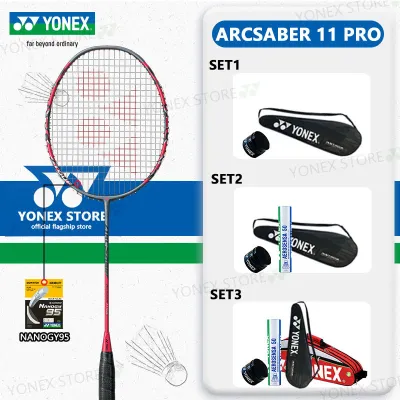
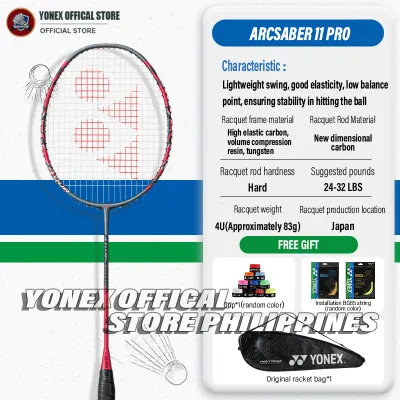

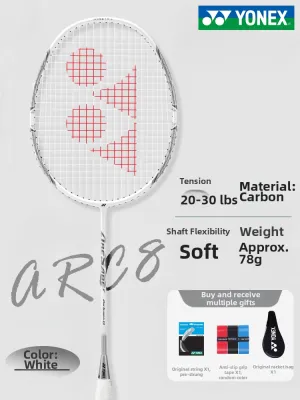


Prices are valid at publication and may change. Please refer to the product page for the latest price.
Physical conditioning and anatomical limits must also guide your choice, especially when playing in warm, humid indoor courts common in tropical climates like the Philippines. High humidity can accelerate fatigue, making a heavy or overly stiff racket difficult to swing consistently over a long three-set match. If you have a history of shoulder discomfort or limited wrist mobility, choosing a racket that demands excessive physical effort to generate power can lead to injury. Assess your current forearm strength and endurance honestly before committing to a specific frame specification.
Decode Racket Balance: Head-Heavy, Even-Balance, and Head-Light
The balance point of a badminton racket—measured in millimeters from the bottom of the handle to the point where the frame balances perfectly—determines how heavy the racket feels during a swing. This distribution of mass directly influences your swing momentum, reaction time, and overall control over the shuttlecock.

Head-heavy rackets concentrate their mass toward the top of the frame, creating a hammer-like effect when you swing. This design leverages centrifugal force to deliver maximum power, making it the traditional choice for offensive players who rely on steep, heavy smashes from the back of the court. However, this added momentum comes with a trade-off: head-heavy frames are slower to maneuver in rapid defensive exchanges and require robust wrist and shoulder strength to prevent fatigue and repetitive strain injuries.
Head-light rackets shift the weight distribution down toward the handle, making the frame feel exceptionally agile and easy to swing. This configuration is ideal for defensive specialists who need to react instantly to fast smashes, execute quick drives, and control the net with delicate touches. Beginners also benefit greatly from head-light rackets, as the reduced swing resistance allows them to focus on developing proper stroke mechanics without fighting the weight of the frame.
Even-balance rackets distribute weight uniformly across the frame and handle, offering a versatile middle ground for all-around players. These rackets provide enough stability and weight to generate decent power on smashes while remaining quick enough to defend against fast attacks. If you are still developing your personal playing style or prefer a balanced, tactical game that adapts to different opponents, an even-balance racket offers the most reliable compromise.
Match Shaft Flexibility and Weight to Your Physical Strength
Shaft flexibility is a critical factor that determines how energy is transferred from your arm to the shuttlecock. Flexible shafts bend easily during a swing, storing elastic energy that releases like a whip at impact; this assists players with slower swing speeds or developing technique in clearing the shuttle deep into the opponent’s court. Conversely, stiff shafts do not bend easily and require rapid, explosive swing speeds to flex. For advanced players with excellent wrist snap, a stiff shaft provides immediate feedback, faster recovery, and unmatched placement precision.
Racket weight is standardized using a “U” classification system, where a lower number indicates a heavier frame. For example, 3U rackets (typically weighing 85 to 89 grams) offer excellent stability and power but can tire the arm during extended play. Lighter 4U (80 to 84 grams) and 5U (75 to 79 grams) rackets are highly popular because they reduce muscle fatigue, especially in hot, humid environments where sweat and exhaustion set in quickly. Choosing a lighter frame helps maintain quick reaction times and clean technique throughout long sessions.
Before finalizing your choice, check the manufacturer’s specifications printed on the shaft or cone for grip size (usually designated as G5 or G6, with higher numbers indicating smaller handles) and recommended string tension limits. In humid climates, strings can lose tension faster, but pulling strings beyond the frame’s certified limit can warp or crack the racket. Ensure your physical grip comfort matches the handle size, and select a tension that matches your ability to hit the sweet spot consistently.
Test and Verify Your Racket Choice Before Buying
Before making a purchase, you can perform a simple physical check to verify a racket’s actual weight distribution. Rest the shaft of the unstrung racket on your index finger, moving it until the frame balances horizontally. Measure the distance from the butt cap to this balance point; a measurement over 295 millimeters generally indicates a head-heavy bias, while anything under 285 millimeters points to a head-light design. This quick test ensures the physical product matches the manufacturer’s marketing labels.
Whenever possible, test the swing weight and grip comfort in person. Visit a local sports specialty shop to hold the racket, or ask playing partners at your local court if you can borrow a similar model for a few practice swings. Pay close attention to how the racket feels during a rapid shadow swing; if you feel immediate strain in your wrist or if the frame feels sluggish during quick defensive motions, it may be too heavy or head-heavy for your current physical conditioning.
When purchasing from online sports marketplaces, verify the seller’s authenticity guarantees, return policies, and warranty terms. Counterfeit rackets are common in the market, so look for official brand holograms, unique serial numbers engraved on the cone, and authorized dealer badges. Ensure the retailer offers a clear return policy in case the racket arrives with manufacturing defects or does not match the specified weight and grip size.
Frequently Asked Questions (FAQ)
Does a more expensive badminton racket automatically improve my game?
No, a higher price tag does not guarantee better performance on the court. Premium rackets are often constructed with high-modulus carbon fiber and stiff shafts designed for advanced players who already possess explosive swing speeds and precise technique. If a beginner or intermediate player uses an expensive, ultra-stiff racket costing over ₱8,000, they may struggle to generate power and could risk injuring their wrist or elbow. It is far more beneficial to choose a mid-range racket that matches your current skill level and physical strength than to buy an advanced model based on price alone.
How often should I restring my badminton racket?
As a general guideline, you should restring your racket as many times in a year as you play in a single week. For example, if you play twice a week, aim to restring your racket at least twice a year. However, you should also perform regular visual checks on your strings; if you notice fraying, shifting strings, or a significant drop in tension that makes your shots feel mushy, it is time for a restring. In humid tropical climates, strings can lose their elasticity and tension more rapidly, making regular maintenance essential for consistent control.
Community discussion
Share your experience or ask a question. Comments are reviewed before publication.