
Selecting the right badminton racket for your child is the most critical step in ensuring they enjoy the sport while protecting their developing joints from strain. To find the perfect fit, you must balance three primary factors: the racket’s length, its overall weight, and the size of the grip. For most children under the age of twelve, a standard adult racket is too long and heavy, which can lead to frustration, poor swing habits, and physical discomfort. By matching these specifications directly to your child’s age and physical development, you can set them up for a fun, successful, and injury-free experience on the court.
When children play with equipment designed for their size, they can focus on developing hand-eye coordination and proper footwork. A racket that is too heavy or long forces a young player to compensate by using their entire arm or shoulder to swing, which limits their control and increases the risk of injury. This guide provides a practical framework to help you evaluate, measure, and select the ideal racket for your young athlete, whether they are just starting out in the backyard or training at a local sports center.
Quick Guidelines for Matching Racket Size to Your Child
Choosing a racket begins with a general understanding of how a child’s age and height align with standard racket lengths. While every child develops at a different pace, manufacturers design junior rackets in specific length increments to match average physical milestones. Using these general categories helps narrow down your options before you begin looking at technical specifications.
Products mentioned in this guide
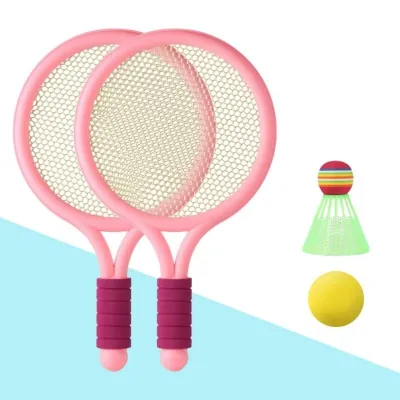
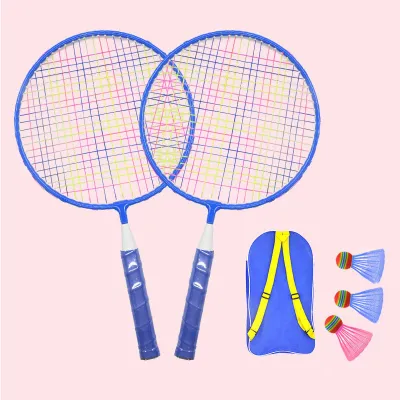
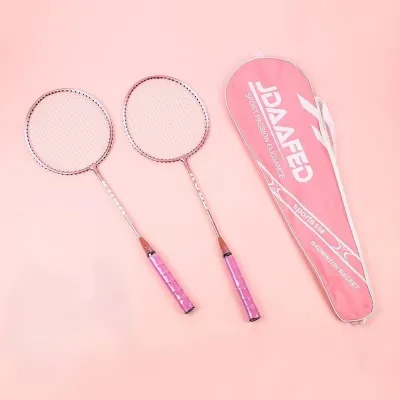
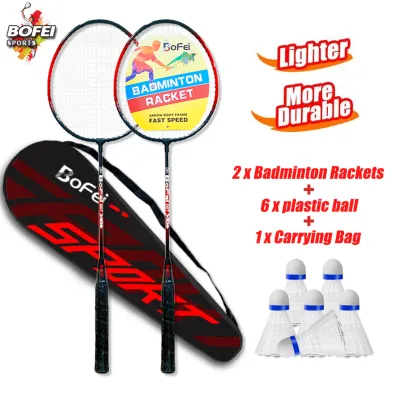
Prices are valid at publication and may change. Please refer to the product page for the latest price.
For the youngest players, aged four to six, rackets measuring 21 inches in length are typically the most appropriate. At this stage, children are still developing basic motor skills, and a short racket keeps the hitting surface close to their hand, making it much easier to connect with the shuttlecock. As children grow and reach the seven to nine age bracket, they generally transition to a 23-inch racket, which offers a bit more reach while remaining highly manageable.
Around ages ten to twelve, young players enter a transition phase where they can comfortably handle 25-inch to 26-inch rackets. These models serve as a bridge to adult gear, featuring slightly more advanced frame designs while keeping the weight low enough to prevent wrist fatigue. Once a child reaches age thirteen or stands over five feet tall, they can usually transition to a standard 27-inch adult racket, provided they have developed the necessary forearm strength.
Weight is another critical factor that directly impacts swing speed and joint safety. In the badminton world, racket weight is classified using a “U” system, where a higher number indicates a lighter racket. For young players, you should look for rackets in the 4U (80 to 84 grams), 5U (75 to 79 grams), or even lighter categories. A light frame allows a child to swing quickly and change directions effortlessly, which is especially important during fast-paced rallies.
Parents should remain highly observant during play to identify signs that a racket is a poor fit. If you notice your child constantly scraping the racket head on the floor during low hits, the racket is likely too long for their current height. Similarly, if they complain of wrist soreness, shake their hand out between rallies, or show a visible lag in their swing, the racket is too heavy for their current strength level.
Understanding Key Racket Specifications for Kids
To make an informed purchase, it helps to understand the technical dimensions of a badminton racket and how each element affects a young player’s performance. Every specification, from the length of the shaft to the flexibility of the frame, plays a role in how the racket behaves during a swing.

Length and Reach
The overall length of a racket determines how far the sweet spot is from the player’s hand. A shorter shaft reduces the leverage required to swing the racket, making it feel significantly lighter than an adult model of the exact same weight. This shorter distance also prevents floor strikes, which are common when children play on concrete barangay courts or backyard grass. Keeping the racket head off the ground preserves the integrity of the frame and prevents the strings from snapping prematurely.
Weight and Balance
Rackets are balanced in three primary ways: head-light, even-balance, or head-heavy. For developing players, a head-light or even-balance racket is highly recommended because it places the center of gravity closer to the hand. This design makes the racket feel incredibly nimble, allowing the child to react quickly to incoming shots. Head-heavy rackets, while popular among advanced adult players looking for smash power, put excessive torque on a child’s wrist and can lead to improper swing mechanics.
Grip Size
Grip circumference is denoted by a “G” number, with higher numbers representing smaller grips. Children have smaller hands and shorter fingers, meaning they require a small grip size, such as G6 or specialized junior sizes. A proper grip size allows the child to hold the racket securely without squeezing too tightly. In the tropical climate of the Philippines, high humidity can make hands sweaty and grips slippery; a grip that is too large will slip easily, forcing the child to overcompensate by gripping harder, which quickly leads to forearm fatigue and blisters.
Shaft Flexibility
Shaft flexibility refers to how much the racket bends during a swing. Junior rackets are almost always designed with highly flexible shafts, which act like a spring to help generate power. When a child swings a flexible racket, the shaft bends on the backswing and snaps forward on impact, launching the shuttlecock with minimal physical effort. Stiff shafts require high swing speeds and precise timing to generate power, which can frustrate beginners and cause unwanted shock vibrations to travel up the arm.
How to Measure and Test the Fit at Home
Before committing to a specific racket, you can perform several simple, observable checks at home to verify if the size and weight are appropriate for your child. These tests require no specialized equipment and provide immediate feedback on how the racket interacts with your child’s unique physical proportions.
The Arm Extension Test
Have your child stand up straight with their shoulders relaxed and their arms hanging naturally at their sides. Place the racket in their dominant hand, pointing the racket head directly down toward the floor. In this position, there should be a clear gap of at least two to three inches between the tip of the racket frame and the ground. If the frame touches the floor, or if your child has to bend their elbow or tilt their shoulder to keep it from dragging, the racket is too long for them.
The Grip Check
Instruct your child to hold the racket handle using a basic forehand grip, which is similar to shaking hands with the handle. Once they are holding it comfortably, look closely at the space between their fingertips and the palm of their hand. There should be a gap roughly equal to the width of your index finger. If their fingertips press deeply into their palm, the grip is too small, though this can easily be corrected by wrapping an extra layer of overgrip tape around the handle. If there is a massive gap and their fingers cannot wrap securely, the grip is too large.
The Swing Observation
Ask your child to perform five to ten overhead shadow swings in an open space, pretending to hit an imaginary shuttlecock. Watch their body alignment and swing path closely during this exercise. If they drop their elbow below their shoulder to lift the racket, or if they feel the need to use two hands to complete the swing, the racket is too heavy. A correct fit allows for a smooth, fluid, single-handed overhead motion where the elbow stays high and the wrist snaps naturally at the peak of the arc.
When to Stop
Always establish clear communication with your child regarding physical comfort during play. If they report any pain, tingling, or sudden weakness in their wrist, elbow, or shoulder, stop the activity immediately. These symptoms indicate that the racket’s specifications are putting undue stress on their joints, or that they are using compensatory movements to swing a racket that is too heavy. Do not encourage them to “play through” the discomfort; instead, re-evaluate the racket’s weight and balance.
Building Your Shortlist: What to Look for When Buying
When you are ready to purchase a racket from a local sporting goods store or an online sports retailer, having a structured checklist will help you identify high-quality, durable options. Focus on verifiable labels and construction materials rather than flashy designs or professional player endorsements.
- Verify the Specifications: Look closely at the racket shaft or the cone just above the grip for printed manufacturer labels. Verify the weight classification (such as 4U or 5U) and the grip size (such as G6) to ensure they match your child's measurements.
- Choose Durable Materials: For younger children who are still learning control, prioritize rackets made from aluminum or aluminum-graphite composites. These materials are highly durable and can withstand accidental impacts with the floor or a partner's racket. Save pure graphite rackets, which are more fragile, for older children who have developed controlled swing paths.
- Check the Factory Stringing: Most junior rackets come pre-strung from the factory. Ensure the string tension is relatively low, ideally between 16 and 20 pounds. Low tension provides a larger sweet spot and a more forgiving feel, helping beginners get the shuttlecock over the net with less effort.
- Confirm Return Policies: Because a racket can feel very different during actual play compared to a dry test at home, prioritize retailers that offer flexible return or exchange policies. Ensure you can return the item if, after a few gentle hits on an indoor court, your child experiences discomfort or struggles with the weight.
While budget-friendly junior models often cost under ₱1,500, investing in a properly sized racket is a low-risk way to ensure your child’s safety and enjoyment. By focusing on durable materials and correct specifications, you can find a racket that supports their growth and fosters a lifelong love for the game.
Frequently Asked Questions (FAQ)
Can my child use an adult racket if they are tall for their age?
Even if a child is tall for their age, they should generally avoid using a standard adult racket until their wrist and forearm strength have fully developed. Height does not automatically equate to joint and muscle maturity, and the extra length of an adult racket creates a longer lever arm that increases the torque on a young wrist. This added leverage forces the child to use improper swing mechanics, such as swinging from the shoulder rather than utilizing a clean wrist snap, which can lead to early fatigue or joint strain. If your child is tall but still developing physically, look for a lightweight transition racket (25 to 26 inches) with a small grip size rather than jumping straight to a heavy adult model.
How often should I upgrade my child's badminton racket?
You should consider upgrading your child’s racket based on two primary triggers: physical growth spurts and skill progression. Physically, if your child has grown several inches and their current racket looks visibly small during the arm extension test, or if they are consistently hitting the shuttlecock with the frame because their swing arc has naturally lengthened, it is time to move up in size. From a skill perspective, as your child’s technique improves and they begin to generate more of their own power, they will benefit from transitioning from a highly flexible junior racket to a slightly stiffer, heavier model with higher string tension to provide better control.
Community discussion
Share your experience or ask a question. Comments are reviewed before publication.