
Selecting the right badminton string is just as critical as choosing the racket frame itself. The stringbed is the only part of your equipment that makes direct contact with the shuttlecock, meaning its physical properties dictate how much power, control, and comfort you experience on the court. To find the perfect match, you must evaluate how different string gauges, core materials, and tension levels interact with your unique swing mechanics, playing style, and skill level.
Understanding Key Badminton String Characteristics
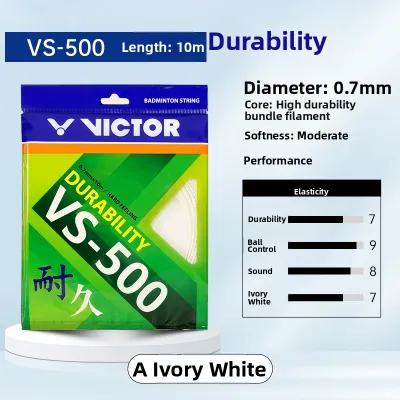
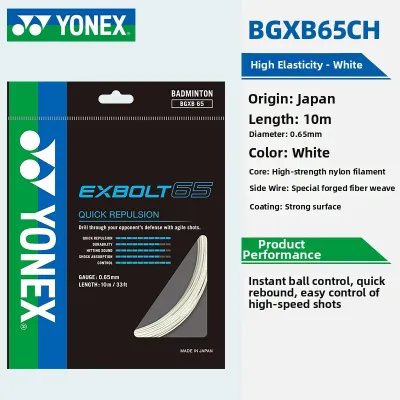
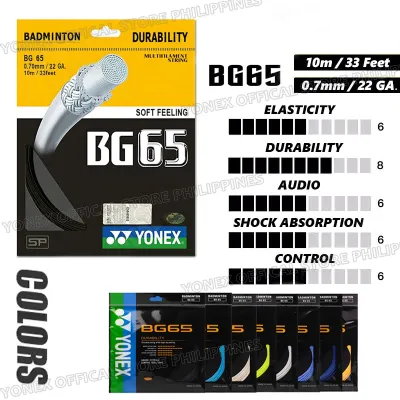
Before selecting a specific string, you must understand the core physical properties that govern its performance on the court. The most fundamental of these properties is the string gauge, which refers to the thickness of the string. Gauges typically range from a thick 0.70mm down to an ultra-thin 0.61mm. Thicker strings provide excellent durability because they contain more material to withstand friction, but they create more aerodynamic drag and offer a duller feel. Conversely, thinner strings slice through the air quickly and provide excellent repulsion, but they wear out rapidly under heavy hitting.
The internal construction of the string also plays a major role in how it behaves. Most modern strings utilize a multifilament construction, where thousands of fine synthetic fibers are braided together around a central core. This design mimics natural gut, offering high elasticity, excellent repulsion, and good shock absorption. Monofilament strings are stiffer and more durable but transfer more shock to the wrist and elbow. Specialized coatings, such as textured resins, are often applied to the outer layer to alter the friction between the strings, directly affecting how much grip you get on the shuttlecock.
Products mentioned in this guide
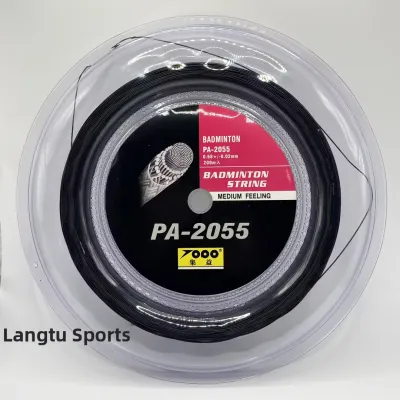
37 Lazada user ratings
good quality for the price
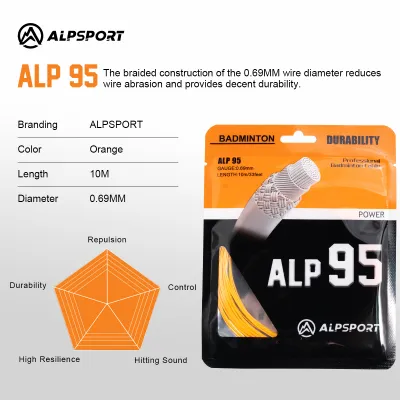
99 Lazada user ratings
The perfect grip for players, featuring a non-slip wooden grip for enhanced control, durable and long-lasting—great value for money, suitabl…Read full reviewShow less
The perfect grip for players, featuring a non-slip wooden grip for enhanced control, durable and long-lasting—great value for money, suitable for everyday use. Made with durable nylon fiber badminton racket shafts, from the trusted brand ALPSPORT.
Suitable for different string tensions, Easy to thread and use, Nylon fiber for added durability, i can now have a higher tension for my rac…Read full reviewShow less
Suitable for different string tensions, Easy to thread and use, Nylon fiber for added durability, i can now have a higher tension for my racket. It's cheaper than those in the mall. Thank u seller for sending the correct item and color.
Durable and long-lasting strings, Suitable for different string tensions, Responsibility of the thread puller, Responsibility of the thread …Read full reviewShow less
Durable and long-lasting strings, Suitable for different string tensions, Responsibility of the thread puller, Responsibility of the thread puller,
It's my second order for this product. I love it! I will order again. Thank u seller for sending the correct item.
Universal resistant badminton line, High-pound bulk pull line, Suitable for different string tensions,
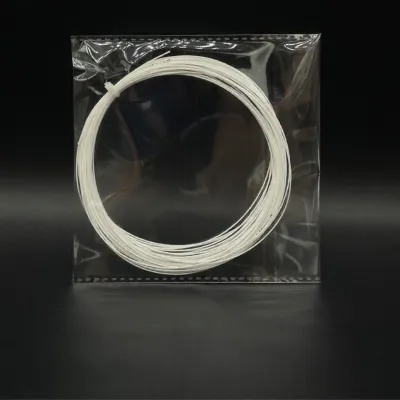
138 Lazada user ratings
Versatile color options, Provides good control and power,
Easy to string on the racket, High-quality nylon thread,
Durable and long-lasting, Versatile color options,
Great value for money, Versatile color options,
🛠️Durability:goods items ang packaging
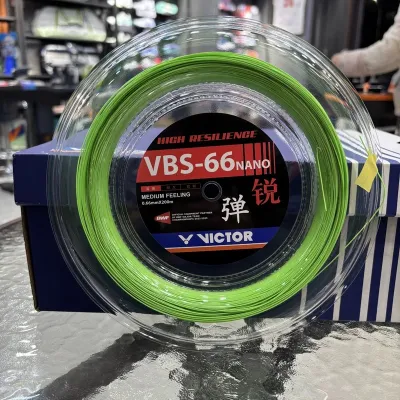
203 Lazada user ratings
yes very nice Reliable and consistent performance., Smooth and comfortable feel while playing., Perfect for players of all skill levels.,
Enhanced durability for extended use., High density nylon material for better performance., Reliable and consistent performance.,
🔨Durability: Great value for the price., Enhanced durability for extended use., 🎧Comfort: ok ✋Grip: best Nfjirkrngntkoren
Versatile color options to match your racket., Durable and long-lasting strings., Enhanced durability for extended use.,
i ordered gold delivered yellow
Prices are valid at publication and may change. Please refer to the product page for the latest price.
Finally, the tension at which the string is pulled on the racket frame determines the balance between power and control. Lower tensions, typically between 18 and 22 pounds (lbs), create a trampoline effect where the stringbed deforms deeply upon impact and flings the shuttlecock back with minimal effort. Higher tensions, ranging from 26 to 30 lbs, turn the stringbed into a rigid, board-like surface. This eliminates the trampoline effect, requiring the player to generate their own power through fast wrist snaps, but it offers unparalleled precision because the shuttlecock spends less time on the strings.
Matching Strings to Your Playing Style
Your dominant strategy on the court—whether you prefer to end rallies with heavy smashes, control the pace with delicate net drops, or play a patient, defensive game—should dictate your string profile. Matching your string’s physical traits to these tactical demands ensures your equipment works with your body rather than against it.

For Aggressive Smashers (Power Players)
Power players rely on rapid energy transfer to maximize shuttlecock speed. Thinner gauges with high-repulsion properties are ideal here, as they snap back quickly to launch the shuttlecock. Stiffer strings strung at appropriate tensions can amplify this power, but only if the player possesses the rapid swing speed required to flex the stiff stringbed.
The primary trade-off for this style is durability. Heavy smashers using thin strings will experience frequent breakages, especially during off-center hits. Additionally, stiffer setups transfer more vibration to the arm, which can lead to fatigue during long sessions in hot, humid conditions.
For Defensive Retrievers and Net Players (Control Players)
Control-oriented players prioritize placement, spin, and soft touches at the net. For this style, strings with textured or rough outer coatings are highly beneficial. The added texture increases friction against the shuttlecock, allowing players to generate sharper slices, tumbling net shots, and deceptive cross-court drops.
Softer multifilament strings are preferred because they increase dwell time—the fraction of a second the shuttlecock remains in contact with the stringbed—giving the player better tactile feedback. Tensions for control players are typically kept in the moderate-to-high range to ensure the stringbed remains stable and predictable during delicate touches.
For All-Around Players (Balanced Style)
Balanced players require a setup that transitions seamlessly from defensive lifts to sudden attacking smashes. A mid-range gauge, typically between 0.65mm and 0.68mm, offers a practical compromise, delivering decent durability without sacrificing too much tactile feedback.
These players should look for strings designed to offer a balanced blend of repulsion power and shock absorption. Instead of constantly switching string models to find a perfect balance, all-around players can fine-tune their performance simply by adjusting their tension by one or two pounds depending on the court conditions and their physical comfort.
Adjusting String Choices for Your Skill Level
Your technical proficiency is the ultimate limiting factor when choosing strings and tensions. Beginners should prioritize durability and safety. When starting out, hitting the sweet spot consistently is difficult. Off-center hits near the racket frame put immense localized stress on thin strings, causing them to snap instantly. Therefore, beginners should opt for thicker gauges (0.69mm to 0.70mm) and lower tensions, specifically between 18 and 22 lbs. This setup provides a large, forgiving sweet spot, generates easy depth on clears, and cushions the arm against harsh vibrations, reducing the risk of developing tennis elbow.
Intermediate players who have developed consistent hitting form and basic footwork can transition to medium-gauge strings (0.65mm to 0.68mm). At this stage, swing speeds are faster, and the sweet spot is hit more reliably. Tension can be gradually increased to 23 to 26 lbs. This adjustment reduces the trampoline effect slightly, forcing the player to rely more on their developing technique for power while granting them significantly better control over the shuttlecock’s trajectory.
Advanced players possess highly refined technique, rapid wrist acceleration, and consistent sweet-spot contact. They can fully exploit the benefits of ultra-thin, high-performance strings (0.61mm to 0.64mm) strung at high tensions of 27 lbs and above. While these thin strings wear out quickly and high tensions make the sweet spot incredibly small, advanced players accept these trade-offs for the instantaneous feedback, explosive repulsion, and surgical precision required at competitive levels.
Practical Buying and Maintenance Tips
Sourcing genuine strings is crucial, as counterfeit products are common on unregulated online marketplaces. In the Philippines, it is best to purchase strings directly from reputable local sports specialty shops or authorized online sports retailers. When buying, examine the manufacturer’s packaging carefully. Genuine packaging clearly displays the string’s gauge, core material composition, and recommended tension limits.
Maintaining your stringbed requires regular inspection. Over time, strings lose tension naturally, a process accelerated by the high humidity and tropical temperatures common in local playing venues. You will know it is time to restring when you notice deep notches worn into the string intersections, visible fraying of the outer fibers, or a dull, “dead” sound upon impact. A baggy, loose stringbed forces you to swing harder to achieve the same depth, which can strain your shoulder and wrist. Restringing labor in local shops typically costs between ₱150 and ₱300, making regular maintenance an affordable way to protect your joints and keep your game consistent.
To prolong the life of your strings, store your rackets in a thermal-lined bag and keep them out of extreme heat, such as inside a parked car under the sun. High heat degrades the nylon fibers, causing rapid tension loss and premature breakage. Additionally, ask your local stringer to inspect the racket’s plastic grommets during every restringing session; cracked or missing grommets allow the sharp edges of the carbon frame to cut directly into the string, leading to instant breakage.
Frequently Asked Questions (FAQ)
How often should I restring my badminton racket?
As a general guideline, you should restring your racket as many times a year as you play per week. For example, if you play twice a week, plan to restring at least twice a year. However, this rule only covers natural tension loss. If you play in highly humid environments, your strings will lose their elasticity faster, requiring more frequent restringing to maintain optimal playability. Always inspect your strings for physical wear, such as deep notches or fraying, and restring immediately if the stringbed feels loose or unresponsive.
Does a higher string tension always mean more power?
No, higher string tension does not automatically translate to more power. In fact, for most recreational players, higher tension actually reduces power. High tension creates a stiff, board-like stringbed with a very small sweet spot, requiring immense swing speed and precise timing to generate power. If your swing is not fast enough, the shuttlecock will simply bounce off the stiff strings with very little velocity. Lower tensions create a larger sweet spot and a trampoline effect that naturally assists in launching the shuttlecock deep into the opponent’s court with less physical effort.
Community discussion
Share your experience or ask a question. Comments are reviewed before publication.