
Selecting the right ball for basketball is the most critical decision you can make to ensure a consistent game, whether you are practicing solo drills or playing a high-stakes local tournament. The ideal basketball must match the specific surface you play on, your physical hand size, and your overall skill level. Using an incorrect ball can lead to rapid wear, poor handling, and unpredictable bounces that disrupt your rhythm. By understanding how materials, sizes, and court conditions interact, you can make an informed purchase that maximizes both performance and durability.
Understanding Basketball Materials and Court Compatibility
Basketballs are constructed from three primary materials: full-grain leather, composite (synthetic) leather, and rubber. Each material behaves differently depending on the playing environment, affecting how the ball feels in your hands and how it reacts when bouncing off the floor or backboard.
Full-grain leather is the gold standard for professional indoor play. Made from genuine animal hide, it is highly durable on clean wooden floors but requires a dedicated break-in period. When brand new, a genuine leather ball feels stiff and slightly slick. Over time, as it absorbs oils from players’ hands and undergoes repeated use, the material softens and develops an unmatched, premium grip. However, genuine leather is highly sensitive to moisture and rough surfaces, making it completely unsuitable for outdoor courts.
Products mentioned in this guide
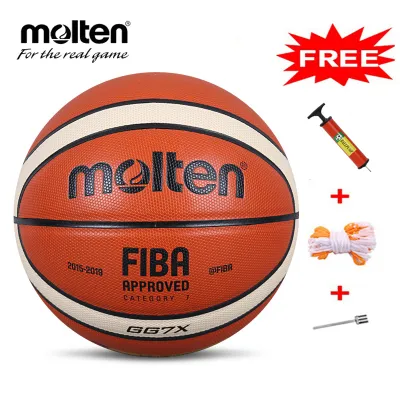
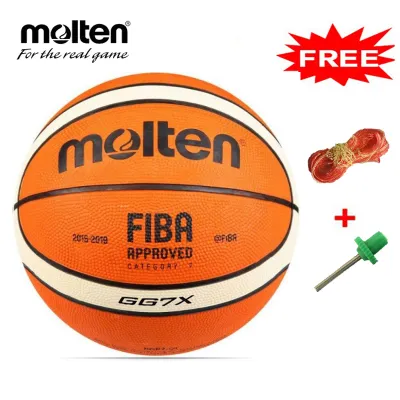
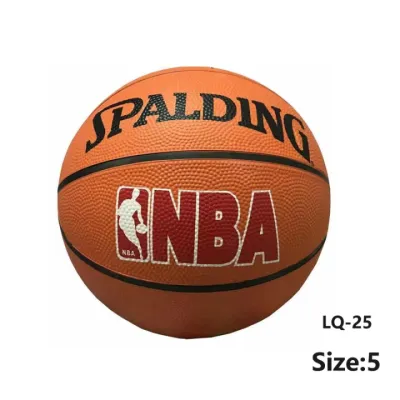
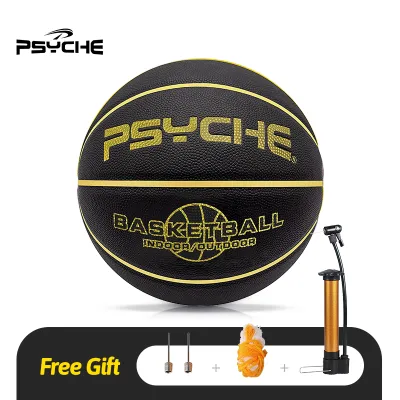
Prices are valid at publication and may change. Please refer to the product page for the latest price.
Composite leather, or synthetic leather, is engineered to mimic the feel of genuine leather without the high cost or the required break-in time. It offers a soft, cushioned feel right out of the box and provides excellent moisture management to help players maintain control when hands get sweaty. Composite balls are highly versatile; manufacturers can adjust the synthetic blend to create indoor-only models or more durable indoor/outdoor hybrid options.
Rubber is the most durable and economical material available. Rubber basketballs are highly resilient, making them the classic choice for rough outdoor courts. They resist punctures, scrapes, and moisture, and they bounce consistently on uneven concrete or asphalt. While they lack the soft, premium feel of leather or composite, their high-friction surface provides a reliable grip that does not degrade when exposed to dirt, dust, or rain.
Before purchasing, always inspect the manufacturer’s markings printed directly on the ball or its packaging. Look for clear indicators such as “Indoor Use Only,” “Outdoor,” or “Indoor/Outdoor.” These labels indicate the specific adhesive and cover materials used during construction, directly dictating how long the ball will survive on your court of choice.
Choosing the Right Ball for Indoor vs. Outdoor Courts
Matching your basketball to the court surface is essential for balancing performance and durability. Indoor and outdoor courts present entirely different physical challenges to the ball’s outer cover.

Indoor hardwood courts are designed to offer a consistent, high-traction surface. However, they easily collect fine dust, which can settle on the ball and cause slips. Genuine leather or high-end composite leather balls are preferred for indoor settings because their porous surfaces absorb sweat and dust, maintaining a reliable grip. The soft construction of these materials also prevents damage to the delicate varnish of indoor court floors.
Outdoor concrete or asphalt courts present a harsh, abrasive environment. These rough surfaces act like sandpaper, quickly grinding down soft materials. If you use an indoor leather or composite ball on concrete, the outer layer will peel, the seams will split, and the ball will lose its grip within a few sessions. Rubber balls are specifically engineered to withstand this intense friction, maintaining their structural integrity and bounce over hundreds of outdoor games.
Indoor/outdoor hybrid composite balls attempt to bridge the gap between these two environments. They feature a more durable composite cover that can handle moderate outdoor play while retaining a softer feel than standard rubber. While convenient for casual players who transition between different courts, hybrids involve trade-offs. Outdoor use will inevitably introduce dirt into the composite pores and wear down the pebbling, which reduces the ball’s grip and performance when you bring it back to a clean indoor hardwood court.
Selecting the Correct Size and Grip for Your Skill Level
Using the correct basketball size is crucial for developing proper shooting form, passing accuracy, and ball-handling control. Basketballs are categorized into standardized sizes based on the player’s age and gender.
Size 7 is the official size for men’s professional, collegiate, and high school play, suitable for male players aged 15 and older. It has a circumference of 29.5 inches (approximately 75 centimeters) and a standard weight of 22 ounces. Using this size ensures older players train with the exact specifications used in official competitions.
Size 6 is the standard size for women’s professional and collegiate play, as well as youth players of both genders aged 12 to 14. It has a circumference of 28.5 inches (approximately 72.4 centimeters). This slightly smaller and lighter profile accommodates smaller hand spans, helping developing players maintain proper shooting mechanics without straining.
Size 5 is designed for youth players aged 9 to 11, featuring a circumference of 27.5 inches (approximately 69.8 centimeters). It allows younger players to build hand strength and learn fundamental dribbling and passing techniques without injuring their wrists or shoulders.
Beyond size, the physical design of the ball’s surface significantly impacts handling. Deep channels—the recessed black grooves separating the panels—give your fingertips natural leverage points to grip and spin the ball during a shot. Surface pebbling refers to the thousands of tiny raised bumps across the panels. High-quality, uniform pebbling increases the friction between your skin and the ball, preventing slips during quick movements, which is especially helpful for players still mastering their ball-handling skills.
How to Inspect and Test a Basketball Before Buying
When evaluating a basketball in a sporting goods store or upon unboxing an online delivery, performing a few simple physical checks can help you verify its quality and construction.
Start with a basic bounce test to check for consistent rebound and air retention. Hold the ball at eye level (approximately 1.8 meters) and drop it onto a hard, flat floor. A properly inflated, high-quality ball should rebound consistently to about chest height (around 1.2 to 1.4 meters). If the ball bounces significantly lower, or if the rebound feels dull and hollow, it may have a slow air leak or a compromised inner bladder.
Next, perform a feel and texture check. Run your palms and fingers over the entire surface of the ball. The pebbling should feel uniform, with no smooth patches, flat spots, or unexpected bumps. Squeeze the ball firmly with both hands to check for structural consistency; there should be no soft areas or pockets where the cover material feels separated from the inner carcass.
Finally, carefully examine the black channels and seams where the panels meet. The edges of the panels should be perfectly flush with the channels, with no lifting, peeling, or visible adhesive residue. Inspect the inflation valve to ensure it is centered, secure, and flush with the ball’s surface. A crooked or loose valve is a common source of air leaks and can cause the ball to bounce erratically if it strikes the court at an angle.
Basic Care and Maintenance to Extend Your Ball's Life
Proper maintenance preserves the ball’s material integrity, ensuring a consistent bounce and grip over its lifespan.
Maintaining the correct air pressure is vital for consistent performance. Always use a reliable hand pump and a digital or analog pressure gauge. Before inserting the inflation needle, moisten it with a drop of water or soapy water to lubricate the valve and prevent the needle from tearing the rubber core. Inflate the ball strictly within the manufacturer’s recommended range, which is typically printed directly around the valve (usually between 7.5 and 8.5 PSI). Avoid over-inflating, which stretches the seams and warps the bladder.
Dirt and sweat build up on the ball’s surface over time, clogging the pebbling and reducing grip. For rubber and composite balls, wipe them down after play with a soft cloth dampened with warm water and a small amount of mild dish soap. Avoid soaking the ball or using harsh chemical solvents, which can break down the synthetic adhesives. For genuine leather balls, use a specialized leather cleaner and dry the surface immediately with a clean towel.
Proper storage is crucial, especially in tropical climates characterized by high humidity and intense heat. Never leave your basketball outdoors, on an exposed balcony, or inside the trunk of a hot car. Extreme heat can melt the internal glues, warp the bladder, and cause the panels to peel. Store your ball in a cool, dry, indoor environment away from direct sunlight to preserve its shape and material integrity.
Frequently Asked Questions (FAQ)
Can I use an indoor basketball on an outdoor court?
Using an indoor-only basketball on an outdoor court is highly discouraged. Indoor balls, especially those made of genuine leather or premium composite, are designed for smooth, clean surfaces. The abrasive nature of concrete or asphalt will quickly grind away the soft outer cover, ruin the pebbling, and split the seams. This results in a permanent loss of grip and ruins an expensive piece of equipment. To protect your investment, it is best to keep a dedicated, durable rubber or outdoor-rated composite ball for outdoor sessions.
How do I know if my basketball is properly inflated?
The most accurate way to verify inflation is by using a standard pressure gauge to match the manufacturer’s recommended PSI, which is typically embossed near the inflation valve. If you do not have a gauge, you can perform a quick visual drop test. Hold the ball at shoulder height and drop it onto a hard floor; it should bounce back up to approximately your waist or lower chest level. Avoid over-inflating the ball until it feels rock-hard, as this puts excessive stress on the seams, increases the risk of warping, and makes the ball difficult to control.
Community discussion
Share your experience or ask a question. Comments are reviewed before publication.