
Choosing the right basketball depends entirely on where you play your games. Smooth indoor hardwood or synthetic courts require soft, moisture-absorbing materials like composite or genuine leather to deliver maximum grip and control. Conversely, abrasive outdoor concrete or asphalt courts—such as typical local community or barangay courts—demand tough, wear-resistant rubber or heavy-duty composite covers that can withstand rough surfaces, dirt, and tropical weather. Selecting the wrong ball for your primary playing surface leads to rapid wear, poor performance, and unnecessary replacement costs.
Match Your Playing Surface to the Right Basketball Material
Selecting the perfect basketball begins with a clear assessment of your primary playing environment. The court surface acts as the primary force acting upon the ball, directly influencing how it bounces, how it wears down, and how much grip it provides. Smooth indoor surfaces, such as polished hardwood or synthetic polyurethane floors, offer a consistent, non-abrasive environment. In contrast, outdoor courts are highly abrasive and unforgiving to delicate materials.
To accommodate these different environments, manufacturers categorize basketball covers into three primary materials: full-grain leather, composite leather, and rubber. Each material is engineered to perform under specific conditions, creating a direct trade-off between premium tactile feel and rugged durability.
Products mentioned in this guide
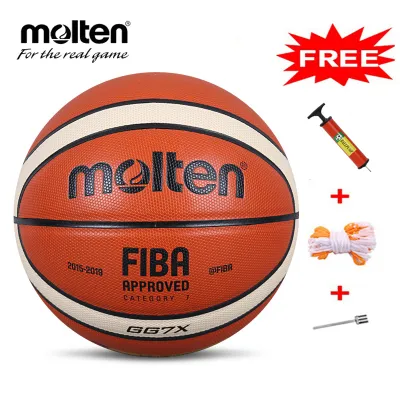
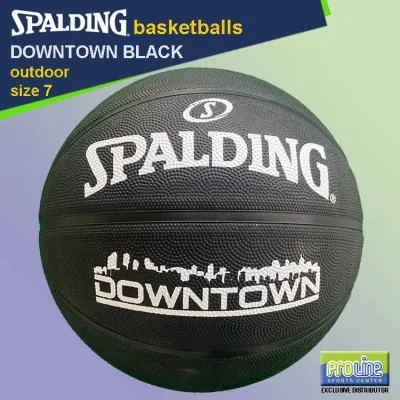
Prices are valid at publication and may change. Please refer to the product page for the latest price.
- Full-Grain Leather: The gold standard for professional indoor play. It requires a break-in period but offers unmatched grip as it absorbs moisture over time.
- Composite Leather: A synthetic alternative that mimics the feel of real leather without the high cost or break-in time. It is highly versatile and available in various grades for indoor or hybrid use.
- Rubber: The most durable and economical option. It resists abrasion from concrete and maintains its structural integrity when exposed to dirt, moisture, and rough handling.
Understanding this material hierarchy prevents you from making an expensive mistake. A ball designed for the clean, controlled environment of an indoor court will quickly degrade if subjected to the friction of outdoor concrete, while a stiff outdoor ball will lack the responsiveness needed for high-level indoor play.
Maximize Grip and Feel on Indoor Hardwood and Synthetic Courts
Indoor basketball courts demand a ball that prioritizes control, consistent bounce, and moisture management. When playing in closed gyms, players generate significant sweat, which can transfer to the ball and make it slippery. This is why full-grain leather and premium composite leathers are the undisputed standards for indoor performance. These materials feature advanced moisture-wicking properties that absorb sweat from your hands, ensuring the ball remains tacky and secure even during intense, fast-paced games.

When shopping for an indoor basketball, you can perform several physical checks to evaluate its quality before making a purchase:
- Pebble Texture: Run your fingers across the surface. High-quality indoor balls have a dense, uniform pebble pattern that feels slightly soft or cushioned to the touch. This cushioning provides better fingertip control during shooting and dribbling.
- Moisture Absorption: Apply a tiny drop of moisture to the cover. A premium indoor composite ball should absorb or disperse the moisture quickly, maintaining its tackiness rather than letting the liquid pool on the surface.
- Channel Depth: Inspect the black channels running across the ball. Deeper, wider channels allow your fingers to find natural leverage points, which is essential for generating backspin on your shots and maintaining control during passes.
It is crucial to keep these premium balls strictly indoors. Using an indoor-only composite or genuine leather ball on rough concrete or asphalt will cause immediate, irreversible damage. The abrasive ground acts like sandpaper, tearing the soft outer cover, peeling away the panels, and smoothing out the pebble texture within a single session. This not only ruins the grip but also wastes a significant financial investment, as high-end indoor balls often cost between ₱3,000 and ₱8,000.
Prioritize Durability and Dust Resistance for Outdoor Concrete
Outdoor play requires an entirely different engineering approach. Concrete and asphalt courts are inherently rough, covered in fine dust, and exposed to harsh weather elements like high tropical heat and humidity. To survive these conditions, you must prioritize durability and dust resistance over plush hand-feel. This is where rubber and heavy-duty composite materials become essential.
Rubber basketballs are the traditional choice for outdoor courts. They are highly resilient, waterproof, and capable of bouncing consistently on uneven concrete. Heavy-duty composites, on the other hand, offer a middle ground by combining a tougher synthetic cover with a reinforced backing layer designed to resist punctures and deep scratches.
When selecting an outdoor basketball, look for the following design features:
- Pronounced Pebble Depth: Outdoor balls need deeper, sharper pebbles to cut through the fine layer of dust that inevitably settles on concrete courts. If the pebbles are too shallow, the dust will create a slippery barrier between your hands and the ball.
- Wide, Deep Channels: Deep channels help channel away dirt, small pebbles, and moisture, ensuring your fingers can still find grip even on an unpolished court.
- Thick Outer Cover: Press your fingernail into the cover. An outdoor-optimized ball will feel noticeably firmer and less spongy than an indoor model, indicating a thicker, wear-resistant outer layer.
Keep in mind that outdoor basketballs typically require a break-in period. When brand new, they can feel stiff, heavy, and slightly slick. As you play with them on concrete, the outer surface will scuff slightly, which actually improves the grip by removing the factory sheen. Do not be discouraged by the initial stiffness; it is a necessary characteristic of a ball built to last on rough surfaces.
Decide if an Indoor/Outdoor Hybrid Basketball Fits Your Routine
For players who constantly transition between indoor leagues and casual outdoor pickup games, buying two separate basketballs might not be practical. This scenario is where indoor/outdoor hybrid basketballs offer a viable solution. These balls are specifically engineered to bridge the gap between the soft feel of indoor composites and the rugged durability of outdoor rubber.
The construction of a hybrid basketball typically involves a specialized composite leather cover. Manufacturers use a slightly harder synthetic compound than what is found on pure indoor balls, reinforcing it with a durable adhesive backing. This allows the ball to resist the moderate abrasion of outdoor courts while retaining a texture that feels familiar and comfortable when you step onto a hardwood floor.
A hybrid ball is highly suitable for:
- Players who split their weekly court time evenly between indoor gyms and outdoor concrete.
- Students who carry one ball to school for use on both indoor multi-purpose courts and outdoor asphalt play areas.
- Budget-conscious players who want a decent level of performance without purchasing multiple specialized balls.
However, choosing a hybrid ball requires accepting certain performance compromises. On indoor hardwood, a hybrid ball will never offer the same ultra-tacky, cushioned grip as a dedicated indoor composite ball. Conversely, when used outdoors, a hybrid ball will wear out significantly faster than a dedicated rubber ball. The rough concrete will eventually smooth out the synthetic cover, meaning you will need to replace it more frequently if you play primarily outdoors.
Maintain Your Basketball to Preserve Grip and Bounce
Regardless of the material you choose, proper maintenance is key to extending your basketball’s lifespan and preserving its playing characteristics. Dust, sweat, and dirt accumulate on the cover over time, clogging the pebbles and reducing grip. Furthermore, exposure to extreme tropical heat and humidity can damage the internal bladder and cause the outer panels to peel.
To keep your basketball in peak condition, implement these simple maintenance habits:
- Cleaning: After playing on a dusty outdoor court, wipe the ball down with a damp microfiber cloth. For stubborn dirt on rubber or composite balls, use a mild mixture of water and a drop of dish soap. Wipe it clean with a damp cloth and dry it immediately with a towel. Never submerge the ball in water or use harsh chemical solvents, as these can dissolve the glues holding the panels together.
- Inflation Checks: Always use a reliable pressure gauge when inflating your ball. Most basketballs have their recommended inflation pressure printed near the inflation valve, typically ranging from 7.5 to 8.5 PSI. Over-inflating the ball stretches the internal nylon windings and bladder, leading to lumps, an inconsistent bounce, and a higher risk of popping. Under-inflation, on the other hand, ruins the ball's responsiveness.
- Storage: Store your basketball in a cool, dry indoor space. Avoid leaving it in direct sunlight, inside a hot car trunk, or exposed to rain on an outdoor porch. Extreme heat causes the air inside the bladder to expand, warping the ball's shape and weakening the outer adhesive layers.
Monitor your ball for visual and tactile warning signs of wear. If you notice the pebble texture has worn completely smooth in major contact areas, or if the black channels have become flush with the panels, the grip is compromised beyond repair. Additionally, if the ball develops a visible bulge, bounces at an odd angle on a flat surface, or fails to hold air pressure for more than a few days, the internal bladder has failed, and it is time to invest in a replacement.
Frequently Asked Questions (FAQ)
Can I use an indoor basketball on an outdoor concrete court?
While you physically can, doing so is highly discouraged. The soft composite or genuine leather cover of an indoor basketball is not designed to withstand the high friction of concrete or asphalt. Within just one or two outdoor sessions, the rough surface will tear the delicate outer layer, smooth out the grip-enhancing pebbles, and permanently ruin the ball’s feel. Given that premium indoor basketballs represent a significant financial investment, using them outdoors results in rapid wear and a poor return on your money.
How do I know when it is time to replace my outdoor basketball?
You should replace your outdoor basketball when it exhibits clear signs of physical and structural degradation. Tactile indicators include a completely smooth surface where the pebbles have worn away, shallow or non-existent channels, and slick spots that make the ball difficult to grip even when dry. Structural indicators include an uneven or unpredictable bounce on a flat surface, visible bulging or warping of the ball’s spherical shape, and a slow air leak that requires you to pump the ball before every game.
Community discussion
Share your experience or ask a question. Comments are reviewed before publication.