
Finding the right basketball ring for kids is one of the most critical decisions a parent can make to support a young player’s athletic journey. While the ultimate goal for any aspiring player is to shoot on a regulation 10-foot hoop, forcing a child to play on a full-height system too early can severely damage their shooting form and enthusiasm for the sport. The ideal height depends entirely on your child’s age, physical strength, and developmental stage.
Generally, children aged 5 to 7 should use a rim set at 6 to 7 feet, those aged 8 to 10 should play at 8 to 9 feet, and players aged 11 and older can transition to the standard 10-foot height. Matching the rim’s height to your child’s physical capabilities ensures they develop proper shooting mechanics, build confidence, and avoid chronic joint strain.
Why Proper Hoop Height Matters for Shooting Mechanics
Many parents make the mistake of setting up a standard 10-foot hoop in the driveway, expecting their young child to grow into it. However, shooting a basketball requires a coordinated chain of movement that starts from the feet, transfers through the legs and core, and releases through the arms and wrists. When a child attempts to shoot at a hoop that is too high for their physical strength, this kinetic chain breaks down completely.
Products mentioned in this guide
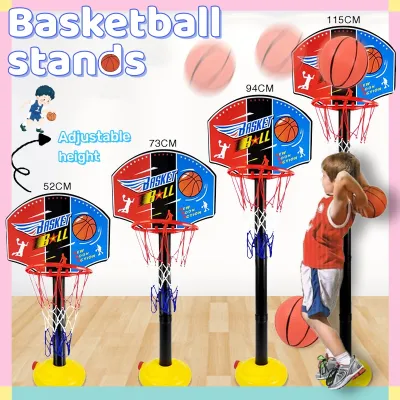
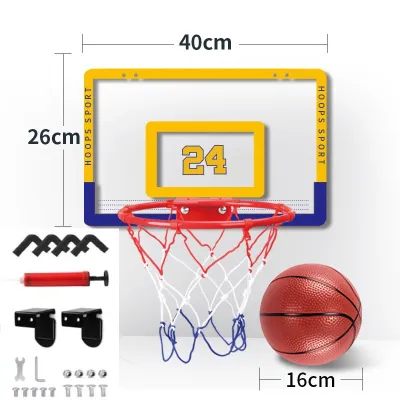
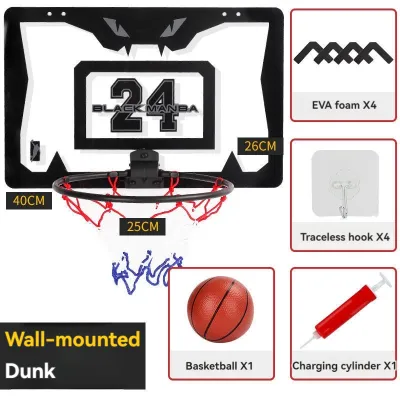
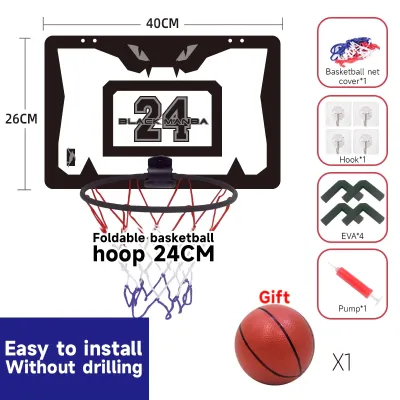
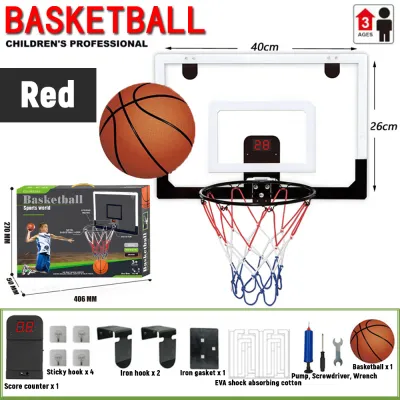
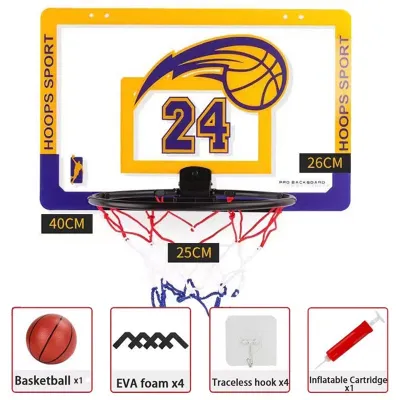
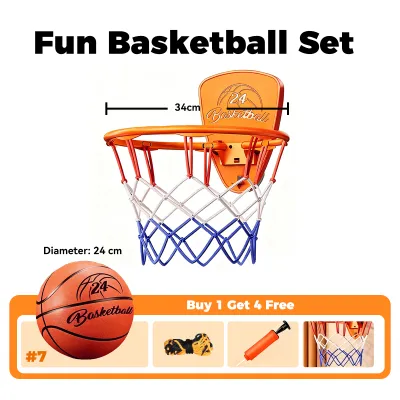
Prices are valid at publication and may change. Please refer to the product page for the latest price.
Instead of pushing the ball upward with a smooth, high-arching release, they are forced to use a two-handed chest push or a low-slung heave just to get the ball near the rim. These compensatory movements quickly turn into bad habits that are incredibly difficult to unlearn as the child grows. When a player develops muscle memory based on incorrect mechanics, their shooting accuracy suffers, and they may struggle to transition to standard play later in life.
Furthermore, constantly falling short of a high rim leads to immediate frustration, fatigue, and a loss of interest in the game. Setting the basketball ring for kids at an age-appropriate height ensures that every shot reinforces correct form, allowing your child to experience the satisfaction of clean swishes while building sustainable muscle memory.
Standard Basketball Ring for Kids: Heights by Age Group
To help parents navigate this progression, youth sports organizations worldwide have established clear, age-based standards for hoop heights. These guidelines are designed to align with average physical development, joint strength, and coordination levels at each stage of childhood. While these serve as excellent baseline recommendations, you should always observe your child’s individual physical strength and adjust the height accordingly.

Ages 5 to 7 (6 to 7 Feet)
For early beginners in this age bracket, the hoop should be positioned between 6 and 7 feet (approximately 1.83 to 2.13 meters) off the ground. At this developmental stage, children are still developing basic hand-eye coordination and motor skills, and their shoulder joints are highly vulnerable to strain from excessive force. Keeping the rim low allows them to focus on the fundamental mechanics of a shot—such as bending their knees, keeping their eyes on the target, and releasing the ball with a high arc—without straining. This stage is most effective when paired with smaller, lightweight basketballs, such as Size 3 or Size 4, which are easier for small hands to grip and control.
Ages 8 to 10 (8 to 9 Feet)
As children enter their middle childhood years, their upper body strength, balance, and spatial awareness improve significantly. An 8-foot (2.44 meters) rim is highly recommended for 8-year-olds, while 9-year-olds and 10-year-olds can typically transition to a 9-foot (2.74 meters) setup. This transitional phase is critical for refining shooting mechanics, introducing basic layups, and practicing structured offensive drills. At this height, players can begin to mimic the shooting forms of older athletes while maintaining control over their release. It is a vital stepping stone that prevents the jarring jump from a toddler-sized hoop straight to a regulation-height rim.
Ages 11 and Older (10 Feet / Standard)
By the age of 11, most children have developed the physical strength and coordination required to transition to the standard regulation height of 10 feet (3.05 meters). This is the official height used in high school, college, and professional leagues globally. However, you should only make this transition if your child can consistently shoot with proper form from a reasonable distance at 9 feet. If they still struggle to reach a 9-foot rim without distorting their shooting motion, it is far better to keep the hoop lower for a few more months to solidify their mechanics rather than rushing them to regulation height.
How to Tell if the Current Ring Is Too High or Too Low
Because children grow and develop at highly individual rates, age charts should only serve as a starting point. To truly determine if your child’s basketball ring for kids is set at the correct height, you must actively observe their physical posture, balance, and shooting mechanics during active play.
Signs the Hoop Is Too High
If the rim is positioned too high for your child’s current strength, their shooting form will deteriorate rapidly as they try to compensate for the lack of leverage. Watch for these clear physical indicators:
- The Chest Push: The child holds the ball with both hands at chest or chin level and shoves it forward and upward, using their entire upper body rather than a clean, one-handed release.
- Excessive Leaning: The child leans their torso far backward during the shot or falls forward off-balance immediately after releasing the ball to generate extra momentum.
- Flat Trajectory: The ball travels in a flat, line-drive path with almost no upward arc, frequently clanging hard off the front of the rim or the bottom of the backboard.
- Shoulder and Neck Strain: The child complains of soreness in their shoulders, neck, or lower back after a short practice session, indicating they are overexerting their joints.
Signs the Hoop Is Too Low
Conversely, a hoop that is set too low fails to challenge your child and can hinder their athletic growth. Look for these signs that it is time to raise the rim:
- Effortless Rim Touching: The child can easily dunk, slap the backboard, or grab the rim without executing a proper vertical jump or showing athletic effort.
- Unnatural Lobbing: The child has to shoot with an excessively high, unnatural looping arc just to keep the ball from flying over the backboard, which ruins their standard shooting trajectory.
- Lack of Leg Engagement: The child shoots entirely from their upper body without bending their knees or jumping, as they do not need to generate any power from their legs to reach the target.
- Boredom and Easy Scoring: The child scores on almost every attempt with minimal effort and quickly loses interest in practicing, indicating the setup no longer provides a stimulating challenge.
Adjusting Your Setup: Fixed vs. Adjustable Systems
When choosing a basketball ring for kids, you must decide between a fixed-height system and an adjustable system. Fixed-height hoops are highly stable and durable, but they offer zero flexibility as your child grows, making them less practical for families with multiple children of different ages. Adjustable systems, on the other hand, are the ideal choice for growing players. They allow you to raise the rim in small increments, matching your child’s physical development year after year.
These adjustable systems typically utilize one of three mechanisms:
- Telescopic Poles: These systems require you to manually slide the pole segments and secure them with a bolt or peg. While highly affordable, they often require two adults to adjust safely.
- Crank Systems: These use a hand crank located at the back of the pole, allowing you to smoothly adjust the height with minimal physical effort.
- Pneumatic or Counterbalance Triggers: These systems utilize a gas-assist strut or spring mechanism, allowing you to adjust the height instantly with a simple squeeze of a handle.
When adjusting any basketball system, always prioritize safety. Check the manufacturer’s manual for specific weight and safety limits before operating the mechanism. Always lower the hoop to its minimum height or secure the backboard before loosening any bolts to prevent the heavy assembly from dropping suddenly and causing injury.
Additionally, outdoor setups in tropical climates like the Philippines require careful maintenance to withstand intense humidity, heavy monsoon rains, and strong winds. In the local market, entry-level portable systems generally range from ₱3,000 to ₱8,000, while heavy-duty, professional-grade adjustable systems can exceed ₱20,000.
Given the local climate, look for systems featuring rust-resistant powder coatings on all metal poles and hardware to prevent structural degradation. Ensure the backboard is made of UV-stabilized polycarbonate or acrylic to prevent yellowing and cracking under intense tropical sunlight. For portable systems, the base must be properly weighted. While water is easy to fill, sand is significantly heavier and more stable. In regions prone to severe weather or typhoons, it is highly recommended to empty the base or move the entire portable system to a sheltered area to prevent it from being knocked over by extreme winds.
Matching the Right Basketball Size to the Hoop
An often-overlooked aspect of setting up a youth basketball court is matching the basketball size to both the hoop height and the child’s physical build. Using a ball that is too heavy or too large completely negates the benefits of a correctly adjusted rim, as the child will still be forced to use poor, two-handed mechanics to lift the heavy ball.
To ensure a balanced setup, verify that your child is using the correct ball size according to standard youth guidelines:
- Size 4 (25.5 inches, approx. 510g): Designed for young children aged 5 to 8. This lightweight ball is easy to grip and matches perfectly with a 6-to-7-foot hoop.
- Size 5 (27.5 inches, approx. 570g): The standard youth size for boys and girls aged 9 to 11. It pairs exceptionally well with an 8-to-9-foot hoop.
- Size 6 (28.5 inches, approx. 620g): Used by girls aged 12 and older, as well as boys aged 12 to 14. This is the official size for women's competitive play.
- Size 7 (29.5 inches, approx. 650g): The official regulation size for boys and men aged 15 and older, designed for use on a standard 10-foot hoop.
Always check the manufacturer’s care and inflation instructions on both the basketball and the hoop system to ensure optimal bounce and safety during play.
Frequently Asked Questions (FAQ)
Can a young child practice on a standard 10-foot hoop?
While a young child can physically attempt to play on a standard 10-foot hoop, doing so is highly discouraged by youth sports coaches. Attempting to shoot at a regulation height before developing the necessary upper body and leg strength forces the child to adopt highly inefficient shooting mechanics, such as pushing the ball from the chest or throwing it with two hands. These bad habits quickly become deeply ingrained in their muscle memory and are very difficult to correct later. Additionally, the constant physical strain of trying to reach a high rim can lead to joint fatigue and shoulder injuries in growing bodies. It is always best to practice on an age-appropriate rim height to foster correct form and build confidence.
How do I accurately measure the height of a basketball ring?
To accurately measure the height of your basketball ring, use a reliable tape measure and ensure the hoop is set up on a completely flat, level playing surface. Measure from the top edge of the metal rim straight down to the ground directly beneath it. Do not measure from the bottom of the net, the backboard, or the mounting brackets, as these do not represent the actual playing height. If your driveway or court has a slight slope, make sure the tape measure is perfectly vertical (perpendicular to the ground) to avoid an inaccurate reading. Double-checking this measurement ensures your child is practicing at the exact height intended for their developmental stage.
Community discussion
Share your experience or ask a question. Comments are reviewed before publication.