
Selecting your first underwater hunting tool requires understanding how local marine environments interact with your gear. In the Philippines, where shallow coral reefs, rocky drop-offs, and varying coastal visibility define the underwater landscape, choosing a beginner-friendly pana for fishing under water is a matter of balancing maneuverability, safety, and mechanical simplicity. An oversized or overly complex setup will not only hinder your movement in tight reef crevices but can also pose serious safety risks to you and your dive buddy. By focusing on a streamlined, manageable setup, you can safely develop your breath-hold capacity, reef awareness, and target accuracy.
For those entering the sport, the ideal starting point is a rubber band-powered spear gun measuring between 70 cm and 90 cm in barrel length. This size offers the perfect compromise between tracking speed in the water and sufficient power to secure common reef fish. Before making a purchase, you must evaluate the build quality of the trigger mechanism, the durability of the shaft, and the availability of replacement parts in local dive shops. Ultimately, no piece of equipment can substitute for proper freediving training and a deep respect for local marine habitats.
Understanding Spear Gun Types for Shallow Coastal Waters
When exploring options for a pana for fishing under water, you will primarily encounter two mechanical designs: rubber band (elastic) spear guns and pneumatic spear guns. Rubber band models utilize heavy-duty latex bands stretched back to hook into notches on a steel shaft. Pneumatic models, on the other hand, use compressed air sealed inside a chamber to propel the shaft forward when the trigger is pulled. For beginners navigating tropical reef environments, understanding the practical differences between these two systems is essential for a safe and successful experience.
Products mentioned in this guide
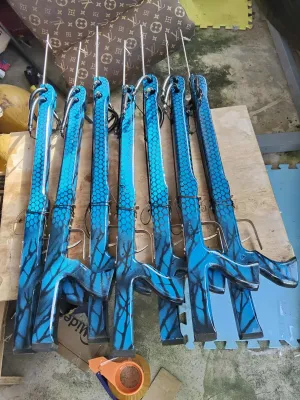
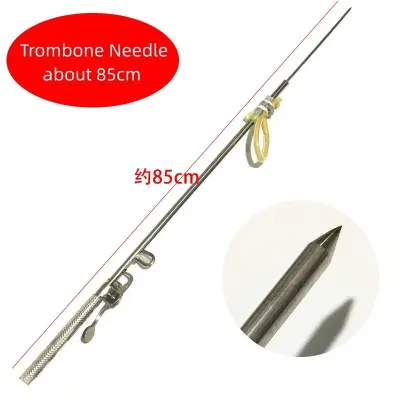
Prices are valid at publication and may change. Please refer to the product page for the latest price.
Rubber band spear guns are widely considered the most practical choice for novice divers. Their mechanical simplicity is their greatest asset; there are no internal O-rings, valves, or pressurized chambers that can fail mid-dive. If a band snaps or wears out due to intense tropical sun exposure, you can easily replace it on the boat or shore with basic tools. Furthermore, band guns provide a clear visual indicator of whether the weapon is loaded and under tension, which is a critical safety feature for beginners learning to handle loaded gear in the water.
Pneumatic spear guns offer high power in a compact frame, but they present several challenges for beginners. They require specialized pumps to pressurize, and their internal mechanisms are highly sensitive to sand and salt crystals. A single grain of sand bypassing the muzzle seal can scratch the inner barrel, leading to pressure leaks that require professional servicing. Additionally, pneumatic guns produce a distinct, metallic sound upon firing, which can easily spook nearby fish and alert other marine life in quiet reef zones.
Before committing to a mechanical spear gun, you should also consider simpler alternatives like polespears and Hawaiian slings. A polespear consists of a single shaft with an elastic loop attached to the rear, while a Hawaiian sling uses a separate launching tube similar to a bow and arrow. These tools are exceptional for building foundational skills. They force you to perfect your stealth, improve your breath-hold duration, and get much closer to your target before releasing. Mastering a polespear first ensures that when you transition to a mechanical gun, you possess the reef awareness necessary to hunt responsibly.
Sizing Your Spear Gun for Philippine Reef Conditions
Selecting the correct barrel length is one of the most critical decisions you will make when purchasing a pana for fishing under water. In the Philippines, coastal waters often feature intricate coral formations, shallow volcanic rock structures, and variable visibility that can change rapidly with the tide. A gun that is too long will feel clumsy and slow when you attempt to track a moving fish among tight crevices, while a gun that is too short may lack the range needed in clearer waters.

For general reef hunting in shallow coastal areas, a barrel length of 70 cm to 90 cm is highly recommended. This range provides excellent maneuverability, allowing you to swing the gun quickly to align a shot without striking fragile coral heads or getting wedged in rocky overhangs. It also offers a comfortable loading length for most body sizes, ensuring you can reach the bands to load the gun safely without straining your arms or losing your balance on the surface.
Using an oversized gun, such as those measuring 100 cm or longer, presents significant handling difficulties for beginners. These longer models are designed for open-blue-water hunting where visibility is exceptional and targets are large. In restricted reef spaces or areas with moderate currents, a long barrel acts like a sail, catching the moving water and fatiguing your wrist and forearm. Attempting to maneuver a long gun inside a cave or under a ledge is not only frustrating but increases the risk of damaging the tip or bending the shaft against hard rock.
The relationship between barrel length, band stretch, and effective range is straightforward: a longer barrel allows for a longer band stretch, which translates to more power and a longer flight path for the shaft. However, for entry-level reef hunting, your effective shooting range is rarely more than two to three meters from the tip of the gun. A 70 cm to 90 cm gun provides more than enough velocity to penetrate typical reef species within this distance. Prioritizing maneuverability over excessive range will help you focus on getting closer to your target, which is the hallmark of an ethical and skilled diver.
Key Features to Check Before Buying
When evaluating entry-level models at a local dive shop or through online marketplaces, you must perform a thorough physical inspection to ensure the gear is safe, durable, and easy to maintain. The trigger mechanism is the most critical safety component of any spear gun. You should verify that the trigger housing is constructed from robust, corrosion-resistant materials such as high-grade stainless steel or marine-grade reinforced polymers. Test the trigger action to ensure it operates smoothly without sticking, and check that the safety switch engages positively and cannot be easily bumped out of position.
The spear shaft itself requires close inspection. For reef hunting, a shaft thickness of 6.5 mm to 7 mm is standard, offering a good balance between speed and resistance to bending. Look for a shaft made of spring steel or stainless steel to withstand constant exposure to warm, highly saline tropical waters. The tip configuration is also important; a Tahitian shaft with a single, integrated flopper is highly recommended for beginners because of its simplicity and low drag. Ensure the flopper moves freely and drops open easily to secure your catch.
Another essential feature to check is the presence and design of a chest loading pad. Loading a rubber band spear gun requires placing the butt of the gun against your chest or hip and pulling the bands back with both hands. Without a proper, cushioned loading pad on the back of the handle, this process can be painful and can cause bruising or slipping, especially when wearing a thin tropical rash guard instead of a thick neoprene wetsuit. Ensure the pad is wide, slip-resistant, and positioned comfortably for your body type.
Finally, assess the ease of replacing the rubber bands and the availability of standard spare parts. Over time, exposure to intense tropical UV rays and saltwater will degrade the latex bands, requiring regular replacement. Check if the gun uses standard screw-in bands or tied bands, and verify that local retailers stock compatible wishbones and bridles. Choosing a model that utilizes standard, widely available components ensures that a broken band will not end your diving trip prematurely.
Building Your Shortlist: Evaluating Entry-Level Options
To build a reliable shortlist of potential spear guns, you should focus on sourcing your equipment from established local dive shops or reputable online retailers that specialize in freediving and spearfishing gear. These sellers are more likely to provide accurate manufacturer specifications, genuine replacement parts, and reliable warranty support. Avoid purchasing unbranded, toy-grade, or poorly documented models from generic online marketplaces, as these products often use inferior plastics and low-grade metals that can fail catastrophically under the high tension of loaded bands.
When planning your ₱ budget, it is wise to view your spear gun as just one part of a complete safety and diving system. Rather than spending your entire budget on an expensive, high-end gun, allocate a significant portion of your funds toward high-quality personal gear. A low-volume mask that fits your face perfectly is essential for maintaining clear vision and easy pressure equalization as you descend. Similarly, a pair of long-blade freediving fins will dramatically improve your swimming efficiency, allowing you to conserve oxygen and stay relaxed underwater.
Before finalizing your choice, look for verifiable user feedback and reviews from local divers who have tested the equipment in tropical saltwater conditions. Pay close attention to comments regarding how well the barrel resists water intrusion—aluminum barrels should be properly sealed to prevent them from filling with water and losing buoyancy, while wooden or carbon fiber models should show high-quality finishes that resist scratching. A well-balanced gun should float on the surface after the shaft is discharged, making it easier to retrieve if you need to tend to a fish or assist your buddy.
Essential Safety and Local Regulation Checks
Spearfishing is a high-risk sport that demands strict adherence to safety protocols, physical limits, and local laws. Before you ever enter the water with a pana for fishing under water, you must verify the legal status of spearfishing in your chosen location. In the Philippines, municipal waters are governed by local government units (LGUs), and many areas have established Marine Protected Areas (MPAs), fish sanctuaries, or seasonal bans on specific species. Fishing in these restricted zones is illegal and carries heavy penalties; always consult the local barangay hall or municipal agriculture office to confirm where recreational spearfishing is permitted.
Physical preparation and self-awareness are your primary safety tools; equipment can never replace proper training and sound judgment. Never dive alone. Always practice the “one diver down, one diver up” buddy system, where one partner watches from the surface while the other descends. This ensures that if a shallow-water blackout or cramp occurs, immediate assistance is available. If you feel fatigued, cold, or experience difficulty equalizing your ears, stop diving immediately and return to shore or the boat.
Safe handling of the spear gun is non-negotiable and must become second nature. A spear gun should only be loaded when you are fully submerged in the water and ready to hunt. Never load your gun on the boat, on the beach, or while wading in shallow water, as a misfire in the air can propel the shaft with lethal force over a significant distance. Before climbing back onto a boat or exiting the water, you must completely unload the bands and secure the shaft.
Finally, maintain absolute muzzle discipline at all times. Never point a loaded or unloaded spear gun at yourself or anyone else, and always keep the safety switch engaged until you are actively aiming at a target. Be highly aware of your surroundings, especially in areas with moderate currents or low visibility where another diver could swim into your line of fire. If you lose sight of your buddy or cannot verify what lies behind your target, do not take the shot.
Frequently Asked Questions (FAQ)
Do I need a special permit to use a spear gun in the Philippines?
While there is no single, national recreational license required for spearfishing in the Philippines, local regulations vary significantly by municipality. Many local government units (LGUs) require registration, municipal permits, or the payment of environmental fees before you can fish in their waters. Additionally, certain provinces or islands may have strict ordinances banning spearfishing entirely or restricting it to specific zones. Always check with the local barangay or municipal agriculture office before diving to ensure you are compliant with local laws.
Is it legal to use a spear gun while scuba diving?
Using a spear gun while breathing compressed air from scuba equipment is widely prohibited under Philippine fisheries laws and is considered highly unethical within the global diving community. Scuba-assisted spearfishing removes the natural physical limits of breath-hold diving, leading to rapid overfishing and the destruction of fragile reef ecosystems. Recreational spearfishing must only be conducted while freediving (breath-hold) to maintain a fair chase and protect marine resources for future generations.
What is the proper way to rinse and store my spear gun after a dive?
To protect your equipment from the corrosive effects of tropical saltwater, you must rinse it thoroughly with clean fresh water after every session. Submerge the entire gun and repeatedly depress and release the trigger mechanism to flush out trapped salt crystals and sand. Allow the gun to dry completely in a shaded, well-ventilated area, as direct sunlight will rapidly degrade the latex rubber bands. Store the gun uncocked in a cool, dry place away from ozone-producing appliances or harsh chemicals.
Community discussion
Share your experience or ask a question. Comments are reviewed before publication.