
Selecting the right big tent capacity requires looking beyond the manufacturer’s passenger rating and analyzing how your group actually sleeps, moves, and stores gear. While a tent labeled for six people might technically fit six sleeping bags laid side-by-side, it leaves virtually no room for bags, coolers, or personal space. To find the ideal size, you must balance the physical dimensions of your camping group with the volume of your equipment, while accounting for the unique demands of your camping environment. In tropical climates where high humidity and sudden downpours are common, having extra breathing room and dedicated dry storage is not just a matter of comfort, but a necessity for keeping your gear dry and your living space well-ventilated.
Understanding Tent Capacity Ratings vs. Real-World Space
Industry-standard tent capacity ratings are calculated using a simple formula: the maximum number of standard adult sleeping pads that can fit on the tent floor like puzzle pieces. Manufacturers design these layouts with zero clearance between pads, assuming campers will sleep shoulder-to-shoulder without any personal gear inside the tent. This rating does not account for luggage, changing clothes, or the natural tendency of people to toss and turn during the night. Consequently, relying solely on the nominal “person count” on the box often leads to cramped, uncomfortable nights.
To establish a realistic baseline for comfort, experienced campers use a simple sizing rule of thumb: subtract two people from the manufacturer’s rated capacity. For example, a four-person tent is typically ideal for two adults with gear, while a six-person tent comfortably accommodates a family of four. If you prefer a more precise calculation, aim for a minimum of 2.5 to 3 square meters of floor space per person. This allocation ensures enough room for a standard sleeping mattress while leaving a narrow corridor for walking and storing small personal items.
Products mentioned in this guide
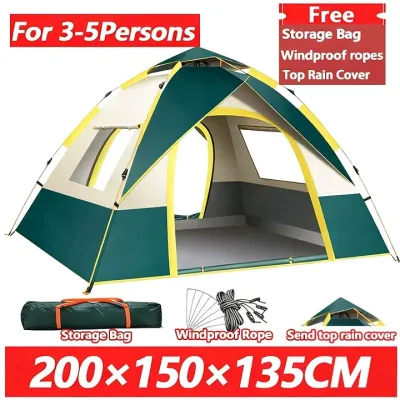
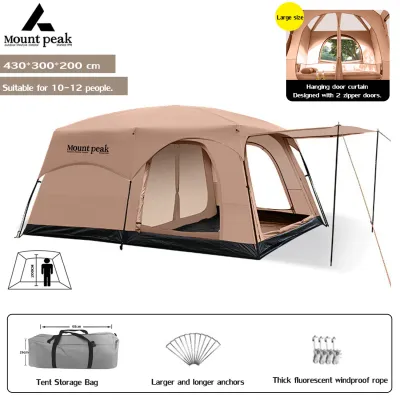
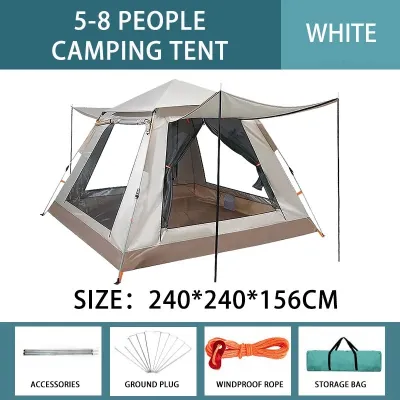
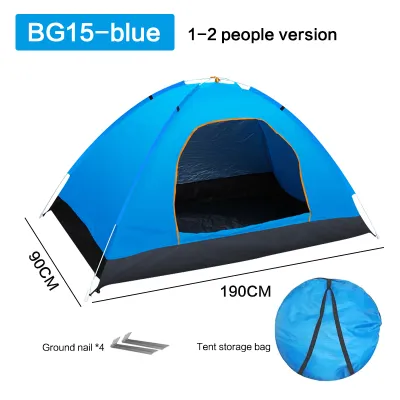
Prices are valid at publication and may change. Please refer to the product page for the latest price.
Beyond the flat floor area, the overall volume of the tent determines how spacious it actually feels. This is where checking the floor plan and peak height specifications becomes critical. A tent with a peak height of 180 centimeters allows most adults to stand upright, which makes changing clothes and moving around significantly easier. However, you must also look at the wall angles. Traditional dome tents have highly sloped walls that cut into the usable headroom near the edges, whereas cabin-style tents feature near-vertical walls that maximize the overhead volume, allowing you to utilize every square centimeter of the floor.
Calculating Space for Your Group and Gear
Determining your group’s specific space requirements starts with analyzing who is sleeping in the tent and their individual habits. Adults generally require more physical space and elbow room than children, but kids often need extra floor space for toys or games if rain forces the group indoors. If you camp with pets, a large dog can easily occupy the same footprint as an additional adult. Furthermore, consider your sleeping setups; if your group uses bulky double-high air mattresses or folding camping cots rather than thin backpacking pads, these items will dictate your floor layout and can significantly reduce the remaining open space.

Gear storage is the next major factor in your capacity equation. When camping in humid or rainy conditions, leaving backpacks, duffel bags, and clean clothes outside is rarely an option. Inside the tent, a single large duffel bag can easily occupy half a square meter of floor space. If your group carries specialized gear, such as camera equipment, hiking packs, or large coolers, you must designate a specific zone inside the cabin for these items. Failing to plan for this equipment means your sleeping area will quickly become cluttered, restricting airflow and making it difficult to move around safely in the dark.
To manage this space effectively, you must choose between an open-plan single-room layout and a multi-room configuration. Single-room tents offer maximum flexibility, allowing you to arrange sleeping pads and gear dynamically based on your immediate needs. However, multi-room tents with built-in fabric dividers provide valuable privacy, which is especially useful for mixed groups or families with children. Keep in mind that dividers can restrict air circulation, so look for designs where the dividers can be rolled back or zipped open during hot, humid afternoons to restore cross-ventilation.
Evaluating Tent Layouts and Vestibule Options
One of the most effective ways to maximize the internal capacity of a big tent is to utilize external storage features, specifically vestibules. A vestibule is an extension of the rainfly that creates a covered porch area outside the main tent door. This semi-protected space is ideal for storing muddy hiking boots, wet raincoats, and bulky gear bags that you want to keep out of the sleeping cabin. By shifting these items to the vestibule, you free up valuable floor space inside, allowing you to choose a slightly smaller, lighter tent without sacrificing comfort.
For large groups, the number and placement of doors are just as important as the overall floor area. A single-door design forces everyone to exit through the same opening, which inevitably leads to traffic jams and wakes up sleeping campmates during late-night bathroom trips. A tent with at least two doors—ideally located on opposite sides—allows for seamless entry and exit. Multiple doors also facilitate excellent cross-ventilation, which is crucial for dispersing body heat and preventing the interior of a large tent from feeling stuffy and humid.
The structural shape of the tent also influences how efficiently you can use the space. Rectangular cabin tents are highly efficient for car camping because their boxy shape accommodates rectangular air mattresses and cots perfectly against the walls. However, their tall, flat profiles act like sails in high winds, requiring robust pole systems and secure stakes. Dome and geodesic tents, on the other hand, feature curved profiles that shed wind and heavy rain exceptionally well. The trade-off is that their sloping walls reduce the usable vertical space near the perimeter, meaning you may need to pull your sleeping setups closer to the center of the tent.
Practical Checks Before You Buy
Before finalizing your purchase of a large-capacity tent, you must verify that its physical footprint is compatible with the campsites you plan to visit. Many established campgrounds feature designated gravel or wooden tent pads that are designed for standard four-person or six-person tents. A massive eight-person or ten-person cabin tent may exceed these dimensions, forcing you to pitch your tent on uneven ground or over vegetation, which can damage both the tent floor and the local environment. Always check the total exterior dimensions, including the extended guy lines and vestibules, against typical campsite layouts.
You must also evaluate the practical logistics of transporting and setting up a large tent. Big tents are inherently heavy and bulky when packed, often weighing anywhere from 10 to 25 kilograms. Ensure that the packed dimensions fit comfortably in your vehicle’s trunk alongside your other camping gear. Additionally, consider the setup process; while some large tents feature instant-up frames, others require a complex assembly of multiple poles and sleeves. If you frequently camp with a small team or are the sole adult responsible for setup, look for designs that can be pitched easily by one or two people without requiring excessive physical strength.
Finally, pay close attention to climate management and ventilation features. A large tent holding multiple people generates a significant amount of warm, moist air from respiration. In humid tropical environments, this moisture will quickly condense on the cool interior walls of the tent if there is inadequate airflow, leading to a damp and uncomfortable sleeping environment. Look for tents with extensive mesh panels on the inner body, adjustable ground vents that draw in cool air, and a rainfly that can be rolled back or propped open to create an awning. These features ensure that air continues to circulate even during a heavy downpour, keeping the interior dry and fresh.
Frequently Asked Questions (FAQ)
Is it better to buy a tent with a higher capacity rating than needed?
Sizing up is generally beneficial if you prioritize comfort and have ample transport space. A larger tent provides the necessary room to stand up, store gear indoors, and move around without stepping on campmates. However, the trade-offs include increased packed weight, a larger storage footprint in your vehicle, and a more complex setup process. Additionally, in cold weather, a tent with excessive interior volume is harder to keep warm with body heat, though this is rarely a concern in warm, tropical climates where maximizing airflow is the primary goal.
How do I measure my gear to ensure it fits in the vestibule?
To determine if your gear will fit under a tent’s vestibule, start by packing your backpacks, duffels, and coolers as you would for a trip. Lay these items out on the floor in the configuration you plan to store them, and measure the total width, depth, and height of the pile. Compare these measurements against the vestibule dimensions provided in the tent’s specification sheet. Keep in mind that vestibules slope sharply from the tent body to the ground, so ensure your tallest items are placed closest to the tent wall where the clearance is highest.
Community discussion
Share your experience or ask a question. Comments are reviewed before publication.