
To choose the right boat motor for your kayak or inflatable boat, you must balance your watercraft’s physical limits, your typical water conditions, and your power requirements. Selecting an incompatible motor can compromise your safety, damage your hull, or leave you stranded. By evaluating your craft’s maximum weight capacity, deciding between the quiet efficiency of an electric trolling motor or the raw power of a gas outboard, and calculating the exact thrust or horsepower needed, you can transform your manual watercraft into a highly capable motorized vessel. A well-chosen boat engine expands your fishing range, helps you fight strong currents, and reduces physical fatigue during long days on the water.
Before heading out onto open water, always check local weather forecasts, tides, and wind speeds. If winds exceed your motoring capability, or if water conditions deteriorate, immediately return to shore. Equipment cannot replace training, physical fitness, and sound maritime judgment. Always wear a properly fitted personal flotation device (PFD) and carry a manual paddle as a backup.
Understand Your Watercraft: Kayaks vs. Inflatable Boats
Kayaks and inflatable boats possess vastly different structural designs, which directly dictate the type of motor they can safely support. Kayaks are narrow, low-profile vessels designed to glide through the water with minimal resistance. Their narrow beams make them highly sensitive to weight distribution and lateral torque, meaning they require lightweight, low-profile motor setups that will not upset their delicate balance.
Products mentioned in this guide
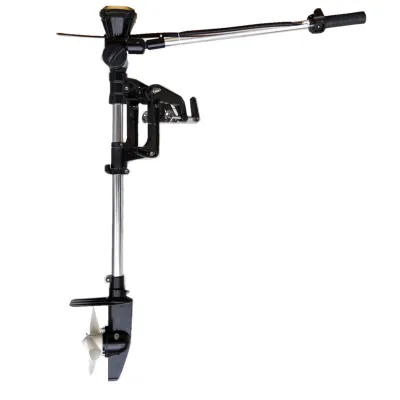
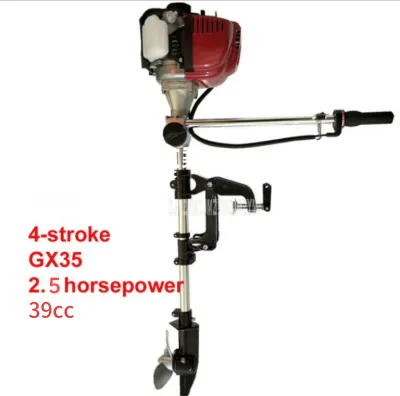
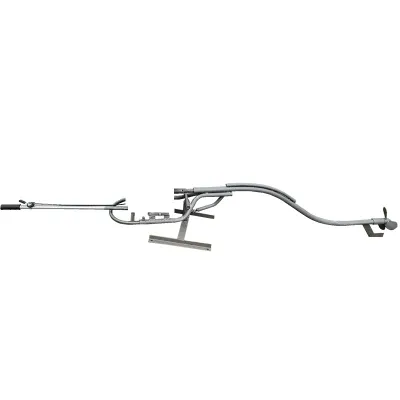
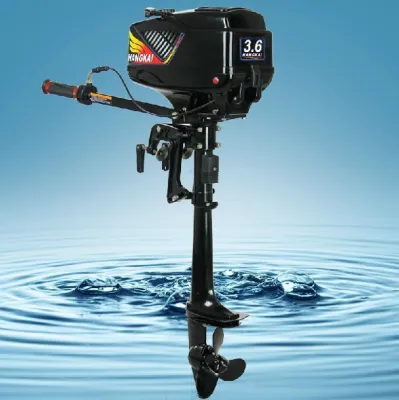
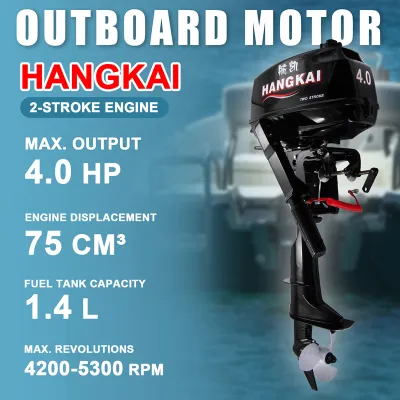
Prices are valid at publication and may change. Please refer to the product page for the latest price.
In contrast, inflatable boats—ranging from small dinghies to large, rigid-hulled inflatable boats—rely on wide, air-filled tubes to provide exceptional primary stability and high buoyancy. Inflatables equipped with rigid marine-plywood or fiberglass transoms are built to support heavier, high-torque engines. They can handle the stress of acceleration and rough water much better than a flexible kayak hull.
Your absolute first step must be to locate and inspect your watercraft’s capacity plate. This metal or durable plastic plate, typically riveted near the stern of an inflatable boat or molded into the cockpit area of a kayak, lists the maximum weight capacity and the maximum allowable motor weight or horsepower. Exceeding these manufacturer-specified limits is highly dangerous; it can submerge your stern, flood your vessel, or cause catastrophic transom failure.
Electric Trolling Motors vs. Gas Outboards: Which Type Fits Your Needs?
Choosing the right power source for your boat engine depends on where you navigate, how fast you want to travel, and your willingness to perform regular maintenance. Each system presents distinct advantages and operational trade-offs that dictate where they can be safely deployed.

Electric trolling motors are incredibly quiet, produce zero emissions, and offer precise maneuverability at low speeds. This makes them the gold standard for anglers who need to stealthily approach fish in shallow waters, mangroves, or calm inland lakes. However, electric motors require a dedicated marine battery system, which adds significant weight and demands careful charge management. If your battery runs out of charge far from shore, you must rely entirely on your paddles.
Gas outboards deliver high speeds, long-range capabilities, and the raw power needed to fight strong tidal currents, heavy winds, or choppy coastal waters. They are fueled by gasoline, meaning you can easily extend your range by carrying an extra fuel canister. The trade-offs are substantial: gas engines are noisy, emit exhaust fumes, are significantly heavier than electric alternatives, and require consistent mechanical upkeep, such as spark plug replacements, carburetor cleaning, and regular flushing after saltwater use.
From a financial perspective, electric setups often have a lower initial price for the motor itself, but the cost of high-quality marine batteries can quickly close the gap. Gas outboards require a larger upfront investment and ongoing fuel and maintenance expenses, but they offer unmatched reliability for long-distance travel and demanding marine environments.
Sizing Your Boat Engine: Thrust, Horsepower, and Weight Capacity
To ensure safe and efficient operation, you must size your motor correctly. Underpowering your boat leaves you vulnerable to winds and currents, while overpowering can damage your hull and compromise stability.
Calculating Thrust for Electric Motors
Electric motors are rated in pounds (lbs) of thrust rather than horsepower. To determine the correct thrust, you must first calculate the total fully loaded weight of your setup. This includes the dry weight of the kayak or inflatable boat, the weight of all passengers, your gear, safety equipment, the motor itself, and the heavy marine battery.
As a reliable marine industry guideline, you need a minimum of 2 pounds of thrust for every 100 pounds of fully loaded weight. For example, if your kayak weighs 100 lbs, you weigh 180 lbs, and your gear and battery weigh 70 lbs, your total loaded weight is 350 lbs. According to the formula, you would need at least 7 lbs of thrust.
However, this baseline formula assumes perfectly calm, windless water. In real-world conditions, you must account for wind, chop, and currents. Consequently, kayaks typically require a motor with 30 to 55 lbs of thrust to ensure adequate control and safety. Larger inflatable boats, which present more wind resistance due to their high-profile tubes, generally require 55 to 80+ lbs of thrust.
Do not make the mistake of buying an oversized motor thinking it will make your kayak fly. Kayaks are displacement hulls with a physical speed limit known as hull speed. Adding an excessively large motor to a standard kayak will not make it go significantly faster; instead, it will simply drain your battery at an alarming rate, add dangerous stern weight, and cause the bow to rise excessively.
Matching Horsepower for Gas Outboards
Gasoline outboard engines are rated by horsepower (HP). When choosing a gas engine for an inflatable boat, you must strictly adhere to the maximum horsepower rating printed on the manufacturer’s transom plate.
Small inflatable dinghies are typically rated for 2 to 5 HP, while larger, rigid-transom inflatables can often handle 8 to 15 HP or more. It is vital to never exceed these limits. A gas engine that is too powerful for the transom will generate excessive torque, causing the transom to flex, crack, or completely tear away from the inflatable tubes.
Furthermore, overpowering a light inflatable boat creates extreme safety hazards. The high speed can cause the bow to lift dangerously high, making the boat highly susceptible to flipping backward in a sudden gust of wind. It also makes steering incredibly sensitive; a sharp turn at high speed with an oversized engine can easily throw passengers overboard or capsize the craft.
Shaft Length and Mounting Compatibility
A motor is only as good as its installation. To operate efficiently, the propeller must remain fully submerged in water without dragging along the bottom or interfering with the watercraft’s hull.
To find the correct shaft length, measure the distance from the top of your mounting surface (the transom or motor mount bracket) down to the waterline. Once you have this measurement, add 10 to 12 inches. This ensures that the propeller sits deep enough to avoid drawing air from the surface—a highly inefficient phenomenon known as cavitation—while keeping the motor head high enough to stay dry.
Mounting configurations generally fall into two categories: transom mounts and bow mounts. Transom mounts are the most common and straightforward, clamping directly onto the flat stern of inflatable boats or specialized kayak motor brackets. Bow mounts, which pull the boat rather than push it, offer superior steering precision and are highly favored by anglers, but they are difficult to install on small watercraft without custom bow plates.
Motorizing a kayak presents unique mounting challenges. Because most kayaks do not have a flat, rigid transom, you will likely need a specialized kayak motor mount. These mounts typically clamp into the kayak’s molded-in rod holders or bolt directly onto the stern accessory tracks. You must also ensure the propeller does not interfere with your rudder lines or your feet if you use a pedal-drive system.
For inflatable boats, standard transom mounting is highly secure, but you must take precautions. Always use heavy-duty marine-grade clamping screws and check them for tightness before every launch, as engine vibrations can cause them to back out. Additionally, always secure a safety lanyard from the motor housing to a solid D-ring on the inflatable hull to prevent losing your engine to the depths if the clamps fail.
Recommended Motor Configurations for Specific Scenarios
To help you visualize the ideal setup, let us look at three common configurations tailored to specific watercraft and activities.
Best Setup for Fishing Kayaks
For the dedicated angler navigating calm lakes, slow-moving rivers, or sheltered mangrove channels, the ideal setup is a 30 to 45 lb thrust electric trolling motor paired with a short 24- to 30-inch shaft.
To maximize performance and keep your kayak nimble, pair this motor with a lightweight Lithium Iron Phosphate (LiFePO4) battery. This setup provides hours of whisper-quiet propulsion, allowing you to hold your position in a breeze or troll along weed lines without scaring the fish.
However, you must respect the limits of this configuration. This lightweight electric setup is not designed to handle strong ocean currents, heavy coastal winds, or long-distance offshore travel. If you attempt to push this system past its limits, you risk running out of battery power prematurely or being swept off course by tidal movements.
Best Setup for Small Inflatable Dinghies (Tenders)
If you are operating a small inflatable dinghy or yacht tender used primarily for short shore runs, transporting gear, or navigating shallow tidal flats, you have two excellent options: a 2 to 5 HP portable gas outboard or a 55 lb thrust electric motor.
The choice here comes down to a clear trade-off. An electric motor offers unparalleled convenience, quiet operation, and zero fuel storage issues on your main vessel. It is perfect for short, peaceful trips.
Conversely, a small 2 to 5 HP gas engine provides the reliability, speed, and continuous range needed to navigate choppy harbors or fight strong tidal currents. If your tender duties require carrying heavy loads of gear and multiple passengers over longer distances, the gas outboard is the safer, more dependable choice.
Best Setup for Large Inflatable Boats
For larger inflatable boats (typically 3.3 meters or longer) used for family excursions, diving, or exploring expansive coastal bays, a robust 8 to 15 HP gas outboard is the standard choice.
This configuration delivers the necessary power to get a heavily loaded inflatable boat up on a plane, significantly increasing speed and fuel efficiency. If your engine features an electric start, you will need to install a dedicated marine starting battery in a secure, dry box. Additionally, ensure your external fuel tank is positioned securely toward the middle or bow of the boat to balance the heavy weight of the engine on the transom.
Keep in mind that these larger setups come with clear physical limitations. An 8 to 15 HP gas engine is heavy, often weighing between 35 and 50 kilograms. This means you will need a trailer, a robust roof rack, or multiple people to safely transport, assemble, and launch the boat. It also demands higher maintenance, proper winterization, and ongoing fuel costs.
Power Sources and Battery Requirements for Electric Motors
If you choose an electric trolling motor, your battery is your fuel tank. Understanding marine battery chemistry is essential for maximizing your time on the water and keeping your vessel safe.
Traditionally, boaters relied on lead-acid or Absorbed Glass Mat (AGM) batteries. While these batteries are relatively inexpensive upfront (often costing around ₱5,000 to ₱8,000), they are incredibly heavy. A standard 100Ah lead-acid battery can weigh up to 30 kilograms. Placing this much concentrated weight in a kayak or small inflatable severely compromises its draft, stability, and overall weight capacity. Furthermore, lead-acid batteries should only be discharged to 50% of their capacity to avoid permanent damage.
Lithium Iron Phosphate (LiFePO4) batteries represent a massive upgrade. Although they require a higher initial investment (often ranging from ₱15,000 to over ₱30,000), they are up to 60% lighter than lead-acid batteries. A 100Ah lithium battery typically weighs only 10 to 12 kilograms, which drastically improves your watercraft’s performance and safety. Lithium batteries also provide constant voltage throughout their discharge cycle, meaning your motor will not lose power as the battery drains, and they can be safely discharged up to 90% or more.
Regardless of the battery chemistry you choose, proper marine safety is non-negotiable. Always house your battery in a heavy-duty, waterproof marine battery box to protect it from saltwater spray and rain. Use high-quality, marine-grade quick-connect plugs and install an inline circuit breaker (typically 50 to 60 amps) to prevent electrical shorts from causing a fire. Finally, always use a smart charger specifically rated for your battery type to prevent overcharging and extend its lifespan.
Frequently Asked Questions (FAQ)
Do I need to register my kayak or inflatable boat if I add a motor?
Yes, in many jurisdictions, including the Philippines, adding any form of mechanical propulsion—whether a gas engine or an electric trolling motor—changes the legal status of your watercraft. Under the guidelines of the Maritime Industry Authority (MARINA) and the Philippine Coast Guard, a paddle kayak or inflatable dinghy is classified as a non-motorized recreational craft. However, the moment you mount an engine, it becomes a motorized vessel. You must register the craft with local authorities, mark the hull with your registration numbers, and carry mandatory safety equipment, such as life jackets (PFDs), a signaling whistle, a flashlight, and a basic first-aid kit.
Can I use a standard outboard motor on a kayak?
No, you should never mount a standard gas outboard motor on a traditional kayak. Standard gas outboards are designed for rigid, wide-beamed boats and are far too heavy and powerful for a kayak’s narrow hull. The extreme weight will submerge the stern, while the engine’s torque can easily twist and crack the kayak’s plastic or composite hull, leading to catastrophic transom failure. More importantly, the high center of gravity and sudden acceleration will make the kayak highly unstable, risking immediate capsizing. If you must use gas power on a kayak, stick to specialized, ultra-lightweight micro-outboards (typically under 2 HP) specifically engineered for kayak hulls, and always verify that the total weight of the motor, fuel, and operator remains well within the kayak’s maximum payload capacity.
Community discussion
Share your experience or ask a question. Comments are reviewed before publication.