
To determine the ideal capacity when shopping for camping tents, do not rely solely on the manufacturer’s “person” rating. A tent’s listed capacity indicates how many standard, shoulder-to-shoulder sleeping pads can fit on the floor with zero space left for gear, movement, or personal comfort. To ensure a comfortable outdoor experience, the general rule of thumb is to select a tent with a rated capacity that is at least one to two people larger than your actual group size.
By choosing a tent with this built-in buffer, you accommodate your gear, allow room to change clothes, and prevent the interior from feeling cramped. However, the perfect size depends on more than just a simple math formula. You must balance your transportation method, your gear storage strategy, the local weather conditions, and the specific physical dimensions of the tent itself.
Understanding Camping Tents Capacity Ratings vs. Real-World Comfort
When browsing camping tents, the “person capacity” label (such as a 2-person or 4-person tent) is the most prominent specification you will see. This rating is determined by a standardized industry calculation: manufacturers map out the floor plan and calculate how many standard-sized sleeping pads can lie side-by-side. These standard pads are typically tapered mummy pads measuring roughly 51 centimeters (20 inches) wide and 183 centimeters (72 inches) long.
Products mentioned in this guide
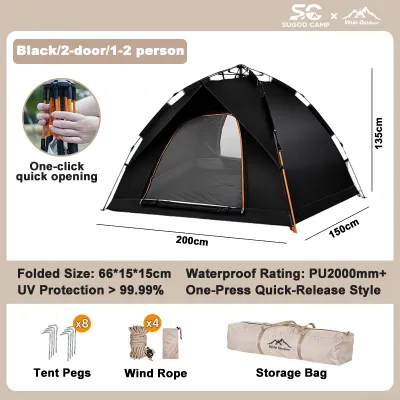
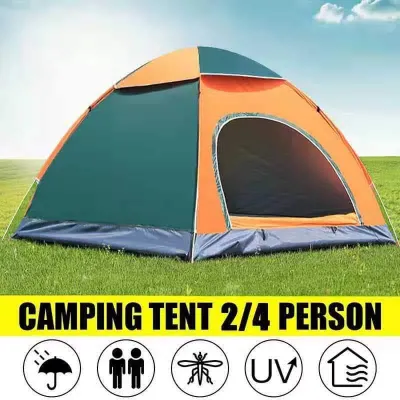
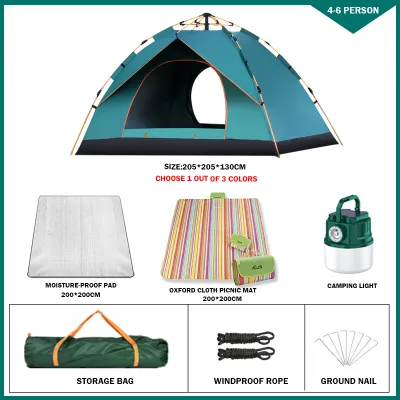
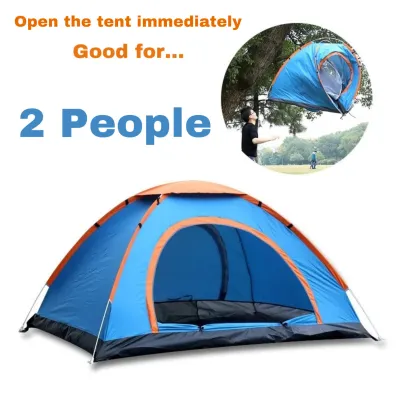
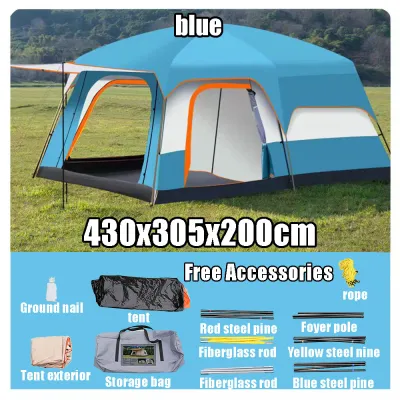
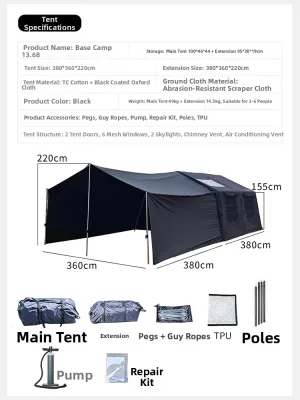
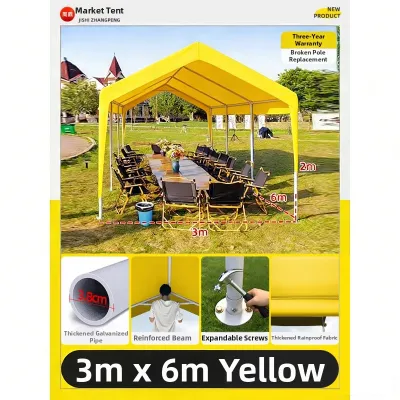
Prices are valid at publication and may change. Please refer to the product page for the latest price.
This calculation assumes a best-case, minimalist scenario where campers sleep head-to-toe with zero gap between them. It does not account for bulky luggage, personal items, dog beds, or the natural human tendency to roll over during the night. If you pack a 4-person tent to its maximum rated capacity, you will find yourself sleeping elbow-to-elbow with your companions, with your head and feet pressed against the tent walls.
To avoid a claustrophobic night, most outdoor enthusiasts employ the “plus-one” or “plus-two” sizing rule. Under this guideline, a solo camper who wants room for a backpack inside the tent should opt for a 2-person tent. A couple seeking a balance of comfort and storage space will find a 3-person tent ideal, while a family of three should look closely at 4-person or even 5-person models. This extra space prevents condensation transfer from the tent walls to your sleeping gear and makes the overall experience much more enjoyable.
It is also critical to recognize that sizing standards are not completely uniform across all manufacturers. A premium backpacking brand may design a 2-person tent with an ultralight, tapered silhouette that prioritizes weight savings over space, resulting in a snug fit. Conversely, a brand focused on casual family camping might design a 2-person tent with a generous rectangular floor plan. Always treat the person rating as a starting point rather than an absolute measurement.
Adjusting Capacity Based on Your Camping Style
Your primary method of travel and campsite access dictates how much tent weight you can carry, which directly influences the interior volume you can afford. Finding the right balance between comfort inside the tent and the physical effort required to transport it is key to a successful trip.

Car Camping When your vehicle does the heavy lifting, weight and packed size are no longer limiting factors. For car camping at established sites, you should prioritize maximum livable space, vertical clearance, and convenient layouts. Sizing up significantly—such as choosing a 6-person cabin tent for a family of four—allows you to bring large inflatable air mattresses, folding camp chairs, and bulky storage bins inside. Many car camping models even feature built-in room dividers, allowing you to separate the sleeping area from a communal living space or a dedicated gear storage zone.
Backpacking and Trekking When you must carry your shelter on your back over steep mountain trails, every gram matters. Backpackers must carefully negotiate the trade-off between a spacious interior and a heavy trail weight. Carrying a tent that is too large translates to unnecessary physical fatigue during long climbs. For multi-day treks, hikers often accept a tighter fit, matching their group size exactly to the tent capacity (e.g., two hikers sharing a lightweight 2-person tent) or carrying individual solo shelters. In these scenarios, efficient gear storage and utilizing the tent’s exterior vestibules become essential to preserving interior sleeping space.
Factoring in Gear, Weather, and Unique Occupants
Determining the right tent capacity requires looking beyond the human head count. Your daily camping habits, the climate of your destination, and the specific needs of your companions will heavily influence how much floor area you actually require.
Gear Storage Deciding where your equipment will sleep is a major factor in choosing tent capacity. If you plan to keep large trekking packs, muddy hiking boots, and cooking gear inside the tent to protect them from pests or damp ground, you must treat that gear as an extra occupant. A large 70-liter backpack can easily occupy the same floor space as a small child. If you prefer to keep the sleeping compartment completely clear, you must ensure your tent has large exterior vestibules or plan to store your gear in your vehicle or under a separate tarp.
Weather Conditions In tropical climates, such as camping in the humid mountains of the Philippines, weather plays a massive role in tent comfort. During the rainy season, sudden afternoon downpours can trap you inside your shelter for hours. A cramped tent where you cannot sit up comfortably quickly becomes frustrating. Furthermore, high humidity levels increase the risk of interior condensation. If your sleeping bag or clothing touches the wet interior walls of a cramped tent, moisture will transfer to your gear, leaving you damp and cold. A slightly larger tent with excellent ventilation and extra floor space helps keep you dry and comfortable during extended rainy spells.
Unique Occupants Consider the specific needs of everyone in your camping party. If you camp with a dog, they will require their own dedicated floor space and a durable tent floor fabric that can withstand claws. Families camping with restless children should look for extra floor area to accommodate late-night movement without disrupting everyone’s sleep. Taller individuals also require special consideration; if you are over 180 centimeters tall, you will need a tent with an extended floor length so your head and feet do not press against the sloping walls, which can compromise the tent’s rainfly protection.
Critical Dimensions to Check Beyond the "Person" Label
To make an informed purchase, you must look past the marketing labels and evaluate the technical specification sheet of the tent. Three critical measurements will tell you exactly how spacious a tent will feel in the field.
Floor Dimensions and Area Always check the exact length and width of the tent floor, usually measured in meters or centimeters. Compare these dimensions to the combined width of your sleeping pads. For example, if you plan to use two wide rectangular sleeping pads that are each 65 centimeters wide, you will need a tent floor width of at least 130 centimeters just to lay them flat. Additionally, check if the floor plan is a perfect rectangle or if it tapers at the feet, as a tapered design limits where you can place wider pads and gear.
Peak Height and Wall Slope The shape of a tent’s frame determines how much of the interior space is actually usable.
- Dome-Style Tents: These classic models feature poles that cross in the center, creating a curved structure. While highly wind-resistant and easy to pitch, the walls slope sharply inward. This design means the maximum peak height is only available in the dead center of the tent, reducing usable headroom near the edges.
- Cabin-Style Tents: These models utilize near-vertical walls and tall peak heights, often exceeding 180 centimeters. This architecture maximizes the overall interior volume, allowing you to stand upright, change clothes comfortably, and walk around without crouching.
Vestibule Area A vestibule is an extension of the rainfly that creates a covered, floorless storage space outside the tent doors. Evaluating the vestibule area (measured in square meters) is crucial for small, lightweight tents. A generous vestibule allows you to store muddy boots, wet rain jackets, and bulky packs outside the main sleeping cabin while keeping them fully protected from the elements. This effectively frees up valuable interior floor space, allowing you to choose a smaller, lighter tent without sacrificing comfort.
Common Tent Sizing Mistakes to Avoid
Many campers experience post-purchase regret because they overlooked small details during the selection process. Avoiding these common pitfalls will ensure you choose a tent that fits your setup perfectly.
Ignoring Sleeping Pad Thickness and Shape Standard capacity ratings are based on thin, flat sleeping pads. If you use thick, inflatable air mattresses or elevated camp cots for car camping, they will take up significantly more physical volume. Thick mattresses raise your sleeping position closer to the sloping walls of the tent, reducing the effective length of the sleeping area and bringing your face closer to the canopy. Always account for the height of your sleeping system when calculating the required tent volume.
Forgetting Door Swing and Interior Features Consider how you will move inside the tent. If a tent has a single door located at one end, occupants sleeping in the back will have to crawl over others to exit for late-night bathroom trips. Look for tents with multiple doors if you are camping with a group. Additionally, check for the placement of interior gear lofts and storage pockets; if these pockets are stuffed with gear, they can hang down into your sleeping space if the tent’s peak height is too low.
Assuming Brand Uniformity Never assume that a 4-person tent from one brand will have the same dimensions as a 4-person tent from another. One manufacturer might design a spacious model with a floor area of 5.8 square meters, while another might offer a minimalist model with only 4.8 square meters under the same 4-person label. Always compare the actual physical dimensions and floor area listed in the specifications rather than relying on the generic person rating.
Frequently Asked Questions (FAQ)
Is it always better to buy a tent one size larger than needed?
Sizing up is highly beneficial for car camping, where comfort, gear storage, and standing room are the main priorities. However, it is not always the best choice for backpacking or trekking. A larger tent means carrying extra weight and bulk in your pack, which can lead to fatigue on long hikes. Additionally, larger tents have a wider footprint, making it much more difficult to find a flat, cleared space to pitch your shelter on narrow mountain ridges or crowded campsites.
How do I measure my sleeping pads to ensure they fit the tent floor?
To ensure a perfect fit, inflate all the sleeping pads you plan to use on your trip and lay them side-by-side on the floor at home. Measure the total combined width at the widest point, as well as the maximum length. If you are using thick, high-loft air mattresses, measure their height as well. Compare these total dimensions against the manufacturer’s tent floor blueprint. Ensure you leave at least 10 to 15 centimeters of clearance on all sides to prevent your sleeping gear from pressing against the tent walls and absorbing condensation.
Community discussion
Share your experience or ask a question. Comments are reviewed before publication.