
Choosing the right cotton thread for your kite requires matching the physical surface area and structural weight of your kite to the tensile strength and thickness of the line. A thread that is too thin will snap under the sudden tension of a wind gust, sending your kite adrift. Conversely, a thread that is too thick adds unnecessary weight and aerodynamic drag, preventing a lightweight kite from ever climbing past the tree line. In tropical environments like the Philippines, where high humidity, salt-laden coastal air, and seasonal monsoons play a major role in flight dynamics, selecting the correct cotton thread is essential for both a successful flight and safe handling.
To fly a kite successfully, you must view the flying line as an active component of the kite’s aerodynamic system, not merely a tether. Every millimeter of thread exposed to the wind creates drag, which pulls back on the kite and alters its angle of attack. By understanding how thread weight, ply, and material properties interact with your specific kite design, you can ensure stable flights, prevent gear loss, and maintain complete control from launch to retrieval.
Quick Reference: Matching Thread Weight to Kite Size
To establish a safe baseline, you must evaluate the size of your kite alongside the manufacturer’s recommended line weight. The table below outlines typical pairings for single-line recreational kites. Always verify your specific kite’s user manual, as heavy-duty frames, dense fabrics, or high-aspect-ratio designs can generate significantly more pull than standard models of the same size.
Products mentioned in this guide
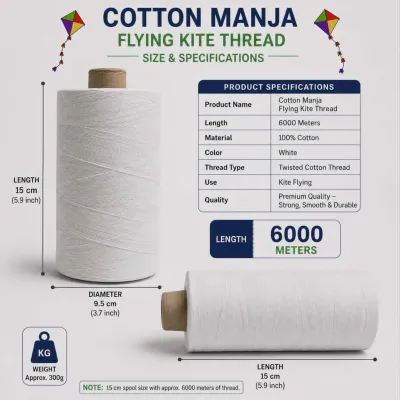
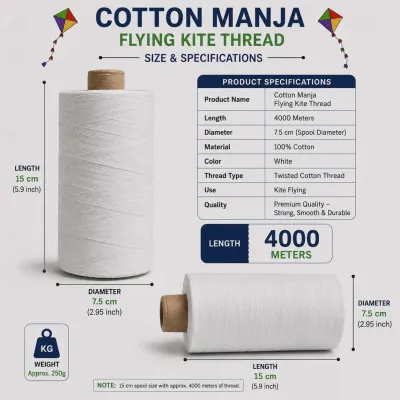
Prices are valid at publication and may change. Please refer to the product page for the latest price.
| Kite Category | Wingspan / Size Range | Recommended Cotton Thread Ply / Weight | Typical Breaking Strength (Verify on Label) | Suitable Wind Conditions |
|---|---|---|---|---|
| Micro & Miniature | Under 50 cm | No. 10 to No. 20 Crochet Cotton | 3 to 6 lbs (1.3 to 2.7 kg) | Very Light Breeze (6–11 km/h) |
| Small / Standard | 50 cm to 100 cm | 3-ply to 4-ply Kite Cotton Thread | 10 to 20 lbs (4.5 to 9 kg) | Light to Moderate (12–19 km/h) |
| Medium / Family | 100 cm to 150 cm | 6-ply to 9-ply Braided Cotton | 20 to 40 lbs (9 to 18 kg) | Moderate to Fresh (20–28 km/h) |
| Large / High-Pull | Over 150 cm | 12-ply+ Heavy Braided Cotton / Cord | 50+ lbs (22.7+ kg) | Fresh Breeze (29–38 km/h) |
Keep in mind that these values serve as a general starting point. If you plan to fly your kite in coastal areas where sea breezes are consistently strong, or during the gusty transition periods between the Amihan (northeast monsoon) and Habagat (southwest monsoon) seasons, you should lean toward the heavier end of the recommended thread spectrum. Additionally, keep a close eye on local weather forecasts; if wind speeds exceed the safe operating limits specified by your kite’s manufacturer, it is best to postpone your flight to prevent structural damage to the kite or line failure.
The Pros and Cons of Cotton Thread for Kites
Cotton thread remains a beloved choice for recreational kite flyers, particularly those who appreciate traditional craftsmanship, tactile feedback, and family-friendly safety. One of its primary advantages is its natural texture, which provides an excellent grip. Unlike synthetic lines that can feel slick or slippery, cotton allows you to maintain a firm hold while letting out or reeling in line. This tactile quality makes it highly comfortable for manual handling, minimizing the risk of the deep, painful friction burns often caused by nylon or polyester lines when a sudden gust pulls the line rapidly through your hands. Furthermore, cotton is highly visible in the sky, biodegradable, and less likely to cause permanent environmental damage if a line accidentally snaps and becomes lost in vegetation. It is also highly compatible with traditional wooden reels and winders, offering a classic aesthetic that appeals to hobbyists of all ages.

However, cotton has distinct physical limitations that you must weigh against its benefits before heading to the field. The most significant drawback, especially in tropical climates, is its high moisture absorption. Cotton fibers act like sponges in high humidity, heavy morning dew, or when exposed to coastal sea spray. As the thread absorbs moisture, it gains substantial weight and its overall tensile strength can degrade. Additionally, cotton has a much lower strength-to-weight ratio than modern synthetic fibers like Kevlar, Dyneema, or braided nylon. This means a cotton line must be much thicker than a synthetic line of the exact same breaking strength, resulting in greater wind resistance (drag) that can pull your kite downward in lighter winds. Finally, if cotton thread is stored while still damp, it is highly susceptible to rot, mold, and mildew, which rapidly destroys its structural integrity and can lead to unexpected line failure during your next flight.
Furthermore, the salt-laden air of coastal beaches can cause salt crystals to build up within the fibers of untreated cotton thread over time. This crystallization can act as a microscopic abrasive, wearing down the internal fibers from the inside out during repeated use. This makes proper maintenance and rinsing essential if you frequently fly your kites near the ocean.
How to Match Thread Thickness to Your Kite's Size
Selecting the correct thread thickness involves understanding how manufacturers label their cotton cordage. Unlike synthetic lines, which are almost exclusively sold by direct breaking strength (measured in pounds or kilograms), cotton thread is frequently labeled by ply count, ticket number, or yarn count (such as Tex or Ne). Ply count refers to the number of individual strands twisted together to form the final thread. A higher ply count generally indicates a thicker, stronger line, but this is only true if the individual strands are of the same thickness. Therefore, you must always look for a rated breaking strength on the spool’s packaging to make an accurate safety decision.
When matching the thread to your kite, the primary objective is to balance the aerodynamic drag of the line against the lift generated by the kite. A large kite has a massive surface area that catches more wind, generating substantial lift and pulling force. This requires a thick, heavy-duty line to prevent snapping. A small kite generates very little lift, meaning even a slightly heavy line can drag it down to the ground. You must calculate this balance carefully by matching your kite’s physical footprint to the specific categories detailed below.
It is also important to remember that wind force is not linear; it is exponential. A wind speed that doubles in velocity increases the force on your kite—and therefore your cotton thread—by four times. This is why a thread that holds perfectly fine in a gentle 10 km/h breeze can snap instantly if the wind picks up to 20 km/h, making a conservative choice in thread thickness highly advisable.
Small and Micro Kites
Small and micro kites, such as miniature diamonds, pocket sleds, or delicate paper kites under 50 centimeters in wingspan, require ultra-thin, low-drag cotton thread. For these lightweight models, any excess weight along the flying line acts as an anchor. Fine crochet cotton (such as size 10 or 20) or lightweight 2-ply cotton thread is ideal for these applications. These threads are thin enough to minimize aerodynamic drag, allowing the kite to rise easily in gentle backyard breezes.
When using such fine thread, ensure your spool or reel unwinds smoothly without any catching or jerking. Because these thin lines have very low tensile strength, even a minor snag on the spool can instantly snap the line under the tension of a light breeze. Additionally, avoid flying micro kites on long lines; keep them within a reasonable altitude where the weight of the suspended thread does not overcome the kite’s limited lifting capacity.
Medium and Standard Kites
Medium and standard kites, ranging from 50 to 150 centimeters in wingspan, represent the most common recreational flyers found in parks and beaches. These include standard delta kites, diamond kites, and traditional Filipino saranggola designs. These kites require a careful balance of strength, weight, and handling comfort. Standard 3-ply to 6-ply braided or twisted cotton thread with a breaking strength of 15 to 30 pounds (approximately 6.8 to 13.6 kilograms) is the standard choice.
This thickness provides enough structural security to withstand sudden moderate gusts while remaining light enough to allow the kite to reach high altitudes. Braided cotton is particularly recommended for this category as it offers superior knot security and resists unraveling when cut or tied. When flying in this category, always ensure your knots are tied cleanly and inspected before launch, as a poorly tied knot can reduce the thread’s breaking strength by up to fifty percent.
Large and Heavy-Lift Kites
Large kites, exceeding 150 centimeters in wingspan, generate substantial aerodynamic pull that can easily overpower standard cotton threads. For these models, you must use heavy-duty, high-tensile cotton cord, typically 9-ply to 12-ply or thicker, with a verified breaking strength of at least 50 pounds (22.7 kilograms). These thicker cords provide the necessary tensile strength to handle the continuous, heavy drag generated by large sail areas.
However, a critical safety boundary must be observed here: always check your kite manufacturer’s instructions to determine if pure cotton thread is safe to use. Many large or high-performance kites generate such immense tension that the manufacturer explicitly mandates high-strength synthetic lines, such as braided polyester or Dacron. If your large kite’s pull rating exceeds the safe limits of available cotton threads, do not attempt to fly it with cotton, as a line break can result in a runaway kite that poses a hazard to bystanders, property, and nearby infrastructure.
Choosing the Right Thread for Specific Kite Designs
The aerodynamic shape and structural frame of a kite dictate how it interacts with the wind, which in turn influences the type of cotton thread that will perform best. Different designs exert different types of tension—some pull steadily, while others dart, dive, or glide dynamically. Matching the thread’s physical structure to these flight patterns ensures better control and longevity.
Traditional and Fighter Kites
Traditional fighter kites and highly maneuverable single-line designs rely on rapid response to line tension changes. In these styles of flying, the pilot constantly releases and reels in line to guide the kite through sharp turns, rapid dives, and sudden climbs. Cotton thread is highly favored for this style of flying due to its natural, non-slip texture and excellent knot-holding capabilities.
For fighter kites, a smooth, tightly twisted, or lightly glazed cotton thread is essential. A glazed or polished finish prevents the thread from snagging on itself or catching on rough ground during rapid line play. It also ensures that the line slides smoothly through your fingers without binding, allowing for precise, split-second control. Ensure the line is wound evenly on a traditional wooden spool or hand-reel to facilitate rapid deployment and retrieval without tangling.
Delta and Diamond Kites
Delta and diamond kites are popular choices for family outings at the park or beach because they are stable, reliable, and easy to launch. These kites typically fly at a steady, high angle, putting a consistent but moderate load on the flying line. Standard braided cotton thread is highly effective for these designs, providing a reliable connection that absorbs minor wind fluctuations smoothly.
Because these kites are frequently flown by children and beginners, the thread must be easy to handle, simple to knot, and comfortable to hold for extended periods. A soft, medium-ply braided cotton thread ensures that young flyers can hold the line securely without the risk of slick synthetic lines slipping through their hands and causing painful cuts. This makes cotton the ideal choice for relaxed, family-friendly flying sessions where ease of use is the top priority.
Box, Cellular, and High-Pull Kites
Box kites, cellular designs, and multi-wing parafoils are known for their exceptional stability and high lifting power. Unlike delta kites, which may glide or spill wind during strong gusts, box and cellular kites are rigid structures that catch a large volume of air, creating a continuous, heavy drag. This constant tension puts immense stress on the flying line throughout the flight.
To handle this sustained pull, you must use a thick, tightly braided cotton thread with a high breaking strength. Avoid twisted cotton lines for these high-pull designs, as the constant tension can cause twisted fibers to untwist, leading to severe kinking, tangling, and localized weak spots that can fail under load. Always verify that the thread’s rated breaking strength comfortably exceeds the maximum pull rating of your box or cellular kite before launching in strong wind conditions.
What to Look for on the Thread Label and Spool
When purchasing cotton thread for your kite, navigating the options at a local craft store or online marketplace requires looking past basic marketing claims. You must evaluate several physical and structural attributes to ensure the thread is safe, durable, and practical for outdoor use.
- Braided vs. Twisted: The structural format of the thread is your first major decision. Twisted cotton thread consists of fibers spun into strands, which are then twisted together. While twisted thread is highly traditional and generally less expensive, it has a strong tendency to untwist under tension, leading to annoying loops, kinks, and tangles. Braided cotton thread, on the other hand, features strands woven together in a tubular or flat pattern. Braided lines are significantly more stable, resist kinking, hold knots exceptionally well, and distribute tension more evenly, making them the superior choice for most kite flying scenarios.
- Coating and Finish: Untreated cotton is highly absorbent and can feel rough. To improve performance, look for cotton thread labeled as "glazed," "waxed," or "polished." A light wax or starch coating smooths down loose surface fibers, reducing aerodynamic drag and protecting the thread from immediate moisture absorption in humid environments. It also increases abrasion resistance, preventing the line from fraying rapidly when it rubs against sand, grass, or the kite's bridle.
- Visibility: Safety in public spaces is paramount. A thin, off-white cotton line can be virtually invisible against a bright sky or hazy horizon, creating a dangerous hazard for runners, cyclists, and other park users. Whenever possible, select cotton thread dyed in high-visibility colors such as bright red, orange, or yellow. This ensures that your flying line is clearly visible to everyone in the area, preventing accidental collisions and keeping your flying site safe.
- Spool Design: The physical spool or dispenser that houses your cotton thread is just as important as the thread itself. A poorly wound spool can lead to snags, overrides, and tangles that can ruin a flying session or cause a sudden line snap. Look for thread wound onto sturdy, wide-diameter plastic or wooden spools that allow the line to pay out smoothly. If you are flying a medium-to-large kite, consider transferring the thread to a dedicated kite reel or a D-handle winder, which provides much better control over line tension and makes retrieval significantly faster and more comfortable.
To further optimize your setup, consider using a small metal barrel swivel between your cotton flying line and the kite’s bridle. This simple addition prevents the natural spinning motion of the kite from twisting the cotton fibers, which can otherwise lead to severe tangling and localized structural weaknesses.
Safety Rules and Maintenance for Humid Weather
Flying kites in tropical regions like the Philippines introduces specific environmental challenges that can rapidly degrade cotton thread if left unmanaged. High relative humidity, intense solar radiation, and sudden tropical downpours require a dedicated maintenance routine to keep your gear safe and functional.
- Moisture Management: Cotton is a natural cellulose fiber that avidly absorbs moisture from the air. When flying near coastal areas or during humid afternoons, your cotton line will absorb water vapor, making it heavier and reducing its overall breaking strength. Never store a damp cotton line. Doing so creates a perfect breeding ground for mold, mildew, and rot, which will quietly eat away at the natural fibers. After a flying session, especially if the line feels damp or was exposed to sea breezes, unwind the thread in a dry, shaded, and well-ventilated indoor area. Allow it to air-dry completely before rewinding it onto the spool for long-term storage. Avoid drying cotton in direct, harsh sunlight, as prolonged UV exposure can break down the fibers and cause premature weakening.
- Friction and Handling Safety: Even though cotton is softer and safer than synthetic lines, it can still cause severe friction burns or cuts if a high-pull kite suddenly jerks the line through your hands. When flying medium-to-large kites, or when flying in strong winds, always wear protective leather or heavy-duty canvas gloves. Never wrap the kite line around your fingers, hands, or wrists to gain leverage. If the kite is struck by a sudden, powerful gust, a wrapped line can constrict violently, causing severe injury or cutting off circulation.
- Pre-Flight Inspection: Before every launch, perform a thorough physical and visual inspection of your flying line. Run the first several meters of the thread—which experience the most wear and tear near the kite's bridle—through your fingers to check for fraying, thinning, or rough spots. Inspect the knots and connection points for any signs of slippage or fiber separation. If you detect any soft, mushy sections (a sign of mildew damage) or visible fraying, cut away the damaged section immediately and re-tie the line using a secure knot, such as a double overhand or a figure-eight knot.
- Environmental Responsibility: Always prioritize safety and environmental stewardship when flying. Select wide, open spaces such as public parks, sports fields, or open beaches, far away from overhead power lines, busy roads, and airports. If your cotton line snaps, make every effort to locate and retrieve the fallen thread. While cotton is biodegradable, abandoned lines can still entangle local birds, wildlife, or marine life before they fully decompose. Never leave discarded thread behind, and always dispose of damaged lines in designated waste receptacles.
Additionally, the tropical sun can be exceptionally harsh on natural fibers. Prolonged exposure to high UV levels breaks down the natural cellulose in cotton, making the thread brittle over time. If you fly your kites frequently, a practical safety measure is to prune and replace the first 10 to 15 meters of your line every flying season, as this section bears the brunt of the tension and environmental exposure.
Frequently Asked Questions (FAQ)
Can I use regular sewing cotton thread for my kite?
No, you should not use standard household sewing cotton thread to fly a kite. Sewing thread is designed for stitching fabrics together and lacks the tensile strength, thickness, and abrasion resistance required to withstand the dynamic loads of kite flying. Under even a light breeze, a typical sewing thread will quickly snap, leading to the loss of your kite. Always use thread specifically rated and labeled for kite flying or heavy-duty crafts like crochet, which provide the necessary ply count and breaking strength to handle wind tension safely.
How do I know if my cotton thread is strong enough for the wind?
To determine if your cotton thread is strong enough, you must cross-reference the thread’s rated breaking strength with your kite’s size and the current wind conditions. Check the label on your thread spool for its breaking strength in pounds or kilograms. As a general safety margin, your line’s breaking strength should be at least three to four times the weight of the kite’s maximum pull in standard winds. If the wind is gusty or blowing at the upper limit of your kite’s recommended range, the physical force exerted on the line increases exponentially, meaning you will need to step up to a thicker, higher-ply cotton thread to prevent a sudden snap.
Is cotton thread better than nylon for kite flying?
Neither material is universally superior; instead, they serve different flying styles and conditions. Cotton thread is excellent for traditional, single-line, and light-to-medium wind flying. It offers a superior natural grip, is highly comfortable to handle, holds knots exceptionally well, and is much safer for beginners as it is less likely to cause deep friction cuts. However, nylon and other synthetics are much stronger, thinner, lighter, and completely water-resistant, making them the preferred choice for high-performance, large, or dual-line stunt kites. The trade-off is that nylon is highly slippery, can melt under friction, and poses a greater risk of severe line cuts if handled without protective gloves.
Community discussion
Share your experience or ask a question. Comments are reviewed before publication.