
Selecting the correct martial arts uniform is one of the most important decisions you will make as a practitioner, directly impacting your comfort, range of motion, and performance on the mat. Choosing the right Crusader martial arts uniform depends entirely on your specific discipline—whether Taekwondo, Karate, or a grappling art like Judo—as well as your training intensity and how you manage the tropical climate of the Philippines. Taekwondo practitioners require a lightweight, pullover dobok with a V-neck, whereas Karate students demand a wrap-around gi made of heavier cotton or canvas. Grappling disciplines require heavily reinforced, high-tensile weave uniforms designed to withstand intense pulling and friction without tearing.
By understanding the structural differences, fabric weights, and sizing nuances of the Crusader lineup, you can make an informed investment that supports your training goals. A well-chosen uniform not only ensures you comply with gym (dojang or dojo) rules and competition standards but also helps you stay cool and focused during intense training sessions. Let us break down the essential factors to consider when selecting your next Crusader uniform.
Understanding Crusader Uniform Designs by Discipline
Martial arts uniforms are not interchangeable; each discipline has evolved a specific design tailored to its unique movement patterns and safety requirements. Crusader designs its uniforms to match these distinct athletic demands, ensuring that practitioners do not experience restricted movement or accidental gear failure during training. Understanding these structural variations is the first step in selecting the correct uniform for your practice.
Products mentioned in this guide
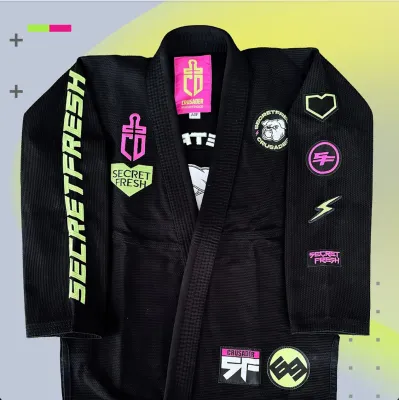
Prices are valid at publication and may change. Please refer to the product page for the latest price.
Taekwondo uniforms, known as doboks, feature a distinctive pullover jacket with a V-neck collar. This design is highly functional: because Taekwondo emphasizes rapid, high-altitude kicks and continuous footwork, a pullover jacket eliminates the need for ties or overlapping fabric that could come undone during dynamic movement. Furthermore, Taekwondo sparring involves wearing a chest protector (hogu) over the uniform; a flat, pullover front ensures there are no uncomfortable pressure points, buttons, or ties pressed against your chest under the protective gear. The fabric used in Crusader doboks is typically an ultra-lightweight polyester-cotton blend, often woven with a ribbed or diamond texture that prevents the damp fabric from sticking to your skin when you sweat.
Karate uniforms, known as gis, utilize a traditional wrap-around jacket (uwagi) secured by internal and external tie strings (himo) and featuring a thick cross-collar. This layout supports the crisp punches, blocks, and deep, stable stances characteristic of Karate. The overlapping front panels provide a structured, traditional appearance and allow the jacket to move naturally with your torso during hip rotation. Karate gis are generally made from heavier plain-weave cotton or durable canvas. This heavier material is essential for generating the iconic “snap” sound during high-velocity strikes, which serves as an auditory feedback mechanism for proper technique in both basic training (kihon) and forms (kata).
Grappling disciplines, such as Judo, Brazilian Jiu-Jitsu (BJJ), and Aikido, subject a uniform to extreme pulling, lifting, and friction. A standard striking uniform made for Taekwondo or Karate will quickly rip under these conditions. Grappling uniforms feature heavy-weave cotton jackets, heavily reinforced lapels, and double-layered fabric at high-stress areas like the knees, armpits, and shoulders. The cuffs on the sleeves and pants are also tailored tighter to minimize the grip opportunities available to your opponent and to prevent fingers from getting tangled in loose fabric during ground transitions.
Crusader categorizes its lineup carefully to prevent buyers from making costly mistakes. Purchasing a heavy Karate gi for a Taekwondo class will severely limit your kicking height and cause you to overheat quickly in a tropical gym. Conversely, wearing a lightweight Taekwondo dobok to a Judo class will likely result in a shredded uniform during your first grappling exchange. Always align your purchase with the specific physical demands and rules of your chosen martial art.
Key Selection Criteria for Your Crusader Uniform
Once you identify the correct discipline category, you must evaluate several key performance criteria to find the specific Crusader model that fits your training frequency, skill level, and competitive ambitions. Balancing these factors ensures long-term comfort and durability.

Fabric Weight and Blend
Martial arts uniforms are classified by fabric weight, typically measured in ounces (oz) per square yard or grams per square meter (GSM). Crusader options generally fall into three main weight categories:
- Lightweight (6 oz to 8 oz): Typically made from a polyester-cotton blend, these uniforms are highly breathable, easy to wash, and quick to dry. They are ideal for beginners, children, and practitioners training in hot, non-air-conditioned tropical environments. However, they lack the structural stiffness preferred for advanced forms.
- Mediumweight (10 oz to 12 oz): Offering a balance of durability and comfort, mediumweight cotton or poly-cotton uniforms provide a moderate "snap" during strikes while remaining light enough for extended sparring sessions. They are excellent for intermediate students.
- Heavyweight (14 oz and above): Constructed from 100% cotton canvas, heavyweight uniforms are highly durable, hold their shape exceptionally well, and deliver a loud snap during movements. They are favored by advanced practitioners, instructors, and kata competitors, though they require more effort to wash and take longer to dry.
Cut and Mobility
An effective martial arts uniform must move with your body without binding or pulling. When evaluating a Crusader uniform, look closely at the cut of the pants and jacket. High-quality uniforms feature a triangular crotch gusset—an extra piece of fabric sewn into the crotch area—which distributes tension evenly and allows you to perform deep stances and high kicks without risking a seam split. Jacket side slits are also crucial, as they allow the hem of the jacket to flare out over your hips rather than bunching up around your waist when you drop into low stances.
Competition Compliance
If you plan to compete in local, regional, or national tournaments in the Philippines, your uniform must comply with the rules of the relevant governing body. For Taekwondo, check if the uniform matches World Taekwondo (WT) guidelines regarding logo placement, cut, and collar color. Color belt students typically wear white collars, junior black belts (under 15 years old) wear red-and-black collars, and adult black belts wear solid black collars. For Karate, ensure the uniform meets World Karate Federation (WKF) standards, which regulate sleeve length, pant length, and brand embroidery placements. Wearing a non-compliant uniform can lead to disqualification at the staging area of a tournament.
Belt Inclusion
Do not assume that every uniform package includes a belt. Many of Crusader’s entry-level student uniforms are sold as complete sets that include a simple white belt. However, intermediate and premium heavyweight uniforms are almost always sold as jacket-and-pants sets only. This is because advanced practitioners already own colored belts or prefer to purchase high-quality, thick cotton or satin belts separately. Always read the product description carefully so you can order a separate belt if your training level requires it.
Recommended Crusader Uniform Profiles by Martial Art
To help you navigate the Crusader selection process, we have outlined the ideal uniform profiles for different disciplines, highlighting the specific features, materials, and construction details you should verify before buying.
Taekwondo (Dobok) Profiles
For Taekwondo training, look for a Crusader dobok that prioritizes speed, heat dissipation, and unrestricted kicking. The ideal profile features an easy-to-wear V-neck pullover design. To handle the high humidity of Philippine dojangs, select a model made from a lightweight poly-cotton blend (typically 65% polyester and 35% cotton). Polyester does not absorb moisture like cotton does; instead, it wicks sweat away from your skin to the outer surface of the fabric, where it can evaporate quickly, keeping the uniform light and dry.
Ensure the dobok features multi-row reinforced stitching along the cuffs of the sleeves, the bottom hem of the jacket, and the leg openings. This reinforcement prevents the fabric from fraying under the repetitive whip-like snapping motion of Taekwondo kicks. If you are a color belt, verify that the collar is solid white. For black belts, ensure the collar is solid black and that the overall cut provides a loose, comfortable fit that easily accommodates protective shin, forearm, and groin guards underneath the fabric.
Karate (Gi) Profiles
When selecting a Crusader Karate gi, your choice should match your training focus. If you are a beginner or are buying for a growing child, a lightweight 8 oz poly-cotton student gi is highly practical. It is soft on the skin, highly affordable, and dries quickly after washing. For daily dojo training, this weight offers excellent comfort and ease of maintenance.
For advanced students, instructors, or those focusing heavily on kata (forms), look for a heavyweight 12 oz or 14 oz 100% cotton canvas gi. This heavy fabric provides the structural stiffness required to maintain a sharp, clean silhouette during slow movements and delivers a loud, satisfying snap during rapid blocks and strikes. The pants should feature a traditional drawstring waist rather than an elastic band, allowing you to tie them securely at your preferred height on your hips, ensuring they do not slip down during deep, powerful transitions.
Judo, BJJ, and Other Grappling Disciplines
If your training involves throws, joint locks, and ground grappling, you must look for a Crusader uniform built like armor. Avoid all lightweight striking uniforms. Instead, verify that the jacket is constructed from a heavy-duty cotton weave, such as a 450 GSM (or heavier) pearl weave or single weave. This specialized weaving pattern interlocking the cotton threads creates a highly durable fabric that resists tearing when pulled with full force.
Pay close attention to the collar of the grappling jacket. It should be thick, stiff, and heavily reinforced with multiple rows of stitching. Many high-quality grappling uniforms feature an EVA foam or rubber insert inside the collar, which makes it much harder for opponents to establish a tight choke grip and prevents the collar from absorbing sweat and bacteria. The pants must be made of durable cotton canvas or ripstop fabric, featuring double-layered reinforcement patches over the knees that extend down the shins to protect against friction burns and wear during ground work (ne-waza).
Sizing, Fit, and Adjusting for the Local Climate
Selecting the correct size for a martial arts uniform can be confusing because sizing charts do not align with standard casual clothing sizes like Small, Medium, or Large. Instead, martial arts uniforms typically use a numbering system (such as Size 000, 0, 1, up to 7) or are categorized directly by the practitioner’s height in centimeters (e.g., 150 cm, 160 cm, 170 cm, 180 cm).
To find your correct size, start by measuring your total height from the top of your head to the floor, as well as your wingspan from fingertip to fingertip with your arms outstretched. If you have a broader build, longer limbs, or fall directly between two sizes on the Crusader sizing chart, it is highly recommended to select the larger size. It is simple for a local tailor to shorten the sleeves or pant hems of a slightly large uniform, but a uniform that is too tight in the shoulders or hips will restrict your movement and cannot be easily altered.
If you choose a uniform made of 100% cotton, you must account for natural fabric shrinkage. Unsanforized cotton canvas and heavy weave gis will shrink by approximately 3% to 5% over their first few wash cycles. This shrinkage occurs primarily in the length of the sleeves and pants. If a brand-new 100% cotton uniform fits you perfectly with zero room to spare, it will likely become too short after you wash it. Poly-cotton blends, on the other hand, contain synthetic fibers that resist shrinking, meaning they will maintain their original size much better over time.
Managing your uniform in the humid, tropical climate of the Philippines requires diligent care to prevent the growth of mold, mildew, and stubborn odors. Never leave a damp, sweat-soaked uniform folded up inside a closed gym bag after training; this creates a perfect breeding ground for bacteria. As soon as you return home, hang the uniform up or place it directly into the washing machine. Wash your uniform in cool water with a mild detergent. Avoid using chlorine bleach regularly on white uniforms, as bleach degrades the cotton fibers over time, making the fabric brittle and prone to tearing.
During the rainy season, drying heavy cotton uniforms can be a challenge. Hang your uniform to dry in a highly ventilated indoor area or a shaded outdoor spot with good air circulation. Avoid drying 100% cotton uniforms in a high-heat mechanical dryer, as this will cause extreme, uneven shrinkage and can warp the collar. Additionally, avoid leaving your uniform in direct, intense tropical sunlight for extended periods, as prolonged UV exposure can stiffen cotton canvas and cause white fabrics to turn yellow.
Where to Buy Authentic Crusader Gear
To ensure you receive a genuine Crusader uniform made with high-quality fabrics, reliable stitching, and correct proportions, it is critical to purchase through authorized channels. Counterfeit martial arts uniforms are common on unverified online marketplaces, often sold at suspiciously low prices (such as under ₱500 for a claimed “heavyweight” uniform). These cheap imitations typically use low-grade, non-breathable synthetic polyesters that trap heat, scratch the skin, and tear easily along the seams during basic movements.
Look for authentic Crusader gear at major authorized sports retail chains, official brand physical stores, or long-standing local martial arts specialty shops in the Philippines. Buying from an established physical store allows you to feel the weight of the fabric and hold the uniform up to your body to verify the sizing before making a purchase.
When your uniform is delivered or when you inspect it in a store, perform these physical quality checks to confirm its authenticity:
- Examine the Logo Embroidery: Authentic Crusader logos feature tight, clean, and dense embroidery with no loose threads, gaps, or spelling errors.
- Check the Seams and Stitching: Inspect high-stress areas such as the crotch gusset, armpits, and side slits. Genuine uniforms feature clean, straight, double or triple-reinforced stitching. Loose, uneven, or single-stitched seams are a clear sign of a low-quality counterfeit.
- Inspect the Fabric Texture: A quality poly-cotton dobok should feel smooth and light, while a cotton canvas gi should feel dense, substantial, and uniform in texture without thin spots or irregular weaving patterns.
- Review the Labels: Look for clear inner tags detailing the fabric composition (e.g., 65% polyester / 35% cotton), care instructions, and sizing details.
Frequently Asked Questions (FAQ)
Can I use a Crusader Karate gi for Taekwondo sparring?
Using a Karate gi for Taekwondo sparring is highly discouraged. A traditional Karate gi is designed with an open, wrap-around jacket that can easily catch an opponent’s toes or feet during high-impact kicks, posing a safety risk to both players. Additionally, the heavier canvas fabric of a Karate gi restricts the rapid hip and leg movements required for Taekwondo and traps excessive heat under your chest protector. Taekwondo sparring requires a closed, lightweight V-neck dobok designed to slide smoothly under protective gear.
Do Crusader uniforms come with a belt?
Whether a belt is included depends entirely on the specific uniform package you purchase. Many entry-level Crusader student uniforms, particularly lightweight Taekwondo and Karate sets designed for beginners and children, include a basic white belt in the package. However, intermediate, advanced, and heavyweight uniforms are typically sold as jacket-and-pants sets only. Because advanced practitioners already have their own colored belts or prefer specific belt materials, manufacturers do not include them in premium packages. Always check the product specifications before completing your purchase.
How do I remove sweat odors from my Crusader dobok?
To remove stubborn sweat odors from synthetic-blend doboks without damaging the fabric, soak the uniform in a basin of cool water mixed with half a cup of white vinegar for 20 to 30 minutes before washing. Then, wash the uniform on a regular cycle using a mild detergent. Avoid using fabric softeners on athletic wear, as softeners leave a thin chemical coating on the synthetic fibers that clogs the weave, trapping bacteria and sweat odors inside the fabric over time. Always hang your uniform to dry completely in a well-ventilated area immediately after washing.
Community discussion
Share your experience or ask a question. Comments are reviewed before publication.