
Selecting the right racket overgrip is one of the most direct ways to improve your control, comfort, and confidence on the court. In the tropical climate of the Philippines, where high humidity and warm indoor court temperatures accelerate sweat production, a standard grip can quickly become slick, leading to missed shots or hand fatigue. Finding the ideal Daltom overgrip variant requires matching your personal sweat level and playing style to the specific material properties of each grip option.
Whether you are looking for a sticky surface that clings to your hand, a highly absorbent wrap that manages heavy moisture, or extra padding to cushion your wrist during hard smashes, there is a specific texture designed for your needs. By evaluating how your hands react during intense rallies and understanding the structural differences between tacky, dry, cushioned, and perforated variants, you can maintain a secure hold on your racket throughout every set.
Quick Guide to Daltom Overgrip Variants
To help you quickly identify the right match for your playing conditions, the table below outlines how different Daltom overgrip variants align with specific sweat levels and grip preferences.
Products mentioned in this guide
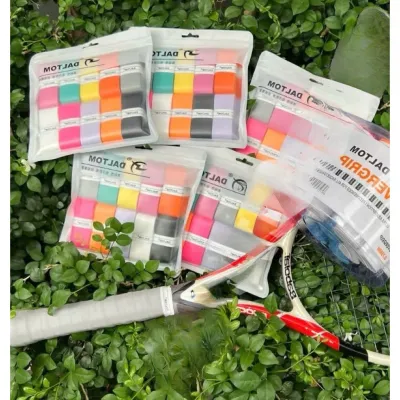
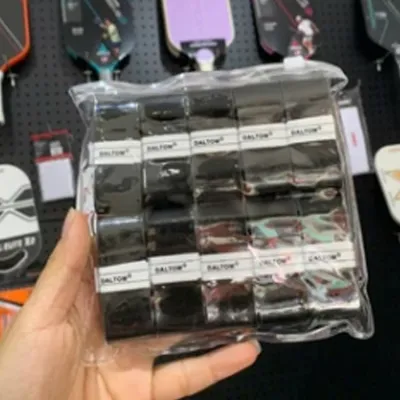
![Combo of 10 1-layer Daltom Racket Grips [Genuine] - For Pickleball Tennis Badminton 【Local shipment】](https://img.lazcdn.com/g/p/c0f3f84a2b1fc035ca69946561e2b211.png_400x400q80.png_.webp)
![[TOP SLAE] Combo of 10 1-layer Daltom Racket Grips [Genuine] - For Pickleball Tennis Badminton](https://img.lazcdn.com/g/p/029565ab2586898630725c7541caf126.jpg_400x400q80.jpg_.webp)
![【Hot selling】 Combo of 10 1-layer Daltom Racket Grips [Genuine] - For Pickleball Tennis Badminton](https://img.lazcdn.com/g/p/bca14ec8322ac514ab7d79c968dbd2b1.jpg_400x400q80.jpg_.webp)
![Combo of 10 1-layer Daltom Racket Grips [Genuine] - For Pickleball Tennis Badminton【Fast Ship】COD](https://img.lazcdn.com/g/p/88bdc51e4447b0b61a56019411c1c3b2.png_400x400q80.png_.webp)
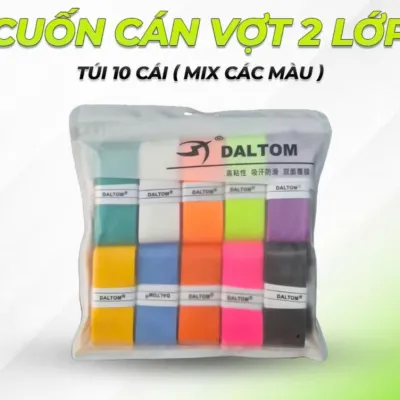
Prices are valid at publication and may change. Please refer to the product page for the latest price.
| Sweat Level | Grip Preference | Recommended Variant | Key Benefit |
|---|---|---|---|
| Low to Moderate | High surface friction and stickiness | Tacky | Maximum adhesion and direct handle feedback |
| High / Heavy | Moisture absorption and dry feel | Dry | Prevents slipping when hands are wet |
| Low to Moderate | Shock absorption and thicker feel | Cushioned | Reduces vibration and increases handle size |
| Moderate to High | Airflow and quick evaporation | Perforated | Combines ventilation with moisture management |
While your baseline sweat level is the primary deciding factor, environmental changes should also influence your choice. During the rainy season, when indoor humidity peaks, even players who normally prefer a tacky grip may need to switch to a perforated or dry variant to prevent slipping. Conversely, during cooler or drier months, a tacky grip can provide the necessary friction without requiring excessive grip pressure.
Assessing Your Sweat Level and Grip Needs
Identifying your personal sweat level is the first step in narrowing down your overgrip options. Players with low sweat levels generally find that their hands remain dry or only slightly damp during a match, allowing them to use grips that focus purely on surface adhesion. Moderate sweat players experience damp palms during long rallies but can easily dry their hands between games. High sweat players, however, deal with constant moisture that can cause the racket to twist in their hand during high-impact shots like smashes and fast drives.

Tropical humidity plays a significant role in how quickly an overgrip degrades. High moisture levels break down the polyurethane coatings of tacky grips, turning a once-sticky surface into a slippery barrier. When this happens, players often compensate by squeezing the racket handle tighter. This extra tension not only limits wrist snap and maneuverability but also leads to premature hand fatigue, forearm strain, and painful friction blisters.
Your playing frequency and intensity also dictate your durability requirements. If you play multiple times a week in competitive leagues, your overgrip will experience rapid wear from friction and salt buildup. Casual weekend players may prioritize long-lasting comfort, whereas frequent players will need to focus on how easily a grip can be replaced and whether it maintains its structural integrity over consecutive days of heavy use.
Comparing Daltom Overgrip Textures and Features
Overgrips are generally categorized by their surface finish and material thickness. Each design is engineered to solve a specific court challenge, whether that is moisture accumulation, vibration transfer, or a loose hold. Understanding the trade-offs of each texture category allows you to select a grip that complements your playing style without compromising racket control.
Choosing a grip always involves a balance between tactile feedback and comfort. A thinner grip allows you to feel the bevels of the racket handle clearly, which is essential for quick grip transitions. A thicker or padded grip, while offering excellent comfort and joint protection, rounds out these bevels and can make it more difficult to feel the exact angle of your racket face.
Tacky vs. Dry Overgrips
Tacky overgrips feature a smooth, polyurethane surface designed to offer high surface friction. This sticky texture allows you to maintain a secure hold on the racket with minimal hand pressure, making it an excellent choice for players who rely on a relaxed grip for deceptive drop shots and quick net play. However, because the surface is non-porous, heavy sweat can pool on top of the grip, causing it to lose its adhesive qualities quickly during intense matches.
Dry overgrips, often characterized by a felt-like or suede-textured finish, are designed specifically for moisture absorption. Instead of relying on surface stickiness, they use porous materials to draw sweat away from your palm, maintaining a dry, secure feel even when your hands are wet. This makes them highly suitable for high-sweat players or those playing in unventilated indoor courts.
To determine when it is time to change your grip, perform these simple checks:
- Tacky Grip Check: Run your thumb across the dry surface of the grip. If your thumb slides easily without any resistance or stickiness, or if you notice shiny, smooth patches on the high-friction areas, the tacky polyurethane layer has worn away.
- Dry Grip Check: Press your finger firmly into the grip after a match. If the material feels stiff, crusty, or fails to absorb water droplets instantly, the fibers have become saturated with sweat salts and dirt, indicating it is time for a replacement.
Cushioned vs. Perforated Overgrips
Cushioned overgrips are constructed with an added layer of foam or a thicker polyurethane profile. They are engineered for players who want to reduce the impact shock transmitted to their wrist and elbow during hard hits. These grips also increase the overall handle size, which can be beneficial for players with larger hands who find standard racket handles too small.
Perforated overgrips feature rows of tiny, precision-cut micro-holes along the tape. These perforations serve a dual purpose: they increase the surface area for sweat absorption and allow air to circulate under your hand, promoting faster evaporation. This design offers a middle ground, providing a secure grip feel with enhanced ventilation during long rallies.
When choosing between these two, consider the following trade-offs:
- Handle Feedback: Thinner, perforated grips keep your hand close to the wood of the handle, allowing you to feel the octagonal bevels clearly for precise shot placement.
- Joint Comfort: Thicker, cushioned grips absorb vibrations from off-center hits, protecting your joints from repetitive strain, but they reduce your ability to feel subtle changes in racket orientation.
Application and Maintenance Tips for Longevity
Proper installation is just as important as choosing the right grip variant. A poorly wrapped overgrip can bunch up, unravel mid-game, or create uncomfortable ridges that cause blisters. Follow this step-by-step wrapping technique to ensure a clean, professional finish:
- Start at the Butt Cap: Peel the protective plastic film off the overgrip. Secure the tapered end (usually featuring an adhesive tab) to the bottom of the racket handle, ensuring it aligns with the edge of the butt cap.
- Maintain Even Tension: As you wrap upward, pull the grip firmly but gently. Avoid overstretching the material, as this can thin out the polyurethane and reduce both its cushioning and durability.
- Control the Overlap: Overlap the edges by approximately 2 to 3 millimeters. Keeping the overlap consistent ensures a smooth, uniform surface. Excessive overlapping will make the handle too thick, while insufficient overlapping can leave gaps where the original grip is exposed.
- Finish at the Top: Once you reach the top of the handle, cut the excess grip at an angle to create a flat, straight edge. Secure it tightly using the included finishing tape.
To extend the lifespan of your overgrip, wipe it down with a slightly damp microfiber cloth after each playing session. This simple routine removes court dust, skin oils, and sweat salts that clog the pores of dry grips or ruin the stickiness of tacky ones. Never use harsh chemical cleaners or soak the grip, as moisture trapped underneath can damage the wooden handle of your racket.
Pay attention to clear indicators that your grip needs to be replaced. Physical signs include peeling edges, fraying material, or visible thinning where your thumb and index finger rest. Tactile signs include a complete loss of friction or a stiff, cardboard-like texture. Additionally, if your racket develops a persistent, sour odor, it is a clear sign that bacteria have built up in the sweat-absorbing layers of the grip.
Purchasing Checklist and Verification
To ensure you are getting genuine products that perform as expected, use this verification checklist when purchasing your overgrips:
- Verify Packaging Seals: Genuine grips are packaged in high-quality, sealed wraps or boxes. Look for clear, sharp brand printing and official holographic labels or security seals on the packaging.
- Check Specifications on the Label: Read the product label carefully to verify the material composition (such as polyurethane or nylon blends) and the exact thickness, which typically ranges from 0.5mm to 0.75mm for standard overgrips.
- Compare Bundle Sizes and Costs: Overgrips are commonly sold in single rolls, 3-packs, or bulk tubs. Compare the unit cost in ₱ across authorized local sports retailers and reputable e-commerce platforms. Purchasing bulk packs is often more economical if you play frequently and need to replace your grip regularly.
Frequently Asked Questions (FAQ)
Can I use a dry overgrip if I have very dry hands?
Using a dry overgrip when your hands do not sweat can actually cause your racket to slip. Dry grips rely on moisture to activate their slip-resistant properties; without sweat, the felt-like surface can feel slick against dry skin, which can lead to friction blisters. If your hands are naturally dry, you will get better results from a tacky overgrip, which provides immediate surface adhesion without requiring moisture.
How often should I replace my Daltom overgrip?
There is no fixed calendar schedule for replacing an overgrip, as it depends on your playing frequency, sweat volume, and local humidity levels. Instead of waiting for a specific number of weeks, replace your grip as soon as you notice physical signs of wear, such as peeling, tearing, or a complete loss of tackiness. For regular players training two to three times a week in humid conditions, replacing the overgrip every two to three weeks is common to maintain optimal racket control.
Does overgrip thickness change the racket's balance?
Yes, adding any material to the handle will add weight to the bottom of the racket, which can slightly shift the balance point toward the handle, making the racket feel slightly more head-light. While standard thin overgrips have a negligible effect on balance, thicker cushioned variants can add enough weight to alter the swing weight and handle feel. It is recommended to test your racket after wrapping to ensure the grip size remains comfortable for your hand span and does not restrict your wrist movement.
Community discussion
Share your experience or ask a question. Comments are reviewed before publication.