
Finding the right dobok taekwondo uniform for kids is crucial for their training comfort, safety, and confidence. In Taekwondo, a uniform that is too small restricts high kicks and quick footwork, while an oversized one creates tripping hazards on the mat. To choose the correct dobok size for your child, you must primarily measure their total height in centimeters, as martial arts sizing is based on height rather than age. Combining this height measurement with their weight and limb lengths will guide you to the perfect fit on any brand’s size chart.
By taking precise measurements and understanding how different fabrics behave, you can avoid the hassle of returns and ensure your child is fully prepared for their first class. This guide breaks down exactly how to measure your child, read manufacturer charts, and perform a physical fit test at home.
What You Need Before Measuring
To get started, you need a few basic tools: a flexible sewing tape measure, a notepad or smartphone to write down the numbers, and a flat wall. Using a hard ruler or a metal construction tape measure is not recommended, as these do not contour to the body and can lead to inaccurate measurements. It is also helpful to have a well-fitting, comfortable t-shirt and a pair of athletic pants on hand as a visual reference for how your child prefers their clothes to drape.
Products mentioned in this guide
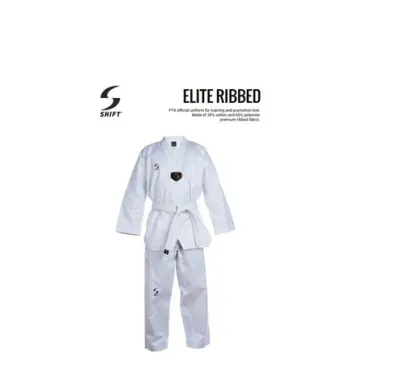
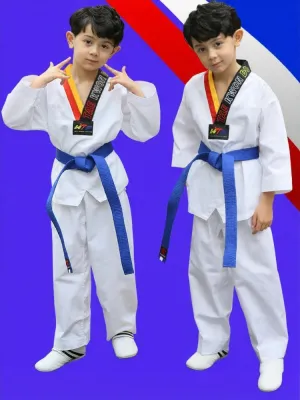
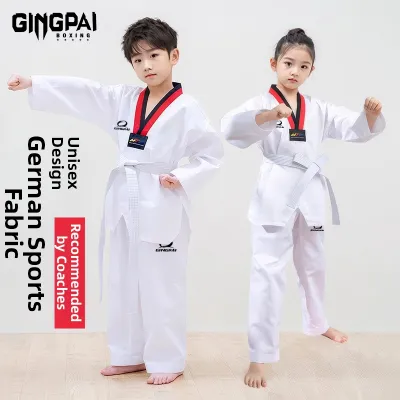
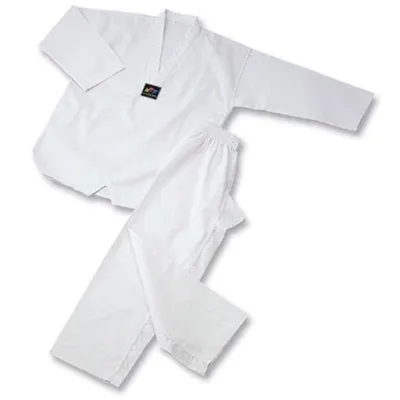
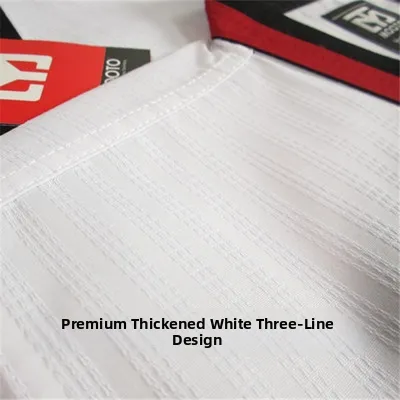
Prices are valid at publication and may change. Please refer to the product page for the latest price.
When taking the actual measurements, ensure your child wears only lightweight clothing, such as a thin t-shirt and shorts, and stands completely barefoot. Heavy fabrics, thick socks, or shoes will distort the baseline numbers, leading to a uniform that may feel too loose or too long once they are on the training mat. Taking these precautions ensures that the physical dimensions you record reflect your child’s actual body structure.
Ensure your child stands straight with their feet slightly apart, mimicking a natural ready stance (charyeot). Recording these numbers in both centimeters and inches is a smart step, as some international brands use imperial measurements on their sizing charts. Having these clear baselines ready will make comparing different brand charts much faster and more accurate.
Step-by-Step Guide to Measuring Your Child
Measuring your child accurately requires a systematic approach, focusing on the specific areas of the body that experience the most movement during martial arts practice.

Measuring Height and Weight
To measure height, have your child stand flat against a straight wall with their heels, buttocks, shoulders, and the back of their head touching the vertical surface. Place a flat object, like a hardcover book, flat on top of their head and mark the wall lightly with a pencil, then measure from the floor up to that mark in centimeters. Next, record their current weight using a reliable scale, as this is the second most critical factor in choosing a dobok.
While height determines the overall length category of the dobok taekwondo uniform for kids, weight helps you decide if your child requires a standard, slim, or wider cut. A child who is tall but very slim might swim in a uniform sized strictly by their height, whereas a stouter child may need to size up to ensure the jacket closes comfortably over their torso. Balancing these two dimensions prevents the uniform from being either too restrictive or excessively baggy.
Children grow in unpredictable spurts, so always take fresh measurements right before ordering rather than relying on measurements taken a few months ago. Even a two-centimeter difference can shift your child into a completely different size bracket, especially if they are already on the border of a size range.
Checking Arm and Leg Length
To measure sleeve length, have your child stand with their arms relaxed at their sides, and measure from the outer shoulder seam down to the wrist bone. This ensures that when they punch or block, the sleeves do not slide down over their hands or ride up past their mid-forearms. For pant length, measure from the natural waistline—just above the hips where the elastic band sits—down to the ankle bone.
Accurate limb measurements are vital because Taekwondo involves dynamic movements like high kicks, deep stances, and rapid pivots. If the pants are too long, they will drag under the heels, causing your child to slip on the dojang floor; if they are too short, they can restrict joint movement and look unprofessional. Keeping the fabric clear of the hands and feet is a fundamental safety requirement in any martial arts school.
When measuring the arm, you can also have your child bend their elbow slightly to simulate an active guard position. This ensures the sleeve won’t pull back too far when they are blocking or punching, maintaining both protection and comfort during intense sparring drills.
How to Read and Use Taekwondo Size Charts
Unlike standard children’s clothing which uses age brackets like “7-8 years,” martial arts uniforms are categorized by height in centimeters, such as 110, 120, 130, or 140. For example, a size 120 dobok is generally designed for a child who is between 115 and 125 centimeters tall. Because there is no universal standardization across martial arts brands, you must never assume that a size 130 in one brand will fit the same as a size 130 in another.
In the Philippines, standard student-grade uniforms typically range from ₱800 to ₱1,500, while premium competition-grade doboks can cost upward of ₱3,000, making an accurate sizing choice even more important to avoid costly returns. Always consult the specific manufacturer’s size chart for the exact model you are purchasing, paying close attention to both the height and weight columns.
If your child’s measurements place them exactly between two sizes, use a practical decision framework: size up to the larger uniform to allow room for natural growth, but double-check the weight limit of that larger size. If the larger size’s weight capacity is significantly higher than your child’s current weight, the uniform’s torso and pants may be excessively baggy, making it better to stick to the smaller size for a safer, cleaner fit. A uniform that is slightly snug is often safer and easier to train in than one that is completely oversized.
Accounting for Growth and Fabric Shrinkage
Balancing the financial desire for a long-lasting uniform with the immediate physical demands of Taekwondo training requires careful consideration of both fabric behavior and growth room.
Growth Room
When trying to get the most value out of a dobok taekwondo uniform for kids, it is tempting to buy a size that allows years of growth, but safety must come first. An acceptable amount of growth room means the sleeves sit slightly past the wrist bone and the pants pool gently at the ankle without touching the floor. Any excess fabric beyond a few centimeters becomes a serious hazard during sparring, forms (poomsae), or jumping drills, as loose pants can easily catch on toes or heels and cause dangerous falls.
In the warm, humid climate of the Philippines, training sessions in local dojangs can be highly physical, and heavy, bunched-up fabric will only trap heat and sweat, causing your child to overheat quickly. A properly fitted uniform allows air to circulate, keeping the young athlete cool and focused on their forms rather than their clothing. A dobok that is too large also affects the child’s psychological comfort; swimming in a sea of white fabric can make them feel self-conscious or clumsy in front of their peers.
Fabric Behavior
The material composition of the dobok dictates how much it will shrink after the first few laundry cycles, which directly affects your sizing choice. Before making a purchase, check the fabric blend on the product details or care label: 100% cotton uniforms are highly breathable but can shrink up to 5% to 10% when washed. If you choose a cotton-rich dobok, it is highly advisable to size up slightly to accommodate this inevitable shrinkage.
Conversely, uniforms made from polyester-polycarbonate or polyester-cotton blends (such as a 65/35 poly-cotton mix) are highly resistant to shrinking and wrinkles, meaning they will hold their original size and shape much better. For parents in tropical areas, lightweight polyester-cotton blends are highly recommended because they wick sweat away efficiently and dry quickly after washing, which is essential when training multiple times a week.
Always verify and follow the manufacturer’s specific washing instructions on the product label—usually recommending cold water washes and air drying—to prevent unexpected shrinkage and preserve the fabric’s integrity. Never put a cotton-blend dobok in a hot dryer unless you are intentionally trying to shrink a slightly oversized uniform.
The Fit Test: Verifying the Dobok Before the First Class
Once the uniform arrives, have your child try it on at home to perform a complete fit test before they step onto the training mat.
Length Check
Verify that the sleeves do not cover any part of the hands when arms are extended, and ensure the pant cuffs sit comfortably at or slightly above the ankle bone without dragging on the floor when standing barefoot. If your child steps on their own pant cuffs while walking, the pants are too long and must be adjusted before class.
Range of Motion Test
Have your child perform a few basic movements, including a high kick, a deep front stance (ap kubi), and a full-extension punch. Watch closely to see if the fabric pulls tightly across the shoulders, restricts the groin area, or limits their ability to bend their knees comfortably. Ask your child how the uniform feels; if they complain of chafing under the arms or tightness in the seat of the pants during a deep squat, the uniform is too small.
Jacket Overlap
Check the front of the jacket to ensure the left side crosses over the right side with adequate overlap across the chest. The jacket should stay securely closed and flat when the belt is tied around their waist, without gaping open or bunching up uncomfortably. A secure overlap ensures they do not have to constantly adjust their uniform during training.
Adjustments
If the dobok is slightly too long but fits perfectly everywhere else, consider having the sleeves or pants professionally hemmed rather than exchanging it for a smaller size that might restrict movement. However, if the waist is too loose even with the drawstring pulled tight, or if the jacket is so large that it slides off the shoulders, you should immediately exchange it for a smaller size to ensure safety during training. Many local tailors can easily hem a dobok, but they cannot fix a jacket that is fundamentally too wide for your child’s frame.
Frequently Asked Questions (FAQ)
Can I just buy a much larger size and let my child grow into it?
Buying an oversized dobok is highly discouraged because excess fabric poses significant safety risks during fast-paced Taekwondo classes. Pants that are too long can easily cause your child to trip during kicks or footwork drills, while baggy sleeves can get caught in an opponent’s gear during sparring. Additionally, an oversized jacket will not sit correctly under the belt, constantly shifting and distracting your child from their instructor’s lessons. It is always best to choose a size that offers a small, safe margin of growth room rather than a uniform that compromises their safety and movement.
Do different taekwondo brands use the exact same sizing?
No, martial arts apparel brands do not use a standardized sizing system, and cuts can vary significantly between manufacturers and regions. A size 130 dobok from a European brand may have a longer, slimmer cut compared to a size 130 from an Asian manufacturer, which might be wider and shorter. Even within the same brand, different models—such as basic student uniforms versus premium sparring doboks—can have slightly different fits. Always measure your child and compare their current numbers against the specific sizing chart provided for that exact uniform model before completing your purchase.
Community discussion
Share your experience or ask a question. Comments are reviewed before publication.