
Choosing the right dumbbell weight as a female beginner is a crucial step toward building a sustainable, effective strength training routine. Many women approach this decision with hesitation, often worrying about picking weights that are either too heavy to lift safely or too light to produce any meaningful physical progress.
The key to finding your appropriate starting load lies in understanding that your body does not require a single, universal dumbbell weight. Instead, your muscles respond to relative tension, which varies significantly depending on your current fitness level, the specific exercise you are performing, and your ultimate fitness goals.
By learning how to assess your baseline strength and apply simple physical tests, you can confidently select a versatile set of weights that supports your progression without risking injury.
Products mentioned in this guide
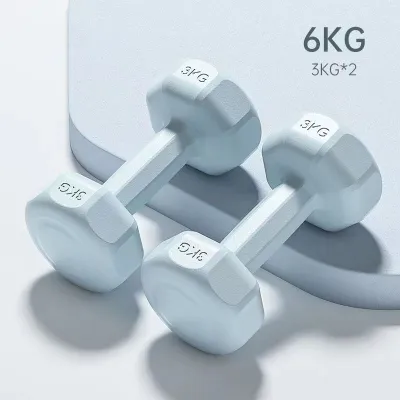
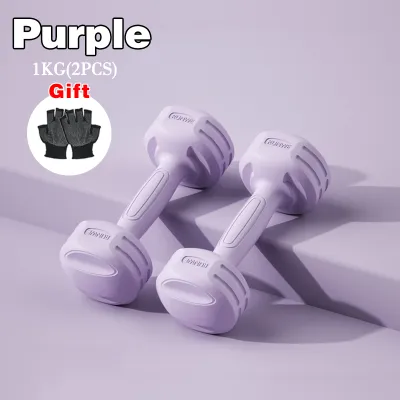
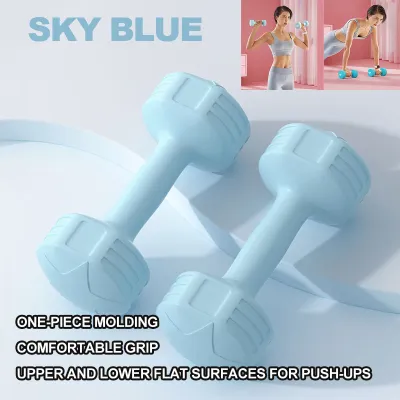
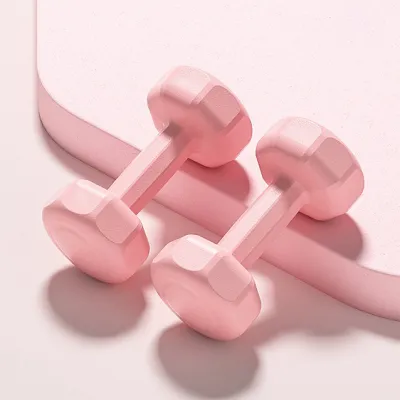
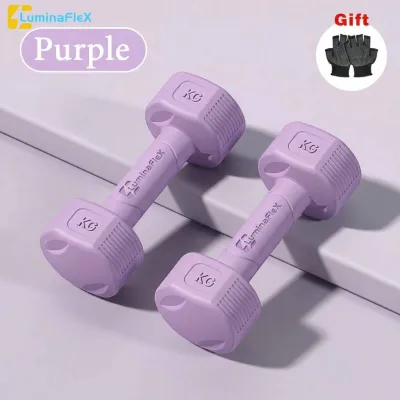
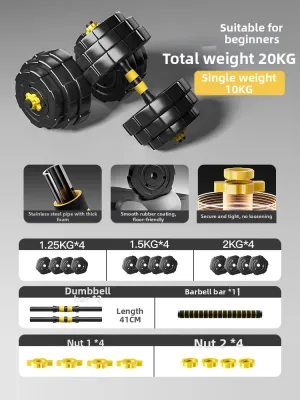
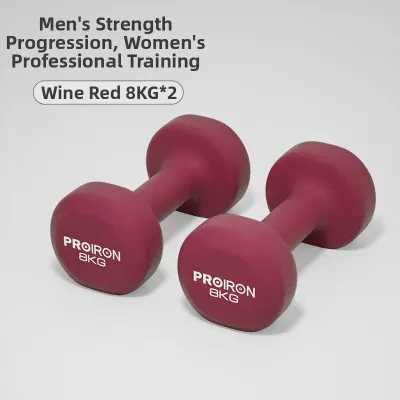
Prices are valid at publication and may change. Please refer to the product page for the latest price.
Assess Your Current Fitness Level and Goals
To establish a safe and effective starting point, you must first evaluate your current physical baseline and what you hope to achieve through strength training. Beginners generally fall into three distinct categories, each requiring a different approach to weight selection.
If you are a complete beginner who has not engaged in regular physical activity or structured exercise for several months, your initial focus should be on learning movement patterns rather than lifting heavy loads. For this starting point, very light weights—often ranging from 1 kg to 3 kg—are highly suitable for developing neuromuscular coordination and joint stability.
If you already have experience with bodyweight exercises, such as regular push-ups, planks, squats, or yoga, your muscles and joints are already accustomed to resisting force. This baseline allows you to start with slightly heavier dumbbells, typically between 3 kg and 5 kg for upper-body movements, and 5 kg to 8 kg for lower-body exercises.
For those transitioning from gym machines to free weights, the adjustment is more about stability than raw strength. Machines guide your body along a fixed path, which isolates muscles but bypasses the stabilizing muscles that keep you balanced. When you switch to dumbbells, you must control the weight in three dimensions, meaning you should scale back your machine weight by roughly 30% to 40% initially.
Your primary fitness goals also dictate your weight selection. If your goal is muscular endurance, you will want to select lighter weights that allow you to complete 15 to 20 repetitions before feeling fatigued. If you are aiming for hypertrophy, which is the development of lean muscle tissue and definition, you should choose a moderate weight that challenges you within the 8 to 12 repetition range. For those focused on building foundational strength, heavier weights that limit your repetitions to 5 to 8 per set are necessary.
Match the Weight to the Exercise Type
One of the most common misconceptions among beginners is that they can use the same pair of dumbbells for every exercise in their routine. In reality, different muscle groups possess vastly different strength capacities and mechanical advantages. Your body’s muscles are organized into small, isolated groups and large, compound networks, and your dumbbell selection must reflect this division.

Isolation exercises target a single joint and a specific muscle group, such as bicep curls, tricep kickbacks, and lateral raises. Because these movements rely on smaller muscles and do not benefit from the assistance of neighboring muscle groups, they require significantly lighter weights. For instance, a beginner might find that a 2 kg dumbbell is highly challenging for lateral raises, as the shoulder muscles are relatively small and must lift the weight at a mechanical disadvantage.
In contrast, compound exercises involve multiple joints and recruit several large muscle groups simultaneously. Movements like squats, lunges, deadlifts, and chest presses allow you to distribute the load across your body’s strongest structures. Your glutes, quadriceps, and hamstrings are designed to carry your entire body weight daily, meaning they require a much heavier stimulus to trigger adaptation. A beginner who uses a 2 kg dumbbell for squats will likely find the exercise far too easy to produce results; instead, starting with 5 kg to 10 kg dumbbells is often more appropriate for lower-body compound movements.
Biomechanical leverage also plays a massive role in how heavy a weight feels. When you perform a lateral raise, your arm is fully extended to the side, creating a long lever arm. This distance from your body’s center of gravity amplifies the torque required to lift the weight, making even a light dumbbell feel incredibly heavy. Conversely, during a dumbbell chest press or a goblet squat, the weights remain close to your joints and your center of gravity, shortening the lever arm and allowing you to handle heavier loads with greater control.
Additionally, environmental factors can influence your physical performance and grip during these movements. In warm, humid tropical climates, such as in the Philippines, sweating is a constant factor during home or gym workouts. A damp grip can make heavy dumbbells feel unstable or slippery, increasing the risk of dropping them. When matching weights to your exercises, consider how your grip strength holds up under humid conditions, and prioritize dumbbell materials or textures that offer secure handling even when your hands are wet.
Practical Testing Methods to Find Your Starting Load
Instead of guessing which weights to buy, you can use practical, physical tests to determine your appropriate starting load. The most reliable method for assessing weight intensity without pushing your body to absolute exhaustion is the “Two-Rep Rule,” which is based on the concept of Reps in Reserve (RIR). To perform this test, select a dumbbell weight and perform a set of your target exercise, aiming for 10 to 12 repetitions.
As you reach the end of the set, evaluate how your muscles feel. If you complete the twelfth repetition and feel as though you could have performed only two more clean repetitions with proper form before your muscles physically failed, you have found your suitable starting weight. This corresponds to an RIR of two. If you finish the set and feel like you could have easily completed five or ten more repetitions, the weight is too light to stimulate muscle growth or strength improvements. Conversely, if you struggle to reach the eighth repetition, or if your form begins to deteriorate before you reach your target, the weight is too heavy and should be reduced.
Recognizing form breakdown is critical for preventing injury and ensuring that the target muscles are doing the work. Common signs that a dumbbell is too heavy include torso swaying, arching your lower back, shrugging your shoulders toward your ears, or using momentum to swing the weight. For example, if you must lean backward to complete a bicep curl, you are using your lower back to cheat the weight upward, which bypasses the biceps and places dangerous stress on your spine.
You should also learn to distinguish between healthy muscle fatigue and joint discomfort. Muscle fatigue presents as a warm, deep, and gradual burning sensation within the muscle belly itself, accompanied by a temporary loss of lifting speed. This is a normal and necessary part of strength training. Joint discomfort, however, is characterized by sharp, sudden, or pinching pain in your wrists, elbows, shoulders, or knees. If you experience any joint pain or unusual pressure, stop the exercise immediately, check your alignment, and switch to a lighter weight.
Building Your First Set: Fixed vs. Adjustable Dumbbells
Once you understand your weight requirements, you must decide on the equipment format that best fits your home workout space, budget, and long-term progression. The two primary options available are fixed-weight dumbbells and adjustable dumbbell systems.
Fixed-weight dumbbells are solid, single-piece weights that do not change. They are incredibly durable, simple to use, and require no setup time between exercises, making them highly practical for fast-paced workouts. However, because you need different weights for different movements, you will eventually need to purchase multiple pairs. In terms of budget, a single pair of light fixed dumbbells might cost between ₱300 and ₱800. While this seems affordable initially, buying four or five pairs to cover your upper-body and lower-body needs can quickly drive your total investment over ₱4,000, while also requiring significant storage space in your home.
Adjustable dumbbells offer a highly versatile alternative by combining multiple weight increments into a single pair of handles. Plate-loaded adjustable sets use threaded collars to secure individual weight plates, allowing you to manually add or remove weight as needed. Dial-system adjustable dumbbells use a mechanical selector to change weights instantly with the turn of a dial. While adjustable systems require a higher upfront investment—often ranging from ₱3,000 to ₱7,000—they replace an entire rack of fixed dumbbells, saving valuable floor space in smaller living areas.
When choosing materials, especially for home workouts in humid climates, consider the long-term durability of the weights. Standard cast-iron plates are highly durable but are prone to rusting when exposed to sweat and high humidity. Neoprene-coated or rubber-encased dumbbells are highly popular because they resist moisture, protect your floors from scratches, and provide a more secure, non-slip grip when your hands are sweaty. If you opt for adjustable dial systems, ensure they are stored in a dry, well-ventilated area to prevent moisture from degrading the internal locking mechanisms.
Common Mistakes Female Beginners Make
Avoiding common pitfalls during your initial purchase can save you money and keep your fitness journey on track. The most pervasive mistake is choosing excessively light weights due to the fear of “bulking up.” Many female beginners believe that lifting anything heavier than 1 kg or 2 kg will result in bulky, masculine muscle growth. In reality, building significant muscle bulk requires a specific combination of high caloric intake, intense heavy lifting, and high levels of testosterone. Strength training with challenging weights will simply help you build lean muscle tissue, improve your posture, boost your metabolism, and increase bone density.
Another frequent error is the “single-pair trap.” Many beginners purchase a single pair of 2 kg or 3 kg dumbbells and use them for every exercise in their routine for months on end. While this might feel comfortable, it violates the fundamental training principle of progressive overload. To continue making progress, your muscles must be exposed to a gradually increasing stimulus over time. If you use the same weight indefinitely, your body will adapt, your progress will plateau, and you will no longer experience the physical benefits of your workouts.
Finally, beginners often overlook the importance of grip comfort and handle diameter. Dumbbell handles come in various thicknesses, and handles that are too thick can cause premature hand fatigue before your target muscles are fully worked. When selecting dumbbells, ensure the handle fits comfortably in your palm, allowing you to maintain a secure, closed grip throughout your exercises.
Frequently Asked Questions (FAQ)
Can I use the same dumbbell weight for all exercises?
No, you should not use the same dumbbell weight for all exercises. Your lower-body muscles, such as your glutes and thighs, are much larger and stronger than your upper-body muscles, like your shoulders and triceps. Using a single weight for everything means it will either be too heavy for your upper body, risking injury, or too light for your lower body, making the exercise ineffective.
How do I know when it is time to increase the weight?
It is time to increase the weight when you can complete all your target repetitions and sets with proper form while feeling that you have more than two reps left in reserve. If your target is 12 repetitions and you can easily complete 14 or 15 reps without losing your form or experiencing joint discomfort, your muscles have adapted, and you should progress to the next weight increment.
Are adjustable dumbbells worth the investment for beginners?
Yes, adjustable dumbbells are highly worth the investment for beginners who plan to commit to long-term strength training. Although they require a higher initial cost, they save significant money and space over time by replacing multiple pairs of fixed dumbbells as you progress and grow stronger.
Community discussion
Share your experience or ask a question. Comments are reviewed before publication.