
To choose the right electric boat engine for a kayak or inflatable boat, you must match the motor’s thrust to your total loaded weight, select a shaft length that keeps the propeller fully submerged based on your deck-to-waterline distance, and choose a battery system that fits your weight limits and runtime needs.
Operating a small watercraft in tropical environments, such as the coastal waters, estuaries, or lakes of the Philippines, requires careful planning. High humidity, sudden afternoon squalls, and strong tidal currents demand a reliable propulsion setup. Equipment alone cannot replace proper safety training, personal flotation devices, and sound on-water judgment. Always assess your physical limits and local weather conditions before heading out.
Determine the Required Thrust for Your Watercraft
Thrust is the measure of how much pushing power an electric boat engine delivers, and selecting the correct amount is essential for safe navigation. To establish a baseline, calculate the total loaded weight of your watercraft. This calculation must include the dry weight of the hull, the weight of all passengers, the motor, the battery, and all onboard gear such as tackle, anchors, and safety equipment.
Products mentioned in this guide
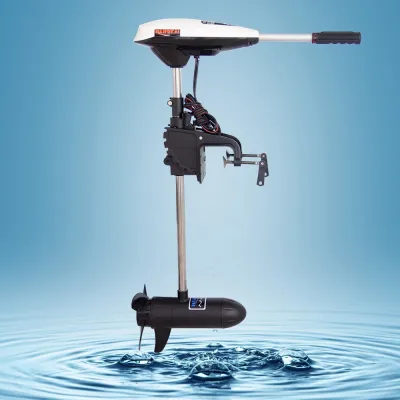
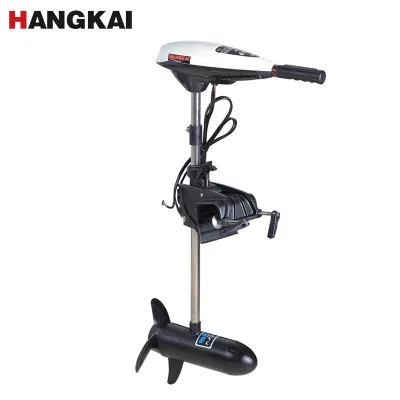
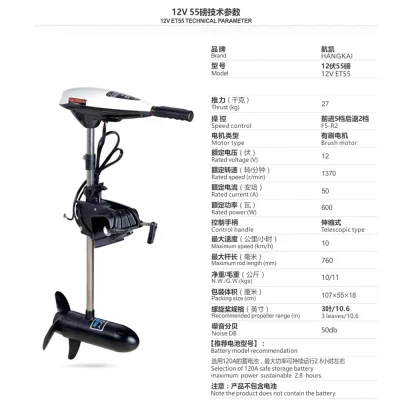
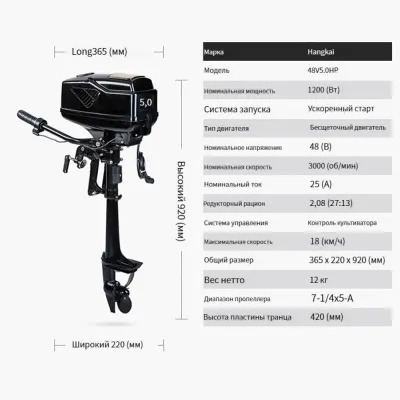
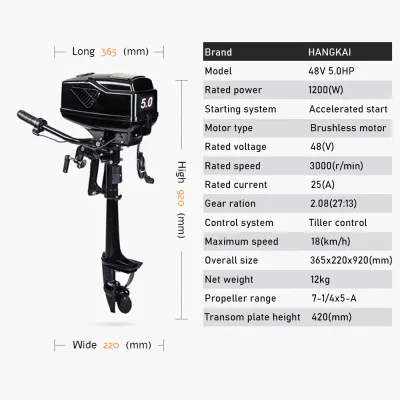
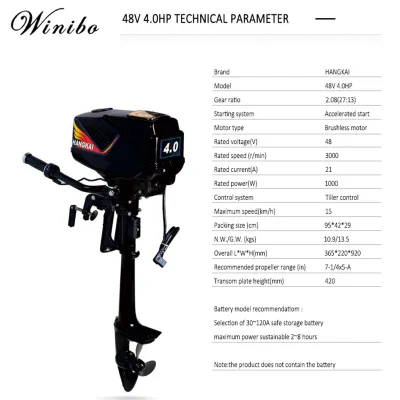
Prices are valid at publication and may change. Please refer to the product page for the latest price.
As a general baseline, a small watercraft requires at least 2 pounds of thrust for every 100 pounds of fully loaded weight. For example, if your fully loaded kayak weighs 400 pounds in total, you would need a motor with at least 8 pounds of thrust under ideal conditions. However, this baseline assumes calm, flat water with no wind or current.
Environmental factors common to tropical waterways require you to adjust this baseline upward. Strong tidal flows, coastal winds, and river currents can easily overpower a motor rated only for calm water. If you plan to navigate active estuaries or open bays, adding a safety margin of 10 to 20 pounds of additional thrust will help ensure you can safely make headway against sudden head currents.
Before finalizing your thrust requirements, always consult your watercraft manufacturer’s specifications. Many kayaks and inflatable boats have strict limits on the maximum weight and thrust or horsepower their hulls can safely handle. Exceeding these rated limits can cause structural damage, warp the transom, or compromise the vessel’s stability, increasing the risk of capsizing.
Select the Correct Shaft Length and Mounting Style
Choosing the correct shaft length is critical to ensure your electric boat engine operates efficiently without drawing in air or striking underwater obstacles. To determine the minimum shaft length, measure the distance from the top of your boat’s mounting surface down to the waterline while the boat is fully loaded.

For proper propulsion, the top of the motor’s propeller housing should sit at least 12 inches below the water surface. If the propeller is too close to the surface, it will draw in air—a phenomenon known as “cavitation”—which reduces thrust, increases noise, and can damage the motor. Add this 12-inch depth requirement to your waterline measurement to find the minimum shaft length needed.
You must also choose between a transom-mount and a bow-mount configuration based on your watercraft’s design and your primary activities. Transom mounts clamp directly to the stern, making them highly compatible with inflatable boats and standard kayaks. They are generally easier to install and allow for straightforward manual steering using a hand tiller, though they require you to reach behind your seat to operate the controls.
Bow-mount setups pull the watercraft from the front, offering superior maneuverability and precise steering control, which is highly beneficial for anglers trying to hold a specific position. However, bow mounts require a flat deck space or a specialized mounting bracket, which can be difficult to install on inflatable boats or narrow kayaks. Additionally, bow-mount motors are typically heavier and more complex to deploy and retrieve.
Finally, verify that the mounting bracket clamps are compatible with the thickness and material of your boat’s transom or mounting rail. Inflatable boats often feature thick, reinforced transoms made of marine plywood or heavy-duty plastic, which require wide bracket openings. Ensure the mounting area is structurally sound and reinforced to handle the constant torque generated by the motor during acceleration.
Evaluate Battery Types and Power Requirements
Your choice of battery directly impacts your watercraft’s runtime, overall weight, and handling characteristics. Traditional deep-cycle lead-acid batteries, including Absorbed Glass Mat (AGM) options, are widely available and offer a lower upfront cost. However, they are exceptionally heavy, which can significantly lower your boat’s freeboard and alter its center of gravity, making a small kayak or inflatable less stable.
Lithium iron phosphate (LiFePO4) batteries represent a modern alternative that addresses the weight limitations of small watercraft. Lithium batteries are up to 70% lighter than equivalent lead-acid batteries, which helps preserve your boat’s carrying capacity and maneuverability. They also maintain a stable voltage output throughout their discharge cycle, meaning your motor will not lose power as the battery drains, though they require a higher initial investment.
You must match your motor’s specific voltage requirement with the correct battery configuration. Most small electric boat engines designed for kayaks and inflatables operate on a 12-volt system, which requires a single 12-volt battery. Larger, high-thrust motors may require 24-volt or 36-volt systems, necessitating multiple batteries wired in series. Connecting a motor to a voltage higher than its rated capacity will destroy the internal electronics and void the warranty.
To estimate your runtime and avoid getting stranded, compare the motor’s maximum amp draw with the battery’s amp-hour (Ah) rating. If a motor draws 30 amps at full speed, a 100 Ah battery will theoretically provide approximately three hours of continuous operation at that speed. In practice, you should always plan your trips using the “rule of thirds”: use one-third of your battery capacity to travel out, one-third to return, and keep one-third in reserve for unexpected delays or emergencies.
Review Control Features and Operational Specifications
The way you control your electric boat engine affects both your comfort and your safety on the water. Tiller handle controls are the most common and reliable option, featuring a twist-grip handle that regulates both speed and direction. Many modern tillers feature telescoping or tilting handles, allowing you to steer comfortably from a natural seated position without straining your back.
For hands-free operation, remote controls, wireless fobs, or foot pedals are excellent alternatives, particularly for anglers who need to control the boat while casting. Wireless systems allow you to adjust your heading from anywhere on the craft, but they rely on internal batteries and introduce additional electronic components that must be kept dry. Foot pedals require a stable, flat deck space, which is often limited in smaller kayaks and inflatable boats.
Speed control mechanisms generally fall into two categories: fixed-speed steps and digital variable speed control. Fixed-speed motors typically offer a set number of forward and reverse speeds (such as five forward and three reverse), which are simple but can limit your ability to match the exact speed of a current. Digital variable speed systems allow for precise, incremental adjustments and are highly energy-efficient, as they only draw the exact amount of power needed for your desired speed.
Operating in tropical coastal environments requires robust protection against corrosion and moisture. If you plan to use your motor in saltwater, verify that the manufacturer explicitly rates the unit for saltwater use. Saltwater-rated motors feature specialized coatings, sacrificial zinc anodes to prevent galvanic corrosion, and fully sealed electrical connections to withstand high humidity and salt spray.
Verify Compatibility and Safety Boundaries Before Purchase
Before purchasing any electric boat engine, you must perform a final compatibility check to ensure your setup remains safe and stable. Calculate the combined weight of the motor, mounting hardware, and battery, and compare this to your watercraft’s maximum weight capacity. Placing too much weight at the stern of a kayak or inflatable can cause the bow to rise dangerously, reducing steering control and making the vessel vulnerable to swamping from passing wakes.
Electrical safety is paramount when operating a motorized watercraft. Always install an appropriate marine-grade inline circuit breaker on the positive power cable between the battery and the motor. The circuit breaker protects the motor’s delicate electronics from damage caused by power surges or propeller jams, and it prevents electrical fires. Use only marine-grade, tin-plated copper wiring of the correct gauge to resist the corrosive effects of humid, salty air.
Finally, thoroughly read the manufacturer’s manual regarding warranty conditions and mandatory maintenance protocols. Many warranties are immediately voided if a freshwater-rated motor is used in brackish or saltwater, or if the wiring is modified without approved connectors. Establishing a disciplined post-trip inspection and cleaning routine is the most effective way to protect your investment and ensure your equipment performs reliably on every excursion.
Frequently Asked Questions (FAQ)
Can I use a standard car battery to power my electric boat engine?
No, standard car batteries are designed to deliver a short, high-current burst to start an engine and are not built for continuous, deep discharge. Using a car battery to power an electric boat engine will rapidly degrade the battery’s internal plates, leading to premature failure and a severely limited runtime on the water. Always use a dedicated deep-cycle marine battery or a compatible lithium battery designed for sustained power delivery.
How should I store the battery and motor after a trip in saltwater?
After every saltwater excursion, thoroughly rinse the motor’s lower unit, shaft, and mounting bracket with clean freshwater to remove salt deposits. Inspect the propeller for tangled fishing line or debris that could damage the shaft seal. Store the motor and battery in a dry, well-ventilated environment away from direct sunlight and extreme temperatures. Charge the battery fully before long-term storage, and check the manufacturer’s care labels for specific maintenance guidelines.
Community discussion
Share your experience or ask a question. Comments are reviewed before publication.