
To fit an exercise step board into a small Philippine condominium, you must balance the physical dimensions of the equipment with the operational space required for safe movement. For most studio or one-bedroom condos ranging from 20 to 35 square meters, a compact exercise step board measuring approximately 68 to 70 centimeters in length is the most practical choice. If you have a larger living room clearing or a dedicated balcony space, a standard club-sized board measuring 100 to 110 centimeters provides more exercise variety but requires careful spatial planning and dedicated storage.
Selecting the right size prevents your home workout from feeling cramped and ensures you do not accidentally damage your furniture or injure yourself during high-energy routines. By understanding how to measure your floor plan and identifying smart storage solutions, you can maintain a highly effective fitness routine without sacrificing the comfort of your living space.
Understanding Step Board Footprints vs. Operational Space
A common mistake when buying home fitness equipment is looking only at the physical dimensions of the item. The physical footprint of an exercise step board refers strictly to the floor space it occupies when resting stationary on the ground. A compact board typically covers an area of about 68 cm by 28 cm, while a full-sized professional club board requires a footprint of roughly 110 cm by 40 cm. While these dimensions may seem small on paper, they do not represent the actual space you need to perform an active workout.
Products mentioned in this guide
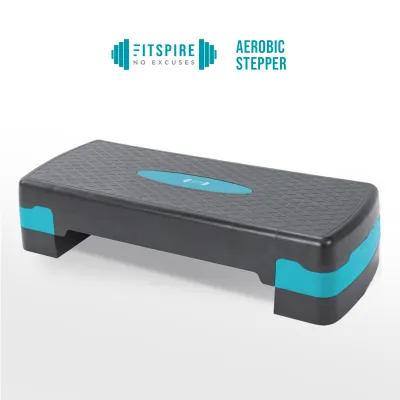
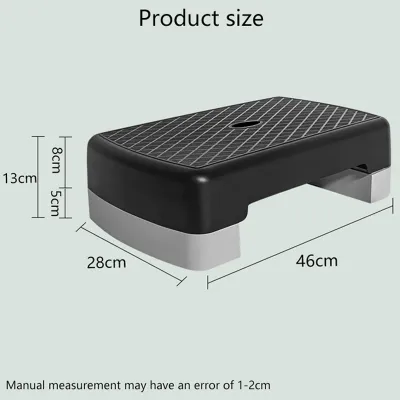
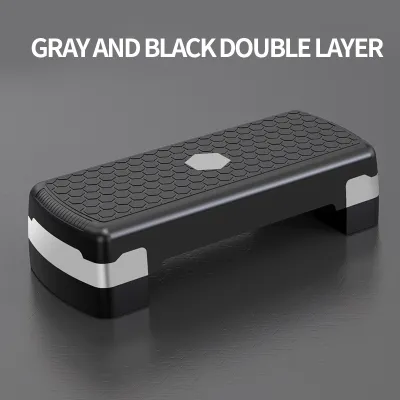
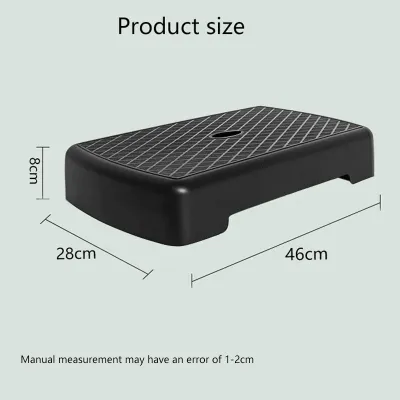
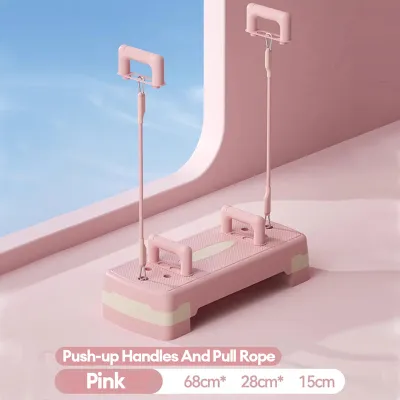
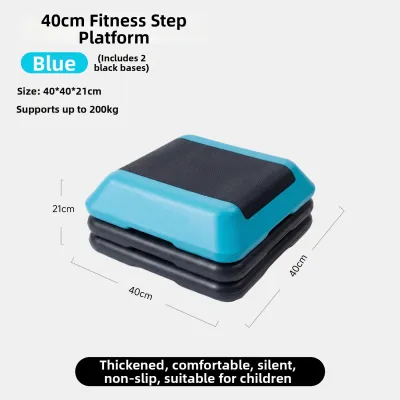
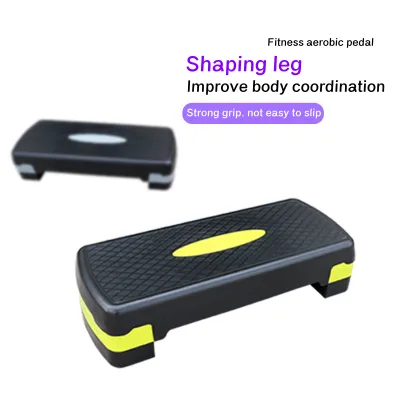
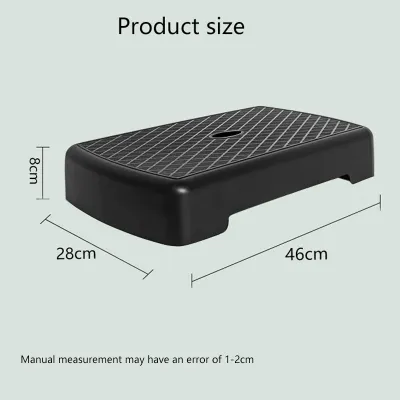
Prices are valid at publication and may change. Please refer to the product page for the latest price.
Operational clearance is the total active area required to use the step board safely without restriction. When exercising, you do not remain static on top of the platform; you step off the back, lunge to the sides, jump laterally, and swing your arms. For safe execution, you should maintain a minimum clearance buffer of 60 centimeters on all sides of the board. This buffer ensures that your feet have a clear landing zone and that you do not strike nearby walls or furniture during dynamic movements.
Adjustable-height risers are another critical element of the spatial equation. Most boards come with modular risers that allow you to adjust the platform height to 10, 15, or 20 centimeters, which directly influences your workout intensity. While adding risers does not alter the physical floor footprint of the board, it significantly changes your vertical clearance requirement. As the platform height increases, your body is positioned closer to the ceiling during jumps, making it essential to evaluate the vertical space in your condo.
How to Measure Your Condo Workout Zone for a Step Board
Measuring your designated workout zone requires a systematic approach that focuses on the actual usable floor area rather than the overall dimensions of the room. Condo layouts often feature structural columns, narrow hallways, or multi-functional corners that restrict your movement. To ensure a safe setup, follow these practical measurement steps before purchasing your equipment.

First, clear the proposed workout area of all temporary items and measure the open floor space. Ensure you measure between the baseboards and keep clear of heavy furniture legs, area rugs that might slip, or low-profile coffee tables. This gives you the true boundary of your active exercise zone.
Second, identify specific condo-specific constraints that could compromise safety. Look upward to check for low-hanging ceiling fans, decorative light fixtures, or concrete beams that could pose a hazard during overhead arm reaches or jump-squat movements. Additionally, check the swing paths of nearby doors, wardrobe panels, and the proximity of fragile items like television consoles or glass sliding doors leading to a balcony.
Third, establish a safe buffer zone around your proposed board location. You can easily visualize this by placing a standard yoga mat on the floor as a temporary proxy or marking out the board’s dimensions with masking tape. Stand in the center and extend your arms fully in every direction; you should be able to rotate completely without your hands or feet touching any walls, furniture, or glass surfaces.
Finally, perform a physical dry run of your planned exercises within this marked boundary. Step forward, lunge backward, and step laterally to ensure your movements feel natural and unconstrained. If you feel hesitant or find yourself holding back your range of motion to avoid hitting an object, your active zone is too small for that specific board size, and you should consider a more compact equipment option.
Choosing the Right Step Board Size for Your Layout
Selecting the ideal exercise step board size depends on your available condo layout, your storage capacity, and your specific fitness goals. Different board categories cater to distinct spatial limitations and training styles, making it important to weigh the trade-offs of each option.
Compact or mini step boards are highly recommended for tight studio apartments, small bedrooms, or multi-purpose living areas. These boards are lightweight, highly portable, and exceptionally easy to store in tight spaces. The primary trade-off is the limited surface area, which provides a narrower target for your feet. This requires greater precision during fast-paced choreography and limits your ability to perform wide-stance exercises, such as wide squats or incline chest presses, directly on the platform.
Standard or club-sized step boards are best suited for larger living rooms, open-concept layouts, or dedicated balcony fitness zones. They offer a generous, highly stable landing surface that easily accommodates users of all heights and fitness levels. This larger surface allows for a broader range of exercises, including full-body bench work and lateral agility drills. However, standard boards are bulky, heavy, and can be difficult to store out of sight in a small home, often requiring a dedicated closet or large under-bed clearance.
Adjustable-height boards offer the best balance of versatility and space efficiency. Because the intensity is modified by stacking modular risers vertically, you can progress your fitness level and increase your caloric burn without needing a larger physical floor footprint. This makes adjustable models an excellent long-term investment for small-space fitness enthusiasts.
Before finalizing your choice, always verify the manufacturer’s weight capacity and structural stability guidelines. Lighter, budget-friendly plastic boards can sometimes slide on smooth surfaces or flex under high-impact landing. Ensure the model you select features robust, non-slip rubber feet and a highly textured top surface to maintain traction, particularly in high-humidity tropical environments.
Practical Storage Solutions for Small Condo Spaces
Once your workout is complete, storing your fitness gear out of sight is essential for maintaining a clean, uncluttered condo environment. Because space is at a premium, you must utilize creative storage strategies that make use of underutilized areas in your home.
Under-bed or under-sofa storage is one of the most effective ways to hide a step board. Before purchasing, measure the vertical clearance height from the floor to the lowest point of your bed frame or sofa base. Compare this measurement to the combined height of the step board with its risers attached. If the clearance is tight, you may need to store the risers separately from the main platform to fit the equipment underneath.
Vertical storage is an excellent alternative if your furniture sits too low to the ground. You can lean the step board vertically against a wall inside a utility closet, behind a bedroom door, or next to a wardrobe. When storing equipment vertically, always secure it properly to prevent tipping hazards, especially in high-traffic areas. Utilizing heavy-duty utility straps or specialized wall mounts can keep the board safely anchored and out of the way.
If you own multiple fitness accessories, look for stackable or nesting designs. Many modern step boards are designed so that the risers fit securely into the underside of the main platform when not in use, creating a single, compact unit. If your model does not feature nesting parts, keep the loose risers organized by placing them in a dedicated storage bin or securing them to the board with a simple luggage strap to prevent them from scattering.
Common Sizing and Space Mistakes to Avoid
Avoiding common purchasing and setup errors will save you time, money, and frustration, while ensuring your home workouts remain safe and sustainable.
One frequent mistake is purchasing a standard-sized board without verifying your storage limits, only to realize it does not fit under your furniture or inside your closets. This often results in the board being left out permanently in narrow walkways, creating a persistent tripping hazard in your living space.
Another common error is neglecting the use of a proper equipment mat. While a step board can be placed directly on the floor, using it on bare ceramic tiles or laminate flooring can lead to slipping, scratching, and significant impact noise. A high-density equipment mat is essential for protecting your condo’s flooring and dampening vibrations, which prevents noise complaints from downstairs neighbors in multi-story residential buildings. Remember to account for the size of this mat when planning your overall workout footprint.
Finally, avoid choosing a cheap, fixed-height board solely because it saves a few centimeters of space. While a fixed board might seem convenient initially, the inability to adjust the height severely limits your exercise variety and prevents you from progressive overload as your fitness improves, reducing the long-term value of the equipment.
Frequently Asked Questions (FAQ)
Can I use a standard step board in a studio condo?
Yes, you can use a standard step board in a studio condo if you have a clear, dedicated floor area of at least 2.3 by 1.6 meters to accommodate both the board and the necessary operational clearance. However, if setting up a standard board requires you to constantly move heavy furniture before every workout, a compact step board or a multi-functional folding fitness bench may serve as a more practical and sustainable solution for your daily routine.
Do I need an equipment mat under my step board on condo floors?
Using a high-density equipment mat under your exercise step board is highly recommended for condo living. The mat provides critical slip resistance on smooth surfaces like polished tiles or vinyl, protects your flooring from impact damage, and dampens vibrations to minimize noise transmission to neighbors living below you. When planning your space, ensure the mat is slightly larger than the operational clearance zone of your step board.
Community discussion
Share your experience or ask a question. Comments are reviewed before publication.