
Finding the perfect fitness gift requires balancing utility, space, and the recipient’s physical capabilities. In the Philippines, where unpredictable tropical weather, heavy rains, and dense urban traffic can make outdoor jogging or gym commutes challenging, home workout equipment has become highly sought after. An exercise stepper is an exceptional gift choice because it delivers an effective cardiovascular workout and strengthens the lower body without occupying the massive footprint of a treadmill or stationary bike. Whether your recipient is a busy professional working from a high-rise condo in Metro Manila, a parent managing a bustling household, or an older relative looking to maintain mobility, a stepper offers a convenient way to stay active indoors. However, because these machines vary widely in motion mechanics, resistance types, and safety features, selecting the right model requires careful evaluation. By matching the stepper’s design to the user’s specific fitness level, joint health, and living environment, you can ensure your gift becomes a daily staple rather than an unused corner ornament.
Matching the Stepper Type to the Recipient's Fitness Goals
To choose a stepper that your recipient will actually use, you must first understand the different categories available on the market. Each type caters to a distinct fitness level and physical preference.
Mini steppers are the most common and compact option. They feature two small pedals that move in a simple, vertical up-and-down motion. These machines are highly intuitive, making them excellent for beginners, seniors, or individuals recovering from sedentary periods. They provide a low-to-moderate intensity workout that stimulates blood circulation and targets the calves, thighs, and glutes. Because they are lightweight and easy to move, they are perfect for casual exercisers who like to step while watching television or working at a standing desk.
Products mentioned in this guide
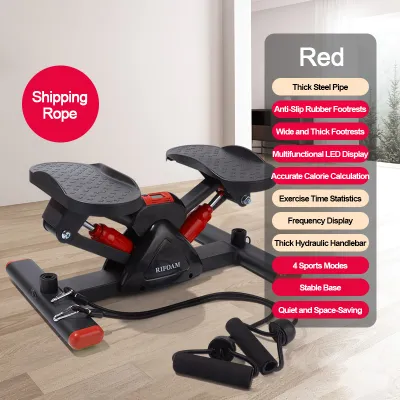
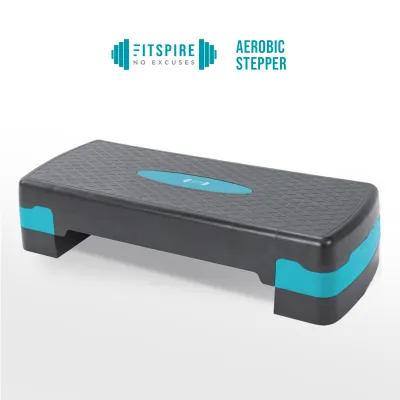
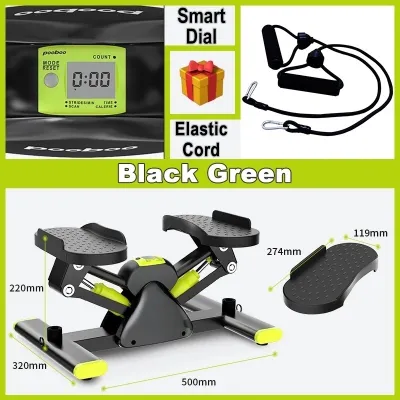
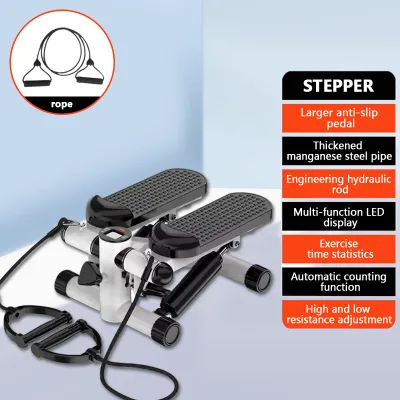
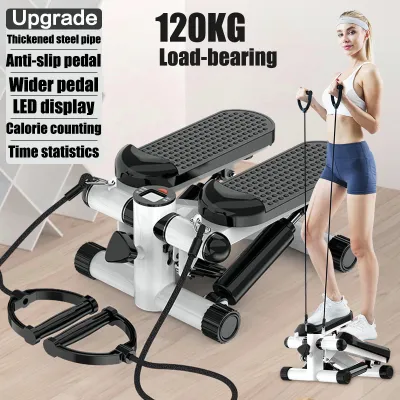
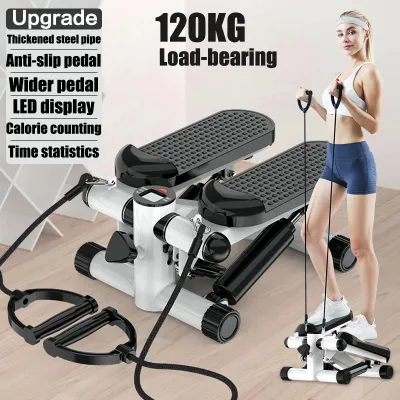
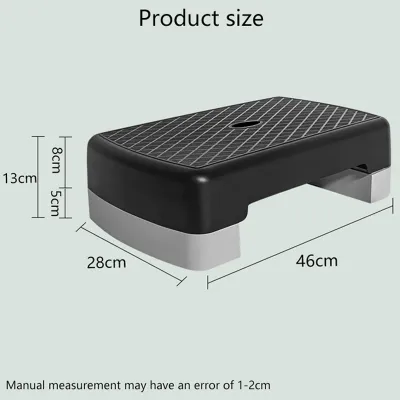
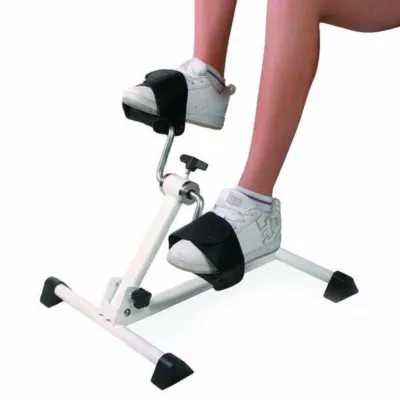
Prices are valid at publication and may change. Please refer to the product page for the latest price.
For recipients who want a more comprehensive workout, steppers with integrated resistance bands are an ideal upgrade. These models feature heavy-duty elastic bands attached to the base of the machine, allowing the user to perform bicep curls, shoulder presses, or lateral raises while stepping. This dual-action design engages the upper body and core simultaneously, turning a simple cardio session into a full-body toning routine. It is a highly efficient option for busy individuals who want to maximize their limited workout time.
Elliptical or gliding steppers offer a different motion path, moving the feet in a smooth, continuous oval or horizontal slide rather than a strict vertical drop. This design is specifically engineered to minimize impact on the ankles, knees, and hips. If your gift recipient has sensitive joints, mild arthritis, or is transitioning back into fitness after an injury, a gliding stepper provides a comfortable, fluid experience that eliminates the jarring stop at the bottom of a traditional step.
Twist steppers introduce a lateral, side-to-side rotation to the stepping motion. As the user steps down, the pedal twists slightly outward, engaging the obliques, lower back, and deep core muscles. While this is highly effective for improving balance and targeting the waistline, it requires a higher degree of coordination and joint stability. This type is best suited for intermediate fitness enthusiasts who already possess good balance and do not suffer from chronic knee or hip instability.
Essential Features to Evaluate for a Quality Gift
When comparing different steppers for exercise, looking beyond the outer casing to evaluate the internal components is essential for ensuring durability and safety.

The resistance mechanism is the heart of the machine. Most compact steppers utilize hydraulic cylinders to generate resistance. As the user steps, fluid is forced through a small valve inside the cylinder. While hydraulic systems are highly compact and cost-effective, they naturally generate heat during operation. Most manufacturers specify a maximum continuous usage time—often between 15 and 30 minutes—to prevent the hydraulic fluid from overheating and damaging the seals. If your recipient plans on long, endurance-style workouts, you may want to look for premium models that feature magnetic resistance. Magnetic systems use a flywheel and adjustable magnets to create resistance, offering a virtually silent workout and unlimited continuous usage, though they typically require a larger physical footprint.
Weight capacity and structural limits are critical safety specifications that must be verified in the product manual before purchase. Standard mini steppers often support user weights up to 100 kg, while reinforced steel frames can accommodate 120 kg or more. Choosing a machine with a weight capacity that comfortably exceeds the recipient’s weight ensures structural integrity, prevents premature wear on the joints and cylinders, and guarantees a stable, wobble-free workout. Additionally, check the pedal dimensions; wider, longer pedals accommodate various shoe sizes and allow the user to adjust their foot placement to target different muscle groups.
Digital monitors add significant value to a fitness gift by helping the user track their progress. Most basic models include a small LCD screen that displays step count, elapsed time, and estimated calories burned. While simple, these metrics provide immediate feedback and motivation. Ensure the monitor is positioned at an angle that is easily readable from a standing position and features a simple, one-button interface that does not require complicated programming.
Pedal design directly impacts safety and comfort. Look for pedals with deeply textured, non-slip surfaces or rubberized grips. In the warm and humid climate of the Philippines, sweat can quickly accumulate during an indoor workout, making slippery pedals a safety hazard. Some advanced models also allow users to adjust the step height or pedal angle, which changes the resistance level and allows for a customized workout that matches the user’s natural stride.
Space, Portability, and Storage Constraints
In many Philippine households, particularly in urban centers where condominium living and compact apartments are common, floor space is at a premium. A fitness gift should seamlessly integrate into the recipient’s home without creating physical clutter or safety hazards.
Before purchasing, conduct a footprint analysis by comparing the machine’s base dimensions against the recipient’s available floor space. A standard mini stepper typically occupies a small footprint of approximately 40 cm by 40 cm, making it easy to place in the corner of a bedroom or living room. However, you must also account for operational clearance. The user needs enough space around the machine to step on and off safely, as well as vertical clearance to ensure they do not hit their head on low ceilings or ceiling fans when standing on the elevated pedals.
Portability is another key factor, especially if the recipient prefers to move their equipment between rooms. Check the overall weight of the machine; a weight of 5 to 8 kg is generally easy for most adults to lift and carry. Some larger or heavier models feature built-in transport wheels or integrated carrying handles, which greatly simplify relocation and prevent strain when moving the machine from a storage closet to the living room.
Storage solutions are vital for keeping a tidy home. If the recipient lives in a shared space, look for steppers with highly compact profiles that can easily slide under a bed, fit inside a wardrobe, or tuck neatly behind a door. Models with detachable resistance bands or foldable handlebars are particularly advantageous, as they can be broken down into a flat shape in seconds, keeping the living area clear when the workout is complete.
Pre-Purchase Verification and Safety Boundaries
Before finalizing your purchase, running through a comprehensive pre-purchase checklist will help you avoid common gifting pitfalls and ensure the product is safe and fully supported.
First, cross-reference the recipient’s physical profile against the manufacturer’s explicit user limits. Beyond weight capacity, some steppers have height recommendations to ensure the stride length remains ergonomic. Operating a machine outside its designed limits can lead to rapid mechanical failure or physical strain.
Second, carefully review the warranty and customer support terms. Because hydraulic cylinders are subject to high friction and heat, they are the components most likely to require maintenance or replacement over time. Look for sellers that offer a clear warranty on the frame and hydraulic parts, and verify if replacement parts are easily accessible in the local market.
Third, evaluate the machine’s stability features. A quality stepper should feature wide, heavy-duty stabilizer bars at the base, capped with non-slip rubber end caps. These caps serve a dual purpose: they prevent the machine from sliding across smooth tiled or wooden floors during vigorous workouts, and they protect the flooring from scratches and scuffs.
Finally, check the retailer’s gifting and return policies. When purchasing online, ensure the platform offers a straightforward return or exchange window. A gift receipt or a flexible exchange policy is incredibly helpful in case the recipient requires a different style of stepper, such as transitioning from a twist stepper to a low-impact gliding model due to personal comfort or physical needs. When budgeting for a quality stepper, prices in the local market typically range from ₱1,500 for basic mini models to over ₱5,000 for advanced magnetic or multi-functional units, so verifying what is included in the purchase price is essential.
Frequently Asked Questions (FAQ)
Are exercise steppers safe for people with knee or joint issues?
Traditional vertical mini steppers involve a repetitive stepping motion that can place stress on the knees and ankles, particularly if the user bottoms out the pedals with force. For individuals with pre-existing joint conditions, chronic pain, or past injuries, a gliding or elliptical stepper is generally a safer, lower-impact alternative as it provides a smooth, continuous path without sudden stops. Regardless of the machine type, anyone with joint concerns should consult a physical therapist or medical professional before starting a new exercise regimen to ensure the motion is safe for their specific condition.
How much clearance is needed around a mini stepper for safe use?
While a mini stepper has a very small physical footprint, safe operation requires a clear zone of at least 1 meter of open space on all sides. This clearance ensures the user can step on and off the machine without tripping over nearby furniture, walls, or electrical cords. Additionally, users should verify their ceiling height; standing on a stepper elevates the body by 15 to 30 cm, so it is crucial to ensure ample head clearance, keeping well away from low-hanging light fixtures or active ceiling fans.
What maintenance is required to keep a hydraulic stepper in good condition?
To maximize the lifespan of a hydraulic stepper, regular low-risk maintenance is essential. Users should perform quick visual inspections before each workout, checking for loose bolts, worn pedal grips, or signs of hydraulic fluid leakage. Because the high humidity and tropical climate of the Philippines can accelerate rust and wear, it is important to wipe down the machine with a dry cloth after every use to remove corrosive sweat. Store the stepper in a cool, dry place away from direct sunlight, and avoid exceeding the manufacturer’s recommended continuous workout duration to prevent the hydraulic cylinders from overheating.

Community discussion
Share your experience or ask a question. Comments are reviewed before publication.