
Quick Answer: Core Selection Criteria for Fish Grabbers
Selecting the right fish grabber depends on matching your primary fishing environment with the physical traits of your target catch. A shore angler wading through coastal shallows requires a compact, highly portable tool, whereas an offshore boater needs extended reach to safely secure heavy, thrashing fish over high gunwales. The fundamental rule is to verify that the grabber’s rated weight capacity and jaw opening exceed the maximum size of your expected catch. Balancing reach against portability, and jaw capacity against overall tool weight, ensures you can control the fish without compromising your balance or safety.
Selecting the Right Length and Style for Your Environment
Your fishing platform dictates how close you can safely get to the water’s surface. Choosing a tool length and grip style that matches your specific environment prevents unnecessary stretching, loss of balance, and dropped gear.

Shore Fishing and Wading
Wading along sandy flats or casting from rocky shorelines requires a compact fish grabber that stays out of the way until needed. Shorter tools, typically ranging from six to eight inches, are ideal because they allow you to maintain maximum leverage and control when a fish is brought close to your body. When you are standing waist-deep in water, a long, unwieldy tool can easily throw off your balance during a struggle.
Products mentioned in this guide
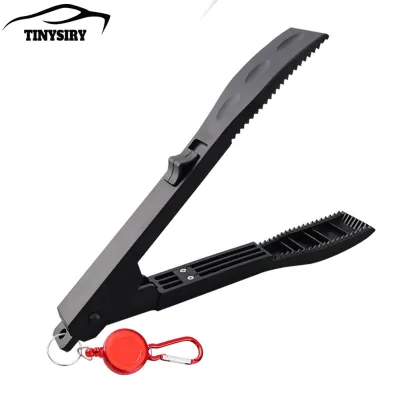
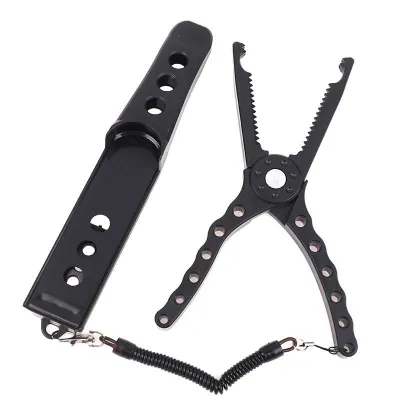
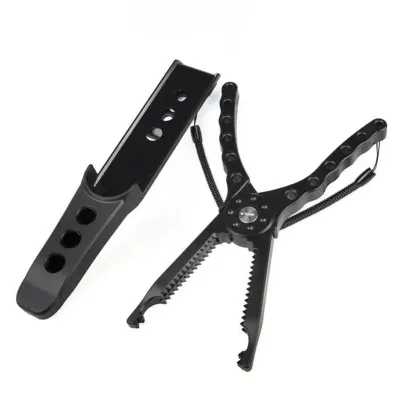
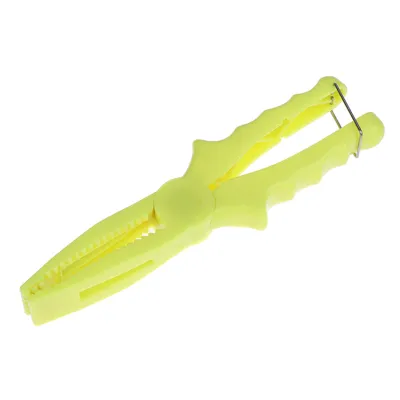
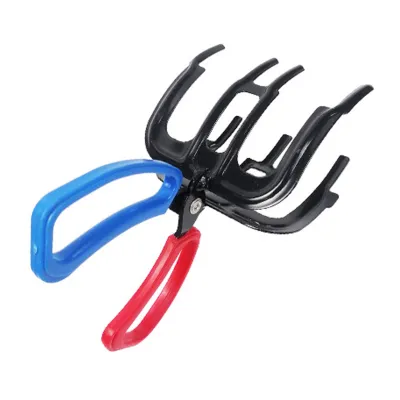
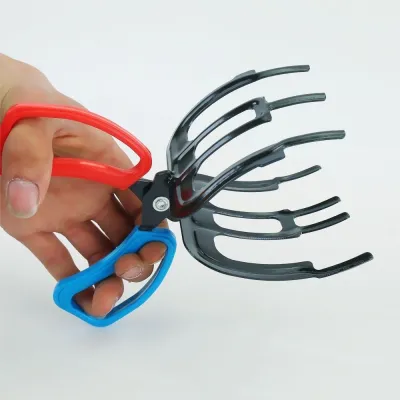
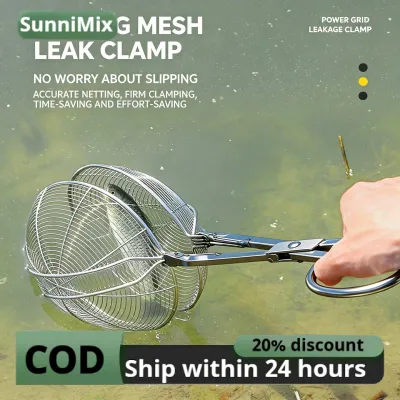
Prices are valid at publication and may change. Please refer to the product page for the latest price.
Security is paramount when wading in moving water or surf. Look for models equipped with a reliable, heavy-duty wrist lanyard or a coiled retractor that anchors firmly to your wading belt or pack. This prevents the tool from sinking or sweeping away if it slips from your hand.
Additionally, check the product specifications for sheath compatibility. A secure, quick-drain belt sheath keeps the grabber within easy reach while keeping your hands free to manage your rod, reel, and line during active casting.
Wading in tropical waters often exposes your gear to fine sand, suspended silt, and salt crust. These abrasive elements can easily migrate into the trigger housing of a fish grabber, causing the internal spring to stick or fail. When selecting a tool for wading, look for open-frame designs or models with accessible flush ports that allow you to easily rinse out sand and debris with clean water after a session.
Boat and Offshore Fishing
Anglers fishing from motorized boats or offshore vessels face a different set of physical challenges, primarily the distance between the deck and the water. An extended-reach fish grabber, often measuring twelve inches or more, is essential for reaching over high gunwales without leaning precariously over the side. This extra length keeps your hands and body safely away from sharp hull edges, propellers, and the unpredictable thrashing of large pelagic or bottom-dwelling species.
When targeting heavy offshore species, verify the manufacturer’s stated weight ratings and jaw strength. The tool must withstand sudden, violent head shakes from powerful fish without bending or releasing its grip.
Look for robust, positive-locking mechanisms that physically lock the jaws shut once clamped. This mechanical lock ensures that a heavy, slippery catch cannot force the jaws open through sheer weight or twisting force, protecting both the angler and the gear.
On a boat, managing a large, thrashing fish requires quick coordination. A longer grabber acts as an extension of your arm, allowing you to secure the fish’s lip while keeping your face and torso clear of the gunwale. This is particularly important when dealing with species that have sharp dorsal spines or gill plates, which can cause painful cuts if the fish thrashes unexpectedly against the side of the boat.
Kayak and Paddleboard Fishing
Kayak and stand-up paddleboard fishing demand a careful balance of reach, compact storage, and effortless one-handed operation. Because you are seated close to the water line, a mid-length tool of approximately nine to ten inches offers the perfect compromise, providing enough reach to clear the kayak’s hull while remaining easy to stow. The tool must fit securely within standard kayak crates, rod holders, or under deck bungees without cluttering your limited cockpit space.
Weight is another critical factor when paddling long distances. Prioritize lightweight materials like high-grade aluminum or reinforced composites to minimize fatigue and keep your overall gear weight manageable.
Most importantly, verify that the grabber features a smooth, reliable one-handed trigger mechanism. When kayak fishing, one of your hands must constantly manage the paddle, rudder, or fishing rod, leaving only one hand free to deploy the grabber and secure the fish.
Because space is at a premium on a kayak, your grabber must be easily accessible yet securely tethered. A heavy-duty coiled lanyard attached to a track-mounted accessory eyelet ensures the tool remains within arm’s reach but cannot float away if dropped overboard. Look for models that feature a high-visibility float attachment, which keeps the tool on the surface of the water if it accidentally slips from your hand during a chaotic landing.
Matching Jaw Capacity and Grip to Your Target Species
To select an effective fish grabber, you must match the physical dimensions of the tool’s jaw to the mouth structure and behavior of your target species. Start by reading and verifying the manufacturer’s specifications for maximum jaw spread and weight limits. A jaw spread that is too narrow will fail to clamp around the thick lip of a large predator, while an underrated tool risks mechanical failure under load.
Evaluate the specific anatomy and fighting style of the fish you target. For example, species like snook have abrasive mouths, while groupers possess thick, fleshy lips and immense crushing power. If you target fish with highly active, twisting fighting styles, look for a grabber with a 360-degree rotating shaft. This rotation allows the tool to spin freely with the fish’s movements, preventing the jaw from twisting out of the fish’s mouth or causing severe skeletal damage to the specimen.
Using an undersized or weak grabber on a large, thrashing fish presents serious safety and equipment risks. If the jaw capacity is insufficient, a sudden surge can cause the tool to slip, exposing your hands to sharp teeth, gill plates, or trailing treble hooks. Furthermore, the sudden shock of a heavy fish shaking its head can bend the internal springs or snap the trigger pins of an underrated tool, rendering it useless. Always choose a grabber with a rated capacity that comfortably exceeds the average weight of your target species.
The physical shape of the grabber’s jaws also plays a critical role in how securely it holds a fish. Some models feature blunt, rounded jaws designed to minimize tissue damage, which is ideal for catch-and-release angling. Other models have slightly hooked or offset jaws that provide a more aggressive grip on thick-lipped species. When evaluating jaw capacity, measure the maximum opening distance and compare it to the typical lip thickness of your target species to ensure a secure fit.
Verifying Materials, Build Quality, and Safety Features
The longevity and safety of a fish grabber depend heavily on its construction materials and mechanical design. When fishing in highly corrosive environments, such as the warm, humid coastal waters of the Philippines, corrosion resistance is your primary concern. Check product labels and specifications for marine-grade stainless steel or hard-anodized aluminum. Avoid tools with exposed carbon steel components or low-grade plating, as these will quickly rust and seize when exposed to salt air and spray.
Examine the safety mechanisms built into the tool. A reliable grabber should feature a positive locking trigger that requires manual activation to open, ensuring the jaws cannot be forced apart by a struggling fish. Look for secure, integrated attachment points for wrist lanyards, preferably molded directly into the metal frame rather than glued onto plastic end caps. If the manufacturer includes a protective sheath, verify that it features drainage holes to prevent trapped moisture from accelerating corrosion.
Grip ergonomics and handle materials are equally vital for maintaining control in wet, slippery conditions. Evaluate the handle for non-slip materials like textured rubber, dense EVA foam, or specialized synthetic wraps. The handle design should also incorporate a physical guard or flared end to prevent your hand from sliding forward toward the fish’s mouth or any exposed hooks. A comfortable, secure grip ensures you can apply steady pressure even when your hands are wet, slimy, or covered in fish slime.
In addition to selecting the right metals, pay attention to the surface treatments applied to the tool. Hard-anodized coatings provide an extra layer of defense against scratches and oxidation, while specialized non-stick coatings can help repel water and grime. Regularly inspecting the tool for signs of wear, such as pitting or discoloration around the pivot pins, will help you identify potential failure points before they lead to a lost fish or an injury.
Building Your Conditional Shortlist for Purchase
When browsing online marketplaces or preparing to visit a local retailer, you can narrow down your options by building a systematic, conditional shortlist. Begin by filtering available models based on your primary fishing environment and target species. Set a strict minimum jaw capacity and weight rating first, then filter by material composition based on whether you fish in freshwater lakes or saltwater coastal zones. Finally, select the appropriate tool length that matches your fishing platform.
Next, analyze user reviews on ecommerce platforms, looking specifically for feedback regarding long-term durability and mechanical reliability. Pay close attention to comments mentioning spring tension retention over months of use, and whether the locking mechanism remains smooth after exposure to sand and salt. Be skeptical of generic praise and focus on reviews that describe real-world performance in humid, tropical conditions.
If you are uncertain about the ergonomics or trigger tension of a specific model, pause your online search and visit a local tackle shop in the Philippines. Testing the tool in person allows you to feel the grip comfort, evaluate the weight balance, and test the trigger resistance with your own hands. Local shop staff can also provide valuable insights into which grabbers hold up best against local species and environmental conditions.
When budgeting for a reliable fish grabber, expect to invest anywhere from ₱1,000 to ₱4,000 for a high-quality, marine-grade model. While budget-friendly plastic alternatives exist, they often lack the durability and locking strength required for larger species. Investing in a robust, metal-bodied tool with a reliable locking mechanism ensures that your grabber will perform consistently season after season, saving you money on replacements in the long run.
Frequently Asked Questions (FAQ)
Can I use the same fish grabber for both freshwater and saltwater?
Yes, you can use the same fish grabber in both environments, provided the tool is constructed from corrosion-resistant materials like anodized aluminum or marine-grade stainless steel. However, saltwater is highly aggressive and will eventually degrade even high-quality metals if left unchecked. To prevent rust and mechanical seizing, establish a mandatory rinsing protocol: thoroughly wash the tool with clean freshwater after every saltwater outing. Pay special attention to the internal springs, trigger joints, and rotating shafts, and apply a light coat of marine-grade lubricant to the moving parts periodically.
How do I safely release a fish using a grabber?
To ensure a safe and successful release, always support the fish’s body weight horizontally. Never hang a heavy fish vertically by its jaw using the grabber, as this can cause severe spinal damage, tear internal organs, and break the fish’s jaw. Instead, clamp the grabber onto the lower lip, use your other hand to support the fish’s belly horizontally, and keep the fish in or close to the water. When you are ready to release the catch, lower it back into the water, pull the release trigger smoothly to disengage the jaws, and allow the fish to swim away under its own power.
Is a fish grabber better than a landing net?
A fish grabber and a landing net serve different purposes, and the better option depends on your target species and fishing style. A fish grabber is highly effective for securing toothy, predatory fish and allows for safe hook removal without tangling treble hooks in a net mesh. However, for delicate species or strict catch-and-release fishing, a rubber-coated landing net is generally safer because it supports the fish’s entire body and minimizes damage to its protective slime coat. Always check local tournament rules and conservation regulations, as some areas restrict the use of lip-gripping tools on specific species to protect fish populations.
Community discussion
Share your experience or ask a question. Comments are reviewed before publication.