
Selecting the right lambat pang huli ng isda is the difference between a successful day on the water and returning home empty-handed. Your choice depends entirely on whether you are actively harvesting bait, securing a hooked game fish, or working with a group in shallow coastal waters. By matching your net to your specific environment and target species, you ensure a productive, safe, and legally compliant fishing trip.
Quick Diagnostic: Identifying Your Primary Net Category
To find the right net, first determine if you need to catch fish directly with the net or if you need a tool to secure a fish already caught on a hook and line. Active catching tools, such as cast nets, are designed to capture schooling fish or bait directly from the water. Auxiliary landing gear, like landing nets, are used solely to lift a hooked fish safely out of the water to prevent your line from snapping.
Next, consider your operating setup. If you are fishing solo from a rocky shoreline or a sandy beach, a lightweight, hand-thrown cast net or a compact landing net with a belt clip is ideal. For boat-based operations, you have more space to store larger landing nets with long handles or heavier cast nets that require a stable platform to throw.
Products mentioned in this guide
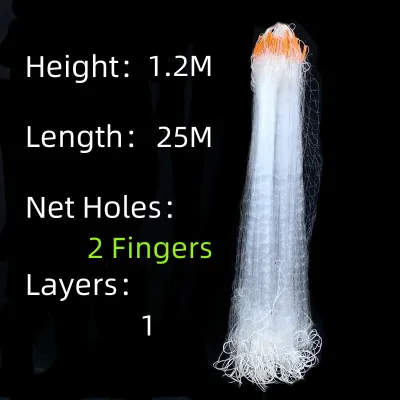
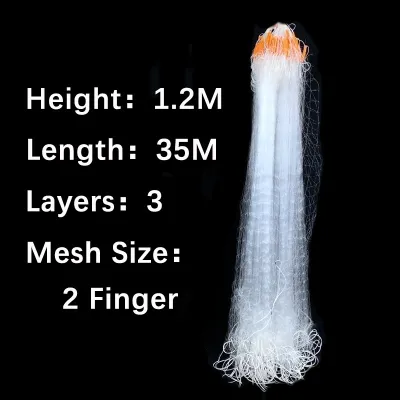
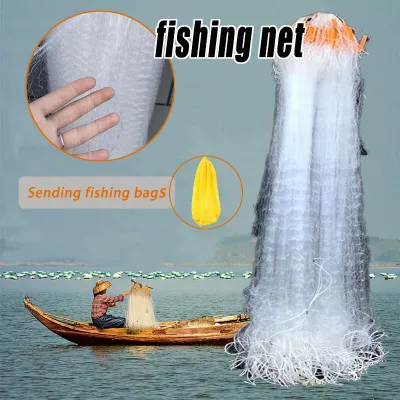
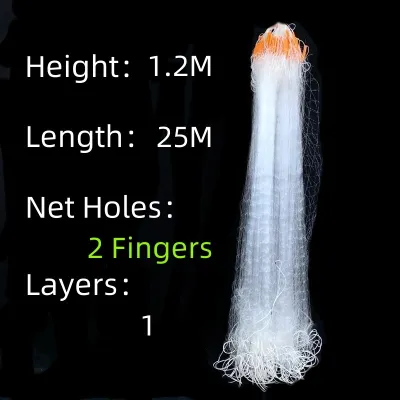
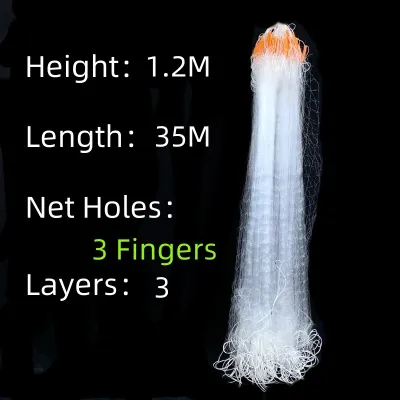
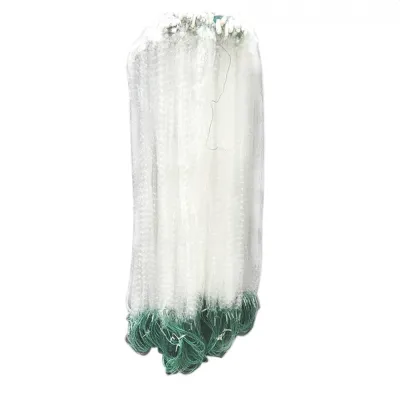
Prices are valid at publication and may change. Please refer to the product page for the latest price.
Finally, clarify your primary goal. If you are gathering small baitfish like tamban or dilis before a long day of angling, a small-mesh cast net is your best option. If you are targeting larger recreational species with a rod and reel, a durable landing net is essential to secure your catch.
Assess Your Environment and Target Species
The physical environment of your fishing spot dictates the physical limits of your net. Shallow freshwater rivers, streams, and estuaries often feature submerged logs, sharp rocks, and thick vegetation. In these environments, heavy or wide nets can easily snag and tear, making smaller, highly maneuverable nets a safer choice.

Deep coastal waters and open sandy shores present different challenges. Here, you need a net that can sink rapidly through the water column before the fish can swim away. Strong currents and waves require heavier lead lines or sinkers, but you must balance this weight against your physical ability to throw or retrieve the net repeatedly.
Target species behavior also dictates your net specifications. Schooling baitfish move quickly in tight groups near the surface, requiring a fast-spreading cast net with a fine mesh. Solitary game fish, such as mangrove jack or large tilapia, require a landing net with a wide hoop and deep bag to accommodate their sudden thrashing and weight.
Physical space and shoreline obstacles must be checked before you deploy any gear. Overhanging mangrove branches, docks, and shoreline brush will catch loose netting during a throw. If your favorite fishing spot is crowded with obstacles, a compact dip net or a short-handled landing net is much easier to manage than a large cast net that requires a wide, unobstructed swinging radius.
Match Your Fishing Style to the Right Net Type
Cast nets, known locally as laya, are the classic choice for active, solo fishers. These circular nets are thrown by hand so they open fully in the air, sink to the bottom, and trap fish underneath as they are retrieved. They are highly effective in shallow coastal waters, estuaries, and calm rivers for catching bait or pan-sized fish, but they require practice and physical coordination to throw effectively.
Landing nets are indispensable auxiliary gear for hook-and-line anglers. Instead of pulling a heavy fish up by the fishing line—which risks breaking the leader or tearing the hook from the fish’s mouth—you guide the fish into the submerged landing net. Look for models with rubber-coated mesh, as these are gentler on the fish’s protective slime coat and prevent hooks from getting tangled in the netting.
Dip nets and seine nets serve specific, localized purposes. Dip nets feature a small hoop on a long pole, perfect for scooping up crabs, prawns, or small fish from docks, rock crevices, or shallow tide pools. Seine nets are long, flat nets with floats on top and weights on the bottom, typically operated by two or more people who drag the net through shallow sandy flats to corral fish toward the shore.
Gill nets are passive tools designed to entangle fish by their gills as they attempt to swim through the mesh. While highly efficient for commercial operations, gill nets are subject to strict regulatory boundaries and are generally not suitable for recreational or sport fishing. Using them incorrectly can lead to severe ecological damage, including the accidental capture of non-target species and marine mammals.
Evaluate Material and Construction Specifications
When purchasing a lambat pang huli ng isda, checking the mesh size is your first priority. The mesh size—measured from knot to knot or as a stretched diagonal—must be small enough to retain your target species but large enough to let water flow through easily. A mesh that is too fine will create high water resistance, slowing down the sink rate of a cast net and allowing fast fish to escape, while also violating local conservation laws regarding juvenile fish.
The material of the netting determines its visibility underwater, durability, and ease of handling. Monofilament nylon is virtually invisible to fish, absorbs very little water, and sinks quickly, making it the preferred choice for cast nets. Multifilament nylon is softer, highly durable, and easier to pack, but it can absorb water, become heavy, and tangle more easily if not maintained. Polyethylene is highly resistant to abrasion against rocks and coral, making it excellent for heavy-duty landing nets and commercial-grade gear.
Weight and spread specifications are critical for cast nets. The radius of the net determines its coverage area, with larger radii requiring more skill to throw. The weight of the bottom line, often made of lead or steel sinkers, determines how fast the net sinks; a standard guideline is to check for a weight of about 1 to 1.5 pounds per radius foot to ensure the net sinks faster than the fish can swim, especially in deeper or moving water.
Navigate Local Fishing Regulations in the Philippines
Responsible fishing requires strict adherence to local laws to protect marine biodiversity and support sustainable coastal communities. Before purchasing or deploying any net, you must check the guidelines set by the Bureau of Fisheries and Aquatic Resources (BFAR) and your specific Local Government Unit (LGU). Municipal waters, which extend up to 15 kilometers from the coastline, often have localized ordinances that govern net fishing.
Mesh size restrictions are strictly enforced across the country to prevent the capture of juvenile fish, which threatens future fish populations. Generally, active fishing nets with a mesh size smaller than three centimeters are prohibited, though exceptions exist for specific seasonal bait fisheries under strict LGU permits. Additionally, using any form of net is strictly banned inside marine protected areas, fish sanctuaries, and designated conservation zones.
You must also verify seasonal closures and municipal boundaries before heading out. Certain areas enforce temporary bans on specific net types during spawning seasons for species like sardines or mackerel. Always consult local barangay officials or fishery officers at your destination to confirm that your chosen net type and fishing style are fully compliant with current local regulations.
Frequently Asked Questions (FAQ)
How do I properly clean and store my fishing net after use?
After every fishing trip, thoroughly rinse your net with clean, fresh water to remove salt, mud, sand, and organic debris. Hang the net to dry completely in a shaded, well-ventilated area, as direct sunlight and UV rays will rapidly degrade nylon and monofilament fibers. Once dry, store the net in a cool, dry storage bin or peg away from direct sunlight and pests like rodents, which may chew through the mesh.
Can I use the same cast net for both freshwater and saltwater?
Yes, you can use the same cast net in both environments, provided the materials are resistant to corrosion. Saltwater is highly corrosive to metal weights and handline hardware, so you must verify that the sinkers and swivel connections are made of lead, treated steel, or brass. To prevent salt buildup and premature degradation, you must rinse the entire net thoroughly with fresh water immediately after every saltwater use.
Community discussion
Share your experience or ask a question. Comments are reviewed before publication.