
Choosing the right front rack for your bicycle depends on balancing what you carry, how your bike is built, and how the extra weight affects your steering. For daily errands and grocery runs, a front rack keeps your cargo visible and within arm’s reach. However, there is no single setup that works perfectly for every rider. A commuter carrying fragile items requires a different configuration than someone strapping down bulky boxes. To find the ideal system, you must evaluate your typical cargo volume, understand the structural limits of your bicycle’s fork, and learn how to manage front-loaded weight safely on the road.
Identifying Your Cargo Profile for Daily Errands
Before browsing rack designs, evaluate what you actually bring home from the store. Grocery items vary wildly in shape, weight, and fragility. A heavy carton of milk behaves differently on a bike than a loaf of bread. If your daily routine involves quick stops for small, loose items, you need a system that prevents small objects from slipping through gaps. Conversely, if you frequently transport large, rigid boxes, a flat surface without restrictive walls will serve you better.
Weight distribution is another critical factor. Unlike rear panniers, front cargo directly impacts your steering dynamics. Heavy loads positioned high up near the handlebars can make the front wheel feel sluggish or prone to sudden flopping when parked or turning at low speeds. If your daily errands require carrying heavier loads, you must plan for a rack that positions the weight as low and close to the steering axis as possible.
Products mentioned in this guide
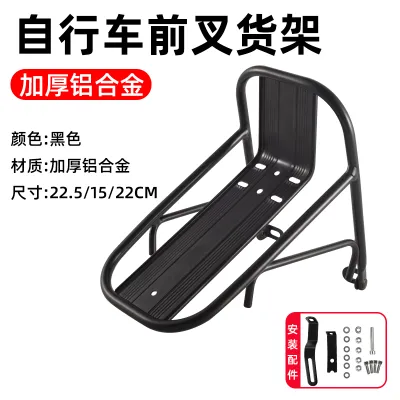
15 Lazada user ratings
Lightweight and durable, Fast shipping service, Secure mounting system, Sturdy aluminum frame, serves its purpose, hope it will last longer.…Read full reviewShow less
Lightweight and durable, Fast shipping service, Secure mounting system, Sturdy aluminum frame, serves its purpose, hope it will last longer. thank you.
The installation was pretty smooth and didn't take much effort.
Lightweight and durable, Perfect
Good quality material,
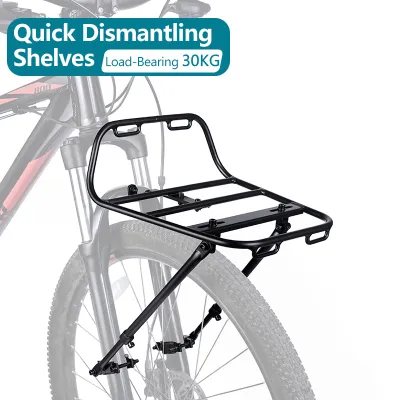
7 Lazada user ratings
Awesome, the product is really good, even better than I expected.
nice good quality
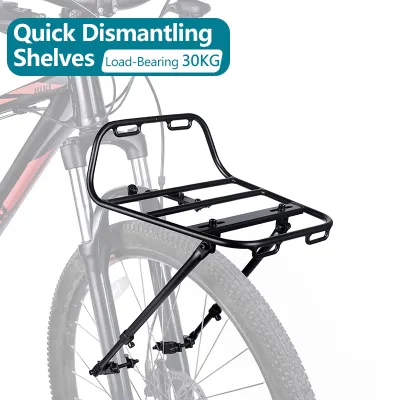
2 Lazada user ratings
The packaging is very good. The material of the items is durable quality.
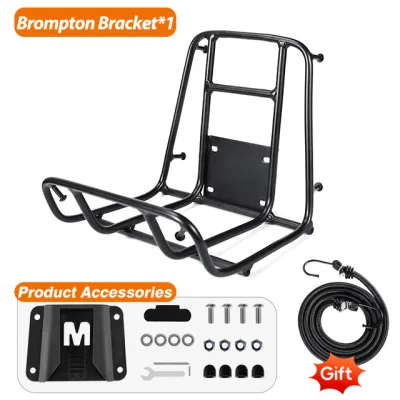
123 Lazada user ratings
Photo not related. Many times order here, they packed it well, very fast delivery. Very recommended, I will order again soon. Thankyou Sleek…Read full reviewShow less
Photo not related. Many times order here, they packed it well, very fast delivery. Very recommended, I will order again soon. Thankyou Sleek black color adds style, Great for long-distance biking trips, Excellent value for the price, One-year warranty for peace of mind,
Sleek black color adds style, Sturdy aluminum alloy material, Great for long-distance biking trips, Securely holds items in place, Provides …Read full reviewShow less
Sleek black color adds style, Sturdy aluminum alloy material, Great for long-distance biking trips, Securely holds items in place, Provides ample space for luggage, One-year warranty for peace of mind, Excellent value for the price, Convenient and easy to install,
late posting gayun pa man salamat parin at malaking baGay para sa ak8n ma6 Nagagamit akong Maasahan sa biyahe koh.
Received the item... quality is okay, it's beautiful, and delivery was fast despite it being right during Tet.
maganda at maayos.. bobili uli
Prices are valid at publication and may change. Please refer to the product page for the latest price.
Your daily routine also dictates how quickly you need to load and unload your gear. If you make multiple short stops, a simple drop-in system like a basket saves time. However, if your commute involves bumpy roads or unpredictable weather, a secure, enclosed system becomes essential to prevent items from bouncing out or getting soaked.
Basket-Style Setups for Quick and Easy Grocery Runs
For many urban cyclists, a front basket is the most intuitive and convenient way to carry groceries. These setups are generally divided into open wire baskets and solid-walled containers. Wire baskets, often constructed from steel or aluminum, are lightweight and allow rain to drain immediately. They provide excellent visibility, letting you keep an eye on your belongings while riding. The primary advantage of a basket is its simplicity: you can drop a backpack, a tote bag, or loose grocery items straight inside without needing to fiddle with bungee cords or cargo nets.

However, wire baskets have distinct limitations. Small items like keys or loose fruit can easily slip through the wire grid if the basket is not lined. Solid-walled baskets, such as those made from molded plastic or woven materials, solve this issue but can add wind resistance and weight to your front end. Additionally, open baskets offer no protection from sudden rain showers, which can quickly ruin paper grocery bags or sensitive electronics.
Weight capacity is another crucial consideration. Most handlebar-mounted baskets are designed for light to medium loads, typically capping out between 5 to 10 kilograms. Exceeding these limits can strain the mounting brackets, pinch your brake and gear cables, and severely compromise your steering control. If you regularly carry heavy grocery hauls, look for a basket that mounts directly to the fork eyelets or front axle rather than relying solely on handlebar clamps.
Platform-Style Racks for Flexible and Heavy Loads
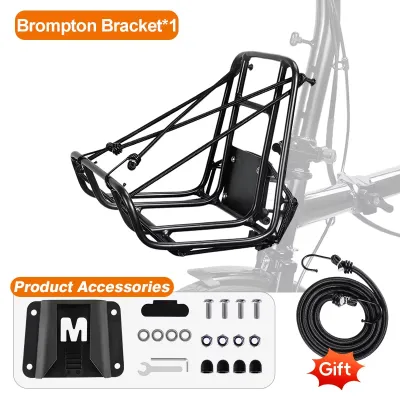
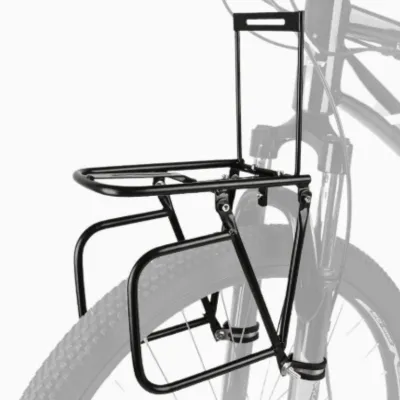
Platform-style racks, often referred to as porteur racks, feature a flat, wide metal deck positioned over the front wheel. This design is highly favored by riders who need maximum flexibility, as it does not confine your cargo within fixed walls. A platform rack allows you to carry oversized, awkwardly shaped, or bulky items—such as pizza boxes, shipping packages, or large water containers—that would never fit inside a standard basket.
To make a platform rack functional, you must pair it with reliable securing accessories. Bungee cords, adjustable cam straps, and elastic cargo nets are essential tools for keeping your load stable. Because there are no side walls to contain your items, any shift in weight during a sharp turn or sudden stop can cause cargo to slide off, potentially interfering with your front wheel and causing a crash. Taking the time to tightly strap down every item is a mandatory step before setting off.
Many high-quality platform racks are designed to mount directly to the frame or the lower eyelets of the fork, which allows them to support significantly heavier loads than handlebar-mounted baskets. Some heavy-duty platforms can safely carry up to 15 to 20 kilograms, provided your bicycle’s frame and fork are rated for such weight. Additionally, some platform designs feature integrated lower rails, allowing you to mount low-rider panniers alongside the top deck. This dual-level setup lowers your center of gravity, greatly improving handling when transporting heavy groceries.
Enclosed Bags and Crates for Secure, Weather-Ready Commutes
When your daily commute involves unpredictable weather, rough roads, or frequent stops in public areas, enclosed cargo solutions offer superior protection and peace of mind. Integrated front panniers, supported handlebar bags, and rigid crates are the primary options for riders who prioritize security and weather resistance.
Waterproof front panniers, which mount to the sides of a low-rider front rack, are excellent for keeping your groceries dry during heavy downpours. Because they sit low on either side of the front wheel, they keep the center of gravity close to the ground, resulting in exceptionally stable handling. Handlebar bags supported by a small front rack offer a similar benefit but keep your items higher up for easy access. Many of these bags feature roll-top closures and water-resistant fabrics, ensuring that your phone, wallet, and dry goods remain protected from road spray and rain.
Rigid crates, such as classic wooden or plastic milk crates secured to a front platform, offer a highly durable, semi-enclosed alternative. While they do not provide built-in weatherproofing, they can easily be paired with waterproof dry bags or simple plastic liners. Crates excel at preventing items from shifting or getting crushed, making them ideal for carrying fragile groceries. The trade-off with enclosed systems is accessibility: while a zippered handlebar bag or a buckled pannier keeps your items secure from opportunistic theft during quick stops, they require more time to pack and unpack compared to an open basket.
Verifying Bike Compatibility and Steering Handling
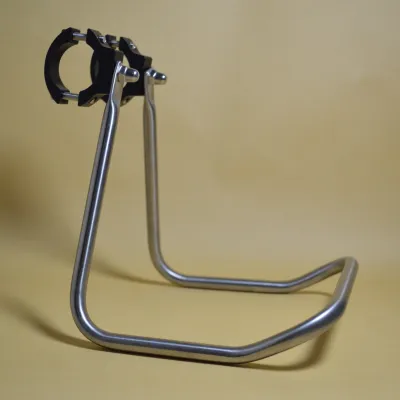
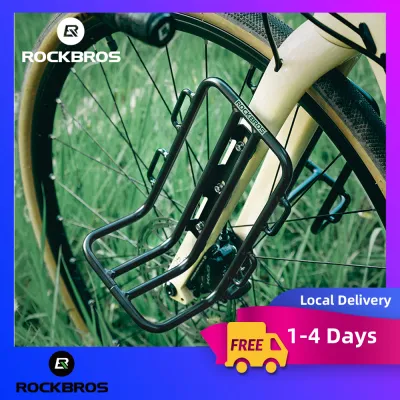
Before purchasing any front rack, you must verify that it is compatible with your specific bicycle frame and fork. Start by inspecting your fork for mounting points, also known as eyelets. Many touring, gravel, and commuter bikes feature threaded eyelets near the dropouts (at the bottom of the fork) and mid-blade mounts halfway up the fork legs. Some racks also require a mounting point at the fork crown, where the front brake caliper or fender attaches. If your bike lacks these eyelets, you may need to look for specialized racks that mount directly to the front axle or use heavy-duty p-clamps, though these options often have lower weight capacities.
It is equally important to understand how front-loaded cargo affects your bike’s steering geometry. When you add weight to the front wheel, the steering becomes heavier and slower. A phenomenon known as “wheel flop” can occur, where the front wheel wants to swing sharply to one side when the bike is stationary or moving slowly. To mitigate this, check if your bike has a steep head tube angle, which generally handles front loads better than slack, mountain-bike-style geometry.
Always consult your bicycle manufacturer’s specifications to determine the maximum weight limit for your fork. Carbon fiber forks, in particular, require extreme caution; many manufacturers explicitly prohibit mounting racks to carbon forks due to the risk of structural failure under load. If you are unsure about compatibility or torque specifications for mounting bolts, consult a professional bicycle mechanic before installation.
Packing and Riding Safely with Front Cargo
Riding a front-loaded bicycle requires a conscious adjustment in your riding style and packing habits. Proper weight distribution is the key to maintaining balance and control. Always place your heaviest items—such as canned goods, liquids, or heavy tools—at the bottom of the rack or basket, as close to the center line of the wheel as possible. Lighter, more fragile items like bread, eggs, or leafy greens should sit on top. This keeps the center of gravity low, reducing the impact on your steering.
Before you pedal away, perform a quick safety check. Ensure that no loose straps, bag handles, or grocery items are dangling near the spokes of your front wheel or the brake calipers. Verify that your cargo does not pinch or restrict your brake and gear cables, which can prevent you from stopping or shifting gears safely. If you are using a tall basket or stacking items high on a platform, make sure your view of the road directly in front of your wheel is not obstructed, and ensure your front headlight remains fully visible to oncoming traffic.
On the road, remember that the extra weight will significantly increase your braking distance. Begin braking earlier than usual, and apply both front and rear brakes smoothly to avoid skidding. Take corners at a slower, more controlled speed, as a heavy front end will resist sudden changes in direction. If you must ride over potholes, speed bumps, or uneven pavement, reduce your speed to prevent the cargo from bouncing violently, which could destabilize your steering or damage your rack mounts.
Frequently Asked Questions (FAQ)
Can I install a front rack on a bike with suspension forks?
Installing a front rack on a suspension fork is highly challenging and often unsafe. Most standard front racks are designed for rigid forks and cannot accommodate the movement of suspension lowers. Mounting a rigid rack to a suspension fork can restrict its travel, damage the fork seals, or cause the rack to bind during a hard impact, leading to a sudden crash. If you must carry cargo on a suspension fork, look for specialized racks designed specifically for suspension systems that clamp securely to the lower legs, and always verify compatibility with the fork manufacturer’s guidelines.
How do I prevent small groceries from falling through a wire basket?
To keep small items from slipping through the gaps of a wire basket, you can line the interior with a dedicated fabric basket liner, a durable canvas tote bag, or a reusable shopping bag. Elastic cargo nets with a tight mesh pattern are also excellent for securing loose items from the top while keeping them contained. When using liners or bags, ensure they are securely fastened to the basket frame so they do not flap in the wind or sag down into the front wheel, where they could catch on the spokes or tire tread.
Community discussion
Share your experience or ask a question. Comments are reviewed before publication.