
Finding the right mountain bike requires balancing your personal riding goals with a realistic budget. If you are considering a Garuda MTB bike, you will find a variety of configurations designed for different environments, from daily city commutes to rugged weekend trail rides. To make the best choice, you must evaluate how a bike’s frame material, suspension design, and braking system align with your local terrain and physical needs. Remember that no matter how capable a bike is, it cannot replace proper safety training, physical preparation, and sound judgment on the trail.
Match Your Riding Style to the Right MTB Category
Defining your primary riding environment is the first step in narrowing down your options. If you plan to use your Garuda MTB bike primarily for daily commuting on paved roads, concrete streets, or flat gravel paths, your main priorities should be pedaling efficiency and rolling speed. For these activities, a hardtail mountain bike—which features a front suspension fork but no rear shock—is highly efficient. Hardtails are lighter than full-suspension models, meaning less energy is wasted when climbing hills or accelerating from a stop. Look for models equipped with fast-rolling, low-profile tires that minimize rolling resistance on asphalt.
If your goals lean toward trail riding, where you will encounter loose dirt, rocks, tree roots, and steep descents, you need a bike built for stability and traction. Trail riding demands a front suspension fork with adequate travel (typically 100mm to 120mm) to absorb impacts and keep your front wheel planted. Wider tires with aggressive, knobby tread patterns are essential here to provide grip on loose or muddy surfaces.
Products mentioned in this guide
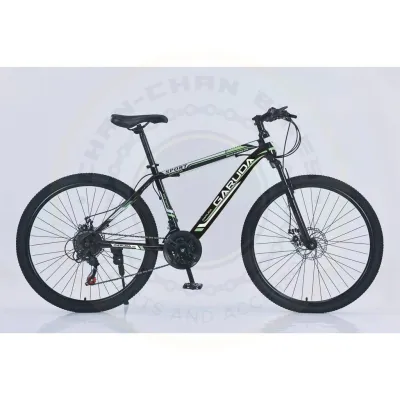
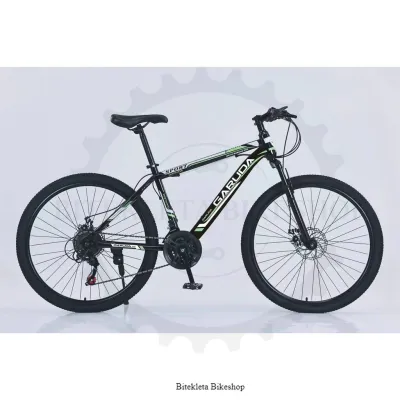
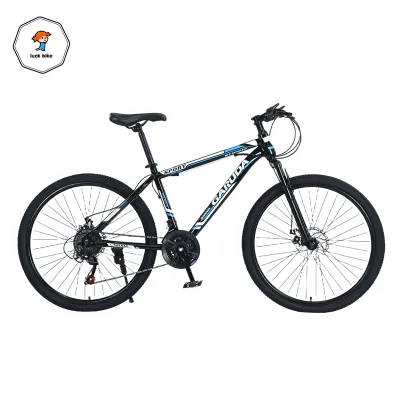
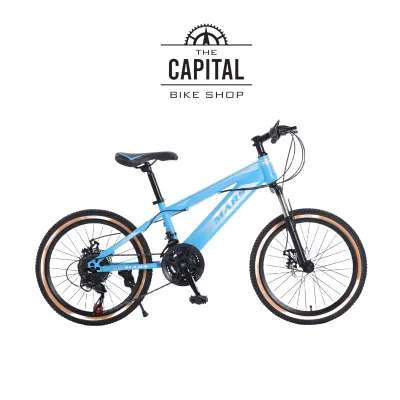
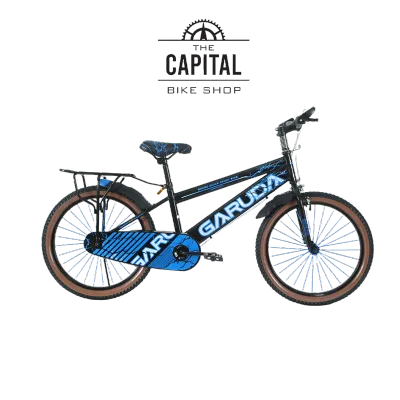
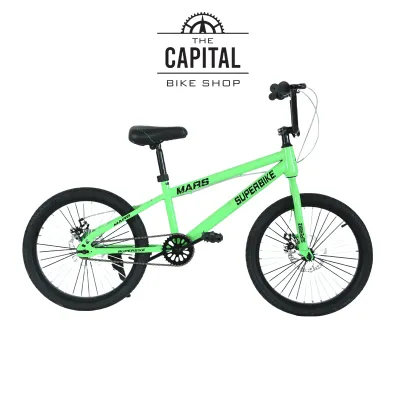
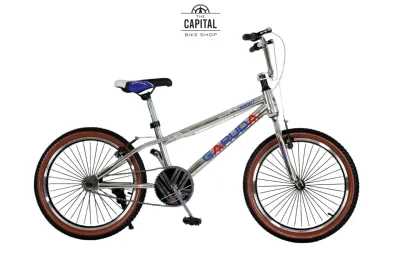
Prices are valid at publication and may change. Please refer to the product page for the latest price.
Assessing your local terrain is crucial, especially in a tropical climate like the Philippines, where sudden downpours can turn dry dirt paths into slick, muddy tracks in minutes. If your typical rides involve steep, slippery clay climbs, you will need a drivetrain with low gear ratios and tires designed to shed mud quickly. Consider your typical ride distance and physical comfort as well. A more upright geometry reduces strain on your lower back during long commutes, while a longer, lower geometry provides better stability when descending steep trail sections. Always match the bike’s size to your height and inseam to ensure proper control and prevent chronic strain.
Set a Realistic Budget and Know What to Expect
Setting a realistic budget is about more than just the sticker price of the bike; it requires understanding what component quality you can expect at different price points. In the entry-level tier, which typically ranges under ₱10,000, you will generally find high-tensile steel or basic aluminum alloy frames. These bikes are equipped with mechanical disc brakes and entry-level drivetrains (often 3×7 or 3×8 speeds). While steel frames are highly durable and budget-friendly, they are significantly heavier than alloy frames and require diligent maintenance to prevent rust in humid, tropical environments. Mechanical disc brakes provide decent stopping power but require regular manual adjustments as the steel cables stretch over time.

Moving into the mid-range tier, which often spans from ₱10,000 to ₱20,000 or more, unlocks significant performance and safety upgrades. In this range, you can expect lightweight aluminum alloy frames that improve handling and reduce rider fatigue. Suspension forks in this tier often feature a lockout mechanism, which allows you to temporarily stiffen the fork. This is incredibly useful when transitioning from a bumpy trail to a flat paved road, as it prevents the fork from bobbing and wasting your pedaling energy. You will also find hydraulic disc brakes, which use fluid pressure instead of cables to actuate the brake pads. Hydraulic systems offer superior stopping power, better modulation (the ability to control braking force precisely), and require much less hand effort, which is a critical safety factor during long, steep descents.
When planning your purchase, always factor in the hidden costs of cycling. Never spend your entire budget on the bike alone. You must reserve funds for essential safety gear, starting with a high-quality, certified helmet. Other necessary accessories include riding gloves to protect your hands and improve grip, a basic puncture repair kit, a portable hand pump, and a multi-tool for trailside adjustments. If the bike does not come with pedals, or if the included plastic pedals lack grip, you should budget for a set of durable composite or alloy flat pedals with metal pins to keep your feet securely planted in wet conditions. Finally, budget for a professional initial tune-up if you are not experienced in bicycle mechanics.
Key Specifications to Compare Across Garuda Models
When comparing different Garuda MTB bike configurations, having a practical checklist of key specifications will help you make an informed decision. Start by examining the frame material and geometry. If you are inspecting the bike in person, look closely at the weld quality along the frame joints; the welds should be uniform and resemble a neat stack of coins, indicating a strong, reliable bond. Check the standover height by standing over the top tube with both feet flat on the ground. You should have at least two to three inches of clearance between your groin and the frame to ensure you can dismount safely and quickly in an emergency.
Next, evaluate the drivetrain and shifting components. The drivetrain determines how easily you can pedal up steep inclines and how fast you can go on flat sections. Modern mountain bikes are increasingly moving toward 1x (single chainring) drivetrains, which simplify shifting by eliminating the front derailleur, reducing weight, and minimizing the risk of a dropped chain. However, traditional 2x or 3x systems still offer a wide range of gears that can be highly beneficial for beginners tackling varied terrain. Ensure the shifters are easy to reach and operate smoothly without requiring excessive thumb pressure.
The braking system is your most critical safety component. While mechanical disc brakes are highly reliable and easy to repair on the trail with a standard multi-tool, they do not match the performance of hydraulic disc brakes. Hydraulic systems are sealed against mud, water, and grit, making them exceptionally reliable in wet tropical weather. They also self-adjust as the brake pads wear down, whereas mechanical brakes require manual adjustment of the cable tension and pad clearance. If your budget allows, prioritizing hydraulic brakes is one of the best decisions you can make for your safety and confidence.
Finally, assess the wheelset and tires. Look for double-wall aluminum alloy rims, which offer much greater resistance to bending and denting when hitting rocks or potholes compared to single-wall rims. Check the spoke count; a standard 32-spoke or 36-spoke wheel provides the durability needed for trail riding and carrying heavier loads. The tire tread should match your primary riding surface. If you plan to ride on wet, muddy trails, look for deep, widely spaced knobs that dig into the soil and shed mud easily. For urban commuting, a tighter, shallower tread pattern will roll much faster and quieter on concrete.
Pre-Purchase Checks and After-Sales Support
Before finalizing your purchase, whether you are buying from a local physical shop or an online marketplace, performing a thorough pre-purchase inspection is essential. If you are buying in-store, take the time to inspect the frame for any scratches, dents, or alignment issues. Spin both wheels to check their trueness; the rims should spin straight without wobbling or rubbing against the brake pads. Squeeze the brake levers to ensure they feel firm and do not pull all the way back to the handlebars. Check that all bolts, especially those securing the handlebars, stem, seatpost, and pedals, are tightened to the manufacturer’s specifications.
If you choose to purchase your Garuda MTB bike from an online marketplace, it will almost certainly arrive partially assembled in a large cardboard box. Typically, you will need to install the front wheel, handlebars, pedals, and seatpost yourself. While this may seem straightforward, proper assembly is critical to your safety. Incorrectly installed handlebars or loose pedals can lead to catastrophic failure while riding. If you do not possess the specific tools, such as a torque wrench, or the mechanical experience required, it is highly recommended to take the boxed bike to a reputable local bike shop. A professional mechanic can assemble the bike, align the disc brakes, tune the derailleurs, and ensure that all safety-critical components are correctly torqued.
Additionally, always verify the after-sales support and warranty terms before handing over your money. Ask the seller or shop about the warranty coverage on the frame and components. A reliable warranty protects you against manufacturing defects, but it typically does not cover normal wear and tear or damage from crashes and improper assembly. Confirm the return policy in case the bike arrives with shipping damage. Finally, consider the long-term availability of standard replacement parts. Mountain bikes require regular maintenance, and components like brake pads, chains, cassettes, and derailleur hangers will eventually wear out. Choosing a bike that uses standard, widely available component sizes ensures you can easily find replacement parts at any local bike shop in the future.
Frequently Asked Questions (FAQ)
Is a Garuda MTB a good choice for beginner trail riders?
Yes, a Garuda MTB bike can be an excellent entry point for beginners looking to explore trail riding without a massive initial investment. These bikes provide a stable platform for learning fundamental skills such as body positioning, braking control, and line selection. However, because entry-level components have durability limits, beginners must avoid extreme jumps or highly technical downhill tracks. Always prioritize a proper bike fit, wear a certified helmet, and gradually build your skills on easier trails before progressing to more challenging terrain.
What essential gear should I buy alongside my new MTB?
Your safety should always come first, making a certified bicycle helmet your absolute most important purchase. Look for a helmet that meets international safety standards (such as CPSC or CE EN1078) and fits snugly on your head. Beyond a helmet, invest in a pair of padded riding gloves to protect your palms during falls and improve your grip on sweaty handlebars. For maintenance and emergencies, carry a basic puncture repair kit, tire levers, a spare inner tube, a portable hand pump, and a cycling multi-tool. Finally, wear sturdy, closed-toe shoes with flat, grippy soles to prevent your feet from slipping off the pedals.
Can I upgrade the suspension fork on my Garuda bike later?
Yes, upgrading the suspension fork is a common way to improve your bike’s performance as your skills grow, but you must verify several technical specifications first. You need to check whether your frame’s head tube is straight (1-1/8 inch) or tapered, as this dictates what fork steerer tubes will fit. You must also match the axle standard of your front wheel (such as a standard 9mm quick-release or a modern thru-axle) to the new fork. Finally, ensure the new fork’s travel does not exceed the manufacturer’s recommended limit for your frame; adding too much travel can alter the bike’s geometry, putting dangerous stress on the frame and negatively affecting handling.
Community discussion
Share your experience or ask a question. Comments are reviewed before publication.