
Selecting the correct martial arts uniform—traditionally known as a gi, or a dobok in Korean disciplines—depends entirely on the specific movements, rules, and physical demands of your chosen sport.
Wearing the wrong uniform can restrict your mobility, lead to premature fabric tears, or even violate your gym’s dress code.
To make an informed purchase, you must evaluate whether your discipline emphasizes striking or grappling, assess the local climate’s impact on fabric weight, and verify your school’s specific regulations.
Products mentioned in this guide
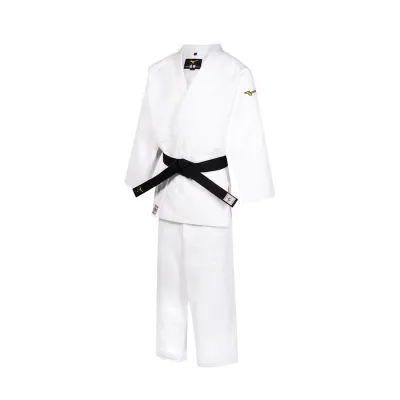
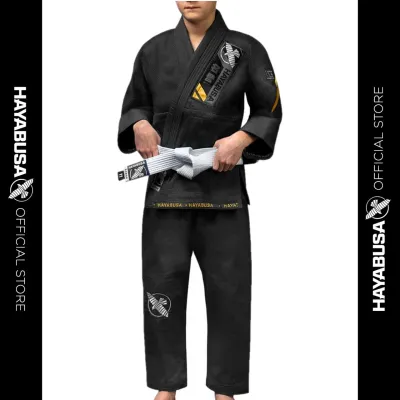
Prices are valid at publication and may change. Please refer to the product page for the latest price.
In the Philippines, where high humidity and tropical temperatures are constant training factors, selecting the right material and weave is especially critical.
A uniform that is too heavy or poorly ventilated can cause rapid overheating during intense training sessions.
Conversely, a fabric that is too thin will quickly shred under the strain of grappling grips and throws.
Identify Your Discipline: Striking vs. Grappling Gi Requirements
The fundamental design of a martial arts uniform is shaped by how practitioners interact during combat.
Striking arts, such as Taekwondo and Karate, prioritize rapid footwork, high kicks, and quick hand techniques.
Consequently, uniforms for these disciplines are engineered for maximum breathability, lightweight movement, and unrestricted range of motion.
Grappling arts, such as Judo and Brazilian Jiu-Jitsu (BJJ), involve intense physical contact, pulling, throwing, and ground fighting.
Uniforms for these sports must serve as functional equipment that can withstand hundreds of kilograms of pulling force without tearing.
This functional division means a uniform designed for one discipline is rarely suitable for the other.
Striking Arts (Taekwondo and Karate)
Uniforms for striking arts focus on speed and ease of movement.
In Taekwondo, the uniform is called a dobok and typically features a closed V-neck pullover jacket.
Traditional Karate uniforms, known as karategis, utilize a cross-collar wrap design secured by ties inside the jacket.
Both styles use lightweight fabrics, usually ranging from 6 ounces to 10 ounces, to allow the limbs to move freely without heavy resistance.
Sleeve and pant cuts in striking uniforms are designed to prevent interference with your techniques.
The sleeves generally end a few inches above the wrist, and the pants are cut to sit above the ankle to prevent tripping during rapid footwork.
This shorter cut also helps showcase clean, sharp movements during forms or kata practice.
Before purchasing, you must confirm your specific federation’s styling and color rules.
For example, World Taekwondo (WT) sanctioned events require a specific V-neck style, often with black collars for black belt holders and white collars for color belts.
Traditional Karate schools may mandate a pure white, heavy-canvas wrap jacket, while sport Karate tournaments might allow lighter, modern synthetic blends.
Grappling Arts (Judo and Brazilian Jiu-Jitsu)
Grappling uniforms are built like defensive armor.
Because opponents will constantly grab your collar, sleeves, and pants to control or throw you, these uniforms require heavy-duty construction.
The collars are thick, dense, and often reinforced with rubber or extra layers of fabric to make it more difficult for opponents to secure a tight grip or apply chokes.
The fabric used in grappling gis is significantly heavier than striking uniforms, typically starting at 350 GSM (grams per square meter) and going up to 900 GSM for heavy competition models.
Stress points around the armpits, side splits, knees, and crotch are reinforced with triple-stitching and extra fabric patches.
Cuffs on the sleeves and pants are also tailored tighter to minimize the space an opponent has to insert their fingers, reducing the risk of finger sprains and joint injuries.
Judo and BJJ gis also differ slightly in their overall cut and dimensions.
Judo uniforms (judogis) feature wider sleeves and a longer skirt to facilitate traditional throwing grips.
BJJ uniforms tend to have a more fitted, tapered cut to minimize excess fabric that opponents can exploit during ground transitions.
Decode the Fabric: Weaves, Weights, and Materials of Your Gi
Understanding the terminology on a product tag is essential for selecting a gi that balances durability with comfort.

The way the fabric is woven directly determines its strength, weight, and texture.
Single Weave: This is the lightest and thinnest option for grappling uniforms. It is highly breathable and affordable, making it an excellent choice for beginners and those training in hot, humid Philippine dojos. However, it is less durable over long periods of constant pulling and is easier for opponents to grip.
Double Weave: Made by weaving two layers of fabric together, this option is incredibly thick, heavy, and stiff. While it offers maximum durability and makes it very difficult for opponents to maintain grips, it retains a significant amount of heat and takes a long time to air dry.
Pearl Weave: The current standard for modern BJJ training, this weave features small, pearl-like bumps on the surface. It offers the durability of a heavier weave while maintaining the lightweight feel and breathability of a single weave.
Ripstop: Characterized by its distinct crosshatch grid pattern, ripstop fabric is incredibly thin and resistant to tearing. It is commonly used for BJJ pants and lightweight travel jackets because it dries exceptionally fast and resists ripping even when punctured.
Fabric weight is measured in ounces (oz) for striking uniforms and grams per square meter (GSM) for grappling jackets.
For a striking uniform, a 6 oz to 8 oz fabric is ideal for hot climates and daily training, while a 10 oz to 14 oz fabric is preferred for advanced practitioners who want a loud “snap” sound during forms.
For grappling, a jacket between 350 GSM and 450 GSM provides a great balance of comfort and durability in tropical conditions, while weights above 500 GSM are typically reserved for cooler climates or specific competition advantages.
When reading material tags, you will generally choose between 100% cotton and polyester-cotton blends. Use this checklist to evaluate your options:
- 100% Cotton: Highly breathable and soft against the skin, but prone to shrinking up to 10% if washed in warm water or machine-dried. It also absorbs a high volume of sweat, making it heavy during long training sessions.
- Polyester-Cotton Blends: Highly resistant to shrinkage, dries much faster than pure cotton, and typically lasts longer. However, lower-quality synthetic blends can trap heat and retain body odors if not washed immediately after class.
In the Philippines, where humidity prevents quick air-drying, a lightweight pearl weave jacket paired with ripstop pants is highly recommended for grappling.
For striking, a lightweight polyester-cotton blend dobok or karategi will help keep you cool and dry quickly between training sessions.
Check the Fit: Sizing, Shrinkage, and Cut
An ill-fitting gi can hinder your performance and cause safety issues.
To find the correct size, you must look beyond standard small, medium, and large labels.
Most manufacturers use specific sizing charts (such as A0 to A5 for adult male BJJ gis, F1 to F4 for females, and numerical sizes like 000 to 7 for Karate and Taekwondo uniforms).
To determine your size, take accurate measurements of your height, weight, wingspan (from fingertip to fingertip), and inseam.
Always compare these measurements against the brand’s specific size chart, as sizing varies significantly between manufacturers.
You must also account for the “shrink-to-fit” factor of the fabric.
If you purchase a 100% cotton uniform that is not labeled as “pre-shrunk,” expect it to shrink after the first few washes.
If your measurements sit at the very top of a size bracket, it is safer to size up and intentionally shrink the uniform using controlled warm washes, or choose a pre-shrunk cotton-polyester blend that will maintain its original fit.
The cut of the uniform should match your discipline’s functional requirements.
A traditional Karate or Judo cut is loose and boxy, allowing air to circulate and providing room for deep stances and high kicks.
A BJJ cut is much more tailored to the body, with slimmer sleeves and pants to prevent opponents from grabbing loose material.
When trying on a new uniform, check these structural alignment points:
- Jacket Overlap: The front panels of a wrap jacket should overlap fully across your chest without pulling tight or exposing your midsection when you raise your arms.
- Sleeve Length: For striking, the sleeves should end approximately two to three inches above the wrist bone. For grappling, the sleeves must reach near the wrist bone when your arms are extended straight out in front of you to comply with safety and competition standards.
- Pant Length: The hem of the pants should sit just above the ankle bone. Pants that drag on the floor are a slipping hazard, while pants that sit mid-calf may violate competition rules.
Align With Your Training Goals and Gym Rules
Before making your final purchase, you must align your choice with your experience level, your gym’s specific culture, and your future competition plans.
Beginner vs. Advanced: If you are just starting your martial arts journey, avoid investing in expensive, premium-tier uniforms. A basic, entry-level single-weave gi or a standard lightweight cotton-blend uniform (ranging from ₱1,500 to ₱3,000) is more than sufficient. As you commit to the sport and develop your preferences for specific weights and cuts, you can upgrade to specialized, high-performance models that often cost ₱5,000 to ₱10,000 or more.
Gym Etiquette and Mandates: Every dojo, academy, or gym has its own set of rules regarding uniforms. Some traditional schools strictly mandate white uniforms to maintain a unified, respectful appearance. Other modern academies allow blue, black, or even custom colors, but may require you to purchase their school-branded uniform or place specific academy patches on your jacket. Always consult your head instructor before buying a third-party uniform to avoid purchasing something you cannot wear to class.
Competition Compliance: If you plan to compete, your uniform must meet the strict guidelines set by the sport’s governing body. Organizations like the International Brazilian Jiu-Jitsu Federation (IBJJF), World Taekwondo (WT), and the World Karate Federation (WKF) have precise rules regarding uniform color, sleeve and pant length, collar thickness, and patch placement. Always consult the official, up-to-date rulebook of your specific sanctioning body before purchasing a competition-grade uniform, as an illegal uniform can lead to immediate disqualification at the tournament bullpen.
Frequently Asked Questions (FAQ)
Can I use my Karate gi for Brazilian Jiu-Jitsu?
No, you should not use a Karate gi for Brazilian Jiu-Jitsu.
Karate uniforms are made of lightweight fabric designed for striking and mobility, and they lack the reinforced stitching required for grappling.
The intense pulling, tugging, and friction of BJJ will easily tear a karategi, and the loose, wide sleeves can trap fingers, posing a safety risk to both you and your training partner.
How often should I wash my martial arts gi?
You must wash your uniform after every single training session without exception.
Always check your uniform’s care label and the manufacturer’s washing instructions before cleaning to prevent accidental damage or excessive shrinkage.
Leaving a damp, sweat-soaked gi in your gear bag encourages the growth of bacteria, mold, and fungi, which can lead to unpleasant odors and highly contagious skin infections.
To preserve the fabric, wash the uniform in cold water using a mild detergent, and hang it to air dry in a well-ventilated area away from direct, harsh sunlight.
Do I need to buy a belt with my new gi?
Whether a belt is included depends on the target audience and brand of the uniform.
Many beginner-level uniforms, especially for children or entry-level striking programs, include a standard white belt.
However, most adult, premium, or specialized grappling uniforms are sold as the jacket and pants only, requiring you to purchase your belt separately.
When buying a belt, check the brand’s sizing chart to ensure it can wrap around your waist twice and leave enough length for a secure, double-knot tie.
Community discussion
Share your experience or ask a question. Comments are reviewed before publication.