
Selecting the right golf ball is one of the most direct ways to improve your performance on the course, yet many players simply buy whatever is on sale or play whatever they find in the rough. The ideal golf ball for your game is determined by matching its physical construction, compression rating, and cover material to your specific swing speed and skill level. In the tropical climate of the Philippines, where high humidity can affect ball aerodynamics and damp fairways can limit roll-out, playing a ball that complements your swing profile is essential for maintaining distance and control. By aligning your equipment with your actual playing ability, you can avoid overspending on premium models that might actually hinder your progress, while ensuring you have the exact spin and feel needed to lower your scores.
Assess Your Current Golf Skill Level and Swing Profile
To find the perfect golf ball, you must first establish an honest baseline of your current playing ability and physical swing characteristics. Golfers are generally categorized into three broad skill tiers based on their handicap and scoring averages. High handicappers, typically shooting above 95 or holding a handicap of 25 and above, generally struggle with consistent ball striking and directional control. Mid handicappers, who usually score between 80 and 94 with handicaps ranging from 10 to 24, have developed a more reliable swing but still experience occasional misses. Low handicappers and scratch players, scoring consistently in the 70s with single-digit handicaps, possess highly repeatable swings and precise control over their ball flight.
Beyond scoring, your physical swing speed is a critical variable in ball selection. Players with slower swing speeds, often under 85 miles per hour with a driver, require a ball that compresses easily to maximize distance. Moderate swing speeds range from 85 to 105 miles per hour, while fast swing speeds exceed 105 miles per hour, typically seen in advanced players who can effortlessly compress firmer golf balls. You can verify your swing speed using a launch monitor at a local fitting center or estimate it based on your average driving distance; a driver carry distance of under 200 yards generally indicates a slower swing speed, while carries over 250 yards point to a faster swing.
Products mentioned in this guide
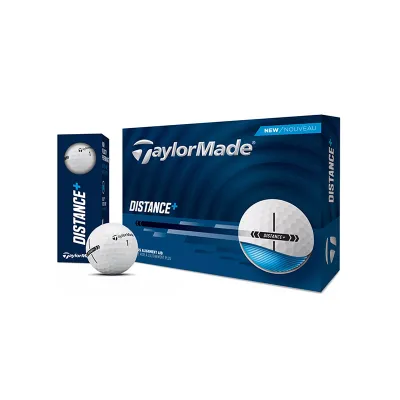
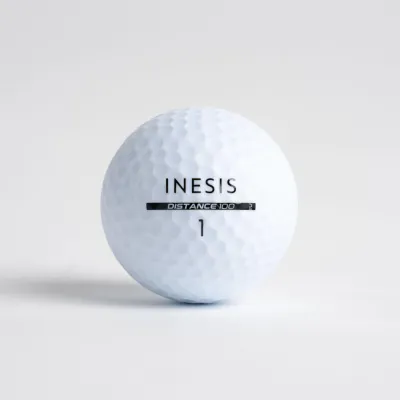
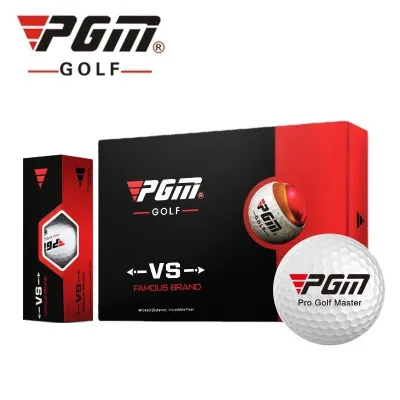
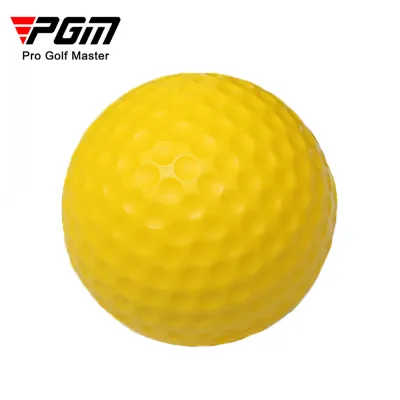
Prices are valid at publication and may change. Please refer to the product page for the latest price.
Finally, evaluate your short game consistency and your specific need for greenside spin control. If your approach shots and chips frequently roll off the green because you cannot generate stopping power, your ball choice might be working against you. Conversely, if you do not yet have the mechanical consistency to strike the ball cleanly on short shots, prioritizing high-spin performance may only exaggerate your mishits. Understanding where you stand on this spectrum allows you to choose a ball designed to support, rather than complicate, your current skill level.
Decode Golf Ball Construction and Cover Materials
Understanding the physical anatomy of a golf ball is key to interpreting the technical specifications listed on the packaging. Golf balls are engineered with varying layers, ranging from simple two-piece designs to highly complex five-piece constructions. A standard two-piece ball consists of a large solid core surrounded by a single outer cover. This design is optimized for maximum distance and durability, as the large core transfers energy efficiently while minimizing spin. Three-piece and multi-layer balls introduce one or more mantle layers between the core and the cover. These intermediate layers act as a transition zone, allowing the ball to behave differently depending on the force of the impact—spinning less off a high-speed driver shot but spinning more off a high-loft wedge.

The outer cover material plays a massive role in the ball’s feel and spin characteristics. The two primary cover materials are ionomer (often branded as Surlyn) and urethane. Ionomer is a highly durable, cut-resistant plastic that produces low spin and a firmer feel, making it excellent for players who want to minimize slices and maximize distance. Urethane, on the other hand, is a softer, more flexible material that grips the clubface during impact. This extra friction generates significantly higher spin rates, giving players the precise control and “bite” needed for advanced greenside play, though it is more susceptible to scuffs and wear.
Compression ratings measure how much a golf ball deforms under a standard load, directly impacting energy transfer. Low-compression balls (typically rated between 30 and 70) are soft and require less force to compress, making them ideal for slower swing speeds to achieve maximum distance. Mid-compression balls (70 to 90) offer a balanced feel for moderate swings. High-compression balls (90 to 100+) are very firm and require high swing speeds to fully compress the core; if a slow-swinging player uses a high-compression ball, they will fail to activate the core’s spring-like effect, resulting in a loss of distance and a harsh, jarring feel at impact.
Match Golf Ball Features to Your Playing Ability
Choosing the right ball requires matching these technical specifications to your specific skill level to optimize your performance on every shot.
Golf Ball Features for Beginners and High Handicappers
For beginners and high-handicap players, the primary goals on the course are achieving maximum distance, keeping the ball in play, and managing equipment costs. If you are still developing a consistent swing, a two-piece golf ball with an ionomer cover is highly recommended. These balls are engineered to be incredibly durable, resisting scuffs from cart paths, trees, or frequent wedge strikes, which is highly practical when you are still refining your accuracy.
Low-compression cores are highly beneficial for this group, as they allow slower to moderate swing speeds to compress the ball fully, launching it higher and farther with less effort. Additionally, the low-spin profile of a two-piece ionomer ball is a major advantage for players struggling with a slice or a hook. Because these balls minimize side spin, your off-center hits will curve less in the air, helping you find more fairways and reduce the number of lost balls in the tropical rough.
Golf Ball Features for Intermediate and Mid Handicappers
As your swing becomes more consistent and you begin targeting specific areas of the green, your equipment needs to evolve. Intermediate and mid-handicap players benefit most from a three-piece construction that offers spin separation. This means the ball is engineered to deliver low spin off the driver for maximum distance, while providing moderate to high spin off short irons and wedges for better stopping power on the greens.
A mid-compression core is ideal for the moderate swing speeds typical of mid-handicappers, providing a soft yet responsive feel without sacrificing ball speed. Look for balls featuring hybrid covers or advanced, softer ionomer blends. These materials bridge the gap between the extreme durability of standard ionomer and the high-spin performance of urethane, giving you a noticeable improvement in greenside feel and control while remaining highly durable and cost-effective for regular play.
Golf Ball Features for Advanced and Low Handicappers
Advanced players and low-handicap golfers require a ball that offers maximum workability, precise spin control, and highly sensitive tactile feedback. If you fall into this category, you should look for multi-layer constructions, such as four-piece or five-piece balls, paired with a premium urethane cover. These complex designs allow you to execute a wide variety of shots, from low-launching, high-spin wedge shots to high, sweeping draws off the tee.
High-compression ratings are essential for advanced players with fast swing speeds. The firm core and multi-layer mantle system ensure optimal energy transfer, preventing the ball from over-compressing and losing velocity off fast swings. The soft urethane cover is crucial for generating maximum greenside spin, allowing you to play aggressive approach shots, execute precise bunker escapes, and control the rollout of your chips on fast, well-manicured greens.
Test and Validate Your Golf Ball Choice on the Course
While technical specifications provide an excellent starting point, the ultimate test of a golf ball takes place on the course under real playing conditions. To validate your choice, conduct a structured on-course evaluation, starting from the green and working your way back to the tee. Begin with short game tests, specifically chipping and pitching from various lies around the green. Observe how the ball reacts upon landing: does it release and roll out predictably, or does it grab the turf and stop quickly? Compare different ball types to see which one matches your preferred short-game style and technique.
Next, assess the putting feel and sound feedback on the green. Putters transmit distinct vibrations and sounds depending on the ball’s cover and compression. A softer ball will produce a muted click and a plush feel, while a firmer ball will deliver a sharp, distinct click. Pay close attention to your distance control and roll consistency; the ball should feel comfortable off your putter face and roll smoothly without hopping or skidding.
Finalizing your test, observe the ball’s flight, trajectory, and dispersion patterns during full swings with your irons and woods. Take note of the launch angle and how well the ball holds its line against crosswinds, which can be particularly strong on coastal courses in the Philippines. A ball that is too firm or high-spinning for your swing may balloon in the wind or curve excessively offline, while the correct ball will maintain a stable, penetrating trajectory and a tight dispersion pattern, giving you the confidence to target more fairways and greens.
Frequently Asked Questions (FAQ)
Do expensive golf balls always perform better?
No, expensive golf balls do not guarantee better performance for every golfer. Premium multi-layer urethane balls are highly engineered for advanced swing mechanics and fast swing speeds. If a beginner or high-handicapper plays these balls, they may not generate the swing speed required to activate the inner layers, resulting in shorter drives and exaggerated slices due to the high-spin cover. For average players, mid-range balls often provide the best performance-to-value ratio, offering the right balance of distance, control, and affordability.
Should I use the same golf ball for every round?
Yes, committing to one specific golf ball model is highly recommended for building consistency in your game. Different ball models react differently to the exact same swing mechanics, producing variations in distance, launch angle, and greenside spin. By playing the same ball consistently, you eliminate an unnecessary variable, allowing you to develop reliable distance gaps with your irons and predictable rollout expectations on your chips and putts.
Does golf ball color affect visibility and performance?
No, the color of a golf ball is purely cosmetic and does not alter its physical performance, compression rating, or aerodynamic properties. However, high-visibility colors like matte yellow, orange, or green offer significant practical benefits on the course. They are much easier to track in flight and locate in the rough, especially under overcast skies, low-light conditions, or the intense glare of the tropical sun, making them an excellent choice for players looking to save time and reduce lost balls.
Community discussion
Share your experience or ask a question. Comments are reviewed before publication.