
Choosing the right golf driver head is the single most critical decision you can make to optimize your performance off the tee. The driver is the longest and lowest-lofted club in your bag, making it the most difficult to control. To find the perfect match, you must align the head’s design—specifically its loft, volume, weight distribution, and Moment of Inertia (MOI)—with your physical swing speed and skill level. A driver head that matches your unique swing characteristics helps you maximize distance and tighten your shot dispersion. Conversely, playing with an unsuitable driver head forces you to make compensations in your swing, leading to inconsistent contact, frustrating slices, and lost yardage.
In tropical playing environments like the Philippines, where high humidity and warm temperatures can subtly affect air density and ball carry, optimizing your launch conditions is even more critical. High humidity actually makes the air less dense, which can yield excellent distance if your launch angle and spin rates are finely tuned. However, the heavy, moisture-rich air also demands a highly efficient ball flight to prevent the ball from ballooning or dropping prematurely. Finding the ideal combination of driver head characteristics ensures your ball cuts through the humid air with the perfect balance of lift and roll-out.
Assess Your Swing Speed and Skill Level First
Before you begin browsing the latest driver heads from top manufacturers, you must establish an accurate baseline of your physical metrics and playing ability. Many golfers make the mistake of choosing a driver head based on what their favorite touring professional plays, or what they wish their swing speed was, rather than their actual, repeatable on-course performance. Selecting equipment based on aspiration rather than reality is a recipe for frustration and poor scoring.
Products mentioned in this guide


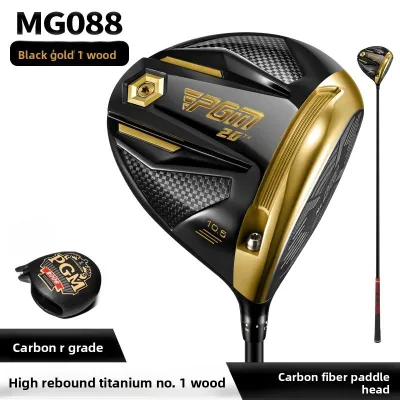
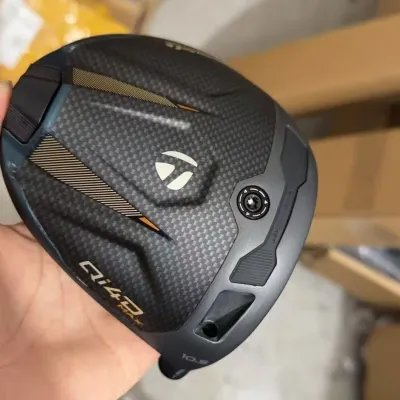
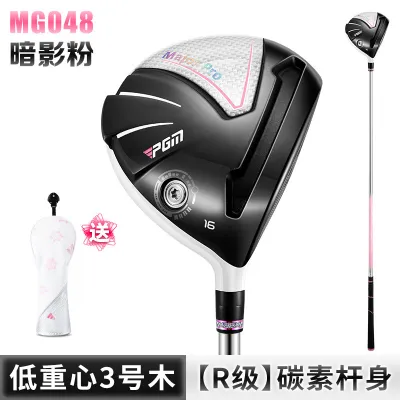

Prices are valid at publication and may change. Please refer to the product page for the latest price.
Swing speed is typically divided into three broad categories that dictate how a driver head behaves at impact. Slow swing speeds (under 85 mph) are common among seniors, juniors, and true beginners. Average swing speeds (85 to 105 mph) represent the vast majority of recreational male golfers and high-level female players. Fast swing speeds (above 105 mph) are typically reserved for low-handicap players, competitive amateurs, and professionals. This metric is crucial because it determines how much energy you transfer to the ball, which in turn dictates the precise amount of loft and spin required to keep the ball airborne for the maximum amount of time.
Your skill level, often measured by your handicap and the consistency of your ball striking, is the second vital component of your baseline. Beginners and high-handicappers (handicaps of 20 and above) generally struggle with consistent center-face contact and frequently battle a slice, which is caused by an open clubface relative to an out-to-in swing path. Intermediate players (handicaps of 10 to 19) possess more consistent swings but still experience occasional off-center strikes and predictable miss patterns. Advanced players (single-digit handicaps and scratch golfers) consistently strike the ball near the center of the face and have the clubhead control necessary to intentionally curve the ball left or right.
To gather this baseline data, avoid relying on guesswork or the distance markers at your local driving range. Instead, utilize a high-quality launch monitor at a dedicated indoor golf facility or work with a professional club fitter. These devices use advanced radar or camera technology to measure your clubhead speed, ball speed, launch angle, and spin rate with extreme precision. If a professional fitting is not immediately accessible, on-course observation using a GPS rangefinder to measure your average total distance can provide a reasonable estimate of your performance, but a technological assessment remains the gold standard for avoiding equipment that actively fights your natural swing.
Match Driver Head Loft to Your Swing Speed
Once you have established your swing speed, your first major technical decision is selecting the static loft of the driver head. Loft is the angle of the clubface relative to the vertical plane, and it is the primary driver of both launch angle and backspin. There is a strict, inverse relationship between your swing speed and the loft you require: slower swing speeds need higher loft to generate sufficient lift, while faster swing speeds require lower loft to prevent the ball from ballooning into the wind and losing total distance.

For players with slow swing speeds (under 85 mph), a driver head with a higher loft—typically between 10.5 and 12 degrees, or even up to 14 degrees—is essential. Because these players do not generate enough ball speed to create natural aerodynamic lift, the extra loft is necessary to launch the ball high enough to maximize carry distance. For average swing speeds (85 to 105 mph), a loft range of 9.5 to 10.5 degrees generally provides the optimal balance of launch and spin. Players with fast swing speeds (above 105 mph) generate immense ball speed and backspin naturally; therefore, they require lower-lofted heads, usually between 8.0 and 9.5 degrees, to keep the ball flight penetrating and prevent excessive spin from destroying their roll-out.
However, the static loft stamped on the sole of the club is only part of the equation; you must also consider your dynamic loft and angle of attack. The angle of attack refers to whether you are hitting downward (negative angle) or upward (positive angle) on the ball at the moment of impact. If you have an upward angle of attack, you naturally add loft to the club at impact, meaning you can play a lower static loft. Conversely, if you hit down on the ball—a common trait among players who struggle with a slice—you deloft the club, meaning you will need a higher static loft to achieve an optimal launch angle.
When evaluating driver heads, always prioritize your actual launch conditions over the number printed on the club. Modern manufacturing tolerances and design differences mean that a 10.5-degree head from one brand may launch and spin completely differently from a 10.5-degree head from another. Furthermore, many contemporary driver heads feature adjustable hosel sleeves that allow you to increase or decrease the stated loft by up to 2 degrees. This adjustability is incredibly useful for fine-tuning your ball flight as your swing evolves or when transitioning between different playing conditions, such as moving from dry, windy courses to lush, humid fairways.
Choose Head Size and Forgiveness Based on Skill Level
The physical size and shape of the driver head play a massive role in how forgiving the club is on off-center hits. Under the Rules of Golf, the maximum allowable volume for a driver head is 460 cubic centimeters (cc). The vast majority of modern drivers are built to this limit because it allows engineers to push the weight to the extreme perimeter of the club, creating a massive sweet spot. However, some manufacturers also offer smaller heads, typically around 430cc to 445cc, which are designed for a very specific type of player.
For beginners and high-handicappers, a maximum-volume 460cc head is highly recommended. These heads are designed with a high Moment of Inertia (MOI), which is a physical measurement of the clubhead’s resistance to twisting on off-center strikes. When you hit a ball off the toe or the heel of a high-MOI driver, the head resists twisting, which preserves ball speed and keeps your shot from offline disaster. These “maximum-game-improvement” heads feature a large footprint at address, which inspires confidence and provides the highest level of forgiveness possible, making them ideal for players who are still developing a consistent swing path.
In contrast, advanced players with highly consistent swings may find that extreme forgiveness comes with a trade-off in workability and aerodynamics. Smaller driver heads (under 450cc) feature a more compact profile that reduces aerodynamic drag during the swing, potentially increasing clubhead speed for fast swingers. More importantly, these smaller heads have a lower MOI, which makes them highly responsive to intentional manipulation. An advanced player who wants the ability to shape their shots—hitting a low draw to run under the wind or a high fade to hold a tight fairway—will appreciate the workability of a smaller, tour-preferred driver head.
For the intermediate player, the decision often comes down to honest self-assessment. While it may be tempting to opt for a smaller, sleeker head that mimics the clubs used by professional players, most intermediate golfers will benefit far more from a standard 460cc head that offers a balanced blend of forgiveness and moderate workability. Unless you are consistently striking the center of the face and actively trying to curve the ball on almost every tee shot, prioritizing a high-MOI design will save you strokes by reducing the severity of your worst misses on the course.
Evaluate Center of Gravity and Adjustability Features
The internal weight distribution of a driver head, specifically its Center of Gravity (CG), dictates the launch angle, spin characteristics, and directional bias of your shots. Manufacturers manipulate the CG by placing heavy materials, such as tungsten, in specific locations inside the head. Understanding where the CG is located in a particular driver head will help you choose a model that naturally complements your swing tendencies and corrects your common ball-flight errors.
Draw-biased driver heads feature a CG that is positioned closer to the heel of the club. This weight placement makes it easier for the golfer to rotate the clubface closed during the downswing, which helps counter a slice—the most common swing flaw among recreational players. By helping to square the face at impact, a draw-biased head can turn a destructive slice into a manageable fade or even a gentle draw. Conversely, fade-biased heads place the CG closer to the toe, which slows down face rotation and helps advanced players prevent a hook, which is a common miss for high-speed swingers.
Many modern driver heads feature advanced adjustability options, such as sliding weight tracks on the sole and adjustable hosel sleeves. These features allow you to manually shift the CG forward, backward, toward the heel, or toward the toe, giving you the power to customize your ball flight. Moving the weight toward the back of the head increases MOI and launch angle, while moving it forward lowers the launch and reduces spin for maximum roll-out. While these adjustable components are highly beneficial for intermediate and advanced players who understand their swing data, they can easily become a distraction for beginners.
If you are a beginner, it is highly advisable to avoid over-complicating your equipment. A fixed, high-forgiveness, draw-biased driver head is almost always a better choice than a highly adjustable model with multiple sliding weights. Constantly changing the settings on your driver can lead to mental confusion and prevent you from focusing on developing a repeatable, mechanically sound swing. It is crucial to remember that while adjustability is an excellent tool for fine-tuning and squeezing out a few extra yards, no amount of weight shifting can fix a fundamentally flawed swing path or a severe over-the-top move.
Test and Verify Your Driver Head Selection
Once you have narrowed down your choices based on your swing speed, skill level, and the physical specifications of the driver heads, you must test your selections in a controlled environment. Never purchase a driver head based solely on static specifications or online reviews. The physical interaction between your unique swing, the driver head, and the shaft is highly dynamic, and testing is the only way to ensure that you are making the correct investment.
When testing driver heads on a driving range or an indoor simulator, establish a structured testing protocol. Warm up thoroughly using your shorter clubs before hitting any drivers, as a cold swing will not yield accurate data. When you begin hitting the test drivers, focus on executing your normal, repeatable swing rather than trying to swing as hard as possible to chase a single high-distance number. Pay close attention to how the club feels at impact and how consistently you can find the center of the face. Collect data on a minimum of 10 to 15 shots with each head to get a reliable average, discarding any extreme outliers caused by completely missed swings.
During your test session, track several key performance metrics on the launch monitor:
- Ball Speed: This indicates how efficiently the driver head transfers energy to the ball; look for the head that delivers the highest average ball speed on both center and off-center hits.
- Launch Angle and Spin Rate: Ensure these numbers fall within the optimal ranges for your swing speed to maximize your carry and total distance.
- Dispersion: This is the physical area where your shots land; look for the driver head that produces the tightest, most consistent pattern, as accuracy is just as important as distance.
Finally, remember that a driver head does not perform in isolation; it must be tested with the exact shaft flex, weight, and grip combination you plan to use in your final club. A head that performs beautifully with a stiff, low-launch shaft may perform terribly with a regular, high-launch shaft. If your testing reveals highly inconsistent dispersion patterns, unmanageable spin rates, or a feel that you find uncomfortable, do not try to force a fit. Stop and consult a professional club fitter who can analyze your launch data and recommend alternative head and shaft combinations that are perfectly tailored to your game.
Frequently Asked Questions (FAQ)
Does a larger driver head always mean more distance?
No, a larger driver head does not inherently generate more ball speed or distance on perfect, center-face strikes. The primary benefit of a larger 460cc driver head is its high Moment of Inertia (MOI), which provides forgiveness and preserves ball speed on off-center hits. Maximum distance is achieved when your launch angle, spin rate, and ball speed are perfectly optimized for your swing speed. If an advanced player can consistently strike the center of the face with a smaller, more aerodynamic head that allows them to swing faster, they may actually achieve more distance with the smaller head than with a larger, high-forgiveness model.
Should beginners buy an adjustable driver head?
While adjustable driver heads offer great versatility, beginners are usually better off starting with a fixed, high-forgiveness, draw-biased driver head. The ability to shift weights and change hosel settings can easily become a distraction for a player who is still trying to build a consistent, repeatable swing. A fixed driver head forces the player to focus entirely on their physical mechanics rather than looking for a quick equipment fix. Additionally, fixed driver heads are often less expensive, allowing beginners to invest more of their budget into professional golf lessons, which will have a far greater impact on their long-term performance and enjoyment of the game.
Community discussion
Share your experience or ask a question. Comments are reviewed before publication.