
Choosing the right golf flag requires balancing visibility, environmental conditions, and hardware compatibility. Whether you are setting up a personal putting green in your backyard, managing a busy driving range, or preparing a local course for tournament play, the flag serves as the primary target for every golfer. In tropical climates like the Philippines, where intense sunlight, high humidity, and sudden heavy downpours are common, selecting the appropriate material and design is crucial to prevent premature fading and tearing. By evaluating your specific use case, understanding fabric specifications, and ensuring a secure fit with your existing flagstick, you can find a durable option that remains highly visible and functional season after season.
Identify Your Primary Use Case for the Golf Flag
Determining the specific environment where the golf flag will be used helps narrow down the necessary durability, size, and visibility requirements. Different settings impose unique demands on the flag’s construction and design, making it important to match the product to its intended location.
Home practice greens are often located in backyards, pocket gardens, or indoor setups where space is limited. For these residential areas, lightweight and easy-to-move setups are ideal. The flags do not need to withstand extreme wind forces because they are often shielded by residential walls, fences, or surrounding foliage. A smaller footprint also means the flagstick and cup can be more compact, making them easy to store or move when mowing the lawn or rearranging the space.
Products mentioned in this guide
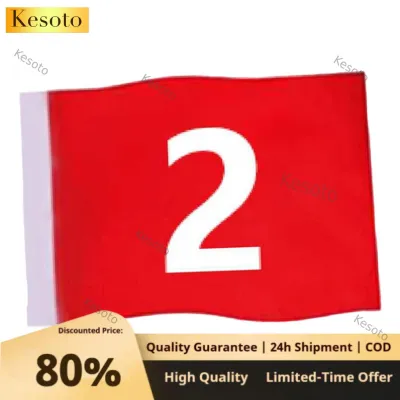
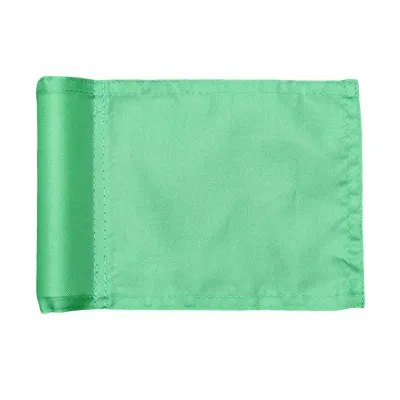
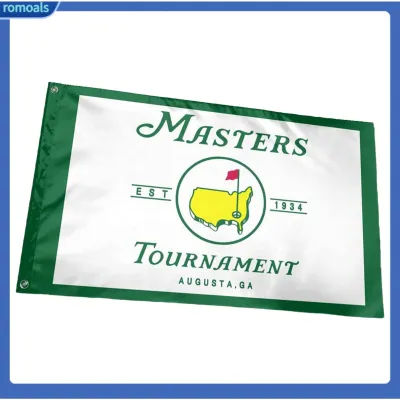
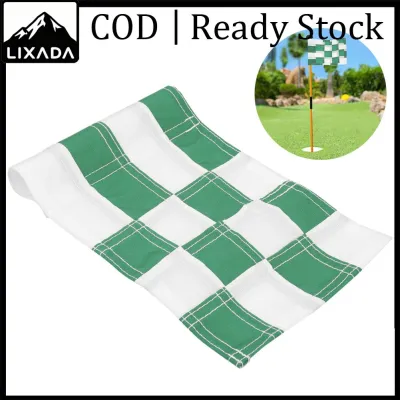
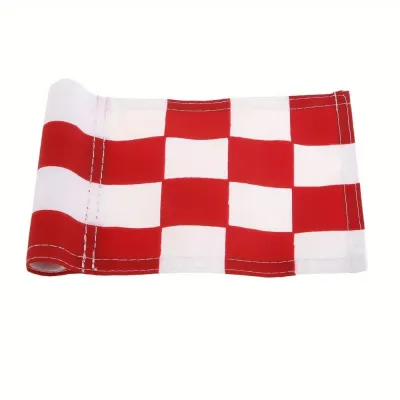
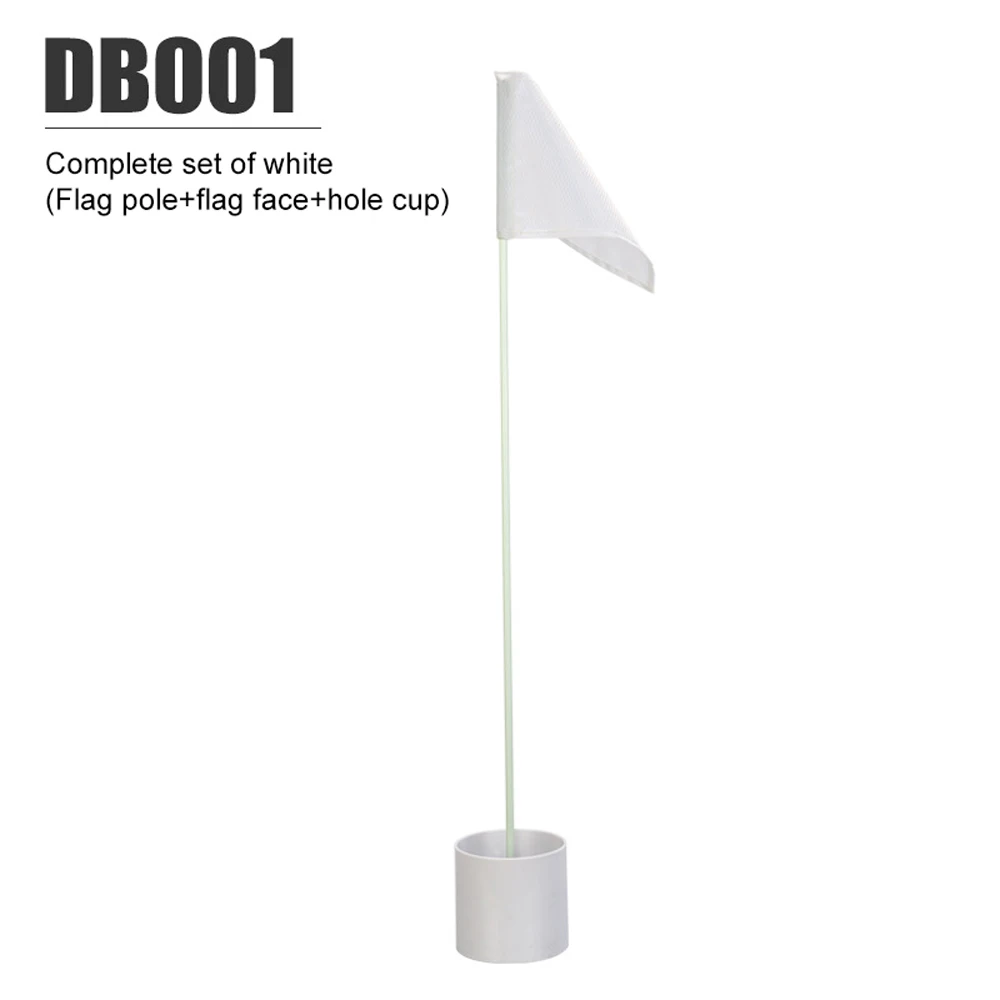
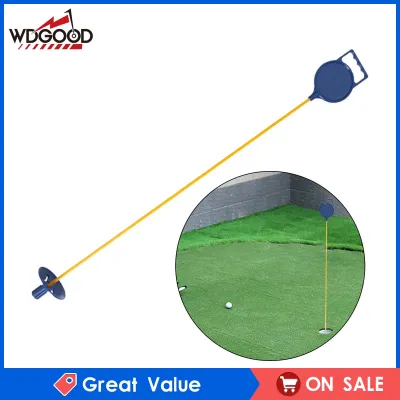
Prices are valid at publication and may change. Please refer to the product page for the latest price.
Driving ranges demand maximum durability and high visibility from long distances. Golfers view these flags from distances of 50 to 250 yards or more, meaning the flags must be large enough and bright enough to stand out against distant netting, trees, or open skies. Because driving range flags are left outdoors constantly and subjected to continuous wind, they require heavy-duty materials and reinforced construction to avoid fraying within a few weeks of use.
Actual course or tournament play requires standardized dimensions, professional aesthetics, and wind-resistant features that meet official regulations. The flag must drape naturally while remaining legible, allowing players to accurately gauge wind direction and speed before making their shot. Choosing flags with clean lines and crisp colors ensures a professional appearance that enhances the overall playing experience for club members and tournament participants.
Key Fabric and Design Features to Evaluate
Assessing the physical attributes of the flag fabric and design ensures it meets your visibility needs and local weather conditions. Not all flags are constructed equally, and understanding the differences in materials can prevent premature wear.

When evaluating material composition, check manufacturer labels for tear resistance and UV protection claims rather than assuming all nylon or polyester performs the same. In tropical regions with high solar exposure, untreated fabrics can degrade and fade rapidly, turning a vibrant red flag into a dull pink within months. Look for high-density fabrics, such as 400D nylon, which offer better resistance to the elements and prolonged exposure to intense sunlight.
Compare standard sizes against the distance from which the flag needs to be seen by the golfer. Standard golf flags typically measure 14 inches by 20 inches, which is the standard for most regulation courses. For backyard greens, smaller pin flags measuring around 6 inches by 8 inches are common because they match shorter, residential-scale flagsticks. Ensure the size you choose matches the viewing distance; a tiny backyard flag will be virtually invisible from a 150-yard tee box on a driving range.
Select high-visibility colors that stand out against your specific background, such as trees, sky, or practice netting. If your practice green is surrounded by lush green foliage or tropical trees, a solid green flag will blend in and become difficult to spot. Instead, opt for high-contrast colors like bright red, vibrant yellow, or classic black-and-white checkered patterns. White flags work well against dark backdrops but can get lost against a bright, overcast sky.
Look for wind resistance features like vented panels or reinforced stitching, verifying these capabilities through product specifications. Flags that constantly flap in strong winds experience high stress at the seams. Look for flags with reinforced corners and multiple rows of stitching along the fly end, which is the edge furthest from the pole. Some specialized designs feature vented panels or mesh inserts that allow wind to pass through, reducing the drag on the flagstick and minimizing the risk of the cup lifting out of the ground during sudden gusts.
Matching the Flag to Your Flagstick and Hardware
Ensuring the flag and its attachment mechanism are fully compatible with your existing or planned flagstick setup prevents slipping, tearing, or damage. A mismatched flag and pole can lead to constant adjustments and a frustrating practice session.
Before purchasing a replacement flag, measure your current pole or check the specifications of the one you intend to buy to ensure the flag sleeve or clips fit securely. Standard tournament flagsticks usually have a diameter of 1/2 inch or 3/4 inch, tapering at the top. If you buy a sleeve-style flag, the sleeve must be wide enough to slide over the top of the pole but snug enough to prevent excessive wobbling or slipping down the shaft.
Evaluate the pros and cons of sleeve-style flags versus clip-on or tie-on mechanisms based on ease of swapping and security. Tube-style flags feature a hard plastic insert or a fabric sleeve that slides directly over the top of the flagstick, secured by a nut or cap at the top. This style is highly popular because it prevents the flag from wrapping around the pole. Grommet-style flags use metal eyelets and clips or ties to secure the flag to the pole, offering more flexibility but sometimes allowing the flag to tangle more easily in shifting winds.
Verify that the flagstick base fits standard golf cups if used on a practice green, checking for any required adapters. Standard golf cups have a specific bottom shape designed to receive the ferrule, which is the metal or plastic base of the flagstick. Ensure your flagstick’s ferrule matches the cup style—whether it is a standard smart-fit design or a traditional stepped design—to prevent the flagstick from leaning or blowing over in the wind.
Setup, Care, and Storage Guidelines
Establishing a routine to maintain the flag’s appearance and structural integrity over time prevents damage to the materials and extends the lifespan of your equipment. Proper care is especially important in humid climates where moisture can quickly degrade fabrics.
During installation, ensure the flag is secured properly to prevent slipping, tearing, or wrapping around the pole during use. If using a tube-style flag, verify that the top acorn nut or snap cap is secure but not overtightened, which could crack the plastic components. For grommeted flags, adjust the tension of the clips so the flag hangs flat without being pulled so tight that it distorts the fabric or tears the eyelets.
Follow the manufacturer’s care instructions for washing or wiping down the fabric to remove dirt, grass stains, and moisture. To clean the fabric, hand washing with mild soap and cool water is generally recommended. Avoid harsh chemical bleach or abrasive scrubbers, as these can strip away UV-protective coatings and weaken the synthetic fibers. Allow the flag to air dry completely before reinstalling or storing it.
Plan for proper drying and storage in a cool, dry place to prevent mold or material degradation when not in use. Never store a wet or damp golf flag. In humid environments, trapping moisture in folded fabric leads to rapid mold and mildew growth, which can permanently stain the material and rot the stitching. Store your flags flat or loosely rolled in a well-ventilated storage room or cabinet away from direct sunlight.
Regularly check for fraying edges, faded colors, or weakened attachment points to determine when replacement is needed. Establish a monthly inspection routine to check the condition of your flags. Look closely at the fly-end corners for the first signs of fraying, and inspect the grommets or sleeves for cracks or loose threads. Replacing a flag at the first sign of structural wear prevents it from tearing completely during a game and maintains a neat, professional appearance on your green.
Building Your Shortlist: What to Check Before Buying
Creating a practical checklist allows you to evaluate available options in online stores or sports shops without relying on unverified rankings or assumptions. This systematic approach ensures you get the best value for your specific setup.
Cross-reference the listed dimensions, materials, and included hardware against your identified use case and environment. Read the product descriptions carefully and do not rely solely on product photos, which can sometimes make small backyard flags look like full-sized course flags. Verify the exact fabric weight and weatherproofing treatments to ensure the flag can handle local weather conditions.
Confirm whether the purchase includes just the replacement flag, the flagstick, or a complete practice green kit. Some listings offer only the fabric flag, while others sell complete kits that include the flag, flagstick, cup, and base. If you are building a new practice green from scratch, a complete kit is often more convenient and ensures all components are fully compatible. If you only need to replace a worn-out flag, ensure you are not paying extra for hardware you do not need.
Look for clear return policies and accessible customer support in case the hardware does not fit your specific setup. Purchase from reputable sellers on online marketplaces or local sports retailers who provide clear product details and responsive customer service. Check customer feedback specifically regarding how well the colors hold up over time and whether the hardware fits standard poles.
Set a realistic price range in ₱ based on whether you need a basic replacement flag or a heavy-duty commercial setup. Prices for golf flags in the Philippines vary widely depending on quality and intended use. Basic, lightweight replacement flags for home practice greens typically range from ₱300 to ₱800. Mid-range flags with reinforced stitching and UV protection suitable for local clubs or driving ranges generally cost between ₱1,000 and ₱2,500. Heavy-duty, tournament-grade flags or complete flagstick kits can range from ₱3,000 to ₱6,000 or more, representing a long-term investment in durability and professional standards.
Frequently Asked Questions (FAQ)
Can I use a standard course flag for my backyard practice green?
While you can physically mount a standard course flag on a backyard green, it is often impractical due to scale and wind resistance. Standard course flags measure 14 inches by 20 inches and are designed for tall, heavy-duty flagsticks. When placed on a shorter backyard flagstick, a full-sized flag can look disproportionately large and catch too much wind, causing the lightweight flagstick to lean or pull the cup out of the ground. It is highly recommended to check the dimensions of your practice cup and flagstick before purchasing, and opt for smaller pin flags designed specifically for backyard use.
How do I stop the flag from sliding down a smooth flagstick?
To prevent a flag from sliding down a smooth flagstick, check for built-in clips or use manufacturer-approved rubber grommets and collar stoppers. These small rubber rings slide onto the flagstick and grip the pole tightly, providing a physical barrier that keeps the flag sleeve in place. Avoid using abrasive adhesives, duct tape, or harsh metal clamps that could ruin the flagstick’s finish or leave a sticky residue that attracts dirt. If your flagstick has a threaded top, ensure the top nut is tightened securely against the flag sleeve to hold it in position.
Community discussion
Share your experience or ask a question. Comments are reviewed before publication.