
Selecting a golf grass mat for your home practice setup is a critical decision that directly impacts your swing development, joint health, and equipment longevity. In the Philippines, where tropical humidity, intense sunlight, and sudden downpours are common, choosing the right mat requires careful consideration of materials and construction. The ideal mat must balance realistic turf feel with sufficient shock absorption to protect your wrists and elbows from repetitive impact. By evaluating your available space, skill level, and practice goals, you can build a reliable setup that mimics the fairway while standing up to local climate conditions.
Investing in a dedicated golf grass mat is not just about convenience; it is about creating a consistent practice environment. A high-quality mat allows you to practice your swing year-round, regardless of weather conditions or course availability. However, with numerous options available on the market, understanding the technical specifications and material differences is essential to making an informed purchase that fits your budget and training needs.
Understanding Golf Grass Mat Construction and Materials
The performance and lifespan of a golf grass mat depend heavily on its structural components. The top layer, or the turf fiber, is typically made of either nylon or polypropylene. Nylon is widely regarded as the more durable option because of its high melting point and resilience under heavy foot traffic. When a clubhead strikes the turf at high speeds, it generates friction heat; nylon resists this heat effectively, preventing the fibers from melting or leaving green residue on the sole of your club. Polypropylene, while more budget-friendly, is softer and may degrade faster under intense daily use and high-speed friction.
Products mentioned in this guide
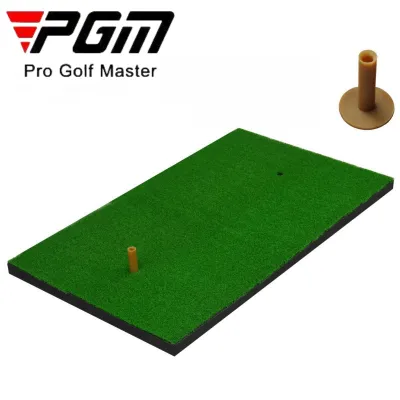
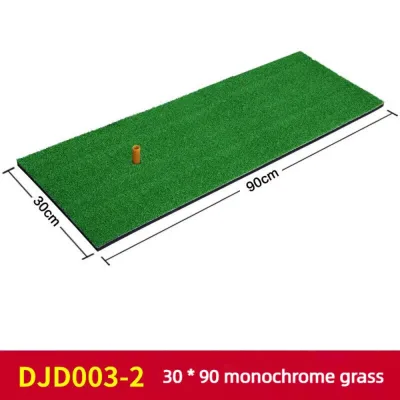
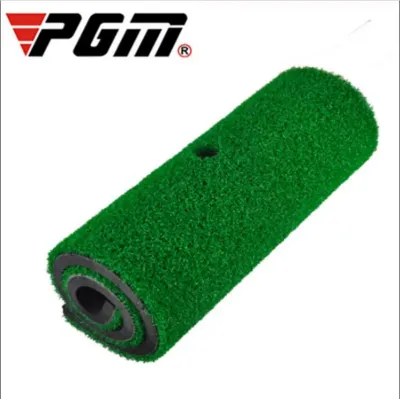
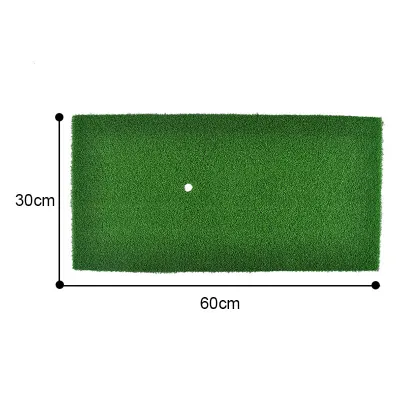
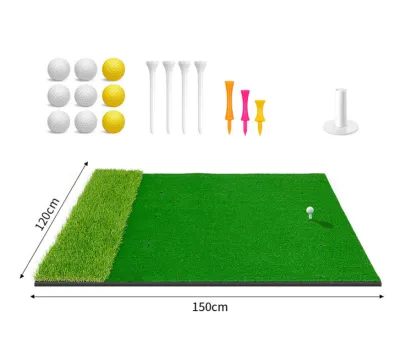
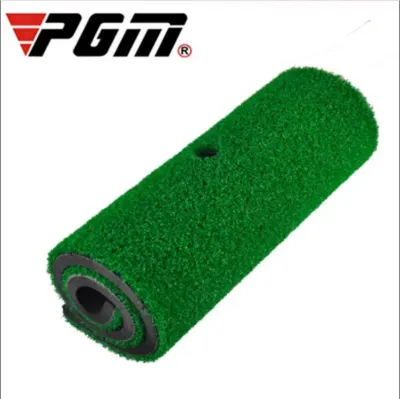
Prices are valid at publication and may change. Please refer to the product page for the latest price.
Beneath the turf fibers lies the backing and the base layer, which are responsible for shock absorption and simulating fairway bounce. High-quality mats utilize a dense foam base, often made of Ethylene-Vinyl Acetate (EVA) or polyurethane, bonded to a heavy-duty rubber non-slip bottom. This multi-layer construction ensures that the mat remains stable during your swing while absorbing the downward force of your club. A cheap mat with a thin, low-density foam base will compress permanently over time, leading to a hard surface that offers little to no protection for your joints.
For outdoor setups in tropical climates, weather resistance is a crucial factor to verify before buying. Constant exposure to intense UV rays and heavy rain can cause low-quality adhesives to delaminate, leading to the turf peeling away from the base. Look for mats that explicitly specify UV-stabilized turf fibers and waterproof bonding agents. Checking these manufacturer specifications ensures your mat can withstand the local heat and humidity without warping, fading, or shedding fibers prematurely.
Matching Mat Thickness and Shock Absorption to Your Skill Level
Your skill level and practice frequency should dictate the thickness and shock absorption capabilities of your golf grass mat. Beginners and high-handicap players tend to hit “fat” shots, where the clubhead strikes the turf before making contact with the ball. On a real fairway, the club digs into the turf, creating a divot. On a hard practice mat, however, a fat shot sends harsh vibrations up the club shaft and directly into your hands, wrists, and elbows. Over time, this repetitive shock can lead to painful injuries such as golfer’s elbow or wrist strain.

To prevent these injuries, high-frequency players and beginners alike should look for mats with advanced shock-absorbing technology. Thicker mats, typically ranging from 1.5 to 2 inches in total thickness, provide a deeper cushion that decelerates the clubhead gradually. This simulates the natural resistance of soil and turf, allowing you to practice for extended periods without joint fatigue. If you plan to place your mat on a hard surface like a concrete carport or a tiled patio, a thick, high-density foam base is non-negotiable to prevent “bottoming out”—the point where the foam fully compresses and your club impacts the hard floor beneath.
Before finalizing your purchase, verify the recommended swing speed or shock absorption rating on the product label. High-speed swingers generate immense force that requires a more robust, dense base to absorb the impact safely. Conversely, players with slower swing speeds or those focusing primarily on short-game practice may find a moderately thick mat sufficient for their needs. Matching the mat’s shock absorption to your specific swing dynamics ensures both safety and realistic feedback.
Evaluating Size, Portability, and Space Requirements
The physical dimensions and weight of your golf grass mat must align with your available practice space and storage conditions. Full-size tee mats, typically measuring 5×5 feet or larger, allow you to stand on the same level as the ball. This is highly beneficial for maintaining proper posture, balance, and alignment during your swing. However, these mats are heavy, difficult to move, and require a dedicated, permanent space, making them less suitable for multi-purpose areas.
If you have limited space or need to pack away your setup after each session, compact practice mats (such as 1×2 feet or 3×5 feet) or rollable options are highly efficient. Compact mats are lightweight and easy to store in a closet or car trunk, but they require you to stand off the mat. When using a compact mat, you must ensure your feet are on a surface of equal height to the mat’s surface; standing lower than the ball can alter your swing plane and lead to poor swing habits. Rollable or foldable mats offer a practical middle ground, providing a larger hitting area while remaining easy to roll up and store in a garage corner.
Before setting up your practice area, confirm the minimum safe swing clearance required for your longest club, which is typically the driver. Measure the height, width, and depth of your practice space—whether it is a garage, balcony, or backyard. Ensure there is ample room for a full, unrestricted swing without the risk of hitting walls, ceilings, light fixtures, or nearby outdoor structures. A safe setup prevents damage to your home and equipment while allowing you to swing with confidence.
Assessing Turf Realism and Club Interaction
A key factor in choosing a golf grass mat is how well it simulates real fairway feedback, particularly for your irons and wedges. Standard, low-cost mats often feature a stiff, uniform surface that causes the clubhead to bounce off the turf. This artificial bounce can mask poor ball-striking, making fat shots look and feel like clean hits. To develop a consistent, reliable swing, you need a mat that provides honest feedback on your club-face contact.
Look for mats that feature divot simulation technology or specialized fiber matrices. These mats allow the clubhead to dig slightly into the turf layer, mimicking the downward strike required for proper iron play. This realistic club interaction ensures that if you hit behind the ball, the mat absorbs the energy and slows the clubhead down, giving you immediate, accurate feedback on your shot quality. This feature is essential for golfers looking to improve their ball-striking consistency and distance control.
Additionally, consider the versatility of multi-textured turf mats. These mats combine different turf heights and densities on a single surface, allowing you to practice fairway shots, rough lies, and even chipping from a single setup. For driver practice, check if the mat supports real wooden tees directly in the turf, or if it includes pre-cut holes for adjustable rubber tee inserts. Mats that accept real wooden tees offer a more realistic driving experience, as you can adjust the tee height precisely to match your driver’s sweet spot.
Building Your Condition-Based Shortlist
To simplify your decision-making process, use this scenario-based framework to identify the right golf grass mat type for your specific practice environment and goals.
- Scenario A: Limited space and frequent storage. If you practice on a small balcony, a shared carport, or need to pack your setup away daily, focus on thin, rollable mats with a lightweight foam backing. Pair these with a portable hitting net. While these mats offer basic shock absorption, their primary advantages are portability, ease of storage, and space efficiency.
- Scenario B: Fixed backyard space and high-frequency iron practice. For a permanent outdoor setup exposed to the elements, prioritize a heavy-duty nylon mat with a thick, UV-resistant rubber base. Look for advanced shock absorption and realistic divot feedback to handle daily iron practice. This setup requires a larger investment, often starting around ₱5,000 or more, but offers the durability and joint protection needed for serious training.
- Scenario C: Dedicated putting and chipping practice. If your focus is entirely on the short game, choose a multi-speed green simulation mat. These mats feature low-pile, smooth fibers that allow for a true ball roll, often combined with a longer fringe section to practice delicate chips and pitches.
Before finalizing your purchase on any local e-commerce platform or brand website, always verify the seller’s return policies and check user reviews for long-term wear feedback. Look for comments regarding turf shedding, base cracking, or adhesive failure, especially from buyers who use the mat in warm, humid outdoor environments. This step helps ensure you receive a durable product that matches your expectations.
Setup, Maintenance, and Safety Checks
Proper installation and routine maintenance are essential to extend the lifespan of your golf grass mat and ensure a safe practice environment. Always place your mat on a flat, level surface. If you are setting up on grass or dirt, use a plywood underlayment to prevent the mat from sinking or shifting during your swing. A shifting mat can disrupt your balance and lead to inconsistent swings or accidental slips.
To maintain the turf fibers, establish a routine cleaning schedule. Sweep or vacuum the mat regularly to remove dirt, leaves, and debris that can grind down the fibers over time. For outdoor setups, rinse the mat occasionally with clean water to remove dust and sweat, and use a stiff-bristled brush to restore the upright posture of the turf fibers. Avoid using harsh chemical cleaners that can degrade the synthetic fibers or weaken the adhesive bond between the turf and the base.
If your mat is exposed to the elements, cover it when not in use to protect it from intense tropical sun and heavy rain. Inspect the mat regularly for wear signals, such as an exposed rubber base, severe turf shedding, or permanent compression of the foam layer. Operating on a worn-out mat significantly increases the risk of joint strain and club damage. Replace the mat promptly once these signs of wear become visible to maintain a safe and effective practice setup.
Frequently Asked Questions (FAQ)
Can I use a regular carpet or artificial turf from a hardware store for golf practice?
Using generic carpet or standard landscaping turf from a hardware store is not recommended for golf practice. These materials lack the specialized shock-absorbing base found in dedicated golf mats, which significantly increases the risk of wrist, elbow, and shoulder injuries from repetitive impact. Additionally, standard carpet fibers are not designed to withstand the high-velocity friction of a golf club strike, leading to rapid tearing, melting, and potential damage to your clubface.
Do I need a specific mat for practicing with a driver versus irons?
While you can use a single high-quality mat for both clubs, they have different surface requirements. Driver practice requires a stable surface that supports tee placement, either through built-in holes for rubber tees or a dense turf that accepts real wooden tees. Iron practice, on the other hand, demands a softer, highly shock-absorbing base that can safely handle downward strikes and simulate realistic divot feedback without jarring your joints.
Community discussion
Share your experience or ask a question. Comments are reviewed before publication.