
Finding the right golf putter grip is one of the most direct ways to improve your consistency on the green. Because the putter is used more than any other club in your bag, the connection between your hands and the shaft dictates how easily you can square the clubface at impact. Choosing the ideal grip requires balancing your natural putting stroke path with your current skill level, ensuring that the physical shape, size, and material of the grip support your mechanics rather than working against them.
Assess Your Putting Stroke Path and Skill Level
Before looking at specific grip models, you must understand how your putter moves during a stroke. Putting strokes generally fall into three categories: straight-back-straight-through, a slight arc, or a strong arc. In a straight-back-straight-through stroke, the putter face remains square to the target line throughout the entire motion. A slight arc features a gentle curve where the face opens slightly on the backswing and closes on the follow-through. A strong arc involves significant rotation of the putter face, resembling a gate opening and closing.
To identify your stroke path without expensive launch monitors, you can perform simple drills on a practice green or at home. Lay two alignment sticks parallel to each other on the ground, leaving just enough space for your putter head to pass between them. Take several practice strokes along this path. If your putter head consistently travels parallel to the sticks without brushing them, you likely have a straight stroke. If the heel or toe of your putter naturally wants to cross the sticks at the end of your swing, your stroke has an arc. Another method is the chalk line test: draw a straight line on the green and observe whether your putter face stays perpendicular to the line or rotates away from it during your stroke.
Products mentioned in this guide
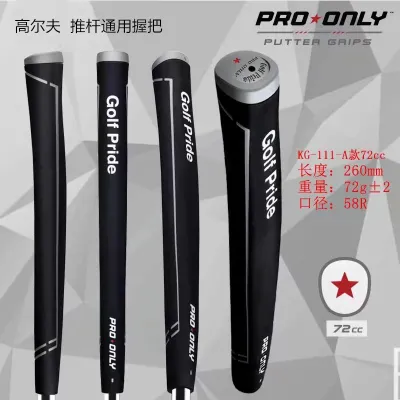
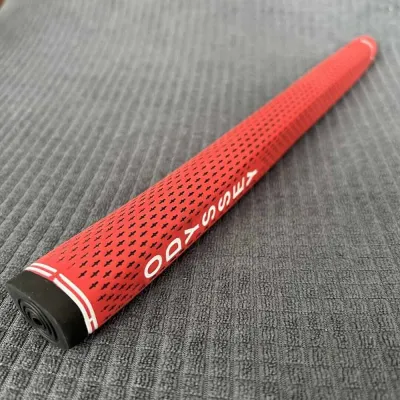
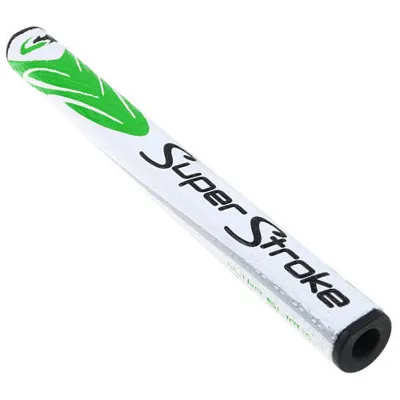
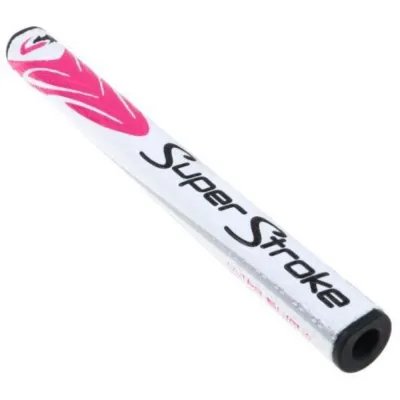
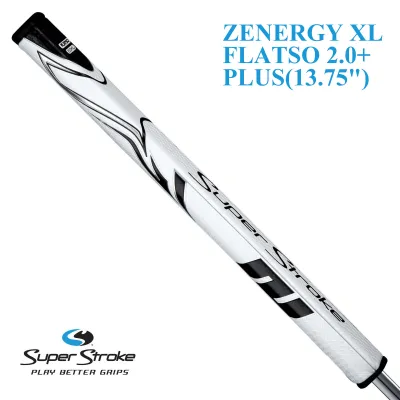

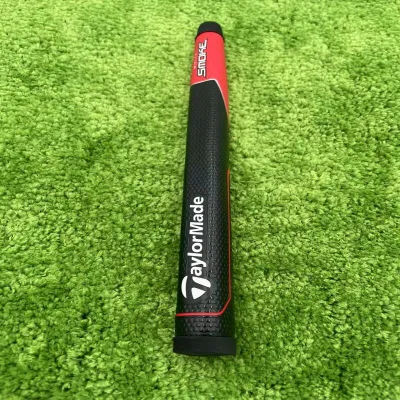
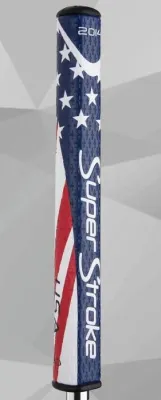
Prices are valid at publication and may change. Please refer to the product page for the latest price.
Your skill level also dictates what you should prioritize in a grip. Beginners and high-handicap players often struggle with active wrists, which leads to inconsistent face angles and poor distance control. For these players, a grip that minimizes wrist movement and promotes a stable, shoulder-driven stroke is highly beneficial. Conversely, advanced players with highly repeatable strokes often prioritize tactile feedback and feel. They rely on the vibrations traveling up the shaft to judge strike quality and control distance, meaning they may prefer grips that do not overly dampen these sensations.
Key Specifications to Evaluate in Putter Grips
Evaluating the physical attributes of a putter grip allows you to match its design to your physical needs and mechanical tendencies. The first major specification is the shape and taper of the grip. Traditional grips feature a tapered design that is thicker at the top and thinner at the bottom, which naturally encourages more hand and wrist activity. Pistol grips have a pronounced curve at the top that fits into the crease of the lead hand, promoting a secure, traditional hold. Oversized or non-tapered grips maintain a uniform thickness from top to bottom, distributing hand pressure evenly and preventing the trailing hand from dominating the stroke.

Size and thickness are equally critical because they directly influence grip pressure. Standard grips are thin and lightweight, offering excellent feedback but requiring precise finger control. Midsize and jumbo grips increase the diameter of the handle, which prevents your fingers from wrapping too tightly. This increased diameter naturally reduces grip pressure, relaxing your forearms and preventing the wrists from flicking or breaking down during the stroke. However, an excessively thick grip can reduce your ability to feel the weight of the putter head, which can impact distance control on long putts.
Material and texture determine how the grip performs in various weather conditions. Rubber grips are durable and offer a classic, firm feel. Polyurethane grips are softer and highly tacky, absorbing vibrations and providing a comfortable surface. Corded grips incorporate fabric fibers into the rubber, offering maximum traction and slip resistance. In tropical climates like the Philippines, where high humidity, intense heat, and sudden rain showers are common, managing sweat and moisture is crucial. Corded or heavily textured grips help maintain a secure hold without requiring you to squeeze the handle tighter when your hands are damp.
Weight and balance alter the overall feel of your putter. Standard putter grips typically weigh between 50 and 70 grams. Lightweight grips keep the balance point lower, making the putter head feel heavier and easier to track during the swing. Heavy or counterbalanced grips, which can weigh over 100 grams, shift the balance point closer to your hands. This counterweighting effect can quieten hand movement, making the entire putter feel more stable and controlled, which is particularly helpful for players struggling with a shaky stroke.
Match Grip Profiles to Your Stroke and Experience
Once you have assessed your stroke and understand grip specifications, you can connect the two to find your ideal setup. If you have a straight-back-straight-through stroke, your primary goal is to eliminate face rotation. An oversized, non-tapered grip is highly effective for this style. By keeping your hands quiet and distributing pressure evenly, these grips allow your shoulders to control the pendulum motion, keeping the putter face square to your target line throughout the entire zone.
If your stroke has a slight or strong arc, you rely on natural face rotation to square the club at impact. Traditional tapered grips or pistol grips are the ideal match here. The thinner lower section and contoured upper section allow your hands to release naturally, facilitating the opening and closing of the putter face. Using an excessively thick, non-tapered grip on an arced stroke can restrict this natural rotation, leaving the putter face open at impact and causing missed putts to the right for right-handed golfers.
Your experience level should also guide your final choice. High-handicap players and beginners often benefit from oversized grips or models with prominent alignment aids, such as flat fronts or colored ridge lines. These features provide immediate physical and visual cues to help square the face at address. Low-handicap players, who have already developed a consistent stroke, often prefer standard or midsize grips with textured surfaces. These grips deliver the precise feedback necessary for micro-adjustments in distance control on fast, challenging greens.
While these guidelines provide a reliable framework, individual physical comfort must dictate your final choice. If a grip shape or size feels awkward or causes tension in your hands, it will likely hinder your performance regardless of what mechanical theory suggests. Spend time holding different profiles at a local pro shop or golf retail store to find what feels most natural in your hands before making a purchase.
Pre-Purchase Checks and Installation Steps
Before buying a new grip, verify the shaft diameter of your putter. Most modern putter shafts have a butt diameter of .580 or .600 inches. Ensure the inner core diameter of the replacement grip matches or is compatible with your shaft to prevent slipping or difficult installation. Additionally, check the return and exchange policies of your local sporting goods store or online marketplace. Since tactile feel is highly subjective, you want the flexibility to exchange the grip if it does not feel right when held against your actual putter shaft.
If you choose to install the grip yourself, gather the necessary tools: double-sided grip tape, a grip solvent or mineral spirits, and a vise equipped with a rubber shaft protector to avoid crushing the shaft. Apply the tape smoothly along the shaft, saturate both the tape and the inside of the grip with solvent, and slide the grip on in one continuous motion. It is critical to align the flat front of the grip perfectly square to the putter face before the solvent dries; even a single degree of misalignment can cause you to push or pull putts consistently. If you are uncomfortable with this process, visit a professional club fitter or local pro shop to ensure a perfect installation.
Once installed, allow the grip to dry completely—typically 12 to 24 hours—before taking it to the course. Spend ample time on the practice green executing short, medium, and long putts. This practice allows you to adjust to the new weight, texture, and hand positioning, ensuring you are fully comfortable with the setup before playing a competitive round.
Frequently Asked Questions (FAQ)
How often should you replace a golf putter grip?
You should replace your putter grip when you notice physical signs of degradation, such as a shiny surface, hardening of the material, cracking, or a loss of tackiness. If your hands slip or you find yourself squeezing harder to maintain control, the grip has lost its effectiveness. In tropical environments with high humidity and intense sunlight, sweat, sunscreen, and dirt build up quickly, breaking down the grip materials faster. For regular players, replacing the putter grip once a year or every 40 to 50 rounds is a good standard to maintain optimal performance.
Are oversized putter grips legal in tournament play?
Oversized putter grips are legal, provided they comply with the equipment rules established by governing bodies like the USGA and the R&A. The rules state that a putter grip may have a non-circular cross-section, provided it does not have concavity, is symmetrical along its length, and its maximum cross-sectional dimension does not exceed 1.75 inches (44.45 mm). Always verify the specific local tournament rules and the current equipment lists of your governing association before entering a sanctioned competition to ensure your equipment remains fully compliant.
Community discussion
Share your experience or ask a question. Comments are reviewed before publication.