
Choosing the right gymnastics ribbon requires balancing your current skill level, physical height, and the specific regulations of your training or competition level. A ribbon that is too long or a stick that is too heavy can hinder your technique, cause early fatigue, and lead to frustrating tangles during practice. By matching the equipment’s dimensions to your physical profile and experience, you ensure a smooth, expressive performance that allows you to master complex patterns like snakes and spirals.
Assess Your Current Skill Level and Training Goals
Beginners typically focus on basic shapes, simple throws, and learning how to keep the ribbon moving constantly without touching the floor. At this stage, the priority is durability and ease of handling rather than meeting strict international weight and length standards. Standard training ribbons made of robust polyester are excellent for withstanding the inevitable friction and floor contact during early practice sessions.
Intermediate gymnasts begin incorporating higher throws, more intricate footwork, and rapid direction changes. As your routine complexity increases, you need equipment that offers better responsiveness and a more fluid drape. This is often the stage where gymnasts transition from basic recreational sets to standardized lengths that prepare them for local club competitions.
Products mentioned in this guide
![[Fast Delivery] 4M Dance Ribbons Kids Dance Gymnastics Ribbon Wands](https://img.lazcdn.com/g/p/1656a2022cb52fa01ba0cddf92e4143a.jpg_400x400q80.jpg_.webp)
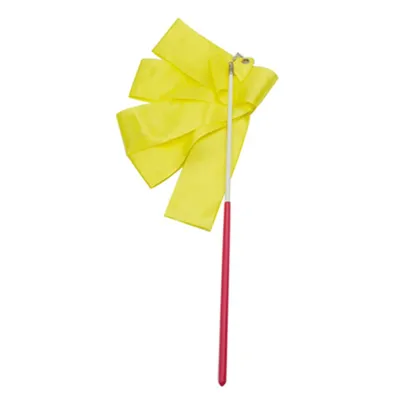

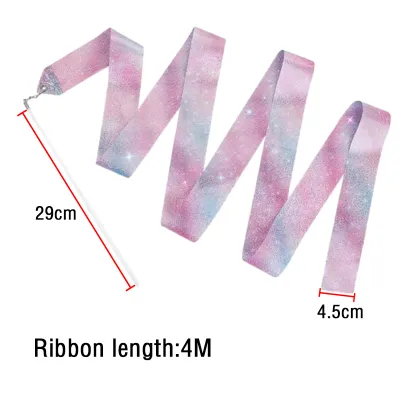
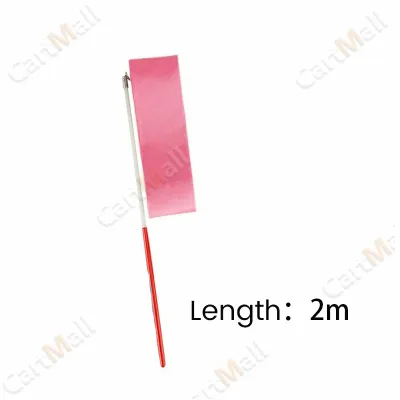
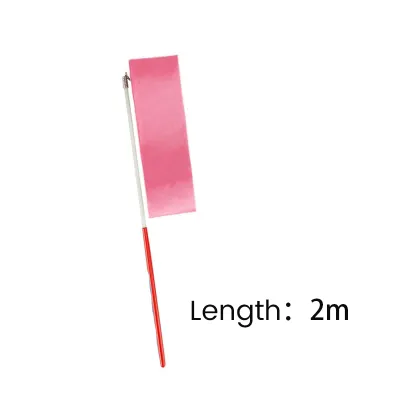
Prices are valid at publication and may change. Please refer to the product page for the latest price.
Advanced gymnasts execute high-velocity throws, complex mastery elements, and precise catches while maintaining continuous, high-speed ribbon movement. For these athletes, competition-grade ribbons with specific weight distributions and highly responsive swivel mechanisms are essential. Transitioning to this level of gear is necessary when your routines require compliance with official federation rules, where even a fraction of a gram or centimeter can affect your score or performance safety.
Match the Stick Size to Your Height and Grip
The gymnastics stick, or wand, acts as an extension of your arm, making its length critical for proper leverage and control. To find the appropriate stick length, measure the distance from the gymnast’s shoulder to the tip of their middle finger with the arm extended straight out to the side. Generally, younger or shorter gymnasts require shorter sticks (often around 50 to 55 centimeters) to prevent the tip from scraping the floor, while taller, older gymnasts use standard 60-centimeter sticks.

Grip diameter is another vital factor that directly impacts hand fatigue and control. Younger gymnasts with smaller hands benefit from narrower grips, which allow for a secure hold without straining the fingers. Many sticks feature a tapered design or a rubberized grip area; testing how comfortably your fingers wrap around the handle is key to maintaining a relaxed yet secure hold during rapid rotations.
Before making a purchase, always check the manufacturer’s specific sizing charts and compare them against your physical measurements. If you plan to compete, verify the stick specifications against the official guidelines of your local gymnastics association or the international federation. This ensures the stick is neither too long for your age division nor too short to execute standard maneuvers effectively.
Select the Ribbon Length and Weight for Your Routine
The length of the ribbon must correspond to the gymnast’s age and physical height to ensure the fabric flows beautifully without pooling on the floor. For young beginners and junior gymnasts under the age of 11, a shorter ribbon of 4 meters is typically recommended. As gymnasts grow and progress to intermediate levels (usually ages 11 to 14), they transition to a 5-meter ribbon, while senior gymnasts (ages 15 and older) use the standard 6-meter ribbon.
Ribbon weight plays a subtle but powerful role in how the apparatus behaves in the air. A heavier ribbon requires more physical effort to keep aloft, which can lead to shoulder and wrist fatigue during extended routines, especially in humid environments where moisture can add weight to the fabric. However, a slightly heavier ribbon can also provide better wind resistance and a more predictable flight path during high throws.
When shopping, carefully read the product labels to verify both the length and the weight of the ribbon. Official competition ribbons must meet precise weight requirements (often a minimum of 35 grams for senior levels). Checking these specifications on the packaging or product description ensures your equipment is fully compliant with the rules of your specific competitive division.
Evaluate Material and Swivel Mechanisms for Smooth Performance
Gymnastics ribbons are commonly crafted from satin, rayon, or polyester, each offering distinct characteristics. Satin and rayon are highly favored for their elegant drape, soft texture, and fluid movement in the air, though they can be sensitive to high humidity. Polyester is highly durable and resists fraying, making it an excellent choice for daily training sessions, though it may feel slightly stiffer than premium fabrics. In tropical climates like the Philippines, where high humidity can cause fabrics to cling or feel heavy, choosing a ribbon with a tight, lightweight weave is essential to prevent static and moisture absorption.
The swivel mechanism at the tip of the stick is the heart of the ribbon’s movement, preventing the fabric from twisting and knotting during rapid spirals. When evaluating a stick, physically check that the swivel rotates freely in all directions without catching or sticking. High-quality wands often use ball-bearing swivels or specialized cord attachments that offer ultra-smooth rotation, which is crucial for maintaining the ribbon’s momentum.
Examine the connection point where the ribbon attaches to the swivel. Look for reinforced stitching at the end of the ribbon and a secure, lightweight clip or cord. The connection should be strong enough to withstand the high tension of sudden throws, yet compact enough to avoid adding unnecessary weight to the tip of the stick, which can disrupt the balance of the entire apparatus.
Final Checklist Before You Buy
Before finalizing your purchase, double-check your measurements against the gymnast’s height, arm span, and competitive division requirements. Ensure the stick length, grip diameter, ribbon length, and ribbon weight all align with your current skill level and training goals. Whether you are investing ₱500 for a basic training set or more for a professional setup, matching the equipment to your physical profile is the key to success.
If purchasing from an online marketplace or a local sports retailer, take a moment to review their return and exchange policies. It is common for a ribbon or stick to feel slightly unbalanced or uncomfortable during the first few practice swings, and having the option to exchange it for a different size or weight provides valuable peace of mind.
Once your new equipment arrives, perform a quick physical inspection before heading to the gym. Check the edges of the ribbon for any loose threads or uneven stitching, test the swivel mechanism by spinning it manually to ensure it rotates without resistance, and verify that the connection clip is securely fastened to both the stick and the fabric.
Frequently Asked Questions (FAQ)
How do I prevent my gymnastics ribbon from tangling during a routine?
To keep your ribbon performing smoothly, proper storage is essential. Avoid stuffing the ribbon carelessly into a gym bag; instead, roll it loosely from the end to the stick, or use a specialized ribbon winder to keep the fabric flat and crease-free. In humid conditions, you can check the manufacturer’s care label to see if a light application of anti-static spray or a gentle ironing on a low-heat setting is permitted to keep the fabric crisp. Additionally, regularly inspect the swivel mechanism on your stick to ensure it remains clean and free of dust or hair, which can restrict rotation and cause the ribbon to twist.
Can I cut a gymnastics ribbon to make it shorter?
Cutting a gymnastics ribbon is generally not recommended because raw fabric edges will quickly fray and unravel under the high-speed friction of practice. If a ribbon must be shortened for a young beginner, it is best to consult the manufacturer’s instructions or seek assistance from a professional tailor who can properly hem and seal the edge. Keep in mind that altering the length of a ribbon may render it non-compliant for official competitions, so always verify your local division’s equipment regulations before making any permanent modifications.
Community discussion
Share your experience or ask a question. Comments are reviewed before publication.