
To choose the right hand grip strengthener, you must match the device’s resistance mechanism and structural design to your current physical baseline and specific athletic goals. Beginners and those recovering from minor injuries benefit most from low-resistance adjustable dial grippers or flexible silicone bands that allow for gentle, progressive movement. Intermediate fitness enthusiasts require fixed-resistance torsion spring models to track precise progressive overload, while advanced lifters and rock climbers need heavy-duty knurled steel grippers or open-hand block adapters to build extreme crushing and support strength. Whether you are looking for a standard hand grip or searching for a heavy-duty hand gripe to break through a lifting plateau, understanding the mechanics of hand strength is the first step toward making an informed purchase.
How to Assess Your Current Grip Strength and Goals
Before purchasing any training equipment, you must understand the three distinct mechanical actions that make up your overall grip profile.
- Crushing strength: The ability to close your hand around an object using force, primarily powered by your fingers and forearm flexors.
- Pinching strength: The force exerted between your fingers and thumb, crucial for holding flat plates or climbing pinch holds.
- Support strength: The capacity to hold onto an object for an extended duration, such as hanging from a pull-up bar or carrying heavy objects over long distances.
To estimate your current baseline strength without specialized laboratory equipment, you can use common gym exercises as a practical proxy. If you can hang from a standard pull-up bar for 45 seconds without your hands slipping, or hold a deadlift barbell equal to your body weight for 30 seconds, you possess a solid baseline of support strength. Conversely, if carrying three heavy grocery bags from your car to your kitchen causes immediate forearm burning and a strong urge to drop the bags, your crushing and support strength are still in the foundational beginner stage.
Products mentioned in this guide
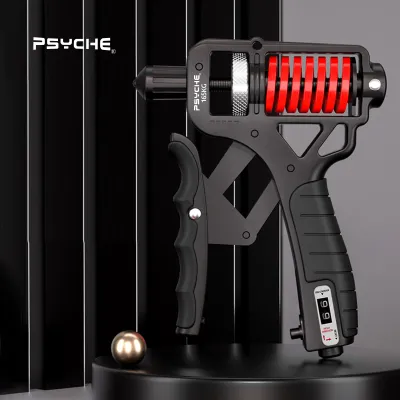
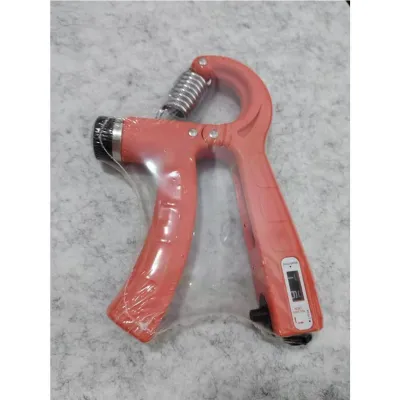
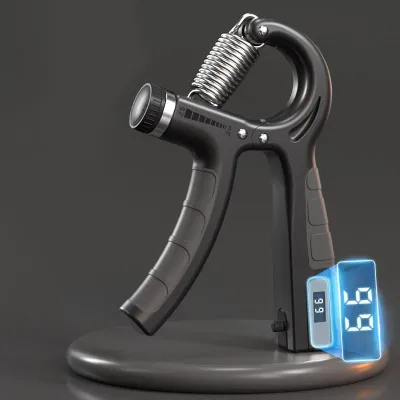
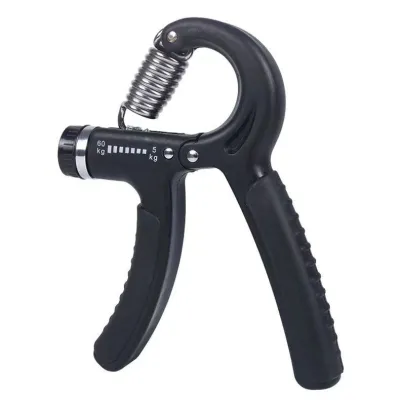
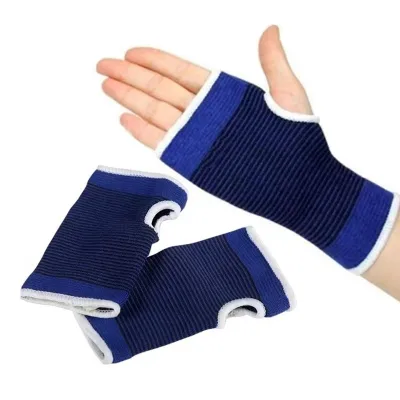
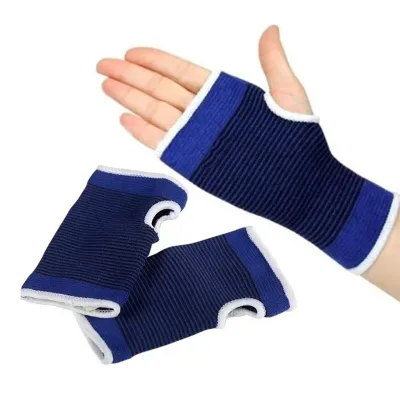
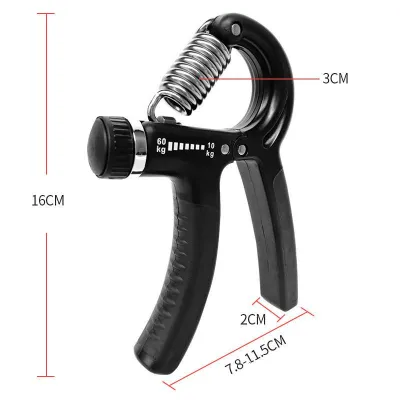
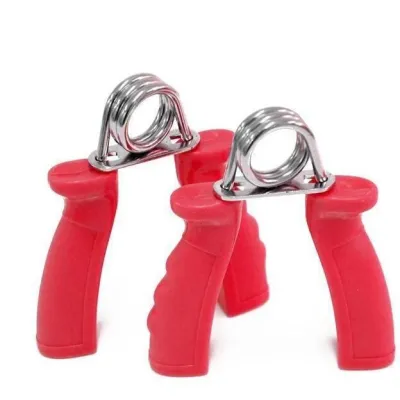
Prices are valid at publication and may change. Please refer to the product page for the latest price.
Your training goals should directly dictate the type of tool you buy. For instance, a rock climber aiming to conquer local crags in the Philippines needs to prioritize finger pinch strength and open-hand endurance to handle small ledges. A powerlifter aiming for a new personal record on the deadlift requires high-level support strength to prevent the barbell from rolling out of their hands during heavy pulls. Conversely, someone recovering from a minor wrist strain or spending long hours typing at a desk needs low-tension, high-repetition active recovery to restore joint mobility and blood flow.
Types of Hand Gripe and Grip Strengtheners by Training Level
Beginners and Rehabilitation: Adjustable and Silicone Grips
Adjustable coil grippers feature a plastic frame with a steel tension spring connected to a rotating dial or screw mechanism. By turning the dial, you physically move the spring’s anchor point, adjusting the resistance range, which typically spans from 5 kilograms to 60 kilograms. This adaptability allows you to apply progressive overload gradually without needing to purchase multiple separate tools as your hands grow stronger, making it highly cost-effective for beginners.

Silicone finger bands and therapy putty focus on the opposite motion: hand extension. Slipping your fingers into the loops of a silicone band and spreading them outward balances the forearm muscles, preventing the common muscle imbalances caused by constant gripping. Therapy putty offers malleable, multi-directional resistance that is excellent for warming up cold joints or slowly rebuilding motor control after a minor sprain.
However, these beginner tools have clear limitations. The plastic housings of adjustable models can flex or squeak under high tension, and they generally lack the structural durability or precise calibration required for testing maximum crushing force or supporting heavy powerlifting routines.
Intermediate Users: Fixed-Resistance and Torsion Spring Grips
When your hands outgrow the maximum setting of adjustable plastic models, fixed-resistance torsion spring grippers are the logical progression. These tools feature a single, high-quality steel spring connected to two solid aluminum or dense plastic handles, providing a non-adjustable, highly accurate resistance rating. Knowing the exact tension allows you to structure periodized training programs, tracking sets and repetitions with mathematical precision.
In humid, tropical climates like the Philippines, handle texture becomes a major safety and performance factor. Sweat can quickly turn a smooth plastic or cheap metal handle into a slippery hazard, causing the tool to fly out of your hand mid-squeeze. Opting for handles with knurled aluminum or textured rubber sleeves ensures your hand remains securely anchored, allowing you to focus entirely on applying force.
The primary drawback of fixed-resistance models is their lack of flexibility. Because each unit has only one set resistance level, you must purchase a new, heavier gripper every time you successfully complete your current progression, which can lead to higher cumulative costs over time.
Advanced Lifters: Heavy-Duty Steel and Block Grippers
For elite powerlifters, strongman competitors, and serious rock climbers, standard fitness grippers no longer provide a sufficient challenge. Heavy-duty steel grippers utilize aircraft-grade aluminum handles paired with exceptionally thick, heat-treated steel torsion springs that offer resistance levels climbing up to 300 pounds or more. These tools feature aggressive, sharp knurling that bites into the skin of your palms, preventing any micro-slippage during maximum-effort squeezes.
To build open-hand strength—which is critical when grabbing thick barbells or climbing wide ledges—block grippers and thick-bar adapters are highly effective. Thick-bar rubber adapters slip over standard dumbbells or pull-up bars, instantly doubling the diameter of the handle and forcing your hands, fingers, and forearms to work twice as hard to maintain a secure hold. Block grippers require a wide, open-handed pinch, shifting the mechanical load away from pure finger curling and onto the thumb and deep hand muscles.
These advanced tools carry a high risk of tendon strain, elbow tendonitis, or joint inflammation if used incorrectly or without a thorough warm-up. They are highly specialized instruments designed for maximum strength development, making them unnecessary and potentially dangerous for casual fitness enthusiasts or those seeking general hand health.
Essential Features to Check Before Your Hand Gripe Purchase
- Resistance range and increments: When browsing online sports retailers, check the manufacturer's technical specifications for how the resistance is measured. Look for brands that clearly state whether their ratings are calibrated at the middle of the handle or the tips, as this significantly affects the perceived difficulty. Ensure the step up between your current gripper and your next target is manageable (ideally in increments of 10 to 15 kilograms or 25 to 50 pounds) to avoid hitting a frustrating plateau.
- Handle material and texture: Plastic handles are lightweight and inexpensive, but they can crack under heavy loads and offer poor friction when wet. Rubberized grips provide excellent comfort and slip resistance for high-repetition endurance sets, though they can wear down over months of heavy use. For maximum durability and grip security, knurled metal (such as anodized aluminum) is the gold standard, though it requires callused hands to use comfortably without discomfort.
- Spring quality and durability: The heart of any hand gripper is its spring. Low-quality steel springs can suffer from rapid tension degradation, losing their resistance after just a few weeks of consistent use, or develop an annoying high-pitched squeak. Look for heavy-duty, rust-resistant carbon steel or chrome-plated springs that maintain their structural integrity over thousands of cycles, especially in humid environments where moisture can accelerate rust.
- Ergonomics and hand size compatibility: A gripper that is too wide or too narrow for your hand span can place unnatural shear forces on your finger joints and wrists. Measure your hand from the tip of your middle finger to the base of your palm; if your hand is under 17 centimeters, look for compact designs or adjustable-width models to ensure you can wrap your fingers fully around the handles without straining.
How to Use Grip Strengtheners Safely and Effectively
- Warm-up protocols: Never begin a grip training session by attempting to close your maximum-resistance gripper. Always start with two to three minutes of dynamic hand movements, such as opening and closing your fists rapidly, stretching your fingers individually, or performing 15 to 20 light repetitions on a highly flexible silicone band or low-tension adjustable model. This increases blood flow to the dense tendons of your fingers and forearms, lubricating the joint spaces and significantly reducing the risk of acute strains.
- Training volume and frequency: Your forearms and hands are already heavily involved in daily activities and gym movements like rows, deadlifts, and pull-ups. To avoid overtraining, limit dedicated grip strengthener sessions to two or three times per week, allowing at least 48 hours of recovery between high-intensity workouts. Treat grip training like any other major lift: perform 3 to 5 working sets of 8 to 12 controlled repetitions, focusing on a slow, deliberate release (eccentric phase) rather than rapid, bouncing squeezes.
- Warning signs: It is crucial to distinguish between healthy muscle fatigue—a deep, warm burn in the forearm belly—and pathological pain. Sharp, shooting sensations, localized throbbing, or a persistent dull ache in your finger joints, wrists, or the outer elbow (often indicating tennis or golfer's elbow) are clear signs of tissue overload. If you experience these symptoms, immediately stop training your grip and allow the affected area to rest.
- When to stop and consult a professional: If joint or tendon pain persists for more than a week despite complete rest, or if you experience numbness, tingling, or a loss of grip strength during daily tasks, stop using all grip tools immediately. Consult a licensed physical therapist or medical professional in your area to receive a proper diagnosis and a structured rehabilitation plan before attempting to resume any strength training.
Frequently Asked Questions (FAQ)
Can I use a hand grip strengthener every day?
No, using a high-resistance hand grip strengthener every day is generally counterproductive and increases your risk of developing overuse injuries like tendonitis. The tendons and small muscles in your hands and forearms require adequate rest to repair and grow stronger after intense exertion. While you can use very light silicone bands or therapy putty daily for active recovery and mobility, heavy crushing or pinching exercises should be limited to two or three structured sessions per week.
Do hand grip strengtheners help with carpal tunnel syndrome?
It depends entirely on the type of tool and the severity of your condition, meaning you should exercise extreme caution. While gentle, low-resistance finger extension bands or soft therapy putty can help maintain joint mobility and improve blood flow under professional guidance, heavy crushing grippers can actually worsen carpal tunnel syndrome by increasing pressure on the median nerve. Always check the manufacturer’s safety instructions and consult a qualified doctor or physical therapist before using any grip strengthening equipment to treat a diagnosed medical condition.
Community discussion
Share your experience or ask a question. Comments are reviewed before publication.