
Starting a home workout routine in the Philippines often begins with a simple question: where can you safely hang your body weight? Whether you are looking to build upper body strength, practice calisthenics, or perform decompression stretches, a hanging bar is one of the most versatile and effective tools you can add to your space. However, choosing the right one requires balancing your fitness goals with the structural realities of your home.
In tropical climates where high humidity can affect building materials, and where residential walls are frequently constructed from concrete hollow blocks rather than drywall studs, selecting and installing a bar requires careful planning. The ideal choice depends on whether you rent or own, the exercises you plan to perform, and the physical limits of your living space. By understanding the unique characteristics of each hanging bar type, you can create a safe, stable, and highly effective workout setup at home.
4 Key Factors to Evaluate Before Buying
Before browsing online marketplaces or local fitness shops, you must identify the non-negotiable specifications and spatial constraints of your home. The first and most critical factor is weight capacity. You must verify the manufacturer’s rated weight limit against your current body weight, but do not stop there. Dynamic movements like pull-ups, chin-ups, or leg raises generate additional force that exceeds your static weight. A safe rule of thumb is to choose a bar with a rated capacity that accommodates your weight plus a generous dynamic load buffer.
Products mentioned in this guide
![[In Stock] N-Power Enhanced Edition Heavy Duty Pull Up Bar Wall Mounted Chin Up Bar for Home Gym Fitness Exercise](https://img.lazcdn.com/g/p/4df786dfdfcc2fa97d3b26a75cae54aa.jpg_400x400q80.jpg_.webp)
![[Local Stock+COD] Enhanced Heavy-duty Bar Wall Mounted Pull Up Bar Chin Up Bar Suitable For Home Gym Exercises](https://img.lazcdn.com/g/p/151e4afd2ac631d858a2797e857ca554.jpg_400x400q80.jpg_.webp)
Prices are valid at publication and may change. Please refer to the product page for the latest price.
Available clearance is the next structural check. You need to measure your ceiling height to ensure your head will not strike the ceiling at the top of a pull-up. For wall-mounted options, check the spacing of your wall studs or the thickness of your concrete walls. If you are considering a doorway bar, measure the depth of your door frame and the width of the opening, as compatibility varies significantly between different bar designs.
Installation permanence is a major deciding factor, especially for renters. If your lease agreement strictly prohibits drilling or structural modifications, you will need to focus on non-invasive, renter-friendly options. Homeowners, on the other hand, have the flexibility to install permanent, heavy-duty fixtures that offer superior stability but require drilling into studs, joists, or concrete.
Finally, consider the grip variety and exercise range required for your training routine. A simple straight bar is excellent for basic chin-ups and hanging stretches, but it limits your hand positions. If you plan to progress to advanced calisthenics, neutral-grip pull-ups, or want to hang accessories like gymnastic rings, you will need a multi-grip bar or a spacious freestanding station that allows for a wider range of motion.
Doorway Bars: Setup, Limits, and Safety Checks
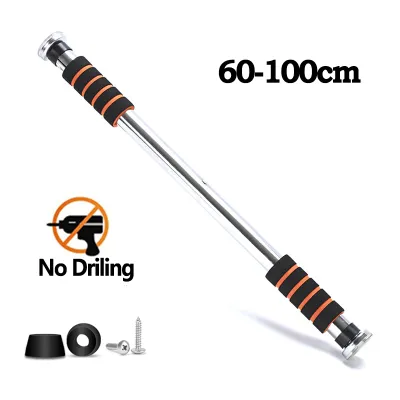
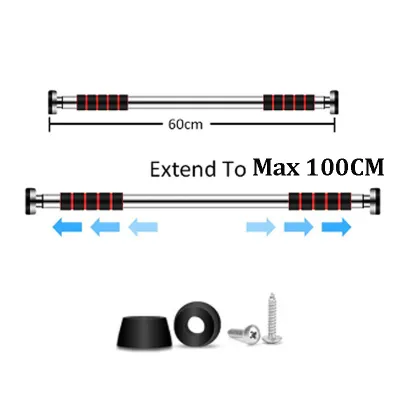
Doorway bars are highly popular due to their accessibility and ease of setup, but they come with distinct structural variations. Tension-mounted bars extend outward, using friction and pressure against the inner sides of the door frame to stay in place. Leverage-mounted bars, by contrast, use a cantilever design that hooks over the top trim of the door frame on one side while pressing against the wall on the other, distributing your weight across the frame.

Before installing either type, you must thoroughly inspect your door frame’s material and structural integrity. Many modern interior doors in local apartments and houses are made of thin wood, PVC, or hollow-core materials that cannot withstand intense pressure. Ensure your frame is constructed from solid wood and securely anchored to the wall. Rotting wood, water damage from high tropical humidity, or loose decorative trim can cause the frame to buckle, leading to a sudden collapse during use.
Movement limitations are a critical safety consideration for doorway bars. These bars are designed strictly for controlled, vertical movements like strict pull-ups, chin-ups, and hanging knee raises. Dynamic exercises such as kipping pull-ups, muscle-ups, or rapid swinging generate horizontal forces that can easily dislodge a doorway bar from its position. Attempting these movements on a doorway setup poses a high risk of injury.
To maintain safety over time, establish a routine inspection habit. Before every single workout, check the condition of the rubber friction pads to ensure they have not degraded or become slick from humidity. Verify that the locking mechanisms are fully engaged and tight. Inspect the door frame regularly for signs of wood splitting, paint cracking, or shifting trim, which indicate that the frame is under excessive stress and can no longer safely support the bar.
Wall-Mounted Bars: Stability and Installation Needs
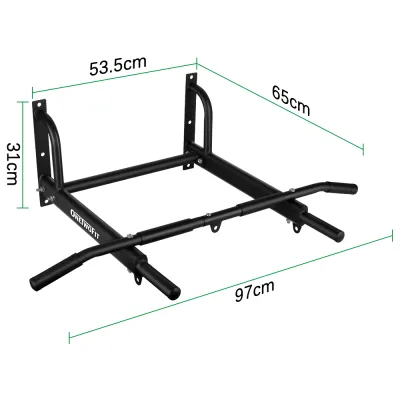
Wall-mounted bars offer a highly stable, permanent solution for dedicated home gyms, but they require a solid understanding of your home’s wall construction. In the Philippines, residential walls are commonly built using concrete hollow blocks (CHB) or solid concrete. Installing a wall bar in this environment requires heavy-duty masonry anchors, such as sleeve or shield anchors, drilled directly into solid concrete or the sturdy mortar joints of the blocks. If your home features drywall or plasterboard partitions, you must locate the wooden or metal studs behind the wall; never attempt to mount a pull-up bar directly into drywall alone.
Clearance is another vital factor when planning a wall installation. You must ensure there is sufficient distance between the bar and the wall—typically at least 30 to 50 centimeters—so your knees, feet, or chest do not strike the wall during exercises. Additionally, verify that there is enough vertical clearance above the bar so your head does not hit the ceiling during the peak of your pull-up.
If space is limited, you must weigh the trade-offs between fixed and foldable wall-mounted designs. Fixed bars are incredibly rigid and offer maximum stability, but they protrude permanently into your living space. Foldable wall-mounted bars feature hinge systems that allow you to pin the bar flat against the wall when your workout is finished, making them an excellent choice for multi-purpose rooms, corridors, or tight garage spaces.
Because wall-mounted bars must support significant dynamic loads, the installation process must be precise. If you do not own a high-powered hammer drill, quality masonry drill bits, or if you are unsure about the load-bearing capacity of your wall, it is highly recommended to hire a professional carpenter or contractor. A professional can verify the wall’s structural integrity and ensure the anchors are set correctly, preventing costly property damage or severe physical injury.
Ceiling-Mounted and Freestanding Stations: Space and Clearance
For fitness enthusiasts with ample space or those who want the absolute highest level of stability, ceiling-mounted bars and freestanding stations are the premier options. Ceiling-mounted bars are bolted directly into overhead wooden joists or a concrete ceiling slab. This setup provides unparalleled 360-degree clearance around the bar, allowing you to perform dynamic movements without worrying about hitting a wall. However, you must verify that your ceiling joists are structurally sound and that the ceiling height allows for a full-body hang without your feet dragging on the floor.
Freestanding stations, commonly known as power towers, require absolutely no drilling or structural modifications, making them a favorite for renters who have dedicated floor space. When evaluating a freestanding station, pay close attention to the base footprint and weight distribution. Look for models with wide, extended bases, non-slip rubber feet, and built-in anti-tip stabilizers to ensure the unit remains grounded during intense workouts.
Choosing between these two heavy-duty options involves a clear trade-off between maximum stability and floor space consumption. A ceiling-mounted bar keeps your floor completely clear, which is ideal if you use your workout area for other activities like yoga or aerobics. A power tower, while highly versatile, occupies a significant amount of floor space—often around one square meter—and can be difficult to move once assembled.
If you plan to expand your home workouts by attaching heavy accessories, your choice of bar becomes even more important. Ceiling-mounted bars and heavy-duty power towers are ideal for hanging gymnastic rings, suspension trainers, or even light punching bags. The robust construction of these systems is designed to handle the multi-directional, swinging forces that these accessories generate, which would easily destabilize or damage a doorway or lightweight wall-mounted bar.
Matching Your Hanging Bar to Your Space and Goals
To finalize your decision, it helps to map your living situation and fitness goals against the unique characteristics of each bar type. The table below provides a quick reference to guide your choice:
| Bar Type | Renter-Friendly | Space Required | Exercise Intensity | Best For |
|---|---|---|---|---|
| Doorway (Tension/Leverage) | Yes | Minimal | Low to Moderate | Strict pull-ups, chin-ups, passive hanging |
| Wall-Mounted | No | Moderate | Moderate to High | Weighted pull-ups, leg raises, calisthenics |
| Ceiling-Mounted | No | Moderate | High | 360-degree movements, gymnastic rings |
| Freestanding (Power Tower) | Yes | High | Moderate to High | Multi-exercise routines, dips, leg raises |
Your specific training goals should also dictate your equipment choice. If your primary focus is physical therapy, spinal decompression, or gentle stretching, a simple doorway tension bar or a low-height bar is perfectly adequate. However, if your goal is advanced calisthenics, muscle-ups, or high-intensity functional fitness, you will quickly outgrow a doorway bar and should invest in a highly stable wall-mounted, ceiling-mounted, or heavy-duty freestanding station.
Budget is another practical consideration. In the local market, budget-friendly doorway bars typically cost under ₱1,500 and are highly accessible. Mid-range options, ranging from ₱1,500 to ₱5,000, include standard wall-mounted bars and entry-level power towers. Premium options above ₱5,000 consist of heavy-duty multi-grip wall mounts, ceiling mounts, and commercial-grade power towers. When investing, consider the long-term durability of the materials; in the humid Philippine climate, powder-coated steel or stainless steel is highly recommended to prevent rust and maintain structural integrity over the years.
Installation Safety and When to Stop
When installing any hanging bar, safety must be your absolute priority. Always cross-reference the manufacturer’s installation manual with the actual conditions of your wall, ceiling, or door frame. Never substitute the provided hardware with weaker alternatives; for instance, do not use standard wood screws if the manual specifies heavy-duty lag bolts, and never use masonry anchors in wooden studs.
During the drilling process, you must be prepared to stop immediately if you encounter unexpected resistance. This resistance could indicate that you have hit a steel reinforcing bar (rebar) inside a concrete wall, a hidden water pipe, or electrical conduit wiring. Drilling through these can cause severe property damage, utility failure, or electrical shock. If the wall material crumbles easily or feels hollow where it should be solid, stop the installation and re-evaluate the location.
Once the installation is complete, perform a rigorous, progressive load test before attempting a full workout. Do not immediately jump onto the bar. Instead, pull down on the bar with a fraction of your weight while keeping your feet firmly on the ground. Gradually increase the downward pressure, listening closely for any creaking, cracking, or shifting. If you observe any movement in the wall anchors, door frame, or ceiling joists, remove your weight immediately.
If your home features non-standard construction, lightweight partition walls, or if you are simply uncomfortable performing structural drilling, do not hesitate to consult a qualified local contractor. Paying a professional to securely mount your hanging bar is a small price to pay for peace of mind, ensuring that your home gym remains a safe environment for your fitness journey.
Frequently Asked Questions (FAQ)
Can I use a doorway pull-up bar on a hollow core door?
No, you should never use a doorway pull-up bar on a hollow core door frame. Hollow core doors and their accompanying frames are constructed from thin wood veneers or composite materials wrapped around a cardboard honeycomb interior. They lack the structural density required to withstand the intense outward pressure of a tension bar or the downward leverage of a cantilever bar. Attempting to use a bar on these frames will likely cause the wood to crack, buckle, or collapse entirely under your weight, posing a severe risk of injury. If your home has hollow core doors, look into a freestanding power tower or a wall-mounted bar installed on a solid concrete wall instead.
How do I protect my door frame from damage when using a tension bar?
To minimize cosmetic and structural damage to your door frame, you can place thick, heavy-duty microfiber cloths or specialized rubber padding between the ends of the tension bar and the wooden frame. This helps distribute the pressure more evenly and prevents the bar’s rubber pads from leaving deep indentations or black scuff marks on your paint. Additionally, avoid over-tightening the bar beyond the manufacturer’s recommendations, as excessive pressure can warp the frame. Regularly inspect the area for any signs of paint cracking, wood indentation, or shifting trim; if you notice any of these warning signs, remove the bar immediately to prevent permanent structural damage.
Community discussion
Share your experience or ask a question. Comments are reviewed before publication.