
Choosing the right heavy-duty bungee cord for mountain climbing scenarios requires matching the cord’s material, elasticity, and hook design to specific utility tasks like tent anchoring, gear bundling, and transport security. It is critical to establish at the outset that bungee cords are strictly utility tools; they must never be used for fall arrest, belaying, or any life-safety application. In rugged mountain environments, selecting the wrong cord can lead to gear loss, shelter failure, or sudden snap-back injuries. By understanding how different specifications perform under environmental stress, climbers can make informed decisions to secure their equipment safely.
Understanding Core Specifications Before You Buy
Evaluating a heavy-duty bungee cord starts with understanding its core material composition. Natural rubber cores offer excellent elasticity and remain flexible in cold, high-altitude environments, making them highly reliable for alpine ascents. Conversely, synthetic elastomers like polyurethane or latex provide superior resistance to UV rays, moisture, and intense tropical humidity. For climbers tackling humid approach trails in tropical regions like the Philippines, synthetic options often resist rot and environmental degradation more effectively over long periods.
The diameter and strand count of the cord serve as primary indicators of its overall strength and durability. A thicker diameter, typically ranging from 8mm to 10mm, generally offers higher tension and greater resistance to abrasive rock surfaces. Inside the protective sheath, a high density of tightly bundled elastic strands distributes tension more evenly than a single solid core, reducing the risk of sudden, catastrophic failure under load.
Products mentioned in this guide
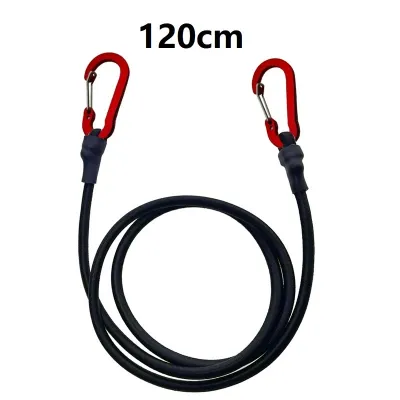
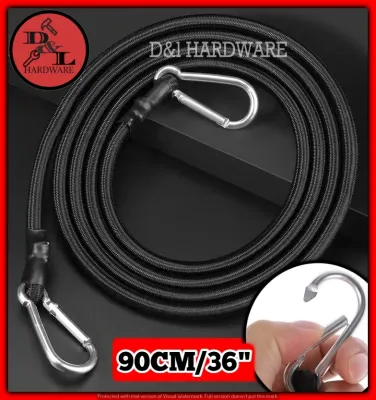
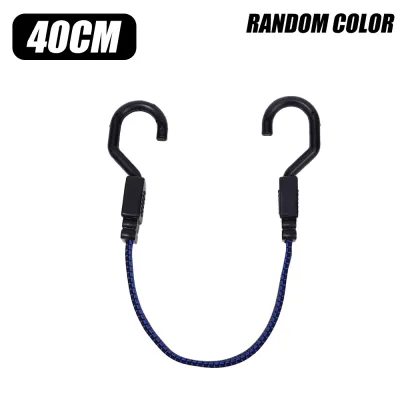
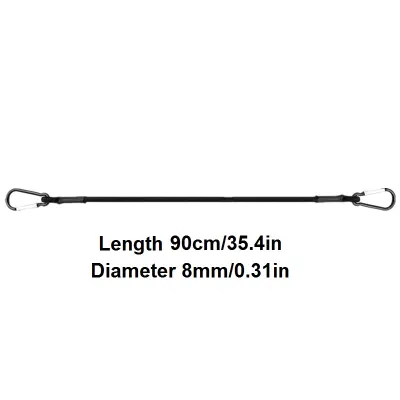
Prices are valid at publication and may change. Please refer to the product page for the latest price.
Hook design is another critical factor that dictates safety and usability. Coated wire hooks provide high structural strength but carry a risk of scratching delicate gear or tearing technical fabrics if the protective coating wears thin. Molded plastic hooks resist rust and are gentler on fabrics, though they can become brittle and crack when exposed to extreme cold or high impacts. For climbing utility, carabiner-style hooks with locking gates offer the most secure connection, preventing accidental detachment during movement.
Finally, elongation limits define how far a cord can safely stretch before its structural integrity is compromised. Over-stretching a bungee cord beyond its rated limit—typically 50% to 100% of its relaxed length—weakens the inner elastic strands and drastically increases the risk of violent snap-back. Climbers must verify these limits to ensure the cord maintains constant, safe tension without risking sudden failure in unpredictable alpine conditions.
Matching Cords for Tent Anchoring and Shelter Setup
When pitching a tent or setting up a tarp shelter on exposed mountain ridges, wind resistance is a primary concern. Standard cords often stretch too easily, allowing the shelter to flap violently or collapse under sudden gusts. For these scenarios, selecting low-stretch, high-tension bungee cords is essential to maintain a taut, stable pitch. These cords absorb the immediate shock of wind gusts while keeping the shelter fabric securely tensioned against its anchors.

High-altitude environments expose gear to intense, unfiltered UV radiation, which rapidly degrades unprotected rubber. To prevent the inner core from drying out, cracking, and losing its elasticity, climbers should verify that the cord features a UV-resistant outer sheath, typically made of tightly woven polyester or nylon. This protective layer shields the elastic core from sun damage during multi-day exposures on open ridges.
Compatibility with existing shelter hardware is also vital for a secure setup. The hooks or attachment points on the bungee cord must fit cleanly through tent grommets, guyline loops, or trekking pole straps without causing damage. A hook that is too large can deform or tear grommets, while a hook that is too small or lacks a secure gate can easily slip off under tension, causing the shelter to fail.
Safe tensioning practices are critical to prevent injuries and equipment damage during setup. Always pull the cord away from your face and body, and adjust the tension angle so that if a hook slips, it snaps away from people and delicate gear. Avoid over-tightening the cords, as excessive tension can tear out tent grommets or cause the cord to snap back violently, potentially causing severe injury.
Selecting Cords for Gear Bundling and Pack Organization
Securing bulky items like sleeping bags, sleeping pads, or extra clothing layers to the outside of a backpack requires a careful balance of elasticity. Cords with moderate elasticity are ideal for this task, as they allow you to compress soft gear tightly without applying crushing force. Excessive tension can permanently deform synthetic insulation or damage delicate gear, while insufficient tension allows items to shift and unbalance your pack during active movement.
The material of the outer sheath plays a major role in protecting both the cord and your climbing gear. A smooth, tightly woven nylon or polyester sheath minimizes friction wear against the technical fabrics of your backpack and soft gear. This prevents the cord from abrading expensive lightweight materials while resisting wear from contact with rough rock faces and dense trail vegetation.
To minimize weight and eliminate the risk of snagging, climbers should avoid heavy metal hooks for pack organization. Lightweight plastic cord locks, toggles, or soft loop attachments are excellent alternatives that secure gear quietly and efficiently. These non-metal fasteners eliminate the risk of sharp edges puncturing your pack or catching on branches during tight scrambles.
Weight and packability are crucial considerations for multi-day ascents where every gram counts. Carrying an excessive number of heavy-duty cords adds unnecessary bulk and weight to your load. Climbers should select a few versatile, highly adaptable cords that can serve multiple bundling purposes, rather than packing a large assortment of single-use straps.
Securing Equipment During Transport and Approach Hikes
Transporting heavy or rigid gear like ice tools, climbing ropes, or camp stoves to the trailhead requires robust securing methods. For vehicle transport, especially on rough, unpaved roads leading to remote trailheads, bungee cords must have high load-bearing thresholds. Implementing redundancy by using multiple independent cords ensures that even if one cord fails or slips, the remaining tie-downs keep the heavy equipment securely in place.
Off-road transport generates significant vibration and sudden shocks that can cause heavy gear to shift violently. Heavy-duty bungee cords act as effective shock absorbers, dampening these vibrations and preventing metal equipment from clattering or damaging other gear. The elastic tension keeps constant downward pressure on the load, accommodating the movement of the vehicle without loosening.
To prevent single-point failures, climbers should avoid relying on a single cord to secure heavy or awkwardly shaped loads. Utilizing a crisscross pattern or multiple parallel cords distributes the weight and tension evenly across the transport rack or truck bed. This multi-point setup provides a much more stable hold and minimizes the risk of gear shifting during sharp turns or sudden stops.
Before securing any load, a thorough inspection of the hook gate mechanisms, spring tension, and structural integrity is mandatory. Ensure that any locking gates close completely and that there are no signs of rust, cracking, or deformation in the hooks. A compromised hook can fail suddenly under the high tension required for transport, leading to lost gear or dangerous road hazards.
Cross-Scenario Compatibility and Retirement Rules
Deciding whether to carry a single set of versatile, multi-purpose cords or dedicated, scenario-specific sets depends on the complexity of your climb. For simple approach hikes and weekend trips, a few adaptable cords with carabiner-style hooks are often sufficient. However, for technical climbs or extended expeditions, carrying specialized cords tailored for tent anchoring and gear bundling ensures optimal performance and safety under demanding conditions.
Establishing a strict inspection routine before and after every climb is essential for gear longevity and safety. Perform visual and tactile checks along the entire length of each cord. Feel for flat spots, lumps, or areas where the inner core feels disconnected, and look closely for micro-tears, fraying, or slippage in the outer woven sheath.
Environmental factors like tropical humidity, salt air, and intense sun can accelerate the degradation of elastic materials. Look for clear signs of aging, such as a loss of elasticity where the cord remains stretched out when relaxed, a brittle or powdery texture in the rubber core, or severely faded and frayed outer sheaths. Any cord showing these symptoms must be retired immediately.
Apply strict retirement rules to ensure safety in the field. Under no circumstances should a compromised, worn, or damaged bungee cord be used for securing heavy loads, overhead transport, or any application where failure could cause injury or property damage. Remember that bungee cords are utility items; they must never be used for life-safety, climbing protection, or fall arrest.
Frequently Asked Questions (FAQ)
Can I use standard bungee cords instead of heavy-duty ones for climbing?
Standard commercial bungee cords are not designed to withstand the harsh conditions of mountain environments. They typically feature lower-density core strands, thinner outer sheaths that fray easily against abrasive rock, and lightweight wire hooks that can bend or detach under tension. Using them in alpine settings increases the risk of sudden failure under dynamic loads, exposure to sharp rock edges, or extreme temperature fluctuations.
How do I know when a heavy-duty bungee cord needs replacing?
A heavy-duty bungee cord must be replaced if you observe physical signs of wear, such as fraying of the outer sheath, permanent stretching where the cord does not return to its original length, exposed inner rubber strands, or bent and cracked hooks. You can also perform a functional test: gently stretch the cord to verify it still offers firm resistance and snaps back cleanly, and check that any hook gates or spring mechanisms operate smoothly without sticking.
Community discussion
Share your experience or ask a question. Comments are reviewed before publication.