
Selecting the right heavy jump rope depends on balancing your current physical conditioning with your specific training objectives. Unlike standard speed ropes designed for rapid rotation and agility, weighted ropes shift the training load upward, transforming a classic cardiovascular exercise into a demanding upper-body workout. To make the correct choice, you must evaluate the rope’s weight, cable material, handle mechanics, and durability under local environmental conditions.
Historically, jump ropes were viewed purely as tools for footwork and aerobic conditioning. However, the introduction of heavier cables has expanded their utility, allowing fitness enthusiasts to build muscular endurance, improve rotational coordination, and increase caloric expenditure in shorter training windows. Choosing the wrong weight or design can lead to premature fatigue, poor form, or joint strain, making it essential to understand how different specifications impact your workouts.
Quick Decision Guide: Matching Heavy Jump Ropes to Your Needs
Identifying the ideal heavy jump rope requires analyzing how rope weight, handle design, and cable thickness dictate the tool’s primary purpose. A common misconception is that a heavier rope is always better, but selecting an inappropriate weight can disrupt your rhythm and place excessive stress on your joints. This guide relies on general biomechanical principles and standard fitness equipment classifications to help you find the right match.
Products mentioned in this guide
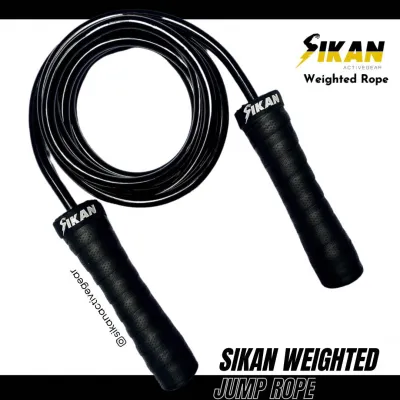
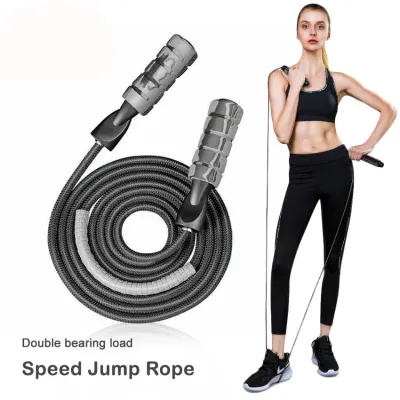
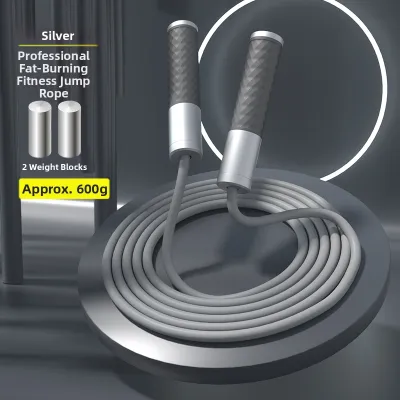
Prices are valid at publication and may change. Please refer to the product page for the latest price.
When choosing a rope, consider your primary fitness goal alongside your current experience level. Beginners require ropes that provide sensory feedback without overloading the shoulders, while advanced athletes need substantial resistance to stimulate muscle growth and power. The fundamental safety rule of weighted jump rope training is progression: never start with the heaviest option available. Gradually increasing the weight allows your tendons, ligaments, and stabilizing muscles to adapt, preventing acute injuries to the rotator cuff and wrists.
To help guide your initial selection, consider these general recommendations:
- For learning proper form and timing: Choose a light-heavy rope weighing between 1/4 lb and 1/2 lb with unweighted handles.
- For sustained cardiovascular endurance: Opt for a 1/2 lb rope equipped with high-speed ball bearings to maintain smooth, continuous rotations.
- For upper-body strength and conditioning: Select a rope weighing 1 lb or more, featuring thick PVC or braided steel cables.
- For combat sports conditioning: Use a 1/2 lb to 1 lb rope to build the specific shoulder endurance required to keep your guard up.
What Makes a Jump Rope "Heavy" and Why It Matters
To understand the benefits of a heavy jump rope, it is necessary to define the category boundaries. Standard speed ropes, often used in competitive skipping or high-speed conditioning, typically weigh less than 3 ounces (approximately 85 grams), with the weight concentrated almost entirely in the handles. In contrast, a heavy jump rope features a weighted cable, with weights generally ranging from 1/4 lb (approximately 113 grams) to over 1 lb (approximately 450 grams), and in some advanced cases, up to 2 lbs or more. This weight is distributed throughout the entire length of the loop, creating significant centrifugal force during rotation.

This distributed weight introduces a distinct biomechanical advantage: tactile feedback. Because the heavy cable moves slower and pulls outward as it rotates, you can easily feel the exact position of the rope throughout its arc. This sensory feedback is highly beneficial for developing timing and coordination, as it eliminates the guesswork associated with ultra-light speed ropes that can easily catch on your feet if your rhythm is slightly off.
Furthermore, heavy ropes drastically alter muscle engagement. While standard skipping primarily taxes the calves, quadriceps, and cardiovascular system, rotating a weighted cable requires continuous stabilization from the upper body. The wrists, forearms, biceps, shoulders, traps, and upper back must work dynamically to control the rope’s path. This turns a simple cardio session into a comprehensive full-body workout, increasing metabolic demand and burning more calories per minute than traditional skipping.
However, heavy ropes have distinct limitations. They are not designed for high-speed tricks, complex footwork variations, or advanced double-unders. Attempting to perform rapid, repetitive double-unders with a rope heavier than 1 lb significantly increases joint impact and fatigue, which can compromise your form. Heavy ropes should be viewed as tools for strength, endurance, and rhythm rather than speed and agility.
Choosing the Right Rope Weight for Your Current Fitness Level
Selecting the correct rope weight is a balancing act between challenging your muscles and maintaining proper biomechanics. Using a rope that is too heavy for your current strength level will force you to compensate by flaring your elbows, hunching your shoulders, or using your entire arms instead of your wrists to turn the rope. This poor form reduces workout efficiency and heightens the risk of injury.
Beginners: Mastering Form and Timing
For individuals new to jump rope training or those transitioning from light speed ropes, the safest entry point is a rope in the 1/4 lb to 1/2 lb range. This weight class provides sufficient resistance to slow down the rope’s rotation, giving you ample time to coordinate your jumps with the sound and feel of the cable hitting the floor. It offers a gentle introduction to upper-body stabilization without placing excessive strain on the delicate muscles of the rotator cuff.
At this stage, your primary goal is to establish a consistent rhythm while keeping your elbows tucked close to your ribs and rotating the rope using only your wrists. Beginners should focus on short training intervals, such as 30 seconds of jumping followed by 30 seconds of rest, to build baseline endurance. If you experience sharp, localized pain in your shoulders, elbows, or wrists, stop immediately. Focus on perfecting your posture and hand positioning before attempting longer intervals.
Intermediate Jumpers: Building Endurance and Resistance
Once you can comfortably skip for several minutes without tripping or experiencing shoulder fatigue, you are ready to transition to medium weights, typically between 1/2 lb and 3/4 lb. This weight range is ideal for intermediate fitness enthusiasts who want to increase the intensity of their workouts and build muscular endurance in their forearms, shoulders, and upper back.
Intermediate ropes are highly versatile and can be seamlessly integrated into high-intensity interval training (HIIT) or circuit routines. For example, alternating between 1 minute of intermediate rope jumping and 1 minute of bodyweight exercises (such as push-ups or squats) creates a demanding full-body conditioning routine. At this level, you should focus on sustaining longer jumping intervals, aiming for 2 to 3 minutes of continuous rotation per set while maintaining perfect posture.
Advanced Athletes: Maximizing Power and Shoulder Engagement
Advanced athletes and highly conditioned fitness enthusiasts can utilize ropes weighing 1 lb, 1.5 lbs, or even 2 lbs to maximize power output and upper-body resistance. These ultra-heavy ropes function similarly to resistance bands or light dumbbells, requiring immense grip strength and shoulder stabilization to keep the cable moving.
Because of the high physical demand, advanced ropes are typically used for short, explosive strength intervals rather than long-duration cardio. A typical advanced protocol might involve 20 to 30 seconds of maximum-effort jumping, focusing on driving the heavy cable around as fast as possible, followed by a generous recovery period. It is crucial to avoid using these ultra-heavy ropes for high-impact plyometric training on hard surfaces, as the combined weight of your body and the heavy rope’s downward pull increases the impact forces traveling up through your ankles, knees, and hips.
Selecting Rope Features Based on Your Specific Training Goals
Beyond choosing the correct weight, you must evaluate how the design of the jump rope aligns with your specific training objectives. Different fitness goals require distinct handle configurations, cable materials, and rotational mechanics.
Cardio Endurance and Fat Loss
If your primary goal is to burn calories and build cardiovascular stamina, you should look for a moderate-weight rope (1/4 lb to 1/2 lb) paired with a high-quality ball-bearing system. A smooth, fast-spinning bearing ensures that the rope rotates with minimal friction, allowing you to maintain a steady, elevated heart rate for extended periods.
For cardio-focused workouts, it is highly recommended to use unweighted handles. When the weight of the system is concentrated entirely in the cable, your shoulders and cardiovascular system work in harmony. If the handles themselves are heavily weighted, your grip and forearms will fatigue and fail long before your heart rate reaches its target zone, cutting your cardio session short.
Upper Body Strength and Muscle Conditioning
For those treating the jump rope as a portable resistance training tool to tone the arms, shoulders, and back, the equipment requirements shift. In this scenario, a combination of weighted handles and a thick, heavy cable is highly effective. This setup maximizes the time-under-tension for your upper body, forcing your muscles to contract continuously to control the heavy rotating mass.
Look for ropes that feature thick PVC or braided steel cables. These materials offer more aerodynamic drag and physical resistance as they cut through the air, requiring more force to spin. This added resistance stimulates muscle activation in the deltoids, traps, and latissimus dorsi, helping to build muscular endurance and definition over time.
Boxing and Combat Sports Footwork
In boxing, Muay Thai, and mixed martial arts, shoulder endurance is critical for keeping your hands up and maintaining your guard during late rounds. Heavy jump ropes are a staple in combat sports training because they perfectly simulate this physical demand while simultaneously developing footwork and rhythm.
For combat athletes, a 1/2 lb to 1 lb rope offers the ideal balance. This weight is heavy enough to fatigue the shoulders and upper back, forcing the athlete to find efficiency in their movement, yet light enough to allow for quick footwork transitions, lateral movement, and rhythm changes. Look for a rope that allows you to easily transition from basic jumps to boxer skips and high knees without losing rotational momentum.
Critical Specifications to Check Before You Buy
Before purchasing a heavy jump rope, it is essential to analyze its technical specifications to ensure it can withstand your training environment and suit your physical proportions. Investing in the wrong materials can lead to rapid product wear or poor training ergonomics.
- Cable Material: Heavy jump rope cables are typically made from solid PVC, coated steel wire, or braided synthetic fibers. Solid PVC is highly durable, flexible, and excellent for outdoor use on concrete surfaces, though it can stretch slightly in extreme heat. Coated steel wire is thinner and faster, but the protective coating can wear away quickly if scraped against rough concrete. Braided synthetic fibers are incredibly heavy and durable, but they generate high aerodynamic drag and absorb moisture. In the hot and humid tropical climate of the Philippines, sweat and moisture are major factors. If you train outdoors, on a terrace, or in a non-air-conditioned home gym, look for stainless steel cores with thick polyurethane (PU) or nylon coatings to prevent rust and corrosion.
- Handle Design: The handles are your point of contact with the rope, making ergonomics crucial. Look for handles with textured, non-slip grips, such as knurled patterns or sweat-wicking synthetic wraps. In humid conditions, a secure grip prevents the handles from slipping out of your hands as you sweat. Additionally, decide between fixed-weight handles and adjustable handle compartments. Adjustable handles allow you to add or remove internal weights, giving you the flexibility to customize the training load based on your workout of the day.
- Bearing System: The connection between the cable and the handle determines how smoothly the rope rotates. High-speed ball bearings offer the smoothest, lowest-friction rotation, making them ideal for cardio-focused workouts. However, ball bearings contain small moving parts that can be sensitive to dust, dirt, and sweat, requiring occasional cleaning or lubrication. Conversely, simple plastic bushings or metal joints are highly durable, virtually maintenance-free, and resistant to outdoor elements, though they introduce slightly more rotational friction.
- Adjustability and Sizing: A heavy jump rope that is too long or too short will ruin your form, cause frequent tripping, and increase joint strain. Look for ropes that feature reliable, heavy-duty sizing mechanisms, such as adjustable screw collars or secure locking clamps. Some heavy cables cannot be adjusted easily and must be cut to size using heavy-duty wire cutters. Always verify the manufacturer's sizing instructions before purchasing, and ensure the locking mechanism can handle the centrifugal force of a heavy rotating cable without slipping.
Quick Comparison: Heavy Jump Rope Profiles by Goal and Level
To assist you in making a final decision, the table below summarizes how different heavy jump rope profiles align with specific fitness levels, training goals, and equipment preferences.
| User Profile / Goal | Recommended Weight Range | Ideal Cable Material | Handle Preference | Primary Benefit |
|---|---|---|---|---|
| Beginner<br>(Form & Timing) | 1/4 lb to 1/2 lb | Solid PVC | Lightweight, unweighted, textured grip | Provides tactile feedback to learn rhythm without overloading joints |
| Intermediate<br>(Cardio & Endurance) | 1/2 lb to 3/4 lb | Coated steel wire or thin PVC | Slim, ergonomic handles with ball bearings | Sustains high-intensity cardio and builds muscular endurance |
| Advanced<br>(Strength & Power) | 1 lb to 2 lbs | Thick PVC or braided synthetic | Heavy-duty, weighted handles with secure locks | Maximizes upper-body resistance and grip strength |
| Combat Sports<br>(Footwork & Guard) | 1/2 lb to 1 lb | Coated steel wire | Ergonomic, sweat-wicking non-slip grip | Builds specific shoulder endurance to keep hands high during fights |
Note: The weight ranges and specifications listed above are general industry standards. Individual physical strength, joint health, and personal preferences may vary. Always prioritize proper form and gradual progression over raw weight.
Frequently Asked Questions (FAQ)
Can I use a heavy jump rope every day?
While daily light cardiovascular exercise is generally safe, training with a heavy jump rope every day is not recommended. The added weight places significant, repetitive stress on your rotator cuffs, wrists, forearms, and calves. To prevent overuse injuries like tendonitis or shin splints, it is best to limit heavy rope sessions to two or three times per week. Alternatively, you can alternate heavy rope days with light speed rope days to allow your muscles and connective tissues adequate time to recover and rebuild.
Will a heavy jump rope build significant muscle mass?
Heavy jump ropes are excellent tools for developing muscular endurance, cardiovascular conditioning, and upper-body toning, but they will not build massive muscle hypertrophy. Muscle growth requires progressive overload through high-resistance, low-repetition movements, such as traditional weightlifting or intense calisthenics. A heavy jump rope provides continuous, low-to-moderate resistance over hundreds of repetitions, which primarily trains your slow-twitch muscle fibers for endurance rather than explosive growth.
How do I correctly size a heavy jump rope for my height?
To find the correct length, perform the standard step-on-the-middle test. Stand flat-footed with one foot on the center of the cable, and pull the handles straight up along the sides of your body. For most jumpers, the tips of the handles should reach your armpits or the level of your lower chest. If you are using a very heavy or thick cable, you may want to keep the rope slightly longer to accommodate the wider arc and slower rotation speed, ensuring you do not trip during your workouts.
Community discussion
Share your experience or ask a question. Comments are reviewed before publication.