
Selecting the right jighead hook is the foundation of successful soft plastic fishing. Whether you are casting into brackish estuaries for mangrove jack or targeting mudfish in freshwater lakes, your choice of jighead directly dictates how your lure behaves in the water and how effectively you hook a striking fish. To make the right selection, you must balance three critical variables: the weight of the head, the size and gap of the hook, and the shape of the lead or tungsten body. Matching these elements to your target species, lure size, and local water conditions will transform your presentation from a lifeless piece of plastic into an irresistible target.
Understand Jighead Anatomy and How It Affects Performance
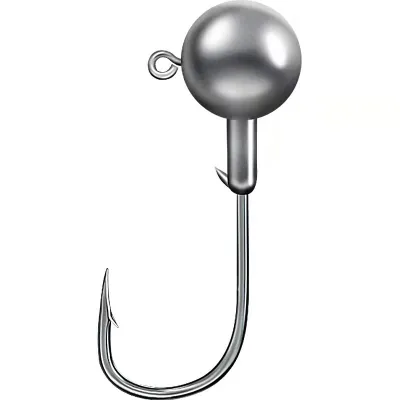
A jighead hook may look like a simple piece of terminal tackle, but its structural elements are highly engineered to perform specific tasks under water. The first point of contact is the hook eye, which determines how the jighead sits when tied to your line. A 90-degree eye, where the loop sits perpendicular to the hook shank, is ideal for vertical jigging or slow, hopping retrieves because it keeps the nose of the lure pointed forward and down. In contrast, a 60-degree or 30-degree eye is better suited for swimming retrieves through vegetation, as the angled eye helps the jighead slide over obstructions rather than catching on them.
Moving down the hook, the shank length and gap width are the primary dimensions that dictate how your soft plastic bait fits. The shank is the straight portion of the hook, and its length must match the body of your lure to ensure the hook point exits at the optimal spot. The gap is the distance between the shank and the sharp hook point. A wide gap is essential when using thick-bodied soft plastics, as it leaves enough open space for the plastic to compress when a fish bites, exposing the point for a clean hookset.
Products mentioned in this guide
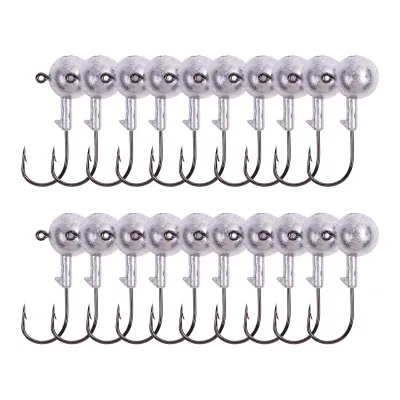
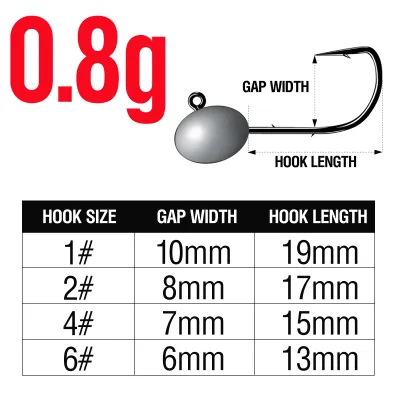
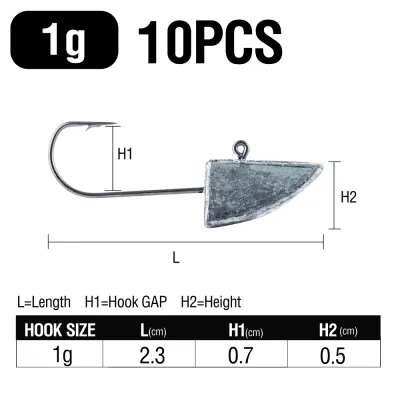
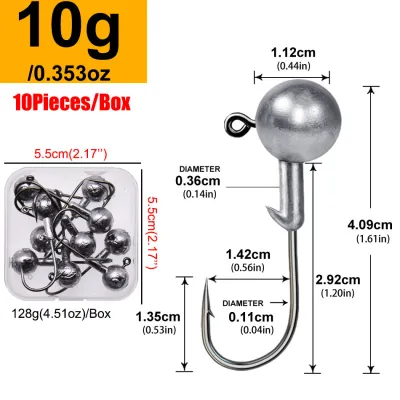
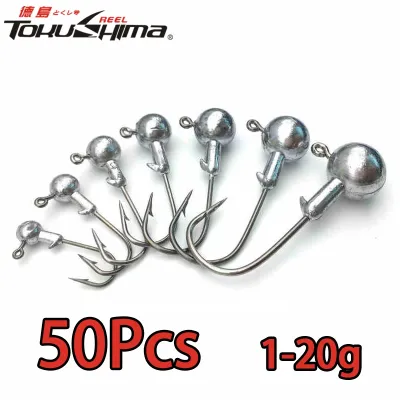
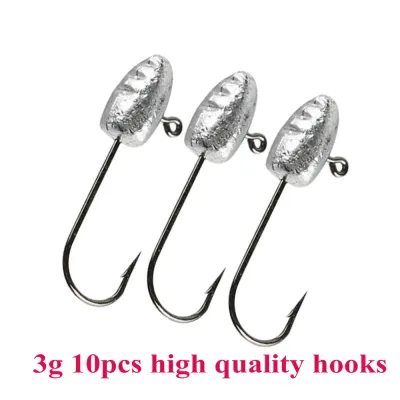
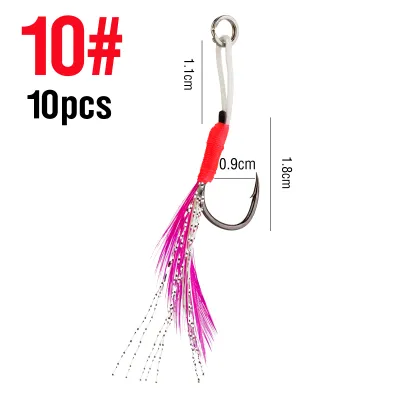
Prices are valid at publication and may change. Please refer to the product page for the latest price.
Finally, the bait keeper and the barb play crucial roles in lure retention and fish landing. The bait keeper—often a small wire barb, a lead collar, or a series of ridges on the shank—holds the soft plastic firmly in place, preventing it from sliding down the hook during aggressive casts or missed strikes. The hook’s barb secures the fish once hooked, but anglers practicing catch-and-release often choose micro-barbs or barbless designs to minimize tissue damage and simplify hook removal.
Match Jighead Weight to Depth and Water Current
Selecting the correct jighead weight is a balancing act between maintaining contact with the bottom and presenting a natural, slow-falling lure. In tropical coastal waters, estuaries, and deep river channels, tidal currents can quickly sweep a light jighead away from the strike zone. As a general rule, you should use the lightest weight possible that still allows you to feel the bottom or control the depth of your presentation. If your jighead is too heavy, it will crash to the bottom too quickly, looking unnatural and increasing your risk of snagging on rocks or debris; if it is too light, the current will lift it high into the water column where fish may not be feeding.

Your retrieval technique also dictates your weight requirements. For vertical jigging over deep structures or drop-offs, a heavier jighead is necessary to keep your line vertical and maintain a direct connection to your lure. When casting and retrieving horizontally along shallow flats or mangrove edges, a lighter jighead provides a slower, more enticing fall that gives predatory fish more time to strike.
Before heading out, check the manufacturer’s weight markings on the packaging or stamped directly onto the jighead. Because water density, wind, and line thickness all affect how fast a lure sinks, it is highly recommended to perform a quick visual check on the water. Cast your rig close to your boat or bank and count how many seconds it takes to reach the bottom, adjusting your weight up or down based on the actual sink rate you observe.
Select Hook Size and Gap to Match Your Soft Plastics
A common mistake among beginners is choosing a jighead based solely on the weight, without considering how the hook size matches the soft plastic lure. If the hook shank is too long for your soft plastic, it will stiffen the body of the lure and ruin its natural swimming action. Conversely, if the shank is too short, the hook point will exit too close to the head, leaving the tail vulnerable to “short strikes” where fish bite the tail of the lure without reaching the hook. Aim to have the hook point exit approximately one-third to one-half of the way down the body of the soft plastic.
The hook gap must also be matched to the thickness of your lure. When a fish bites down on a soft plastic bait, the plastic must compress into the gap to expose the hook point. If you use a narrow-gap hook with a thick, bulky paddle tail, the compressed plastic will block the hook point, resulting in missed hooksets. For thick-bodied lures, always opt for a wide-gap hook that leaves ample clearance for the hook point to penetrate the fish’s mouth.
Additionally, consider the wire gauge or thickness of the hook itself. Fine-wire hooks are incredibly sharp and require very little pressure to penetrate, making them perfect for light lines and species with soft mouths. However, if you are targeting powerful, hard-jawed species like mangrove jack or large groupers around heavy structure, a fine-wire hook can easily bend or straighten under pressure. For these demanding scenarios, heavy-duty, thick-wire hooks are essential to withstand the intense pulling force.
Choose the Head Shape for Your Retrieval Technique
The shape of the jighead determines how it moves through the water and how it behaves when it contacts the bottom. The round head is the most versatile and widely used shape in fishing. Its symmetrical design allows it to sink straight and swim smoothly, making it an excellent choice for mid-water retrieves, steady swimming actions, and general casting in mild currents. If you are unsure of which shape to use, a classic round head is almost always a safe and effective starting point.
When your strategy involves dragging your lure along the bottom, a football head or a stand-up head is far superior. Football-shaped heads are wide and flat on the sides, which prevents the jighead from rolling over when it hits rocks or gravel. This stability keeps the hook pointing straight up, significantly reducing snags and presenting the soft plastic in an appealing, defensive posture. Stand-up heads are designed with a flat bottom that forces the jighead to rest on the seabed with the tail of the lure floating upward, mimicking a feeding baitfish or a crab.
For anglers who prefer an active, aggressive presentation, darting or arrow-shaped heads are the ideal choice. These heads feature a pointed nose and angular sides that cut through the water. When you twitch your rod tip, the darting head glides sharply from side to side in an erratic, zigzag motion that triggers instinctive reaction strikes from predatory fish. This technique is highly effective in clear water where fish can see the lure from a distance.
Build a Practical Jighead Inventory for Your Local Waters
Building a versatile tackle box does not mean buying every jighead available on the shelf. Instead, focus on the specific environments and target species you encounter most often in your local fishing spots. For example, if you frequently fish shallow coastal flats or mangrove estuaries, your inventory should lean heavily toward lighter weights with medium-sized, corrosion-resistant hooks. If you target deeper reefs or fast-flowing river mouths, you will need to stock heavier options to reach the strike zone.
Organization is key to efficiency when the action gets fast. Store your jigheads in a heavy-duty, waterproof utility box with adjustable dividers, organizing them systematically by weight and hook size. Labeling the compartments or using color-coded systems can save valuable time when you need to make a quick change on the water. Keeping your tackle organized also prevents different weights from banging against each other, which can chip the paint or dull the hook points.
Before every fishing trip, take a few minutes to inspect your jigheads. Check the hook points for sharpness by dragging them lightly across your fingernail; if the hook slides without catching, it needs to be sharpened or replaced. In humid, tropical climates, saltwater exposure can quickly lead to rust and structural weakness. Discard any hooks showing signs of deep corrosion, as a rusted hook is highly likely to snap when you hook into a strong fish. Spending a few hundred pesos (₱) on high-quality terminal tackle is always more cost-effective than losing the catch of a lifetime to a failed hook.
Frequently Asked Questions (FAQ)
How do I keep my jighead hooks sharp and rust-free?
To prolong the life of your jighead hooks, always rinse them thoroughly with fresh water after every saltwater outing and allow them to dry completely before putting them back in your tackle box. Storing wet hooks in a closed container creates a humid microclimate that accelerates rust, which can quickly ruin your entire inventory. You can place silica gel packets or rust-inhibiting strips inside your tackle compartments to absorb residual moisture. If a hook point becomes dull or slightly rolled after hitting rocks, use a fine-grit hook file or honing stone to restore its razor-sharp edge with a few light, angled strokes.
When should I use a weedless jighead instead of an exposed hook?
You should switch to a weedless jighead when fishing in or around heavy cover, such as submerged timber, thick aquatic vegetation, or dense mangrove roots. Exposed hooks will easily snag on these obstructions, costing you valuable tackle and disrupting your fishing rhythm. Weedless jigheads typically feature a wire guard, a nylon brush guard, or a design that allows you to bury the hook point inside the body of the soft plastic. While weedless setups greatly reduce snags, they do slightly lower your hook-up ratio because the guard must be compressed to expose the hook; therefore, you should stick to exposed hooks when fishing open, sandy, or unobstructed waters.
Community discussion
Share your experience or ask a question. Comments are reviewed before publication.