
Selecting the right table tennis paddle is one of the most critical decisions you will make as a player, directly influencing your control, spin generation, and overall development on the table. JOOLA has long been a prominent name in the table tennis community, offering a vast spectrum of equipment designed for everyone from backyard recreational players to international competitors. However, finding the perfect match requires looking beyond aesthetic designs and price tags to evaluate how a paddle’s structural components align with your physical mechanics and tactical goals.
In the Philippines, choosing a paddle also involves accounting for environmental factors. High tropical humidity and warm playing conditions in local community centers or non-airconditioned sports halls can drastically alter how a ball grips the rubber surface and how a blade handles moisture from sweat. By analyzing your current skill level, understanding JOOLA’s equipment classifications, and verifying specific technical labels, you can build a setup that enhances your strengths and keeps your game consistent.
Assess Your Skill Level and Playing Style
Identifying your current proficiency is the first step in narrowing down your equipment choices. Table tennis players generally fall into three developmental stages, each requiring a different level of paddle responsiveness and forgiveness. Beginners should focus primarily on stroke consistency, basic ball control, and learning how to read incoming spin. At this stage, a highly sensitive or extremely fast paddle will often cause the ball to fly off the table, hindering the development of proper muscle memory.
Products mentioned in this guide
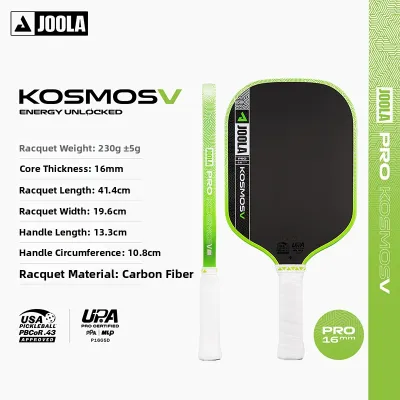
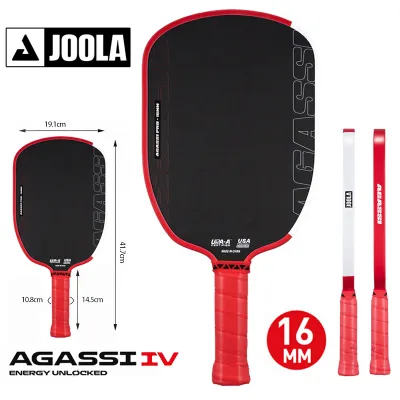
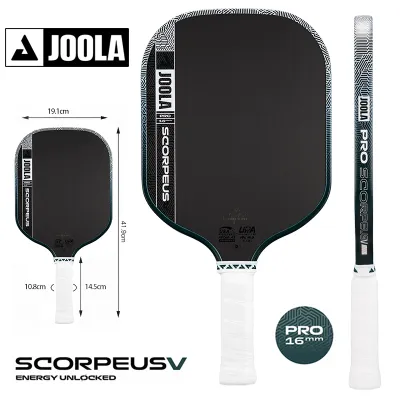
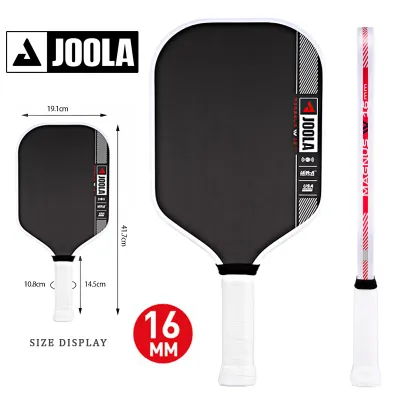
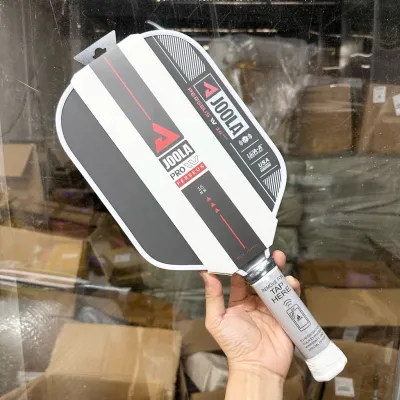
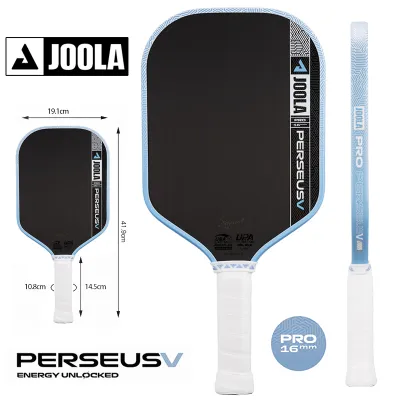
Prices are valid at publication and may change. Please refer to the product page for the latest price.
Intermediate players have established reliable basic strokes and can maintain moderate rallies. If you are starting to implement intentional topspin loops, active blocks, and varied serves, you have entered this transitional phase. You require a paddle that offers a balance of speed and control, allowing you to transition from passive defensive play to active offensive strokes without sacrificing your defensive safety margin.
Advanced players possess highly developed muscle memory, precise footwork, and a defined tactical system. If you regularly compete in local tournaments and can execute high-speed counter-loops or heavy backspin chops from mid-distance, you require specialized equipment. Advanced setups are designed to maximize specific performance vectors, meaning they are highly sensitive to incoming spin and require precise physical timing to control.
Your tactical playing style further refines your paddle requirements. Offensive players who rely on looping, driving, and smashing need equipment that maximizes speed and topspin generation. Defensive players who focus on chopping, blocking, and absorbing the opponent’s pace require setups that prioritize control, dampening, and backspin variation. All-round players, who mix defensive placement with opportunistic attacks, benefit from a balanced paddle that does not lean too heavily toward extreme speed or extreme control.
Physical factors like grip preference and stance also influence your paddle’s weight and balance. Shakehand players, who hold the paddle like a handshake, generally prefer a balanced weight distribution. Penhold players, who hold the paddle like a pen, often favor lighter blades to maintain quick wrist mobility. In warm, humid local playing environments, a paddle that is too heavy can quickly cause wrist fatigue and lead to minor injuries, making weight verification a key comfort factor.
Understanding JOOLA Paddle Lines and Classifications
JOOLA categorizes its table tennis equipment into distinct tiers to help players navigate their options. The most fundamental division is between pre-assembled recreational paddles and custom professional setups. Pre-assembled paddles are factory-glued and ready to use straight out of the box. These are highly convenient and cost-effective for casual players, but they feature fixed components that cannot be easily modified as your skills progress.

Custom setups, on the other hand, require you to select a separate blade and individual rubbers, which are then glued together using specialized water-soluble adhesive. This approach is standard for competitive players because it allows you to customize the forehand and backhand surfaces independently. For example, you can pair a fast, offensive rubber on your forehand with a highly controllable, spin-absorbing rubber on your backhand to match your specific playing style.
When browsing JOOLA equipment, you will observe numerical ratings for speed, spin, and control printed on the packaging or official product listings. These ratings are relative guidelines established by the manufacturer to help compare models within their own product lines. A speed rating of 95 or higher indicates a highly rigid paddle that rebounds the ball instantly, offering minimal dwell time. Conversely, a control rating of 90 or higher indicates a softer, more flexible composition that holds the ball longer, giving you more time to direct your shot.
As you progress through JOOLA’s offerings, you will notice a transition in blade construction from all-wood models to composite designs. Entry-level and intermediate paddles typically feature five or seven layers of natural wood, which provide excellent vibration feedback and a natural feel for the ball. Advanced models introduce composite materials such as carbon fiber, arylate carbon, or glass fiber. These synthetic layers stiffen the blade, expanding the sweet spot and significantly increasing the speed of your shots.
Key Specifications to Verify on the Product Label
Before purchasing any JOOLA paddle, it is essential to verify the technical specifications listed on the product label or official spec sheet. The blade composition is the foundation of the paddle’s performance. Look at the number of wood plies; a 5-ply wood blade is generally more flexible and control-oriented, making it ideal for developing players. A 7-ply wood blade is stiffer and heavier, providing more power for flat hitting and blocking.
If the blade contains composite materials, check where the carbon or synthetic layers are positioned. Outer-carbon blades place the synthetic layer directly beneath the outer wood veneer, resulting in a very crisp feel and immediate speed. Inner-carbon blades place the synthetic layer closer to the core, surrounded by wood plies. This design offers a woody, control-oriented feel on soft touches while activating the speed of the carbon during hard, offensive strokes.
Next, evaluate the rubber characteristics, starting with the surface type. Pips-in rubbers feature a smooth outer surface, which maximizes the contact area with the ball to generate heavy topspin or backspin. Pips-out rubbers have a textured surface facing outward, which reduces the paddle’s sensitivity to incoming spin and is highly effective for fast, flat blocking. You must also verify the sponge thickness beneath the rubber; a sponge thickness of 1.5mm to 1.8mm offers excellent control and ball feel, while sponges measuring 2.0mm to “Max” thickness provide maximum speed and spin potential at the cost of control.
Rubber tackiness and tension are also critical, especially in tropical climates. Tacky, sticky rubbers rely on surface adhesion to grip the ball, which can be highly sensitive to dust and high humidity, requiring diligent cleaning. Tensioned rubbers rely on the elasticity of the sponge and top sheet to generate spin, offering more consistent performance in humid conditions but requiring faster swing speeds to activate.
Finally, choose a handle shape that matches your grip and hand size. The flared (FL) handle is the most popular choice for shakehand players because the wider base prevents the paddle from slipping out of a sweaty hand during intense rallies. The straight (ST) handle has a uniform width, allowing players to easily adjust their grip angle or flip the paddle during play. The anatomical (AN) handle features a contoured middle section that fills the palm, providing a highly secure and stable grip for players with larger hands.
Building Your Ideal JOOLA Paddle Setup
To build a setup that truly supports your development, you must match your assessed player profile to a corresponding equipment configuration. If you are a beginner, your primary goal is to learn correct stroke mechanics without fighting your equipment. Your ideal setup should consist of an all-wood 5-ply blade paired with control-oriented, pips-in rubbers featuring a sponge thickness of 1.5mm to 1.8mm. This combination ensures a large margin of error, allowing you to focus on ball placement and footwork.
For intermediate players looking to transition toward a more offensive or spin-based game, a balanced setup is highly recommended. Look for a high-quality 5-ply wood blade or a soft 7-ply wood blade, paired with versatile rubbers featuring a 2.0mm sponge thickness. This configuration provides enough speed to finish points while retaining the necessary control to execute precise defensive blocks and short pushes over the net.
Advanced and competitive players should look toward composite setups tailored to their specific tactical systems. An offensive looper will benefit from an outer-carbon blade paired with hard, high-tension rubbers of maximum thickness to generate explosive speed and heavy topspin. A modern defensive player might choose a specialized, oversized defensive wood blade paired with long-pips rubber on one side to disrupt the opponent’s rhythm and a spinny, smooth rubber on the other side for counter-attacks.
When purchasing your JOOLA equipment in the Philippines, always verify specifications, warranty terms, and model authenticity through authorized local sports retailers or official brand distributors. Prices can range from approximately ₱1,200 for basic pre-assembled recreational models to over ₱8,000 for professional-grade custom blades and rubbers. Be cautious of unverified online listings offering unusually low prices, as counterfeit table tennis equipment is common and lacks the structural integrity and performance standards of genuine JOOLA products.
Frequently Asked Questions (FAQ)
How often should I replace the rubbers on my JOOLA paddle?
You should replace your table tennis rubbers when you observe physical signs of degradation, such as a faded or slippery sweet spot, crumbling edges, or a noticeable loss of grip when brushing the ball. In the tropical climate of the Philippines, high humidity, heat, and airborne dust accelerate the oxidation of the rubber, causing it to lose its elasticity and tackiness faster than in cooler, drier climates. Sweat transferring from your hands to the rubber surface can also degrade the material over time.
For casual recreational players, replacing the rubbers once a year or every two years is usually sufficient to maintain a decent playing feel. However, active club players who train two to three times a week should expect to replace their rubbers every 60 to 80 playing hours to maintain optimal spin and speed performance. To maximize the lifespan of your rubbers, always wipe them down with a damp, lint-free sponge using distilled water or a specialized rubber cleaner after every playing session, let them air dry away from direct sunlight, and apply protective plastic sheets before storing the paddle in a padded case.
Can I upgrade just the rubbers on a pre-assembled JOOLA paddle?
Upgrading the rubbers on a pre-assembled recreational JOOLA paddle is generally not recommended due to structural differences in how these rackets are manufactured. Pre-assembled paddles are built using permanent, industrial-strength factory glue designed to keep the rubber attached for the entire lifespan of the racket. Attempting to peel these rubbers off often results in severe splintering of the outer wood plies of the blade, leaving an uneven, damaged surface that cannot properly accept new rubbers.
Furthermore, the wood used in entry-level pre-assembled blades is typically of lower quality and lacks the sealing coats found on professional custom blades. If you want to upgrade your equipment to achieve better spin and speed, it is far more cost-effective and structurally sound to purchase a dedicated custom blade and separate rubbers. Custom blades are designed with sealed surfaces and use water-soluble table tennis glue, allowing you to easily peel off and replace worn rubbers multiple times without damaging the underlying wood.
Community discussion
Share your experience or ask a question. Comments are reviewed before publication.