
Choosing the right badminton racket can dramatically impact your performance on the court, especially when navigating the diverse lineup offered by Kawasaki. Selecting a model that aligns with your current skill level ensures that your equipment supports your development rather than holding you back. A mismatched racket can lead to poor shot execution, rapid fatigue, or even physical injury during intense rallies.
To find the ideal Kawasaki racket, you must evaluate three core physical specifications: weight, balance point, and shaft flexibility. Beginners generally benefit from lightweight, flexible frames that assist with power generation, while advanced players require stiffer, heavier rackets to maximize control and precision. By matching these engineering traits to your physical strength and swing speed, you can play more consistently and protect your joints from unnecessary strain.
How to Match a Kawasaki Racket to Your Skill Level
Understanding the technical specifications of a badminton racket is the first step toward making an informed choice. Racket weight is universally categorized using “U” ratings, where a lower number indicates a heavier frame. For instance, 3U rackets typically weigh between 85 and 89 grams, 4U rackets range from 80 to 84 grams, and 5U options are lighter, usually sitting between 75 and 79 grams. Heavier rackets offer more momentum for power shots but demand greater physical strength to swing repeatedly.
Products mentioned in this guide
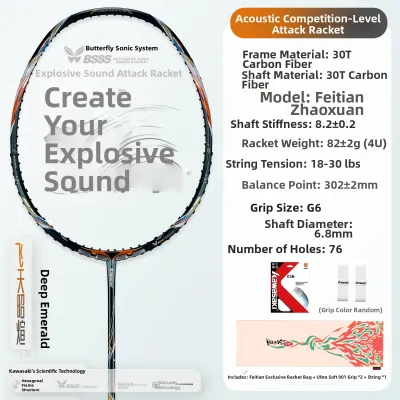
Prices are valid at publication and may change. Please refer to the product page for the latest price.
The balance point of a racket determines where the center of mass lies relative to the handle, which directly influences how the racket feels during a swing. This metric is measured in millimeters from the bottom of the handle to the point where the racket balances perfectly. Head-heavy rackets (typically over 295mm) concentrate weight toward the top of the frame, providing extra leverage for powerful smashes. Head-light rackets (typically under 285mm) shift the weight toward the handle, making them highly maneuverable for quick defensive blocks and rapid net play. Even-balance rackets (around 285mm to 295mm) distribute weight uniformly, offering a versatile middle ground for players who transition frequently between offense and defense.
Shaft flexibility dictates how much the racket bends and snaps back during a stroke. A flexible shaft acts like a spring, bending easily during slow swings to generate extra power with minimal effort. Conversely, a stiff shaft requires a high swing speed to bend, but it delivers exceptional accuracy and immediate energy transfer for players with refined techniques. Choosing the wrong stiffness level can disrupt your timing and reduce the efficiency of your shots.
Aligning these mechanical properties with your physical capabilities is crucial for injury prevention. In tropical regions like the Philippines, where high humidity can make rallies physically demanding and sweat can affect your grip stability, using an overly heavy or stiff racket can rapidly fatigue your forearm and shoulder. This fatigue often leads to improper form, increasing the risk of developing painful conditions like tennis elbow or rotator cuff strain.
Shot consistency also relies heavily on this physical synergy. When a racket matches your natural swing speed, you can control the angle of the racket face more predictably at the moment of impact. This synchronization allows you to execute precise clears, tight net drops, and controlled drives consistently throughout a match, regardless of whether you are playing in a breezy outdoor community court or a humid indoor sports complex.
Recommended Kawasaki Rackets for Beginners
Ideal Specifications for New Players
For those who are new to the sport, the primary goal is to develop proper hitting form and build baseline muscle memory without overexerting the body. Beginners should prioritize rackets with flexible shafts, as the structural bend provides a natural “whip” effect. This mechanical assistance helps players with slower or developing swing speeds push the shuttlecock from baseline to baseline with less physical strain.

In terms of weight and balance, entry-level players are best served by lighter frames, specifically in the 4U or 5U categories, paired with an even or head-light balance. A lighter racket is much easier to maneuver during fast-paced defensive exchanges, allowing you to react quickly to incoming shots. It also minimizes wrist fatigue, which is particularly beneficial during long practice sessions where repetitive motions can easily strain unconditioned muscles.
Managing moisture is another key consideration for beginners learning the game in warm climates. Sweat can cause the racket to slip, leading to tight, tense grip habits that hinder technique. Utilizing a smaller grip size, such as G5, allows you to wrap the handle with absorbent overgrips or towel grips to maintain a secure hold without making the handle too bulky for comfortable finger control.
Kawasaki Series to Explore
When looking at the Kawasaki lineup, beginners should focus on series designed for high durability and forgiveness, such as the Kawasaki Feather or basic Nano series. These lines are engineered to withstand the occasional frame collisions and ground scrapes that frequently occur when learning the game. They also feature larger sweet spots, meaning the racket is more forgiving when the shuttlecock is not struck perfectly in the center of the string bed.
These entry-level models are generally very budget-friendly, typically falling under ₱2,000, making them an accessible investment for casual players. They offer a reliable foundation for mastering the basic overhead clear, drop shot, and underhand lift without requiring a massive financial commitment.
Before making a purchase, it is essential to verify the specific model’s weight and flexibility ratings. Do not rely solely on the series name, as manufacturers often release multiple variants within a single line. Always check the physical product label or the manufacturer’s official specifications sheet to confirm that the racket falls within your target weight and flexibility range.
Top Kawasaki Picks for Intermediate Players
Upgrading Your Racket Specifications
As your footwork improves and your swing speed increases, your equipment needs will naturally evolve. Intermediate players who have mastered basic strokes should transition toward rackets with medium or medium-stiff shafts. This shift provides more immediate feedback from the string bed, allowing you to feel the ball better and place your shots with greater accuracy.
At this stage, you can also explore slightly heavier frames, such as 3U or 4U models, depending on your physical strength. A bit of extra weight, combined with a slightly head-heavy or even balance, provides the necessary momentum to execute powerful smashes and fast-driven shots. This added mass helps you transition from a purely defensive playstyle to a more assertive, offensive strategy.
Intermediate players should also begin paying attention to string tension, as a tighter string bed enhances control. While beginners usually play with tensions around 18 to 22 lbs, intermediate players can comfortably step up to 23 to 26 lbs. This adjustment reduces the trampoline effect of the strings, giving you more precise placement over the shuttlecock’s trajectory.
Kawasaki Lines for Developing Skills
For players in this mid-tier category, the Kawasaki F8 and various mid-range King series models offer an excellent balance of power and control. These rackets are built to accommodate the faster pace of club-level play, where players must quickly alternate between backcourt attacking and frontcourt defense. They provide the structural stability needed to handle higher string tensions without compromising on maneuverability.
These intermediate options generally fall within a mid-range price band of ₱2,000 to ₱5,000. They represent a balanced investment for players who participate in local tournaments or regular club sessions and want a racket that can grow alongside their developing skills.
When selecting a mid-tier model, match the racket’s balance point directly to your preferred role on the court. If you primarily play doubles and find yourself dominating the backcourt with heavy smashes, a head-heavy model from these series will serve you well. If you prefer a fast, all-around style that involves quick net play and defensive drives, an even-balanced model is a more suitable choice.
Advanced Kawasaki Rackets for Competitive Play
Demanding High-Performance Specs
Competitive and highly skilled players require specialized equipment that can translate their physical power and precise technique into high-velocity shots. Advanced rackets feature very stiff shafts that do not bend easily. To utilize these rackets effectively, you must possess excellent wrist snap and a high swing speed; otherwise, the racket will feel dead, and your shots will lack depth.
These high-performance rackets also incorporate aerodynamic frame designs that minimize air resistance, allowing for faster swing speeds through the air. Furthermore, they are engineered to support higher string tensions, often ranging from 27 to 30 lbs or more, which provide a highly responsive, crisp feel upon impact. This elevated tension is essential for executing deceptive shots and tight net spins at a competitive level.
However, playing with highly stiff, high-tension rackets in hot and humid conditions requires excellent physical conditioning. The lack of mechanical assistance from the racket means your muscles and joints absorb more of the impact shock. Advanced players must maintain strong shoulder and forearm conditioning to handle these demanding specifications safely over multi-game matches.
Professional-Grade Kawasaki Options
Advanced players looking for tournament-grade gear should explore premium Kawasaki lines, such as the Arrow series or high-end King models. These rackets utilize advanced carbon fiber composites to achieve maximum frame stiffness and torsional stability, ensuring the racket head does not twist during high-impact smashes. This structural integrity allows for extreme precision even during high-intensity rallies.
These premium models represent the top tier of Kawasaki’s product range, with prices typically exceeding ₱5,000. They are designed specifically for players who demand uncompromising performance and have developed the advanced mechanics necessary to unlock the racket’s full potential.
When using these professional-grade frames, players must strictly adhere to the maximum string tension limits printed directly on the racket frame. Attempting to string a racket beyond its certified capacity can cause structural failure or warp the frame, especially under the high-tension demands of competitive play. Always consult a professional stringer to find a tension that balances performance with frame safety.
Quick Comparison of Kawasaki Rackets by Skill Level
To help you quickly identify which category of Kawasaki rackets aligns with your current playing style and physical capabilities, the table below outlines the general specifications recommended for each skill tier. While individual preferences may vary, these guidelines provide a reliable starting point for your selection process.
| Skill Level | Recommended Shaft Flexibility | Ideal Weight Class | Preferred Balance Point | Primary On-Court Benefit |
|---|---|---|---|---|
| Beginner | Flexible | 4U to 5U (75g – 84g) | Head-Light to Even | Easy power generation and low wrist fatigue |
| Intermediate | Medium to Medium-Stiff | 3U to 4U (80g – 89g) | Even to Slightly Head-Heavy | Balanced control, better smash momentum |
| Advanced | Stiff to Very Stiff | 3U to 4U (80g – 89g) | Head-Heavy to Even | Maximum shot precision and rapid energy transfer |
Using this table as a reference, you can narrow down your options before looking at specific models. Remember that your physical comfort should always take precedence over a racket’s advertised performance features. If a racket feels too heavy or stiff during play, it is better to step down a tier to protect your body and maintain consistent form.
What to Check Before Buying Your Kawasaki Racket
Before finalizing your purchase of a Kawasaki racket, there are several practical details you must verify to ensure you are getting a genuine, high-quality product. First, inspect the manufacturer’s label or the official product page for the recommended string tension range and grip size, which is typically labeled as G4 or G5. A smaller grip size like G5 allows for easier finger adjustments, which is highly beneficial for the quick grip transitions required in fast doubles matches.
When purchasing from e-commerce platforms or online marketplaces, extra diligence is required to avoid counterfeit goods. Always look for official store badges, verify that the seller has high ratings, and read recent buyer reviews carefully. Look specifically for feedback regarding the racket’s frame integrity, paint quality, and whether the product arrived in its original packaging with authentic holographic labels.
Once your racket is delivered, perform a thorough physical inspection before taking it to be strung. Check the frame and shaft under bright light for any hairline cracks, paint chips, or manufacturing defects. Applying high tension to a structurally compromised frame can cause it to collapse during the stringing process, so identifying any issues early is crucial for securing a replacement or refund.
Finally, consider how local playing conditions will affect your setup. In the Philippines, the combination of high heat and humidity can cause strings to lose tension faster than they would in cooler climates. If you prefer a specific playing tension, you may want to request your stringer to pull the strings one pound tighter than your target tension to account for this natural relaxation over the first few days of use.
Frequently Asked Questions (FAQ)
Is Kawasaki a good brand for professional badminton players?
Kawasaki is a well-established brand with a long history in badminton, offering high-end equipment that is regularly used in professional tournaments. Their premium lines feature advanced materials and engineering that compete directly with other major brands. Ultimately, whether a Kawasaki racket is suitable for a professional player depends on how well its specific frame feel, stiffness, and balance align with the player’s unique style and physical preferences.
How often should I restring my Kawasaki racket?
The frequency of restringing depends primarily on how often you play and your local climate rather than a fixed calendar schedule. In warm, humid environments, strings can lose tension more rapidly even when the racket is not in use. You should consider restringing your racket when you notice visible fraying, deep notches where the strings intersect, or a significant drop in control and shot repulsion.
Can a beginner use an advanced Kawasaki racket?
Using an advanced, stiff racket as a beginner is generally discouraged because it can hinder your skill development and increase the risk of injury. Without the developed wrist technique and high swing speed required to flex a stiff shaft, a beginner will struggle to generate power, often leading to overcompensation with the shoulder or elbow. This extra physical strain can quickly cause joint pain or tennis elbow.
Community discussion
Share your experience or ask a question. Comments are reviewed before publication.